Lucas Bennett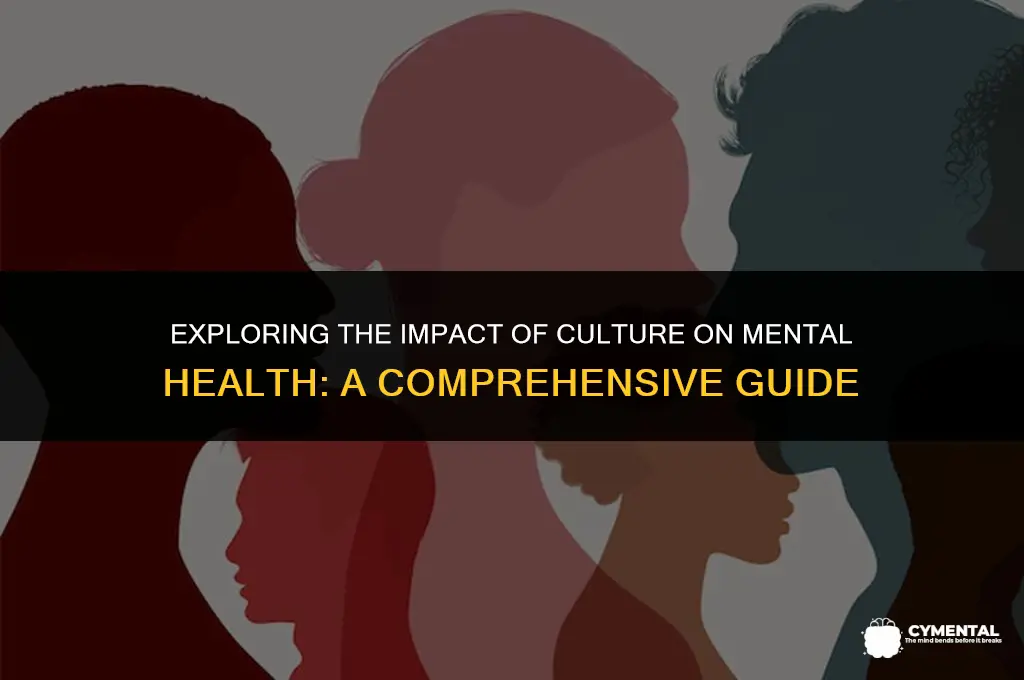
Culture plays a profound role in shaping our understanding and experience of mental health. It influences how we perceive and express emotions, cope with stress, and seek help when needed. Different cultures may have varying definitions of what constitutes mental well-being or illness, and these definitions can impact the way individuals are diagnosed and treated. For example, some cultures may view certain behaviors as normal or even desirable, while others may consider them pathological. Additionally, cultural factors can affect access to mental health services, as well as the types of interventions that are considered appropriate or effective. Understanding these cultural nuances is essential for providing sensitive and effective mental health care that meets the diverse needs of individuals from different backgrounds.
| Characteristics | Values |
|---|---|
| Cultural norms and values | Influence on mental health perceptions and behaviors |
| Social support systems | Availability and quality of support networks |
| Communication styles | Verbal and non-verbal expressions of emotions |
| Stress coping mechanisms | Learned strategies for managing stress |
| Access to mental health services | Availability and cultural competence of providers |
| Stigma surrounding mental illness | Degree of shame or discrimination associated with mental health issues |
| Cultural identity and belonging | Sense of connection to cultural heritage and community |
| Acculturation and assimilation | Process of adapting to a new culture and its impact on mental health |
| Intergenerational trauma | Transmission of trauma and its effects on mental health across generations |
| Cultural spirituality and beliefs | Role of spiritual practices and beliefs in mental health and well-being |
Explore related products


What You'll Learn

Cultural stigma surrounding mental illness
In many cultures, mental illness is shrouded in stigma, leading to significant barriers in seeking help and support. This stigma often stems from a lack of understanding and education about mental health conditions, resulting in misconceptions and negative attitudes towards those affected. For instance, in some societies, mental illness is viewed as a personal weakness or a result of poor upbringing, rather than a legitimate medical condition. This can lead to individuals feeling ashamed or embarrassed about their struggles, preventing them from reaching out for professional help.
The impact of cultural stigma on mental health is profound. It can exacerbate symptoms, prolong recovery, and even lead to suicide in extreme cases. Moreover, stigma can affect not only the individual but also their families and communities, creating a ripple effect of discrimination and exclusion. For example, in some cultures, families may hide a relative's mental illness to avoid social ostracism, thereby isolating the individual and denying them the support they need.
Addressing cultural stigma requires a multifaceted approach. Education and awareness campaigns can help dispel myths and misconceptions about mental illness, promoting a more compassionate and understanding attitude towards those affected. Additionally, involving community leaders and influencers in mental health advocacy can help normalize the conversation around mental illness and encourage more people to seek help.
Another crucial step is to increase access to mental health services, particularly in underserved communities. This can involve training more mental health professionals from diverse cultural backgrounds, providing culturally sensitive care, and offering services in languages other than the dominant language. Furthermore, integrating mental health support into primary care settings can help reduce the stigma associated with seeking specialized mental health treatment.
Ultimately, combating cultural stigma surrounding mental illness is essential for improving mental health outcomes globally. By fostering a more inclusive and supportive environment, we can encourage individuals to seek the help they need without fear of judgment or discrimination. This requires a concerted effort from governments, healthcare providers, community organizations, and individuals alike to challenge and change the harmful attitudes and beliefs that perpetuate stigma.
Navigating Choices: The Impact of Stress and Mental Health on Decision-Making
You may want to see also
Explore related products


Traditional healing practices vs. modern psychiatry
Traditional healing practices and modern psychiatry represent two distinct approaches to mental health, each deeply rooted in different cultural and historical contexts. Traditional healing practices often encompass a holistic view of health, incorporating spiritual, emotional, and physical well-being. These practices can include herbal remedies, ritualistic ceremonies, and community-based support systems. In contrast, modern psychiatry is grounded in a biomedical model, focusing on the diagnosis and treatment of mental disorders through medication and psychotherapy.
One key difference between these approaches lies in their conceptualization of mental illness. Traditional healing practices may view mental health issues as a result of imbalances in the body or spirit, or as a manifestation of social and environmental factors. Modern psychiatry, on the other hand, tends to categorize mental health issues into specific disorders with defined symptoms and treatments. This difference in perspective can lead to varying treatment outcomes and patient experiences.
In some cultures, traditional healing practices are preferred due to their alignment with cultural beliefs and values. For example, in many Indigenous communities, healing ceremonies and the use of medicinal plants are integral to mental health care. These practices are often seen as more accessible and culturally appropriate than Western psychiatric interventions. However, modern psychiatry has its own strengths, such as the ability to provide evidence-based treatments for severe mental health conditions.
The integration of traditional healing practices and modern psychiatry is a complex issue, requiring careful consideration of cultural sensitivity, patient preferences, and the availability of resources. In some cases, a combination of both approaches may be beneficial, allowing for a more comprehensive and individualized treatment plan. Ultimately, the choice between traditional healing practices and modern psychiatry should be informed by a deep understanding of the cultural and personal contexts of the individual seeking care.
The Impact of Peer Pressure on Mental Health: A Comprehensive Guide
You may want to see also
Explore related products


Language barriers in mental health services
Language barriers pose a significant challenge in the provision of mental health services, particularly in multicultural societies. When individuals seeking mental health support do not speak the same language as their healthcare providers, it can lead to miscommunication, mistrust, and inadequate treatment. This issue is compounded by the fact that mental health terminology and concepts can be complex and nuanced, making translation even more difficult.
One potential solution to this problem is the use of interpreters in mental health settings. Interpreters can facilitate communication between patients and providers, ensuring that both parties understand each other's perspectives and concerns. However, the use of interpreters is not without its challenges. For example, interpreters may not be trained in mental health terminology, or they may bring their own cultural biases to the interaction. Additionally, the presence of an interpreter can create a sense of distance or formality between the patient and provider, potentially hindering the development of a therapeutic relationship.
Another approach to addressing language barriers in mental health services is to provide training to healthcare providers in the languages and cultures of their patients. This can help providers to better understand the specific needs and concerns of their patients, and to communicate more effectively with them. However, this approach requires significant investment in time and resources, and may not be feasible in all settings.
Technology can also play a role in overcoming language barriers in mental health services. For example, teletherapy platforms can provide real-time translation services, allowing patients and providers to communicate in their preferred languages. Additionally, mobile apps and online resources can provide mental health information and support in a variety of languages, making it more accessible to individuals who may not speak the dominant language of their community.
Ultimately, addressing language barriers in mental health services requires a multifaceted approach that takes into account the unique needs and circumstances of each patient. By combining the use of interpreters, provider training, and technology, it is possible to improve communication and provide more effective mental health support to individuals from diverse linguistic and cultural backgrounds.
The Impact of Mental and Emotional Illnesses on Social Well-being
You may want to see also
Explore related products


Cultural differences in expressing emotions
In Japan, the expression of emotions is often subdued and indirect, with a strong emphasis on maintaining harmony and avoiding conflict. This cultural norm can lead to a reluctance to seek help for mental health issues, as admitting to emotional distress may be seen as a sign of weakness or a disruption to social order. In contrast, in many Western cultures, such as the United States, there is a greater emphasis on individualism and self-expression, which may lead to a more open and direct approach to discussing emotions and seeking mental health support.
The way emotions are expressed and perceived can also vary greatly between cultures. For example, in some African cultures, emotional expression is often more communal, with a focus on shared experiences and collective support. This can lead to a stronger sense of community and social connection, which may have positive effects on mental health. In other cultures, such as those in the Middle East, emotional expression may be more reserved and formal, with a greater emphasis on maintaining dignity and composure.
Cultural differences in emotional expression can also impact the way mental health professionals approach their work. In some cultures, a more directive and authoritative approach may be expected, while in others, a more collaborative and egalitarian approach may be preferred. Understanding these cultural nuances is essential for mental health professionals to effectively support their clients and avoid misunderstandings or miscommunications.
Furthermore, cultural differences in emotional expression can also influence the way mental health issues are diagnosed and treated. For example, some cultures may place a greater emphasis on somatic symptoms, such as physical pain or fatigue, as indicators of emotional distress, while others may focus more on psychological symptoms, such as anxiety or depression. This can lead to differences in the way mental health conditions are conceptualized and addressed, highlighting the importance of cultural competence in mental health care.
In conclusion, cultural differences in expressing emotions play a significant role in shaping mental health outcomes and the way mental health issues are addressed. By understanding and respecting these differences, mental health professionals can provide more effective and culturally sensitive support to their clients, ultimately leading to better mental health outcomes for individuals and communities worldwide.
Revitalize Your Mind: The Impact of Interior Design on Mental Health
You may want to see also
Explore related products



Impact of cultural values on mental health outcomes
Cultural values play a significant role in shaping mental health outcomes. For instance, in some cultures, mental illness is stigmatized, leading individuals to hide their symptoms and avoid seeking help. This stigma can exacerbate mental health issues, as untreated conditions often worsen over time. In contrast, cultures that view mental health as a priority and encourage open discussions about emotional well-being tend to have better outcomes, as individuals are more likely to seek treatment and support.
The impact of cultural values on mental health is also evident in the way different societies approach stress and coping mechanisms. Some cultures emphasize resilience and individual strength, while others prioritize community support and collective problem-solving. These differing approaches can influence how individuals manage stress and adversity, affecting their overall mental health. For example, a culture that values individualism may lead to higher rates of anxiety and depression, as individuals may feel isolated and unsupported. Conversely, a culture that emphasizes community ties may foster a sense of belonging and social support, which can mitigate the negative effects of stress.
Furthermore, cultural values can influence the types of mental health interventions that are considered acceptable and effective. For instance, some cultures may prefer traditional healing practices, such as herbal remedies or spiritual rituals, over Western-style psychotherapy or medication. This preference can impact the availability and accessibility of mental health services, as well as the willingness of individuals to seek help. It is essential for mental health professionals to be aware of these cultural differences and to tailor their interventions accordingly, in order to provide effective and culturally sensitive care.
In addition, cultural values can shape the way mental health is conceptualized and understood. Different cultures may have varying definitions of mental illness, as well as different criteria for diagnosing and treating these conditions. This can lead to disparities in mental health care, as individuals from different cultural backgrounds may have different expectations and experiences when seeking treatment. Mental health professionals must be mindful of these cultural variations and strive to provide care that is respectful and responsive to the needs of diverse populations.
Overall, the impact of cultural values on mental health outcomes is complex and multifaceted. By understanding and addressing these cultural differences, mental health professionals can work towards improving mental health care and promoting better outcomes for individuals from all cultural backgrounds.
Understanding Grief's Impact: How Loss Affects Mental Health
You may want to see also
Frequently asked questions
Culture significantly shapes how mental health issues are expressed and perceived. Different cultures may have unique ways of verbalizing distress, such as using specific idioms or metaphors. For example, in some cultures, mental health issues might be described in terms of spiritual or physical ailments rather than psychological ones.
Yes, cultural beliefs can greatly impact the treatment of mental health conditions. Some cultures may prefer traditional healing methods, such as herbal remedies or spiritual practices, over modern psychiatric treatments. Additionally, cultural beliefs about the causes of mental illness can influence the type of treatment sought and the expectations for recovery.
Cultural stigma can play a detrimental role in mental health by discouraging individuals from seeking help or disclosing their mental health struggles. In many cultures, mental illness is viewed negatively, leading to feelings of shame and isolation among those affected. This stigma can hinder access to mental health services and impede the healing process.
Mental health professionals can incorporate cultural competence into their practice by educating themselves about the cultural backgrounds of their clients, being aware of cultural differences in communication styles and expressions of distress, and collaborating with clients to develop treatment plans that align with their cultural beliefs and values. Additionally, using interpreters or culturally specific resources can help bridge language and cultural barriers.