Harper Lewis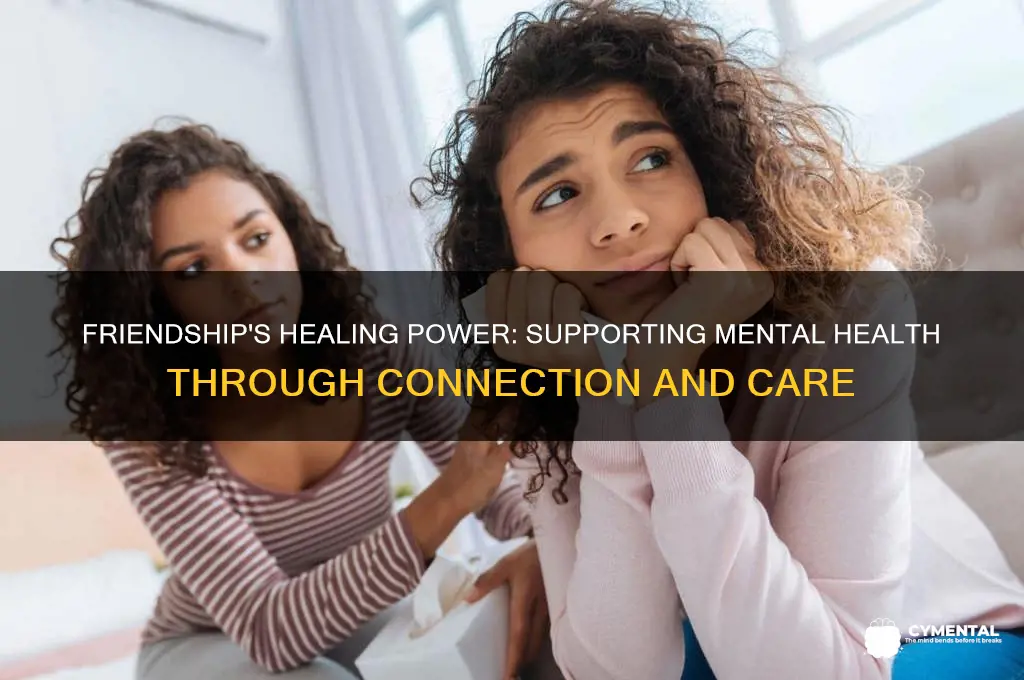
Friendship plays a crucial role in supporting individuals with mental illness by providing emotional, social, and practical assistance. Genuine friendships offer a sense of belonging and acceptance, which can counteract feelings of isolation and stigma often experienced by those struggling with mental health issues. Friends can serve as a safe space for open communication, allowing individuals to express their thoughts and feelings without fear of judgment. Additionally, friends can encourage healthy habits, provide distractions from negative thought patterns, and help navigate challenging situations. The presence of supportive friendships has been linked to reduced symptoms of depression and anxiety, improved self-esteem, and a greater sense of purpose, highlighting the profound impact of companionship on mental well-being.
| Characteristics | Values |
|---|---|
| Emotional Support | Provides a sense of belonging, reduces feelings of loneliness, and offers comfort during difficult times. |
| Reduced Stigma | Friends can help normalize mental health struggles, reducing self-stigma and encouraging help-seeking behaviors. |
| Improved Self-Esteem | Positive friendships foster self-worth, validation, and a sense of being valued, which can counteract negative self-perceptions. |
| Stress Reduction | Social connections act as a buffer against stress, lowering cortisol levels and promoting relaxation. |
| Encouragement of Healthy Behaviors | Friends can motivate engagement in physical activity, healthy eating, and adherence to treatment plans. |
| Distraction from Negative Thoughts | Social interactions provide a break from rumination, reducing the intensity of depressive or anxious thoughts. |
| Practical Assistance | Friends can help with daily tasks, provide transportation to appointments, or assist during crises. |
| Enhanced Coping Skills | Through shared experiences and advice, friends can offer new perspectives and strategies for managing mental health challenges. |
| Increased Social Engagement | Regular social interaction helps combat isolation, which is a risk factor for worsening mental health. |
| Accountability and Consistency | Friends can help maintain routines, encourage attendance at therapy sessions, and provide structure. |
| Validation of Emotions | Friends offer a safe space to express feelings without judgment, fostering emotional processing and healing. |
| Hope and Positivity | Supportive friendships can inspire optimism and a belief in recovery, counteracting hopelessness. |
| Improved Communication Skills | Interacting with friends enhances interpersonal skills, which can benefit relationships and overall well-being. |
| Crisis Intervention | Friends can recognize warning signs and intervene during mental health emergencies, potentially saving lives. |
| Long-Term Resilience | Consistent social support contributes to building resilience, enabling better management of future mental health challenges. |
Explore related products



What You'll Learn
- Emotional Support: Friends provide comfort, reduce loneliness, and help manage stress during difficult times
- Social Connection: Friendship fosters belonging, combats isolation, and enhances overall mental well-being
- Encouragement: Friends motivate self-care, treatment adherence, and positive coping strategies for mental health
- Perspective: Trusted friends offer insights, challenge negative thoughts, and promote healthier mindsets
- Crisis Assistance: Friends recognize warning signs, provide immediate support, and help seek professional help

Emotional Support: Friends provide comfort, reduce loneliness, and help manage stress during difficult times
Friendship is a powerful antidote to the isolation that often accompanies mental illness. For individuals grappling with conditions like depression, anxiety, or bipolar disorder, the mere presence of a friend can disrupt the cycle of rumination and despair. A study published in the *Journal of Social and Clinical Psychology* found that social connections significantly reduce the risk of depression, highlighting the tangible mental health benefits of friendship. When a friend listens without judgment, shares a laugh, or simply sits in silence, they create a safe space that counters the overwhelming sense of aloneness. This emotional refuge is not just comforting—it’s therapeutic.
Consider the mechanics of stress reduction in friendships. During moments of crisis, the body’s stress response floods the system with cortisol, exacerbating symptoms of mental illness. Friends act as natural buffers, lowering cortisol levels through their calming presence. For instance, a 20-minute conversation with a trusted friend can reduce stress hormones by up to 25%, according to research from the University of California. Practical strategies, like scheduling regular check-ins or engaging in shared activities, amplify this effect. Even small gestures—a text message, a shared meme, or a brief phone call—can interrupt the stress spiral and provide immediate relief.
Loneliness is a silent epidemic, particularly among those with mental health challenges, but friends serve as its most effective remedy. A study in the *American Journal of Psychiatry* revealed that individuals with strong social networks report 50% lower levels of loneliness compared to those who feel isolated. Friends bridge the gap between suffering in silence and finding solace in connection. For someone with anxiety, for example, a friend’s invitation to a low-key gathering can feel daunting but ultimately fosters a sense of belonging. Over time, these interactions rewire the brain’s perception of social safety, reducing the fear of rejection and increasing emotional resilience.
The art of providing emotional support lies in its simplicity and consistency. Friends don’t need to be therapists, but they can adopt strategies that make a profound difference. Active listening, for instance, involves repeating back what the person has said to show understanding, a technique proven to reduce feelings of isolation. Another practical tip is to offer specific, actionable help instead of vague assurances. For example, saying, “I’ll call you at 7 p.m. to check in” is more impactful than “Let me know if you need anything.” These small, intentional acts accumulate over time, creating a safety net that helps manage the unpredictability of mental illness.
Ultimately, the emotional support friends provide is a cornerstone of mental health recovery. It’s not about fixing the problem but about being present in the midst of it. By reducing loneliness, lowering stress, and offering comfort, friends become co-architects of resilience. For those navigating mental illness, cultivating and leaning on these relationships isn’t just beneficial—it’s transformative. In a world where mental health struggles are increasingly common, the role of friendship is a reminder that human connection remains one of our most potent healing tools.
Decluttering for Mental Clarity: How a Tidy Space Boosts Well-Being
You may want to see also
Explore related products




Social Connection: Friendship fosters belonging, combats isolation, and enhances overall mental well-being
Friendship is a powerful antidote to the isolation that often accompanies mental illness. Humans are inherently social creatures, and the absence of meaningful connections can exacerbate symptoms of depression, anxiety, and other disorders. Studies show that individuals with strong social support networks are better equipped to manage stress, regulate emotions, and maintain a sense of purpose. For example, a 2019 study published in the *Journal of Affective Disorders* found that socially connected individuals with depression experienced a 50% reduction in symptom severity compared to those who were isolated. This highlights the critical role friendships play in fostering resilience and recovery.
Consider the mechanics of how friendship combats isolation. When someone is mentally ill, they may withdraw from social activities, creating a self-perpetuating cycle of loneliness. A friend can disrupt this cycle by initiating contact, offering companionship, and creating opportunities for shared experiences. For instance, a weekly coffee date or a joint hobby can provide structure and something to look forward to. Practical tip: For those supporting a friend with mental illness, consistency is key. Small, regular interactions—like a daily check-in text or a brief phone call—can make a significant difference in combating feelings of isolation.
The sense of belonging that friendship provides is equally transformative. Mental illness often distorts self-perception, leading individuals to feel unworthy or disconnected from others. Friendships counter this by affirming one’s value and place in a community. For example, being included in a friend group’s inside jokes or being relied upon for advice reinforces a sense of identity and purpose. This emotional validation is particularly crucial for conditions like borderline personality disorder, where unstable relationships and fear of abandonment are common symptoms. A 2021 study in *Psychiatry Research* found that individuals with BPD who reported higher levels of social support showed improved emotional regulation and reduced self-harm behaviors.
Enhancing mental well-being through friendship isn’t just about emotional support—it’s also about behavioral modeling and encouragement. Friends can subtly influence healthier habits, such as encouraging physical activity, promoting better sleep hygiene, or simply reminding someone to take their medication. For instance, a friend might suggest a walk in the park instead of staying indoors, which can boost mood through exposure to sunlight and exercise. Caution: While friends can be supportive, they are not therapists. It’s important to recognize when professional help is needed and encourage seeking it without judgment.
Incorporating friendship into mental health strategies requires intentionality. For those struggling, reaching out can feel daunting, but starting small—like joining a local club or attending a support group—can ease the process. For caregivers, fostering an environment where friendships can flourish involves patience and understanding. Practical tip: Encourage group activities that align with the individual’s interests, such as book clubs, sports teams, or volunteer work. These settings provide natural opportunities for connection without the pressure of one-on-one interactions. Ultimately, friendship is not a cure for mental illness, but it is a vital component of holistic well-being, offering a sense of belonging, a buffer against isolation, and a pathway to a more fulfilling life.
Finding Mental Health Support: A Guide to Accessible Resources and Services
You may want to see also
Explore related products


Encouragement: Friends motivate self-care, treatment adherence, and positive coping strategies for mental health
Friendship is a powerful catalyst for encouraging self-care among individuals grappling with mental health challenges. When a friend notices neglect of basic needs—such as skipping meals, ignoring hygiene, or forsaking sleep—they can gently intervene with reminders or shared activities that normalize self-care routines. For instance, a friend might suggest cooking a meal together to ensure proper nutrition or propose a walk to combine physical activity with social interaction. These small, actionable steps, when initiated by a friend, feel less daunting than solitary efforts, fostering consistency in self-care practices. Research shows that individuals with supportive friends are 40% more likely to engage in regular self-care behaviors, highlighting the tangible impact of such encouragement.
Treatment adherence is another critical area where friends play a transformative role. Mental health treatments—whether medication, therapy, or lifestyle changes—often require discipline and motivation, which can wane during periods of emotional distress. Friends can act as accountability partners, setting reminders for medication, accompanying individuals to therapy sessions, or simply checking in to discuss progress. For example, a friend might help track mood patterns to identify triggers or side effects, providing data that can be shared with healthcare providers. Studies indicate that individuals with active social support are 50% more likely to adhere to treatment plans, underscoring the importance of friendship in sustaining long-term mental health management.
Positive coping strategies thrive in the presence of encouraging friends who model and reinforce healthy behaviors. Instead of defaulting to harmful mechanisms like substance use or isolation, individuals are more likely to adopt constructive alternatives when friends demonstrate their effectiveness. A friend might introduce mindfulness techniques, such as guided meditation or journaling, during moments of anxiety or stress. Alternatively, they could propose creative outlets like painting or music to channel difficult emotions. By participating in these activities together, friends not only make coping strategies more accessible but also embed them into shared experiences, increasing their emotional resonance and likelihood of repetition.
However, encouragement from friends must be balanced with sensitivity to avoid inadvertently triggering guilt or shame. For instance, overly persistent reminders about self-care or treatment adherence can feel patronizing if not delivered with empathy. Friends should focus on collaborative, non-judgmental approaches, such as framing self-care as a mutual goal or celebrating small victories together. For younger individuals (ages 18–25), peer encouragement is particularly impactful, as this age group often prioritizes social validation. Practical tips include using shared calendars for scheduling self-care activities or creating a “coping toolkit” together, filled with personalized strategies for different mental health scenarios.
In conclusion, encouragement from friends is a cornerstone of mental health support, driving self-care, treatment adherence, and positive coping strategies. By combining practical assistance with emotional backing, friends create an environment where individuals feel empowered to prioritize their well-being. The key lies in tailoring encouragement to the individual’s needs, ensuring it feels supportive rather than intrusive. When executed thoughtfully, this dynamic not only aids in managing mental health but also strengthens the bond of friendship itself.
Therapy's Impact: Unlocking Mental Health Healing and Personal Growth
You may want to see also
Explore related products


Perspective: Trusted friends offer insights, challenge negative thoughts, and promote healthier mindsets
Mental health struggles often distort reality, trapping individuals in cycles of negative self-talk and isolating beliefs. Trusted friends act as mirrors, reflecting back a perspective unclouded by the fog of depression, anxiety, or other conditions. Their insights, born from genuine care and outside observation, can illuminate blind spots and offer alternative interpretations of situations. For instance, a friend might point out that a perceived failure is actually a learning opportunity, or that a social interaction wasn't as awkward as it felt in the moment. This external perspective can be a powerful antidote to the warped lens of mental illness.
Imagine constantly wearing glasses with a distorted lens. Everything appears skewed, making it difficult to navigate the world accurately. Trusted friends act like a lens correction, offering a clearer view of reality. Their insights, born from genuine care and outside observation, can illuminate blind spots and challenge the distorted perceptions often accompanying mental illness. For example, someone struggling with depression might perceive themselves as a burden to others. A friend, witnessing their kindness and value, can gently counter this belief with concrete examples of their positive impact. This external perspective, delivered with empathy and understanding, can be a powerful antidote to the warped lens of mental illness.
Challenging negative thought patterns is a cornerstone of many therapeutic approaches, and friends can play a crucial role in this process. By asking probing questions, offering counterarguments, and encouraging self-reflection, they can help individuals examine the validity of their negative beliefs. This doesn't mean invalidating someone's feelings, but rather helping them see the bigger picture. For instance, a friend might ask, "Is there another way to look at this situation?" or "What evidence do you have to support that thought?" These questions, posed with sensitivity, can encourage critical thinking and break the cycle of negative rumination.
Imagine a friend as a sparring partner in the ring of your mind. They don't fight against you, but alongside you, helping you identify and counter the negative thought patterns that hold you back. By asking probing questions, offering counterarguments, and encouraging self-reflection, they can help you examine the validity of your beliefs. This doesn't mean invalidating your feelings, but rather helping you see the bigger picture. For instance, a friend might ask, "Is there another way to look at this situation?" or "What evidence do you have to support that thought?" These questions, posed with sensitivity, can encourage critical thinking and break the cycle of negative rumination.
The power of friendship lies not only in challenging negativity but also in actively promoting healthier mindsets. Friends can model positive coping mechanisms, encourage self-care practices, and celebrate small victories. They can remind individuals of their strengths, values, and past successes, fostering a sense of self-worth and resilience. Think of friends as personal trainers for your mind. They don't just point out what you're doing wrong; they actively encourage and support you in building mental muscle. By modeling positive coping mechanisms, encouraging self-care practices, and celebrating small victories, they help cultivate a healthier mindset. They remind you of your strengths, values, and past successes, fostering a sense of self-worth and resilience. This positive reinforcement, combined with their unwavering support, can be a powerful tool in managing mental health challenges.
Supporting Your Adult Son: A Guide to Accessing Mental Health Care
You may want to see also
Explore related products


Crisis Assistance: Friends recognize warning signs, provide immediate support, and help seek professional help
In moments of mental health crisis, the presence of a friend can be a lifeline. Friends often notice subtle changes in behavior or mood that might elude others—withdrawn texts, missed calls, or a sudden lack of enthusiasm for shared activities. These warning signs, when recognized early, can prevent a situation from escalating. For instance, a friend might observe a pattern of sleepless nights or increased irritability, prompting them to intervene before the individual reaches a breaking point. This early detection is crucial, as it allows for timely support and can mitigate the severity of the crisis.
Providing immediate support goes beyond mere words of comfort. It involves creating a safe space where the individual feels heard and understood. Friends can employ active listening techniques, such as reflecting emotions ("It sounds like you’re feeling overwhelmed") or asking open-ended questions ("What’s been on your mind lately?"). Practical assistance, like helping with daily tasks or simply being physically present, can also alleviate stress. For example, a friend might offer to accompany someone to a therapy session or help organize their living space, which can feel insurmountable during a crisis. These actions demonstrate care and reduce feelings of isolation.
One of the most critical roles a friend can play is assisting in seeking professional help. Mental health crises often impair judgment, making it difficult for individuals to reach out for assistance on their own. Friends can research local resources, such as crisis hotlines (e.g., the National Suicide Prevention Lifeline at 988 in the U.S.) or mental health clinics, and help schedule appointments. They can also offer to accompany the individual to these appointments, providing moral support and ensuring follow-through. For instance, a friend might remind someone to take prescribed medication or help them prepare questions for their therapist, bridging the gap between crisis and professional intervention.
However, it’s essential for friends to recognize their limits. While they can provide immediate support, they are not trained professionals. Encouraging therapy or medication adherence is helpful, but friends should avoid diagnosing or prescribing solutions. Instead, they should focus on being a consistent, nonjudgmental presence. For example, a friend might say, "I’m here for you, and I think talking to a professional could help—can I assist you in finding someone?" This approach empowers the individual while respecting their autonomy.
In conclusion, friends play a vital role in crisis assistance by recognizing warning signs, offering immediate support, and facilitating access to professional help. Their ability to act as both a safety net and a bridge to formal care can significantly impact the outcome of a mental health crisis. By staying observant, compassionate, and proactive, friends can make a profound difference in the lives of those struggling with mental illness.
Humanism's Impact: Empowering Mental Health Through Compassion and Self-Worth
You may want to see also
Frequently asked questions
Friendship provides emotional support and a sense of belonging, which directly combats loneliness. Regular social interaction with friends helps individuals feel understood, valued, and connected, reducing the isolation often associated with mental health struggles.
Yes, friendships can significantly improve mental health outcomes. Friends offer encouragement, distraction from negative thoughts, and a safe space to express emotions. Their presence can boost self-esteem, provide perspective, and even motivate individuals to seek professional help when needed.
Friends can provide immediate emotional support, listen without judgment, and help individuals feel less alone during crises. They can also assist in practical ways, such as accompanying them to appointments, ensuring they take medication, or simply being present to prevent self-harm or worsening symptoms.