Ava Ramirez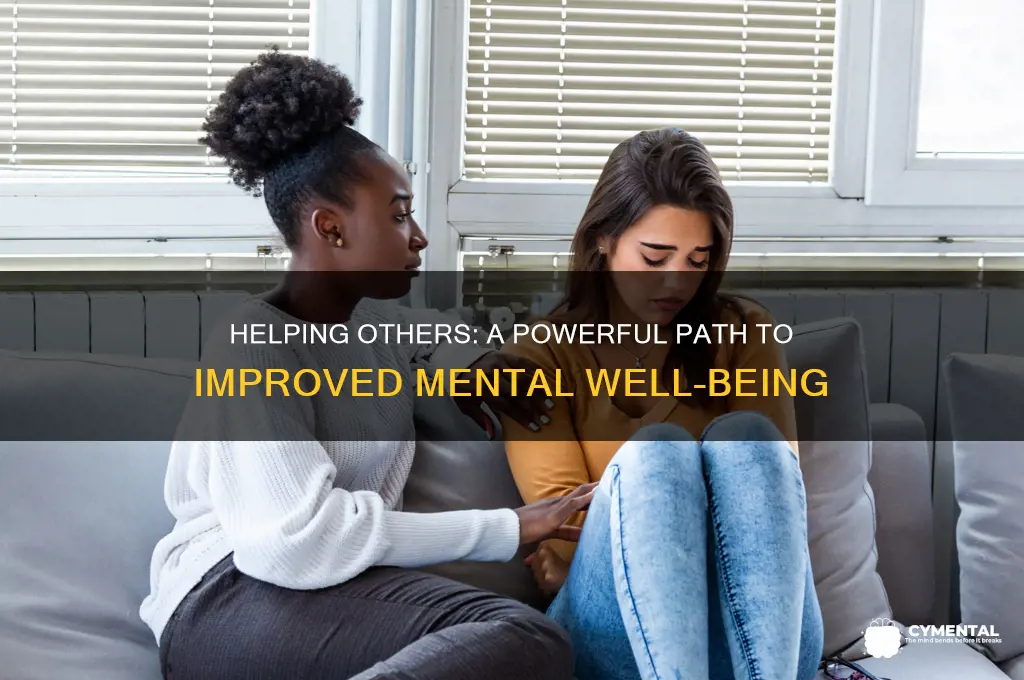
Helping others has a profound and positive impact on mental health, fostering a sense of purpose, connection, and well-being. Engaging in acts of kindness and support triggers the release of neurotransmitters like oxytocin, dopamine, and serotonin, often referred to as the helper’s high, which can reduce stress, anxiety, and symptoms of depression. Additionally, assisting others shifts focus away from personal challenges, providing perspective and a break from negative thought patterns. It also strengthens social bonds, combating feelings of loneliness and isolation, which are significant contributors to mental health issues. Over time, consistent acts of altruism can build resilience, enhance self-esteem, and create a lasting sense of fulfillment, demonstrating that helping others is not only beneficial for the recipient but also a powerful tool for improving one’s own mental health.
| Characteristics | Values |
|---|---|
| Reduces Stress | Helping others triggers the release of oxytocin, a hormone that reduces stress and promotes calmness. Studies show volunteers have lower cortisol levels. |
| Boosts Happiness | Acts of kindness stimulate the brain’s reward system, releasing dopamine, leading to increased happiness and life satisfaction. |
| Combats Depression | Altruistic behavior can reduce symptoms of depression by providing a sense of purpose and shifting focus away from personal struggles. |
| Enhances Self-Esteem | Helping others fosters a sense of accomplishment and self-worth, improving overall self-esteem. |
| Promotes Social Connection | Volunteering or assisting others strengthens social bonds, reducing feelings of loneliness and isolation. |
| Provides a Sense of Purpose | Engaging in meaningful activities for others can give individuals a greater sense of purpose and direction in life. |
| Improves Physical Health | Regularly helping others is linked to lower blood pressure, reduced risk of chronic illnesses, and increased longevity. |
| Encourages Empathy and Compassion | Acts of kindness foster empathy, creating a positive feedback loop that benefits both the giver and receiver. |
| Reduces Anxiety | Focusing on others’ needs can distract from personal anxieties and provide a sense of control and perspective. |
| Strengthens Resilience | Helping others builds emotional resilience, enabling individuals to better cope with challenges and adversity. |
Explore related products


What You'll Learn
- Reduced Stress and Anxiety: Acts of kindness lower cortisol, promoting relaxation and emotional well-being
- Increased Happiness: Helping others boosts serotonin and dopamine, enhancing mood and satisfaction
- Sense of Purpose: Altruism fosters meaning, reducing feelings of emptiness and depression
- Social Connection: Building relationships through helping combats loneliness and isolation
- Improved Self-Esteem: Contributing positively enhances self-worth and confidence

Reduced Stress and Anxiety: Acts of kindness lower cortisol, promoting relaxation and emotional well-being
Stress and anxiety often stem from a hyper-focus on personal challenges, creating a cycle of worry that elevates cortisol levels—the body's primary stress hormone. Engaging in acts of kindness shifts this focus outward, breaking the cycle. Research shows that helping others triggers the release of oxytocin, often called the "love hormone," which counteracts cortisol’s effects. For instance, a study published in *Clinical Psychological Science* found that participants who performed daily acts of kindness experienced a 14% decrease in stress levels compared to a control group. This hormonal shift promotes relaxation, proving that small gestures like helping a neighbor or volunteering can act as a natural stress reliever.
To harness this benefit, incorporate kindness into your routine with intentionality. Start with micro-acts: hold the door for someone, send a supportive message, or offer to help a colleague with a task. Aim for at least three acts daily, as consistency amplifies the cortisol-lowering effect. For deeper impact, allocate time for structured kindness, such as volunteering weekly or mentoring someone in need. The key is to make these actions habitual, not sporadic, to maintain the physiological benefits. Think of it as a daily dose of stress relief, backed by science.
While the benefits are clear, it’s crucial to avoid over-extending yourself. Acts of kindness should enhance your well-being, not deplete it. Set boundaries by choosing activities that align with your energy levels and schedule. For example, if you’re already overwhelmed, opt for low-effort gestures like sharing a compliment rather than committing to time-intensive projects. Additionally, be mindful of your motivations—acts driven by obligation or guilt won’t yield the same stress-reducing effects as those rooted in genuine care. The goal is to create a balance where helping others becomes a source of calm, not another stressor.
The emotional well-being fostered by kindness extends beyond immediate relaxation. Lower cortisol levels contribute to better sleep, improved mood, and increased resilience to future stressors. A study from the University of British Columbia found that individuals who engaged in kind acts reported higher levels of life satisfaction and reduced symptoms of anxiety over time. This long-term benefit underscores the transformative power of kindness, not just as a quick fix but as a sustainable practice for mental health. By making kindness a cornerstone of your lifestyle, you’re not just helping others—you’re investing in your own emotional resilience.
Steroids and Mental Health: Exploring Potential Benefits and Risks
You may want to see also
Explore related products

$32.99 $14.95


Increased Happiness: Helping others boosts serotonin and dopamine, enhancing mood and satisfaction
Helping others isn’t just a moral imperative—it’s a biochemical reaction. Acts of kindness trigger the release of serotonin and dopamine, often referred to as the brain’s "feel-good" chemicals. Serotonin regulates mood, while dopamine is linked to pleasure and reward. Studies show that even small gestures, like holding a door open or complimenting a stranger, can elevate these neurotransmitter levels. For instance, a 2017 study published in *Nature Communications* found that participants who performed acts of kindness for seven days reported higher levels of happiness and lower stress, correlating with increased serotonin activity. This isn’t just anecdotal; it’s neuroscience at work.
To harness this effect, consider incorporating micro-acts of kindness into your daily routine. Start with something simple: buy a coffee for the person behind you in line, send a heartfelt message to a friend, or volunteer 15 minutes of your time to a local cause. The key is consistency. Research suggests that performing at least three acts of kindness weekly can significantly boost mood over time. For older adults, this practice may be particularly impactful, as it combats social isolation and fosters a sense of purpose, further amplifying serotonin production. Think of it as a happiness workout—the more you engage, the stronger the effect.
However, it’s important to approach this with intention, not obligation. Overcommitting or helping out of guilt can negate the benefits, leading to burnout and decreased dopamine levels. Set boundaries and choose acts that align with your values and energy levels. For example, if you’re an introvert, writing thoughtful notes might be more sustainable than organizing community events. The goal is to create a positive feedback loop where helping others feels rewarding, not draining. Tracking your mood in a journal can help you identify which activities yield the most satisfaction.
Comparatively, the happiness derived from helping others differs from that of personal achievements. While accomplishments like a promotion or new purchase provide temporary dopamine spikes, acts of kindness offer sustained serotonin elevation, fostering long-term contentment. This distinction is crucial for mental health, as it shifts focus from self-centered rewards to communal well-being. For teenagers and young adults, this can be a powerful tool to counteract the pressure of academic or social expectations, providing a sense of fulfillment rooted in connection rather than competition.
Incorporating this practice into your life doesn’t require grand gestures. Start small, stay consistent, and pay attention to how your brain responds. Over time, you’ll notice not just an increase in happiness, but a deeper sense of purpose and connection. The science is clear: helping others isn’t just good for them—it’s a powerful way to rewire your own brain for joy.
Supporting Veterans' Mental Health: Presidential Strategies for Healing and Hope
You may want to see also
Explore related products


Sense of Purpose: Altruism fosters meaning, reducing feelings of emptiness and depression
Engaging in altruistic acts can profoundly reshape one’s sense of purpose, acting as a counterweight to the pervasive feelings of emptiness and depression that often accompany a lack of direction. Research indicates that individuals who consistently volunteer or support others report higher levels of life satisfaction and reduced symptoms of depression. For instance, a study published in the *Journal of Happiness Studies* found that participants who performed acts of kindness over six weeks experienced significant improvements in well-being, with the effects most pronounced in those who initially scored high on depression scales. This suggests that altruism doesn’t merely distract from negative emotions but actively rebuilds a sense of meaning.
Consider the mechanics of this transformation: when you help someone, your brain releases oxytocin, often referred to as the “love hormone,” which fosters feelings of connection and fulfillment. Simultaneously, dopamine, a neurotransmitter linked to reward and motivation, spikes, reinforcing the behavior and creating a positive feedback loop. To maximize these benefits, aim for consistent, meaningful acts of kindness rather than sporadic gestures. For example, committing to a weekly volunteer role or daily micro-acts of kindness (e.g., helping a neighbor with groceries) can create a sustained sense of purpose. Avoid overcommitting, as burnout negates the positive effects—start with 1–2 hours per week and gradually increase as it feels manageable.
A comparative analysis reveals that altruism’s impact on mental health is particularly potent in older adults, who often face existential questions about legacy and relevance. A study in *The Gerontologist* found that seniors who mentored youth or participated in community projects reported lower rates of depression and higher self-worth compared to peers who did not engage in such activities. This highlights the importance of tailoring altruistic efforts to life stage and personal interests. For younger individuals, group-based volunteering or peer support programs can provide both purpose and social connection, addressing the dual needs of meaning and belonging.
To integrate altruism into your life effectively, start by identifying causes or activities that resonate with your values. For instance, if you’re passionate about education, tutoring underprivileged students can offer a deep sense of fulfillment. Pair this with self-reflection: journal about how your actions impact others and how they shape your identity. This practice, known as “meaning-making,” amplifies the psychological benefits of altruism. Caution against viewing helping others as a cure-all for mental health struggles; while powerful, it should complement, not replace, professional treatment when needed.
In conclusion, altruism serves as a bridge between personal fulfillment and collective well-being, offering a tangible way to combat feelings of emptiness and depression. By fostering a sense of purpose, it transforms the giver as much as the recipient. Whether through structured volunteering or spontaneous acts of kindness, the key lies in consistency, alignment with personal values, and mindful reflection. As Victor Frankl observed, “Being human always points, and is directed, to something, or someone, other than oneself.” In this redirection lies the antidote to despair.
Vegan Diet and Mental Health: Unlocking Cognitive Benefits and Emotional Well-being
You may want to see also
Explore related products


Social Connection: Building relationships through helping combats loneliness and isolation
Human beings are inherently social creatures, yet modern life often leaves us feeling disconnected. Loneliness and isolation, far from being mere emotional states, are significant risk factors for mental health issues like depression and anxiety. Paradoxically, one of the most effective antidotes to this growing epidemic lies not in seeking help, but in offering it.
Consider this: volunteering at a local soup kitchen doesn't just provide meals; it fosters a sense of belonging. Sharing skills with a neighbor struggling with technology creates a bond built on mutual respect and gratitude. These seemingly small acts of helping others weave a social fabric that combats the isolating threads of loneliness.
The science backs this up. Studies show that acts of kindness stimulate the release of oxytocin, the "love hormone," which promotes feelings of trust and connection. Furthermore, helping others shifts our focus outward, breaking the cycle of rumination often associated with loneliness.
But how much helping is enough? While there's no magic number, consistency is key. Aim for regular, meaningful interactions, even if they're brief. A weekly phone call to an elderly relative, a monthly commitment to a community garden project, or even daily acts of micro-kindness like holding a door open can all contribute to a sense of social connection.
Hockey's Mental Edge: Boosting Resilience, Focus, and Well-Being
You may want to see also
Explore related products


Improved Self-Esteem: Contributing positively enhances self-worth and confidence
Acts of kindness have a profound way of reshaping how we perceive ourselves. When you contribute to someone else’s well-being—whether through a small gesture like holding a door or a larger commitment like volunteering—your brain registers this as evidence of your value. Each positive action reinforces the belief that you are capable, compassionate, and impactful. Over time, this accumulation of evidence builds a foundation of self-worth that is far more resilient than any external validation could provide.
Consider the mechanics of this process. When you help someone, your brain releases oxytocin, often called the "love hormone," which fosters feelings of connection and satisfaction. Simultaneously, dopamine, the "feel-good" neurotransmitter, spikes, rewarding your behavior and encouraging repetition. These biochemical responses create a positive feedback loop: you help, you feel good, and you begin to see yourself as someone who makes a difference. For instance, a study published in the *Journal of Happiness Studies* found that individuals who engaged in regular acts of kindness reported higher levels of self-esteem compared to those who did not.
However, the impact isn’t just chemical—it’s also psychological. When you solve a problem for someone or offer support, you implicitly acknowledge your own abilities. This shifts your internal dialogue from self-doubt to self-assurance. For example, tutoring a struggling student not only helps them but also reinforces your competence in the subject matter. Similarly, organizing a community event highlights your leadership and organizational skills. Each act of contribution becomes a mirror reflecting your strengths, gradually silencing the inner critic that undermines your confidence.
To maximize this effect, be intentional about how and where you contribute. Choose activities that align with your values and skills—this ensures the experience feels meaningful rather than obligatory. For instance, if you’re passionate about animals, volunteering at a shelter will likely feel more fulfilling than a task that doesn’t resonate with you. Additionally, set realistic goals. Committing to one meaningful act per week is more sustainable and impactful than sporadic, larger efforts. Consistency is key; over time, these small actions compound into a significant boost in self-esteem.
Finally, reflect on your contributions. Take a moment after each act to acknowledge what you’ve accomplished and how it made a difference. Journaling can be a powerful tool here—writing down your experiences and the emotions they evoked helps solidify the positive impact on your self-perception. By actively recognizing your role in improving others’ lives, you internalize the belief that you are not only worthy but essential. This mindset shift is transformative, turning helping others from a selfless act into a cornerstone of personal growth.
Mental Health's Role in Physical Healing: Unlocking Recovery Potential
You may want to see also
Frequently asked questions
Helping others boosts mental health by releasing neurotransmitters like oxytocin, serotonin, and dopamine, which reduce stress, increase happiness, and create a sense of purpose and fulfillment.
Yes, volunteering has been shown to reduce symptoms of depression and anxiety by providing social connection, a sense of belonging, and distraction from personal stressors.
Absolutely, acts of kindness and helping others can enhance self-esteem and confidence by fostering a sense of competence, appreciation, and validation from others.
Altruism promotes long-term mental well-being by building resilience, reducing feelings of isolation, and creating a positive feedback loop of gratitude and connection.
Yes, helping others combats loneliness by fostering social connections, creating meaningful relationships, and shifting focus from personal struggles to the needs of others.