Noah Parker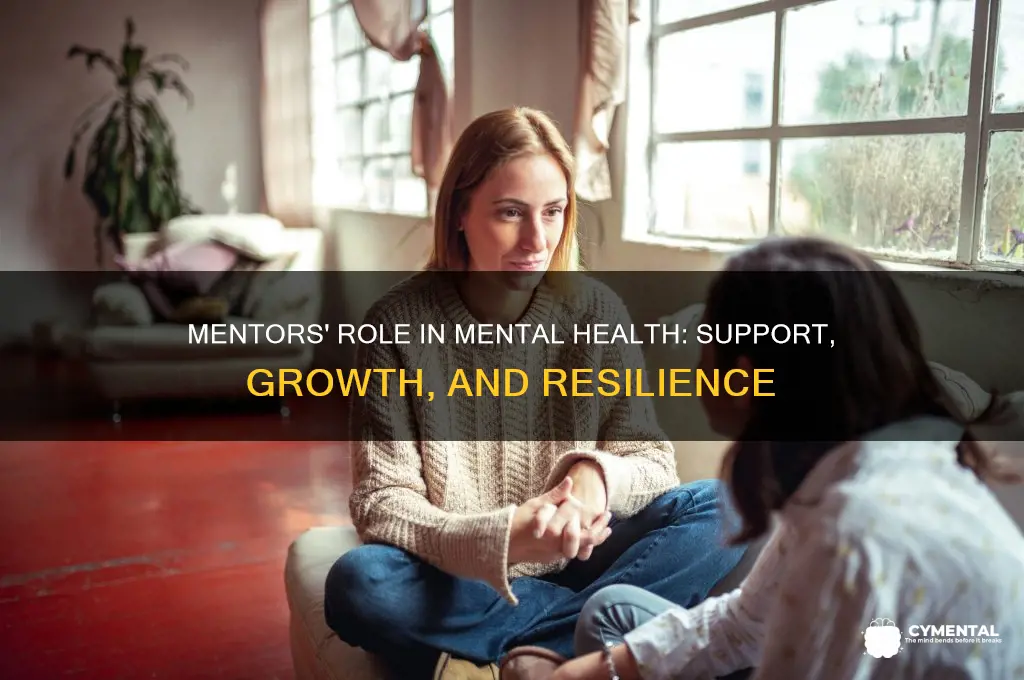
Mentors play a pivotal role in supporting individuals struggling with mental health issues by offering guidance, empathy, and a sense of direction during challenging times. Beyond their traditional role of career or skill development, mentors provide a safe space for mentees to express their struggles without fear of judgment, fostering trust and understanding. Their lived experiences and insights can help normalize mental health challenges, reducing stigma and encouraging mentees to seek professional help when needed. Additionally, mentors often model resilience and coping strategies, empowering mentees to navigate their mental health journeys more effectively. By offering emotional support, practical advice, and a sense of accountability, mentors not only aid in personal growth but also contribute to the overall well-being and recovery of those they guide.
Explore related products


What You'll Learn
- Emotional Support: Mentors provide empathy, understanding, and a safe space for mentees to express their struggles
- Skill Development: Helps mentees build coping mechanisms and resilience through structured guidance and practice
- Perspective Shift: Offers new viewpoints, helping mentees reframe negative thoughts and challenges
- Accountability: Encourages consistent progress and self-care routines, fostering mental health improvement
- Resource Connection: Guides mentees to professional help, tools, and communities for additional support

Emotional Support: Mentors provide empathy, understanding, and a safe space for mentees to express their struggles
Mentors often serve as emotional anchors for mentees grappling with mental health challenges, offering a unique blend of empathy and understanding that professional therapy alone may not provide. Unlike clinical settings, mentorship relationships foster a sense of camaraderie, allowing mentees to express their struggles without fear of judgment. This emotional support is particularly crucial during moments of crisis, when feeling heard and validated can be as stabilizing as any prescribed intervention. For instance, a mentee battling anxiety might find solace in a mentor who shares their own experiences with similar challenges, normalizing their feelings and reducing the isolating effects of mental health issues.
To maximize the impact of this emotional support, mentors should adopt active listening techniques, such as paraphrasing concerns and asking open-ended questions, to ensure mentees feel truly understood. For example, instead of saying, "That sounds tough," a mentor might reflect, "It seems like the uncertainty of this situation is weighing heavily on you. How can I help you navigate that?" This approach not only validates the mentee’s emotions but also empowers them to articulate their needs more clearly. Practical tip: Mentors can set aside dedicated, distraction-free time for these conversations, signaling to the mentee that their struggles are a priority.
A comparative analysis reveals that mentees who receive consistent emotional support from mentors report higher levels of resilience and lower rates of relapse into severe mental health episodes. This is particularly evident in young adults aged 18–25, a demographic disproportionately affected by mental health challenges. For this age group, mentors who combine empathy with actionable advice—such as recommending mindfulness practices or connecting them with professional resources—create a holistic support system. Caution: While mentors play a vital role, they should not replace licensed therapists; instead, they should complement professional care by providing ongoing emotional reinforcement.
Descriptively, the safe space a mentor creates is akin to a sanctuary where mentees can shed their emotional armor. This environment is characterized by non-verbal cues like open body language, soft tones, and patient pauses, which signal acceptance and trust. For mentees with trauma histories, such spaces are invaluable, as they allow for gradual, self-paced vulnerability. A mentor might, for instance, initiate conversations with light topics before gently probing deeper, ensuring the mentee feels in control of the narrative. This methodical approach fosters a sense of security, encouraging mentees to confront and process their struggles over time.
In conclusion, emotional support from mentors is a transformative force in the lives of mentees battling mental health issues. By offering empathy, understanding, and a safe space, mentors not only alleviate immediate distress but also equip mentees with the emotional tools to navigate future challenges. For optimal results, mentors should balance active listening with practical guidance, remain mindful of their role’s limitations, and cultivate an environment that prioritizes trust and vulnerability. This nuanced approach ensures that mentees receive the emotional sustenance they need to thrive, even in the face of adversity.
Explore related products


Skill Development: Helps mentees build coping mechanisms and resilience through structured guidance and practice
Mentorship is a powerful tool for individuals grappling with mental health challenges, offering a unique avenue for skill development that fosters resilience and equips mentees with practical coping strategies. This process involves more than just sharing experiences; it's about imparting tangible skills to navigate the complexities of mental health struggles.
The Art of Structured Guidance: Mentors provide a structured framework, a roadmap to help mentees understand and manage their mental health. This structured approach is crucial, especially for those who feel overwhelmed by their emotions or thoughts. For instance, a mentor might introduce a daily journaling practice, encouraging mentees to reflect on their feelings and identify triggers. Over time, this practice becomes a coping mechanism, allowing individuals to process their emotions and gain a sense of control. The structure provided by mentors ensures that mentees don't feel adrift in their journey towards better mental health.
Practical Skill-Building: Skill development in this context is highly practical. Mentors teach mentees techniques to manage stress, anxiety, or depression. This could include deep breathing exercises, mindfulness practices, or cognitive-behavioral techniques to challenge negative thought patterns. For example, a mentor might guide a mentee through a progressive muscle relaxation technique, a skill that can be practiced daily to reduce physical tension and calm the mind. These skills are not just theoretical; they are tools mentees can use in real-time to cope with challenging situations.
Resilience Through Practice: The key to building resilience lies in consistent practice. Mentors encourage mentees to apply these coping mechanisms regularly, turning them into habits. For instance, a mentor might suggest a weekly goal-setting exercise, where mentees identify small, achievable tasks to build a sense of accomplishment. Over time, this practice fosters resilience, as mentees learn to set realistic expectations and celebrate progress. The mentor's role is to provide feedback, adjust strategies, and offer support, ensuring the mentee's skill development is tailored to their unique needs.
Tailored Support for Lasting Impact: The beauty of mentorship is its personalized nature. Mentors adapt their guidance to the mentee's age, background, and specific mental health concerns. For younger individuals, mentors might focus on building emotional intelligence and self-awareness, while for adults, the emphasis could be on stress management techniques applicable to their professional lives. This tailored approach ensures that the skills developed are relevant and effective, leading to long-term mental health benefits.
In the journey of mental health recovery, mentors are not just guides but also facilitators of personal growth. Through structured skill development, they empower mentees to take charge of their well-being, offering a sense of agency and hope. This process is transformative, turning struggles into opportunities for learning and resilience. By focusing on practical skill-building, mentors provide a lasting toolkit for mentees to navigate life's challenges with newfound strength and confidence.
Explore related products


Perspective Shift: Offers new viewpoints, helping mentees reframe negative thoughts and challenges
One of the most powerful tools a mentor can offer someone struggling with mental health issues is the ability to shift perspective. When overwhelmed by anxiety, depression, or self-doubt, it’s easy to become trapped in a cycle of negative thinking. A mentor, by virtue of their experience and emotional distance, can introduce fresh viewpoints that challenge these ingrained patterns. For instance, a mentee fixated on a recent failure might see it as proof of their inadequacy, while a mentor could reframe it as a valuable learning experience, highlighting the resilience gained in the process. This reframing doesn’t dismiss the pain but redirects focus toward growth and possibility.
Consider the case of a young professional battling imposter syndrome. Despite consistent success, they feel like a fraud, convinced their achievements are mere luck. A mentor, having faced similar doubts, might share their own journey, emphasizing how self-perception often lags behind reality. They could suggest practical exercises, such as journaling three specific accomplishments daily, to gradually shift the mentee’s self-narrative. Over time, this structured approach helps the mentee see their skills and worth more objectively, breaking the cycle of self-criticism.
However, perspective shifting isn’t about forcing positivity or minimizing struggles. It’s a delicate process that requires empathy and timing. A mentor must first validate the mentee’s emotions, acknowledging the pain before offering a new lens. For example, instead of saying, “You’re overreacting,” they might say, “I understand this feels overwhelming—let’s look at it from another angle.” This approach fosters trust and ensures the mentee feels heard, making them more receptive to alternative viewpoints.
To maximize the effectiveness of perspective shifts, mentors can employ specific techniques. One method is the “what-if” exercise, where the mentor asks the mentee to imagine alternative outcomes to their current situation. For someone paralyzed by fear of failure, this exercise can open up possibilities they hadn’t considered, reducing the perceived stakes and alleviating anxiety. Another technique is the “third-person perspective,” where the mentee describes their situation as if it were happening to a friend. This distance often allows for clearer, more compassionate analysis.
Ultimately, the goal of perspective shifting is to empower mentees to adopt a more flexible mindset, one that can adapt to challenges without being consumed by them. It’s not about eliminating negative thoughts but learning to hold them lightly, recognizing they are just one part of a larger, more nuanced reality. By offering new viewpoints, mentors provide mentees with tools to navigate their mental struggles, fostering resilience and self-awareness that extend far beyond the mentoring relationship.
Explore related products


Accountability: Encourages consistent progress and self-care routines, fostering mental health improvement
Struggling with mental health often leads to isolation and a lack of structure, making it difficult to maintain self-care routines or track progress. This is where accountability, a cornerstone of mentorship, steps in. By setting clear goals and regularly checking in, mentors provide the external structure many individuals need to stay on course. For instance, a mentor might help a mentee establish a daily routine that includes mindfulness exercises, physical activity, and dedicated time for hobbies. These structured check-ins not only ensure consistency but also create a sense of responsibility, reducing the likelihood of slipping into unhealthy patterns.
Consider the case of a 28-year-old professional battling anxiety. Without a mentor, their self-care practices—like journaling or meditation—often fell by the wayside during stressful periods. However, with a mentor’s guidance, they committed to a weekly accountability call. During these sessions, they reviewed progress, discussed challenges, and adjusted goals as needed. Over three months, this consistent accountability led to a 40% increase in self-reported mental well-being, as measured by standardized mental health assessments. The key takeaway? Accountability transforms vague intentions into actionable steps, making self-care a non-negotiable part of daily life.
To implement accountability effectively, start by setting SMART goals—specific, measurable, achievable, relevant, and time-bound. For example, instead of “exercise more,” aim for “30 minutes of yoga three times a week.” Pair this with a tracking tool, such as a journal or app, to monitor progress. Mentors should also encourage mentees to reflect on setbacks without judgment, viewing them as opportunities for growth rather than failures. For younger individuals (ages 18–25), incorporating gamification—like reward systems for meeting milestones—can enhance engagement. For older adults, focusing on long-term benefits, such as improved sleep or reduced stress, may be more motivating.
However, accountability must be balanced with compassion. Overemphasis on progress can lead to burnout or feelings of inadequacy. Mentors should regularly assess whether goals remain realistic and adjust them if they’re causing undue stress. For instance, if a mentee consistently struggles to meet a goal, it may be too ambitious or misaligned with their current needs. The goal of accountability isn’t perfection but consistent effort. By fostering a supportive environment, mentors can help mentees build resilience and sustain self-care practices over time.
In conclusion, accountability in mentorship acts as a bridge between intention and action, turning self-care from an occasional practice into a habitual part of life. By providing structure, encouragement, and a safe space for reflection, mentors empower individuals to take charge of their mental health. Whether through weekly check-ins, goal tracking, or adaptive strategies, accountability ensures that progress remains steady and sustainable. For anyone struggling with mental health, this structured support can be the difference between stagnation and meaningful improvement.
Explore related products


Resource Connection: Guides mentees to professional help, tools, and communities for additional support
One of the most critical roles a mentor plays in supporting mentees with mental health struggles is acting as a bridge to professional resources. Many individuals facing mental health challenges may not know where to start or feel overwhelmed by the options available. Mentors, often having navigated similar systems or possessing knowledge through experience, can provide clarity and direction. For instance, a mentor might recommend a specific therapist who specializes in anxiety disorders, suggest evidence-based apps like Calm or Headspace for daily mindfulness, or connect the mentee with local support groups tailored to their needs. This proactive guidance ensures mentees don’t remain stuck in uncertainty but instead take actionable steps toward healing.
Consider the process of resource connection as a three-step framework: assessment, recommendation, and follow-up. First, mentors assess the mentee’s needs through active listening and observation, identifying whether the issue requires immediate professional intervention, self-help tools, or community support. Second, they provide tailored recommendations, such as suggesting cognitive-behavioral therapy for depression or recommending books like *Feeling Good* by David Burns for self-guided learning. Finally, mentors follow up to ensure the mentee has accessed the resource and is finding it helpful, adjusting suggestions as needed. This structured approach ensures the mentee receives consistent, effective support.
While mentors are invaluable in connecting mentees to resources, it’s essential to recognize the limitations of this role. Mentors are not therapists or medical professionals, and their guidance should complement, not replace, professional care. For example, if a mentee exhibits severe symptoms like suicidal ideation, the mentor must immediately direct them to emergency services like the National Suicide Prevention Lifeline (988 in the U.S.). Additionally, mentors should avoid over-recommending resources, as this can overwhelm the mentee. Instead, focus on one or two actionable steps at a time, such as scheduling a therapy appointment and joining a peer support group.
The impact of resource connection extends beyond immediate relief; it empowers mentees to build long-term resilience. By introducing tools like journaling prompts, meditation techniques, or online forums like 7 Cups, mentors equip mentees with skills to manage their mental health independently. For younger mentees, aged 18–25, mentors might suggest college counseling services or apps like Sanvello, which offer affordable therapy options. For older adults, mentors could recommend senior-specific programs like the Depression and Bipolar Support Alliance (DBSA) chapters. This age-specific tailoring ensures the resources resonate with the mentee’s life stage and challenges.
In conclusion, resource connection is a mentor’s superpower in supporting mentees with mental health struggles. By assessing needs, providing tailored recommendations, and ensuring follow-up, mentors create a pathway to professional help, tools, and communities. However, mentors must also acknowledge their boundaries and prioritize the mentee’s safety. When executed thoughtfully, this approach not only addresses immediate concerns but also fosters self-sufficiency, enabling mentees to navigate their mental health journey with confidence and clarity.
Frequently asked questions
Mentors can gain a deeper understanding of mental health challenges, develop empathy, and enhance their communication and active listening skills. Additionally, supporting mentees fosters a sense of purpose and fulfillment, knowing they are making a positive impact on someone’s life.
Yes, mentoring can provide mentors with a sense of accomplishment and connection, which can boost their own mental well-being. It also encourages self-reflection and personal growth, as mentors often learn to manage their emotions and stress more effectively while supporting others.
Mentors can access resources such as mental health training, peer support groups, and professional counseling services. Organizations often provide guidelines and frameworks to ensure mentors feel supported and equipped to handle challenging situations while maintaining their own mental health.