Noah Parker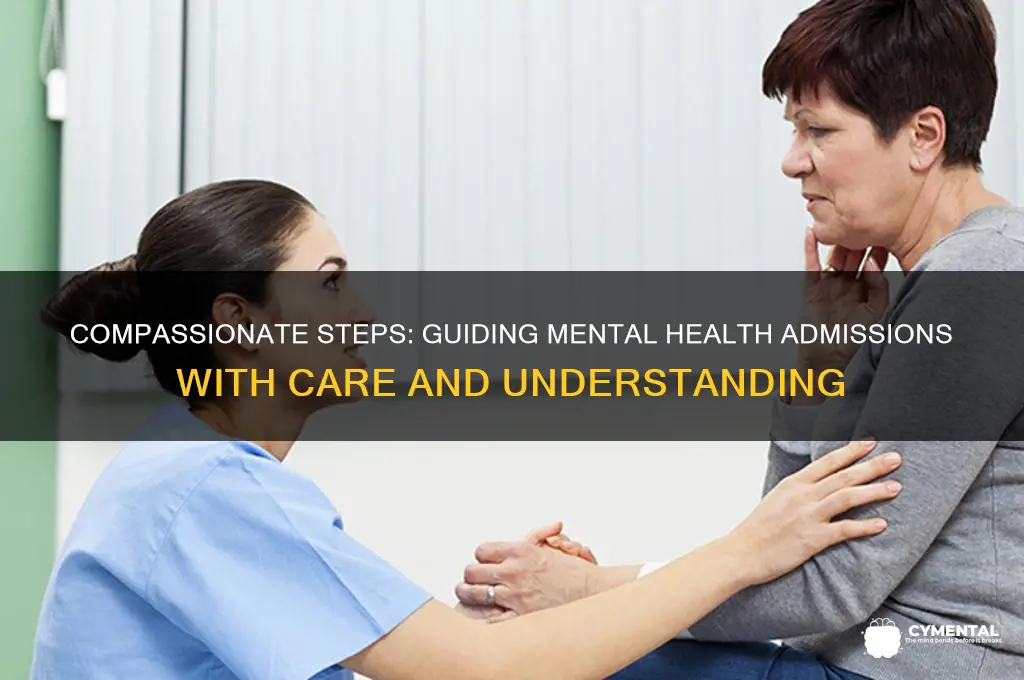
Admitting someone with mental health issues requires a compassionate, informed, and structured approach to ensure their safety and well-being. It begins with recognizing the signs of distress, such as severe anxiety, depression, suicidal thoughts, or psychosis, and approaching the situation with empathy and patience. Open communication is key; expressing concern without judgment and actively listening to their feelings can build trust. If the individual is at risk of harm to themselves or others, it may be necessary to involve mental health professionals or emergency services, prioritizing their immediate safety. Encouraging professional help, such as therapy or hospitalization, should be done gently, emphasizing support rather than coercion. Throughout the process, maintaining confidentiality and involving trusted family or friends can provide additional emotional and logistical assistance, fostering a path toward recovery and stability.
Explore related products


What You'll Learn
- Recognizing Symptoms: Learn common signs like mood swings, withdrawal, or changes in behavior
- Approaching with Care: Use empathy, avoid judgment, and create a safe, non-threatening space
- Encouraging Help-Seeking: Gently suggest professional support and offer to assist in finding resources
- Supporting Treatment: Help navigate therapy, medication, and lifestyle changes for sustained recovery
- Self-Care for Caregivers: Prioritize your mental health to avoid burnout while supporting others

Recognizing Symptoms: Learn common signs like mood swings, withdrawal, or changes in behavior
Mood swings, withdrawal, and behavioral changes are often the first visible threads in the complex tapestry of mental health struggles. These symptoms, though sometimes subtle, can signal a cry for help. For instance, a once sociable teenager suddenly avoiding friends or a colleague exhibiting erratic anger might be grappling with underlying issues. Recognizing these signs early can be the difference between timely intervention and a deepening crisis. It’s not about diagnosing but about noticing patterns that deviate from a person’s baseline behavior, prompting a compassionate response.
Analyzing these symptoms requires a nuanced approach. Mood swings, for example, aren’t just about occasional irritability; they’re extreme shifts that disrupt daily functioning. A person might oscillate from euphoria to deep despair within hours, often without an apparent trigger. Withdrawal, on the other hand, manifests as a retreat from social interactions, hobbies, or responsibilities. This isn’t merely introversion but a noticeable disengagement from life’s fabric. Behavioral changes—such as sudden aggression, neglect of hygiene, or drastic changes in sleep patterns—can further illuminate the struggle. Together, these signs paint a picture that demands attention.
Persuading someone to seek help begins with empathy, not judgment. Approach the conversation with curiosity rather than accusation. For example, instead of saying, “You’ve been acting strange,” try, “I’ve noticed you’ve been pulling away lately, and I’m worried about you.” Offer specific observations: “I’ve seen you skipping meals and staying up late—is everything okay?” This approach validates their experience while opening a door for dialogue. Remember, the goal isn’t to fix but to connect, encouraging professional support without overwhelming them.
Comparatively, recognizing symptoms in children versus adults can differ significantly. In children, withdrawal might appear as clinginess or regression to younger behaviors, like bedwetting. Mood swings could manifest as frequent tantrums or unexplained sadness. Adults, however, may mask their struggles with excuses or denial. For instance, an adult might attribute social withdrawal to “needing space” rather than admitting to feeling overwhelmed. Tailoring your approach to the individual’s age and context is crucial for effective recognition and intervention.
Practically, keeping a symptom journal can be a useful tool. Note specific behaviors, their frequency, and any potential triggers. For example, “Sarah has skipped three family dinners in a row and seems irritable when asked about work.” This documentation provides concrete evidence to share with a mental health professional, ensuring a more accurate assessment. Additionally, familiarize yourself with local resources—crisis hotlines, therapists, or support groups—so you’re prepared to act when the time comes. Early recognition paired with informed action can pave the way for healing.
Police Response to Mental Health Calls: Frequency and Statistics
You may want to see also
Explore related products

$20.99


Approaching with Care: Use empathy, avoid judgment, and create a safe, non-threatening space
Empathy is the cornerstone of any conversation about mental health. It’s not about saying, “I understand exactly how you feel,” because you likely don’t. Instead, it’s about actively listening, acknowledging their emotions, and validating their experiences. For instance, if someone expresses overwhelming anxiety, respond with, “It sounds like this has been really hard for you,” rather than dismissing it with, “Just relax.” Empathy bridges the gap between their reality and your support, making them feel seen and heard, not isolated or misunderstood.
Creating a safe, non-threatening space begins with your tone and body language. Sit at eye level, maintain open posture, and avoid crossing your arms—these small gestures signal approachability. Use calm, measured speech and avoid raising your voice, even if the situation feels urgent. For example, instead of saying, “You need to tell me what’s wrong,” try, “When you’re ready, I’m here to listen.” Phrasing questions as invitations rather than demands reduces pressure and fosters trust.
Judgment, whether explicit or implied, can shut down a conversation instantly. Avoid phrases like, “Why can’t you just…?” or “You’re overreacting.” Even well-intentioned advice, such as “Have you tried meditation?” can feel dismissive if it minimizes their struggle. Focus on asking open-ended questions like, “How can I support you right now?” or “What’s been most challenging for you?” This shifts the focus from problem-solving to understanding, allowing them to guide the conversation at their own pace.
Practical steps can further reinforce a safe environment. Choose a quiet, private location free from distractions. If discussing hospitalization or treatment, use neutral language like, “Sometimes, additional support can help,” instead of, “You need to go to a hospital.” Offer concrete options, such as, “Would it help to call a helpline together or speak to a professional?” This empowers them to make choices while knowing you’re there to assist. Remember, the goal isn’t to fix their mental health but to ensure they feel safe and supported in seeking help.
Spirituality and Mental Health: Healing the Mind, Body, and Soul
You may want to see also
Explore related products


Encouraging Help-Seeking: Gently suggest professional support and offer to assist in finding resources
Recognizing when someone is struggling with mental health issues is only the first step; the next, often more challenging phase, is encouraging them to seek professional help. Many individuals resist this idea due to stigma, fear, or a lack of awareness about available resources. A gentle, empathetic approach can make a significant difference. Start by expressing concern without judgment, using phrases like, "I’ve noticed you’ve been going through a tough time, and I’m here to support you." This opens the door for a conversation while validating their experience. Avoid pushing too hard, as this can trigger defensiveness. Instead, frame professional support as a collaborative solution, such as, "I’ve found some resources that might be helpful—would you like me to share them with you?"
The way you present professional help can influence their willingness to accept it. Compare it to seeking help for a physical ailment: just as one would see a doctor for a broken bone, mental health professionals are trained to address emotional and psychological pain. Use relatable examples to normalize the process. For instance, mention that therapy or counseling is a common tool for managing stress, anxiety, or depression, and many people benefit from it. If they express reluctance, acknowledge their concerns and reassure them that taking the first step is an act of strength, not weakness. Offering to accompany them to an initial appointment or help research therapists can reduce the perceived burden of reaching out alone.
Practical assistance in finding resources can be a game-changer. Many people avoid seeking help because the process feels overwhelming. Start by identifying their specific needs—whether it’s therapy, medication, or support groups—and then use reliable platforms like Psychology Today, the National Alliance on Mental Illness (NAMI), or local health department websites to locate options. If they’re open to it, offer to call clinics or send emails on their behalf to inquire about availability and insurance coverage. For younger individuals or those in educational settings, suggest reaching out to school counselors or university mental health services, which often provide free or low-cost support. Remember, the goal is to remove barriers, not to take control of their decision-making process.
Finally, maintain patience and persistence without being overbearing. Some individuals may need time to process the idea of seeking help, and that’s okay. Periodically check in with them, reinforcing your support and reminding them of the resources available. Share stories (with permission) of others who have benefited from professional help to inspire hope. Above all, let them know that their well-being matters and that they don’t have to navigate their struggles alone. By combining empathy, practical assistance, and persistence, you can play a crucial role in guiding them toward the support they need.
Unraveling the Garcia Girls' Accents: Mental Health Struggles Explored
You may want to see also
Explore related products


Supporting Treatment: Help navigate therapy, medication, and lifestyle changes for sustained recovery
Admitting someone with mental health issues is just the beginning; the real challenge lies in supporting their treatment journey. Sustained recovery often requires a combination of therapy, medication, and lifestyle changes, each with its own complexities. Navigating these elements effectively can make the difference between temporary relief and long-term wellness. Here’s how to approach this critical phase with clarity and compassion.
Consider the case of a 28-year-old diagnosed with major depressive disorder. Their psychiatrist prescribes sertraline, a common SSRI, starting at 50 mg daily. While medication can alleviate symptoms, it’s not a standalone solution. Therapy, such as cognitive-behavioral therapy (CBT), complements this by addressing underlying thought patterns. However, adherence to both can be challenging. For instance, side effects like nausea or fatigue may discourage medication use, while therapy sessions require emotional vulnerability and commitment. As a support person, your role is to help them track progress, celebrate small wins, and troubleshoot obstacles. Use tools like medication reminders or journaling to foster consistency.
Lifestyle changes are equally vital but often overlooked. A study in *JAMA Psychiatry* highlights that regular exercise, adequate sleep, and a balanced diet can significantly improve mental health outcomes. For someone in recovery, this might mean starting with a 10-minute daily walk, gradually increasing to 30 minutes, or replacing sugary snacks with nutrient-dense alternatives. However, these changes require patience and flexibility. Avoid imposing rigid routines; instead, collaborate on achievable goals. For example, if they struggle with sleep, suggest a digital detox an hour before bed or a consistent bedtime routine. Small, incremental adjustments are more sustainable than drastic overhauls.
One common pitfall is assuming that progress will be linear. Recovery often involves setbacks, and it’s crucial to approach these moments without judgment. If medication side effects become unbearable, encourage a conversation with their doctor about adjusting the dosage or switching medications. Similarly, if therapy feels unproductive, explore alternative modalities like dialectical behavior therapy (DBT) or group therapy. Your role is to provide a supportive framework, not to dictate solutions. Ask open-ended questions like, “What do you think might help right now?” to empower their decision-making.
Finally, remember that supporting someone’s treatment is a marathon, not a sprint. Burnout is a real risk for both the individual and their support system. Prioritize self-care by setting boundaries and seeking your own support when needed. Celebrate milestones, no matter how small, to reinforce hope and resilience. By helping them navigate therapy, medication, and lifestyle changes with empathy and practicality, you’re not just aiding recovery—you’re fostering a foundation for a healthier, more fulfilling life.
Understanding Stigma: How Society Treats Those with Mental Health Issues
You may want to see also
Explore related products





Self-Care for Caregivers: Prioritize your mental health to avoid burnout while supporting others
Caregivers often find themselves in a paradoxical situation: while they are dedicated to supporting others through mental health challenges, they may neglect their own well-being. This oversight can lead to emotional exhaustion, reduced effectiveness, and even burnout. Recognizing the signs of caregiver fatigue—such as irritability, insomnia, or a sense of detachment—is the first step in reclaiming your mental health. Ignoring these warning signals not only compromises your ability to provide care but also risks perpetuating a cycle of neglect that mirrors the very struggles you aim to alleviate.
To combat this, establish a self-care routine that is as non-negotiable as the care you provide to others. Start by setting boundaries: allocate specific hours for caregiving and protect your personal time fiercely. Incorporate stress-reduction techniques such as mindfulness meditation, deep breathing exercises, or progressive muscle relaxation for at least 10–15 minutes daily. Physical activity is equally vital; aim for 30 minutes of moderate exercise, like walking or yoga, most days of the week. These practices not only reduce stress but also enhance emotional resilience, enabling you to approach caregiving with renewed patience and clarity.
Another critical aspect of self-care is seeking support. Caregivers often isolate themselves, believing they must shoulder the burden alone. Challenge this mindset by joining support groups, either in-person or online, where you can share experiences and gain insights from others in similar roles. Additionally, consider enlisting professional help through therapy or counseling. A mental health professional can provide tailored strategies to manage stress and prevent burnout, ensuring you remain a stable source of support for your loved one.
Finally, prioritize self-compassion. Caregivers frequently hold themselves to impossibly high standards, berating themselves for perceived shortcomings. Counteract this by practicing self-affirmations and acknowledging your efforts, no matter how small. Allow yourself to take breaks without guilt—whether it’s a short walk, a hobby, or simply moments of quiet reflection. Remember, your ability to care for others is directly tied to your own well-being. By nurturing yourself, you not only safeguard your mental health but also enhance the quality of care you provide.
Rising Mental Health Challenges: Uncovering the Surge in Global Struggles
You may want to see also
Frequently asked questions
Look for persistent changes in behavior, mood, or functioning, such as prolonged sadness, withdrawal from social activities, extreme irritability, or difficulty performing daily tasks. If the person expresses thoughts of self-harm or suicide, seek help immediately.
Approach the conversation with empathy and non-judgment. Express concern, share specific observations, and suggest professional help as a supportive step. Offer to assist with finding resources or accompanying them to appointments.
Validate their feelings and avoid forcing the issue. Share stories of others who’ve benefited from treatment, emphasize that seeking help is a sign of strength, and involve a trusted friend, family member, or mental health professional to assist in the conversation.
Call emergency services (e.g., 911 in the U.S.) or a local crisis hotline immediately. Stay with the person, remove any harmful objects, and speak calmly. Do not leave them alone until professional help arrives.