Madison Cole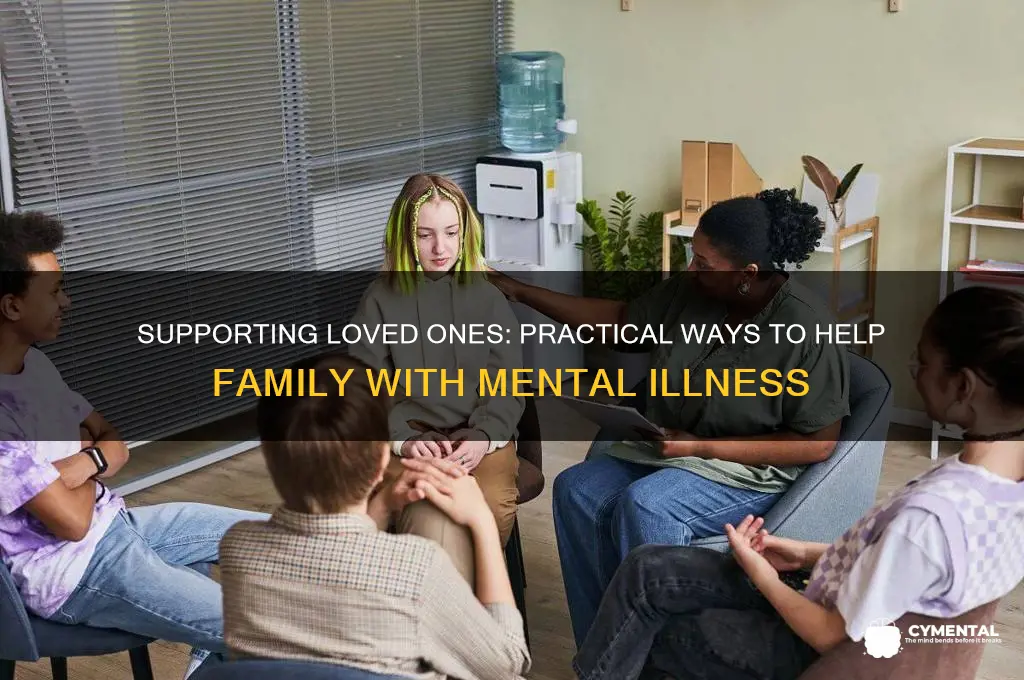
Supporting a family member with mental illness requires patience, understanding, and proactive steps to create a nurturing environment. Begin by educating yourself about their condition to better comprehend their experiences and challenges, which fosters empathy and reduces stigma. Encourage open communication by creating a safe, nonjudgmental space for them to express their feelings, while also respecting their boundaries. Collaborate with them to seek professional help, such as therapy or medication, and assist in finding appropriate resources. Offer practical support, like helping with daily tasks or accompanying them to appointments, but avoid enabling behaviors that hinder their independence. Prioritize self-care to avoid burnout, and consider joining support groups for families in similar situations. Above all, remind them of your love and commitment, reinforcing that they are not alone in their journey.
Explore related products


What You'll Learn
- Educate Yourself: Learn about their diagnosis, symptoms, and effective support strategies
- Communicate Openly: Listen without judgment, validate feelings, and encourage honest conversations
- Encourage Treatment: Support therapy, medication, and professional care; offer to accompany them
- Set Boundaries: Protect your well-being while providing consistent, compassionate assistance
- Promote Self-Care: Help them maintain routines, healthy habits, and stress-reducing activities

Educate Yourself: Learn about their diagnosis, symptoms, and effective support strategies
Understanding your family member's mental illness begins with education. It’s not enough to know the name of their diagnosis; you must grasp the nuances of what they’re experiencing. For instance, if they’re diagnosed with major depressive disorder, learn that it’s more than just feeling sad—it can include persistent fatigue, changes in appetite, and difficulty concentrating. Resources like the National Alliance on Mental Illness (NAMI) or the American Psychiatric Association offer detailed guides on symptoms, triggers, and progression. This knowledge equips you to recognize patterns and respond with empathy rather than frustration.
Once you’ve familiarized yourself with the diagnosis, focus on practical support strategies tailored to their condition. For someone with anxiety, for example, grounding techniques like the 5-4-3-2-1 method (naming five things you see, four you can touch, etc.) can help during a panic attack. If they’re managing bipolar disorder, establishing a consistent daily routine and monitoring mood shifts can prevent episodes. Books like *The Bipolar Workbook* or *The Anxiety and Phobia Workbook* provide actionable steps. Remember, these strategies aren’t one-size-fits-all—adapt them to your family member’s unique needs.
A common mistake is assuming you know what’s best without consulting the person directly. Involve them in the learning process by asking open-ended questions like, “What does this feel like for you?” or “What’s helped in the past?” This collaborative approach not only deepens your understanding but also empowers them to take ownership of their care. For instance, a teenager with ADHD might prefer visual reminders over verbal prompts, while an older adult with schizophrenia may benefit from simplified explanations of their medication regimen.
Finally, education isn’t a one-time task—it’s an ongoing commitment. Mental illnesses can evolve, and new research emerges constantly. Subscribe to reputable newsletters like those from the National Institute of Mental Health (NIMH) or follow evidence-based podcasts like *The Hilarious World of Depression*. By staying informed, you’ll be better prepared to navigate challenges and celebrate progress. Your role isn’t to be an expert but a compassionate, informed ally in their journey.
Supporting Your Adult Son’s Mental Health: Practical Steps for Parents
You may want to see also
Explore related products


Communicate Openly: Listen without judgment, validate feelings, and encourage honest conversations
Effective communication is the cornerstone of supporting a family member with mental illness, but it’s not just about talking—it’s about listening with intention. When your loved one shares their struggles, resist the urge to offer solutions or judgments. Instead, practice active listening: maintain eye contact, nod in acknowledgment, and reflect back what they’ve said to show you’re fully present. For example, if they say, “I feel like I’m drowning,” respond with, “It sounds like you’re overwhelmed right now.” This simple act validates their experience and fosters trust, making them more likely to open up in the future.
Validation is a powerful tool that often goes overlooked. Mental illness can make individuals feel isolated or misunderstood, so acknowledging their emotions without dismissing them is crucial. Avoid phrases like “It’s not that bad” or “Just think positively.” Instead, use statements that affirm their feelings, such as, “It makes sense that you’re feeling this way given what you’re going through.” This doesn’t mean you agree with every thought they express, but it shows you respect their emotional reality. Over time, this validation can help reduce their defensiveness and encourage deeper, more honest conversations.
Encouraging honest dialogue requires creating a safe space where your loved one feels heard and accepted. Start by setting aside dedicated time for these conversations, free from distractions like phones or TV. Be mindful of your tone and body language—a calm, non-confrontational demeanor invites openness. If they hesitate to share, gently reassure them that there’s no pressure to talk, but you’re there when they’re ready. For instance, saying, “I’m here if you want to talk, but it’s okay if you’re not ready yet,” removes the burden of immediate disclosure while keeping the door open.
One practical tip is to use open-ended questions to keep the conversation flowing naturally. Instead of asking, “Are you feeling better?” try, “How have you been managing things lately?” This invites a more detailed response and shows genuine interest in their perspective. Be patient—honest conversations may take time to develop, especially if your loved one has experienced stigma or criticism in the past. Consistency is key; small, regular check-ins can build a foundation of trust stronger than infrequent, lengthy talks.
Finally, remember that open communication is a two-way street. Share your own feelings and concerns in a way that doesn’t shift the focus from their needs. For example, instead of saying, “Your anxiety is stressing me out,” try, “I’m worried about you, and I want to understand how I can best support you.” This approach maintains empathy while fostering mutual understanding. By listening without judgment, validating feelings, and encouraging honest conversations, you create a supportive environment that strengthens your bond and aids their journey toward healing.
Ice Bucket Challenge: Uniting Communities, Raising Awareness, and Boosting Mental Health
You may want to see also
Explore related products




![Nasal Relief Pump Mist Spray .5OZ [ Pack of 3 ]](https://m.media-amazon.com/images/I/9171M+vukzL._AC_UL320_.jpg)
Encourage Treatment: Support therapy, medication, and professional care; offer to accompany them
One of the most effective ways to support a family member with mental illness is to actively encourage and facilitate their engagement with professional treatment. Mental health conditions often require a combination of therapy, medication, and ongoing care from specialists. As a family member, your role is crucial in helping them navigate these options and feel supported throughout the process. Start by expressing your willingness to assist in finding the right resources, whether it’s researching therapists, scheduling appointments, or understanding insurance coverage. Your involvement can reduce the overwhelming nature of seeking help and signal that they aren’t alone in their journey.
Encouraging treatment isn’t just about suggesting therapy or medication; it’s about addressing the barriers that might prevent your loved one from accessing care. For instance, many individuals hesitate to seek therapy due to stigma, fear of judgment, or uncertainty about what to expect. Offering to accompany them to their first appointment can alleviate anxiety and provide emotional reassurance. Similarly, if medication is part of their treatment plan, help them establish a routine by setting reminders or organizing a pillbox. For example, if their psychiatrist prescribes an antidepressant like sertraline, ensure they understand the dosage (typically starting at 50 mg daily for adults) and potential side effects, such as nausea or insomnia, which often subside within a few weeks.
It’s essential to approach this encouragement with sensitivity and respect for their autonomy. Avoid phrases like “You need to go to therapy” or “Just take the medication,” as these can feel dismissive or forceful. Instead, use collaborative language such as, “I’d love to help you find a therapist who feels like a good fit” or “How can I support you in managing your medication?” Acknowledge their concerns and validate their feelings while gently emphasizing the benefits of professional care. For younger family members, like teenagers, framing therapy as a tool for self-discovery or stress management can make it feel less intimidating.
Finally, remember that your role extends beyond the initial steps of treatment. Consistent support is key to long-term success. Check in regularly to see how they’re feeling about their therapy sessions or medication, and celebrate small victories along the way. If they express frustration or doubt, remind them that progress is often gradual and setbacks are a normal part of the process. By being a reliable ally in their treatment journey, you not only help them manage their mental illness but also strengthen your relationship through empathy and understanding.
Moving Out: A Mental Health Boost or Added Stress?
You may want to see also
Explore related products


Set Boundaries: Protect your well-being while providing consistent, compassionate assistance
Caring for a family member with mental illness often blurs the line between support and self-sacrifice. Without clear boundaries, caregivers risk emotional exhaustion, resentment, and compromised health. A 2020 study in *Family Process* found that 40% of caregivers for individuals with severe mental illness reported high levels of burnout, directly linked to a lack of personal limits. Boundaries aren’t selfish—they’re essential for sustainability. Think of them as the oxygen mask on an airplane: secure yours first to ensure you can effectively assist others.
Start by defining what "boundaries" means in your context. For instance, allocate specific hours for caregiving and communicate them clearly. If your sibling calls late at night during a crisis, respond with empathy but state, "I’m here for you, but let’s talk in the morning unless it’s an emergency." Use "I" statements to avoid blame: "I need time to recharge so I can be fully present for you." Be specific—vague boundaries invite confusion. For example, instead of saying, "I need space," say, "I’ll check in twice a day for 30 minutes." Consistency is key; mental health crises don’t adhere to schedules, but your well-being requires structure.
Resistance is common. Your family member might interpret boundaries as rejection, especially if they’re struggling with feelings of abandonment or worthlessness. Prepare for pushback by rehearsing responses. For instance, if they accuse you of not caring, reply, "I care deeply, which is why I’m setting these limits to ensure I can support you long-term." Enlist a therapist or support group to help mediate these conversations. Remember, boundaries aren’t static—they may need adjustment as circumstances change. For example, during a severe episode, you might temporarily reduce your availability at work to provide more immediate support, but ensure this is a planned exception, not a new norm.
Finally, model self-care as part of your boundary-setting. If you’re constantly depleted, your assistance loses effectiveness. Schedule non-negotiable time for your own needs—whether it’s exercise, therapy, or hobbies. A caregiver who neglects their mental health becomes a liability, not an asset. By protecting your well-being, you demonstrate a healthier way of coping, indirectly teaching your family member the value of self-preservation. Boundaries aren’t barriers; they’re bridges to sustainable, compassionate care.
Animal Companionship: Boosting Mental Health and Emotional Well-Being in Humans
You may want to see also
Explore related products



Promote Self-Care: Help them maintain routines, healthy habits, and stress-reducing activities
Routines are the scaffolding of stability, especially for someone navigating mental illness. A consistent daily structure—waking up at the same time, scheduled meals, dedicated work or study periods, and a fixed bedtime—anchors the mind in predictability. For example, a family member with anxiety might find solace in a morning routine that includes 10 minutes of deep breathing exercises followed by a light breakfast. These patterns reduce decision-making fatigue, a common trigger for stress, and create a sense of control in an often chaotic internal world.
Healthy habits, though simple in theory, require intentional reinforcement. Encourage hydration by placing a reusable water bottle within sight, aiming for the oft-recommended 8–10 cups daily. Incorporate nutrient-dense foods like leafy greens, nuts, and fatty fish, which studies link to improved mood regulation. Physical activity need not be daunting—a 20-minute walk, three times a week, can significantly reduce symptoms of depression. Pair these habits with gentle accountability, such as shared grocery lists or joint walks, to foster a sense of partnership rather than oversight.
Stress-reducing activities should be tailored to the individual’s preferences and energy levels. For someone who finds solace in creativity, journaling or sketching for 15 minutes daily can serve as an emotional release. Mindfulness apps, like Headspace or Calm, offer guided meditations as short as 5 minutes, ideal for beginners. For those who prefer movement, yoga or tai chi classes provide both physical and mental benefits. The key is consistency—even small, regular practices accumulate into meaningful coping mechanisms over time.
Caution must be taken to avoid overwhelming your family member with expectations. Start with one or two manageable changes, such as a bedtime routine or a daily glass of water with lemon. Celebrate small victories, like three consecutive days of journaling, to reinforce progress. Be mindful of their energy fluctuations; on particularly difficult days, simplify the routine rather than abandoning it entirely. For instance, a 5-minute stretch or a single deep breath can still honor the habit without adding pressure.
Ultimately, promoting self-care is about collaboration, not control. Involve your family member in planning their routines and habits to ensure they feel empowered, not policed. Adapt strategies as needed—what works one month may not the next. By fostering these practices, you’re not just addressing symptoms but building resilience, one step at a time.
Supporting Through Crisis: Texting Tips for Mental Breakdown Assistance
You may want to see also
Frequently asked questions
Look for persistent changes in behavior, mood, or functioning, such as withdrawal, extreme mood swings, difficulty concentrating, or changes in sleep or appetite. Educate yourself about common symptoms of mental health conditions and consult a professional if you have concerns.
Approach them with empathy and understanding, expressing your concern without judgment. Offer to accompany them to appointments or suggest small steps, like speaking to a trusted friend or helpline. Avoid forcing them, but let them know you’re there to support them when they’re ready.
Set boundaries to protect your mental and emotional health, and prioritize self-care. Seek support for yourself through therapy, support groups, or trusted friends. Remember, you can’t pour from an empty cup—taking care of yourself is essential to being an effective caregiver.
Use active listening, validate their feelings, and avoid dismissive or critical language. Be patient, as they may struggle to express themselves. Focus on offering support rather than trying to "fix" the problem, and encourage open, non-judgmental conversations.
Encourage consistency by offering gentle reminders and celebrating small successes. Help them understand the importance of their treatment and involve them in decision-making when possible. Be a reliable source of support, but also respect their autonomy and independence.