Lucas Bennett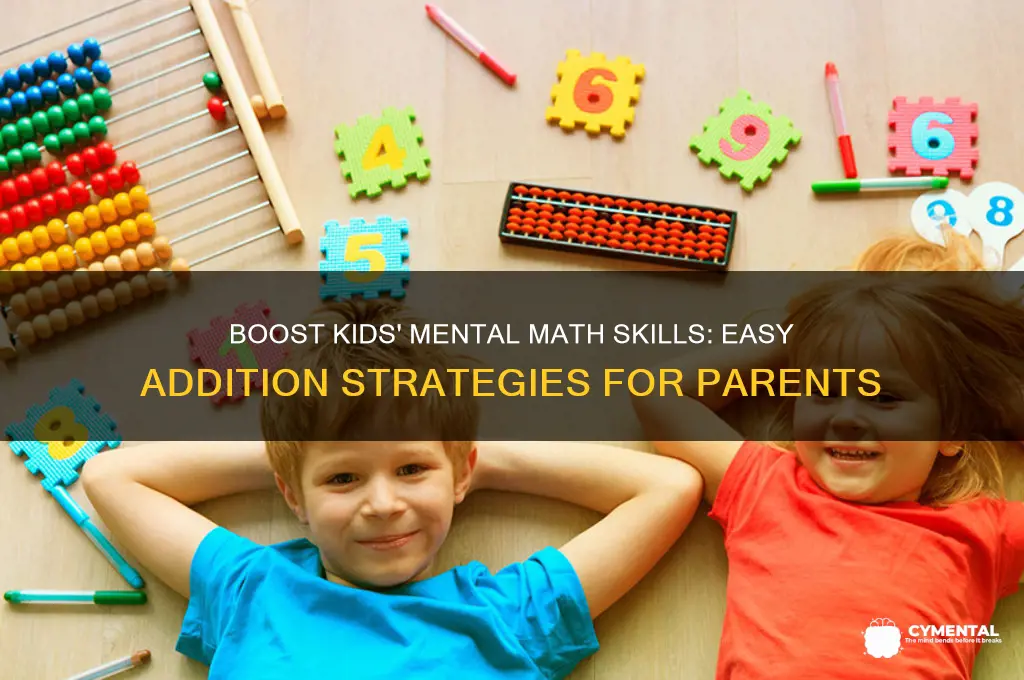
Helping kids develop strong mental math skills, particularly with addition, is essential for building a solid foundation in mathematics. By incorporating practical strategies such as using visual aids like number lines or manipulatives, encouraging estimation and rounding, and practicing with real-life scenarios, parents and educators can make learning addition both engaging and intuitive. Regularly incorporating games, flashcards, and interactive activities can also reinforce quick recall and problem-solving abilities, fostering confidence and fluency in mental math. With consistent practice and a supportive learning environment, children can master addition effortlessly and apply these skills to more complex mathematical concepts in the future.
| Characteristics | Values |
|---|---|
| Use Visual Aids | Incorporate number lines, charts, and manipulatives to help kids visualize addition problems. |
| Break Down Numbers | Teach kids to decompose numbers into smaller, more manageable parts (e.g., 12 + 8 becomes 10 + 2 + 8). |
| Practice with Games | Use interactive games and apps that focus on mental math, such as "Math Bingo" or "Prodigy Math Game." |
| Teach Number Bonds | Help kids understand pairs of numbers that add up to a target number (e.g., 5 + 5 = 10, 3 + 7 = 10). |
| Use Real-Life Scenarios | Relate addition to everyday situations, like counting objects or calculating totals during shopping. |
| Encourage Estimation | Teach kids to estimate sums quickly before calculating exact answers to build number sense. |
| Repeated Practice | Regularly practice addition facts using flashcards, worksheets, or oral quizzes. |
| Teach Strategies | Introduce strategies like "making ten" (e.g., 7 + 8 = 7 + 3 + 5) or "compensating" (e.g., 12 + 8 = 10 + 10 + 2 - 2). |
| Use Technology | Leverage educational tools like Khan Academy, IXL, or Mathletics for structured practice. |
| Positive Reinforcement | Celebrate progress and provide encouragement to boost confidence and motivation. |
| Incorporate Movement | Use physical activities, like jumping or clapping, to help kids associate addition with action. |
| Teach Patterns | Highlight patterns in addition, such as adding zero or doubling numbers (e.g., 2 + 2, 4 + 4). |
| Peer Learning | Encourage kids to work in pairs or groups to solve problems together. |
| Adjust Pace | Tailor the difficulty and speed of practice to match the child's learning pace and attention span. |
| Mindfulness Techniques | Teach simple mindfulness exercises to help kids focus and reduce anxiety during math tasks. |
Explore related products


What You'll Learn
- Use Number Bonds: Teach pairs of numbers that add up to 10, 20, etc
- Visual Aids: Use fingers, dots, or pictures to represent numbers for addition
- Story Problems: Create simple stories to make addition relatable and engaging
- Games and Activities: Incorporate addition into fun games like dice rolling or card matching
- Mental Strategies: Practice breaking numbers into easier parts (e.g., 7 + 8 = 5 + 5 + 5 + 3)

Use Number Bonds: Teach pairs of numbers that add up to 10, 20, etc
Number bonds are a foundational tool for building mental math fluency, especially for addition. By teaching kids pairs of numbers that add up to a target sum like 10 or 20, you create mental anchors they can rely on for quicker calculations. For instance, knowing that 7 + 3 = 10 allows a child to instantly recognize that 17 + 3 = 20 by simply adjusting the tens place. This strategy leverages pattern recognition, a strength of the developing brain, making it easier for children to internalize addition facts.
Start by focusing on number bonds to 10, a manageable and essential milestone for early learners. Use visual aids like ten frames or number lines to illustrate pairs such as 4 + 6, 5 + 5, and 1 + 9. Incorporate hands-on activities like counting blocks or using manipulatives to reinforce these pairs. For example, give a child 10 counters and ask them to split them into two groups in different ways, verbalizing the pairs each time. Repetition and variety in practice are key—flashcards, games, and real-life scenarios (e.g., "If you have 7 apples and get 3 more, how many do you have?") all help solidify these bonds.
Once children master number bonds to 10, gradually introduce bonds to 20, 50, or even 100, depending on their age and readiness. For older kids, this concept can be extended to larger numbers, such as recognizing that 27 + 73 = 100. Pair this with strategies like "making ten" to break down more complex additions. For instance, to solve 18 + 25, a child can mentally break it into (10 + 8) + (20 + 5), using their knowledge of number bonds to simplify the calculation. This approach bridges the gap between basic addition and more advanced mental math techniques.
Caution against overloading young learners with too many number bonds at once. Focus on mastery before moving on, as confusion can hinder progress. Additionally, avoid relying solely on rote memorization; instead, encourage children to visualize and understand the relationships between numbers. For example, ask, "What number do you need to add to 8 to get 20?" rather than just drilling facts. This fosters a deeper understanding and flexibility in applying number bonds to various problems.
In conclusion, teaching number bonds is a powerful way to help kids develop mental math skills for addition. By starting small, using visual and hands-on methods, and gradually increasing complexity, you equip children with a versatile tool for tackling addition problems efficiently. With consistent practice and a focus on understanding, number bonds become more than just memorized facts—they become a mental framework for mathematical thinking.
Supporting Your Partner’s Mental Health: Practical Ways to Show Love and Care
You may want to see also
Explore related products


$9.99


$5.99 $8.95


Visual Aids: Use fingers, dots, or pictures to represent numbers for addition
Children often grasp concepts more effectively when they can see and manipulate them. Visual aids like fingers, dots, or pictures transform abstract numbers into tangible objects, making addition more intuitive. For instance, when teaching 3 + 2, encourage kids to hold up three fingers on one hand and two on the other, then count all five fingers to find the sum. This method bridges the gap between concrete objects and numerical symbols, fostering a deeper understanding of addition.
While fingers are a natural starting point, dots and pictures offer versatility for more complex problems. For preschoolers (ages 3–5), use dot cards or drawings of apples to represent numbers. For example, show three dots and two dots, then combine them to demonstrate 3 + 2 = 5. For older kids (ages 6–8), introduce picture arrays or groups of objects to visualize addition. This progression ensures visual aids remain relevant as children’s math skills grow.
One caution: over-reliance on visual aids can delay mental math fluency. Use them as a stepping stone, gradually reducing their presence as children internalize addition concepts. For instance, start with physical fingers, then transition to imaginary finger-counting, and finally encourage mental visualization. Pair visual aids with verbal explanations to reinforce the connection between symbols and quantities.
To maximize effectiveness, tailor visual aids to the child’s learning style and age. Toddlers (ages 2–3) benefit from large, colorful pictures or physical objects like blocks. Early elementary students (ages 5–7) respond well to dot patterns or number lines. Incorporate interactive elements, such as letting kids draw their own dots or arrange pictures, to keep engagement high. With consistent practice, visual aids become a powerful tool for building mental math confidence.
Work as Therapy: Boosting Mental Health Through Purpose and Productivity
You may want to see also
Explore related products


Story Problems: Create simple stories to make addition relatable and engaging
Children often struggle with mental math because abstract numbers lack context. Story problems bridge this gap by embedding addition in relatable scenarios, transforming dry calculations into meaningful experiences. For instance, imagine a story where a child has three apples and finds two more under a tree. Asking, “How many apples do they have now?” connects the operation to a tangible outcome, fostering comprehension and retention.
Crafting effective story problems requires simplicity and relevance. Tailor stories to a child’s interests—whether animals, toys, or food—to capture their attention. For preschoolers (ages 3–5), use small numbers (1–10) and concrete objects. Example: “If a puppy has 1 bone and its friend gives it 2 more, how many bones does it have?” For early elementary students (ages 6–8), introduce slightly larger numbers and multi-step scenarios. Example: “At a picnic, there are 4 sandwiches. Later, someone brings 3 more. How many sandwiches are there now?”
While storytelling engages, avoid overcomplicating the narrative. Stick to one addition operation per story to prevent confusion. Use clear, concise language and avoid unnecessary details. For example, instead of describing the puppy’s breed or the picnic’s location, focus on the numbers and the action. Visual aids, like drawings or props, can further enhance understanding, especially for visual learners.
Story problems not only improve math skills but also develop critical thinking and listening abilities. Encourage children to verbalize their thought process, reinforcing both numerical and communication skills. For added challenge, introduce open-ended questions like, “What if the puppy finds 1 more bone?” This promotes flexibility in thinking and prepares them for more complex math problems.
Incorporating story problems into daily routines maximizes their impact. Turn everyday situations into math opportunities: “You ate 2 cookies, and I gave you 1 more. How many did you have in total?” Consistency is key—regular practice builds confidence and fluency. By making addition part of their narrative world, children learn to see math not as a chore, but as a tool for understanding their environment.
Health Class and Mental Health: Effective Support or Missed Opportunity?
You may want to see also
Explore related products


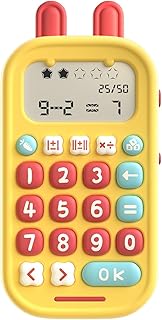
Games and Activities: Incorporate addition into fun games like dice rolling or card matching
Engaging kids in hands-on activities transforms abstract math concepts into tangible experiences. Dice rolling, for instance, is a simple yet effective tool for practicing addition. Start with two dice for younger children (ages 4–6) to keep sums under 12, gradually introducing more dice or larger-numbered dice as skills improve. For older kids (ages 7–10), challenge them with three dice or a mix of standard and decimal dice (e.g., tenths or hundredths) to incorporate place value understanding. The key is to make the activity dynamic—set a timer, create a point system, or introduce friendly competition to keep motivation high.
Card matching games offer another versatile platform for addition practice. Create a deck of cards with numbers and their corresponding sums (e.g., 3 + 4 = 7) or use a standard deck for basic addition (e.g., 5 of hearts + 2 of diamonds = 7). For preschoolers (ages 3–5), simplify the game by matching visual representations of quantities (e.g., three apples + two apples) to their sum. Older children can tackle multi-step problems by drawing multiple cards and adding their values. To deepen learning, ask children to explain their thought process aloud, reinforcing mental math strategies like counting on or decomposing numbers.
Incorporating movement into math games amplifies engagement and retention. Try a "human dice" activity where children roll themselves on the floor (safely!) and add the numbers on their shirts or hands. Alternatively, use a large floor mat with numbered spaces for a life-size board game where players roll dice and move forward by calculating sums. These kinesthetic activities are particularly effective for active learners and can be adapted for group settings, fostering collaboration and peer learning.
While games are inherently fun, intentional design maximizes their educational value. Pair each activity with clear learning objectives—whether it’s mastering single-digit addition, understanding the commutative property, or developing number sense. For instance, in a dice rolling game, prompt children to predict whether their next roll will result in a sum greater than or less than 10. This predictive element sharpens estimation skills and encourages strategic thinking. Regularly rotate games to prevent monotony and introduce new challenges as children progress.
Practical tips ensure these activities are accessible and effective. Keep materials simple—dice, cards, and paper suffice for most games. For digital natives, supplement physical games with interactive apps like "Prodigy" or "Sushi Monster," which gamify addition in a virtual format. Finally, celebrate progress with non-tangible rewards like stickers or a "math champion" title to foster a positive attitude toward learning. By blending play with purpose, these games make addition not just a skill to learn, but an adventure to enjoy.
Traveling and Mental Health: A Case for FMLA Benefits
You may want to see also
Explore related products



Mental Strategies: Practice breaking numbers into easier parts (e.g., 7 + 8 = 5 + 5 + 5 + 3)
Breaking numbers into simpler parts is a cornerstone strategy for mental addition, especially for young learners grappling with multi-digit sums. Consider the equation 7 + 8. Instead of relying on rote memorization, encourage children to decompose it into friendlier components: 5 + 5 + 5 + 3. This approach leverages their understanding of smaller, more manageable numbers, building confidence and fluency. For instance, a 6-year-old might visualize five fingers on each hand plus three more, making the calculation tangible and intuitive.
This method thrives on flexibility. Introduce the concept by pairing numbers close to benchmarks like 5, 10, or 20. For 14 + 9, reframe it as 10 + 4 + 9, or further simplify to 10 + 10 + 3. The goal is to create combinations that feel natural to the child. Start with single-digit additions, gradually progressing to larger numbers as their comfort grows. For 8- to 10-year-olds, challenge them with problems like 37 + 28 by suggesting 30 + 7 + 20 + 8, reinforcing place value understanding.
However, beware of overcomplication. While breaking numbers is powerful, it’s not a one-size-fits-all solution. Some children might struggle with keeping track of multiple parts. Pair this strategy with visual aids like number lines or counters to bridge the gap. For instance, when solving 18 + 15, draw a number line and jump 10 first, then 8, then 5, making each step explicit. This dual approach ensures the strategy remains accessible, not overwhelming.
To embed this skill, practice daily with short, engaging activities. For 5- to 7-year-olds, use games like "Number Break-Up," where they roll two dice and decompose the sum. For older kids, incorporate real-world scenarios: "If you have 27 stickers and get 18 more, break it down to find the total." Consistency is key—five minutes daily trumps an hour weekly. Over time, this mental agility will become second nature, transforming addition from a chore into a seamless thought process.
Boost Your Mind: Mental Benefits of Regular Exercise Revealed
You may want to see also
Frequently asked questions
Encourage daily activities like counting objects together (e.g., toys, stairs) and asking simple addition questions. Use games like dice rolling or number cards to make it fun. For example, roll two dice and have your child add the numbers mentally.
Teach strategies like "making 10" (e.g., 7 + 4 = 7 + 3 + 1 = 10 + 1 = 11) or breaking numbers into smaller, easier parts (e.g., 18 + 9 = 18 + 10 - 1 = 27). Practice these methods regularly to build confidence.
Use real-life scenarios like shopping (e.g., "If we buy 3 apples and 2 bananas, how many fruits do we have?"). Ask addition questions during car rides or while cooking to make it a natural part of their day.
Start with smaller numbers and gradually increase difficulty. Use positive reinforcement and celebrate small wins. If frustration occurs, take a break and revisit the problem later. Keep it light and engaging to maintain their interest.