Madison Cole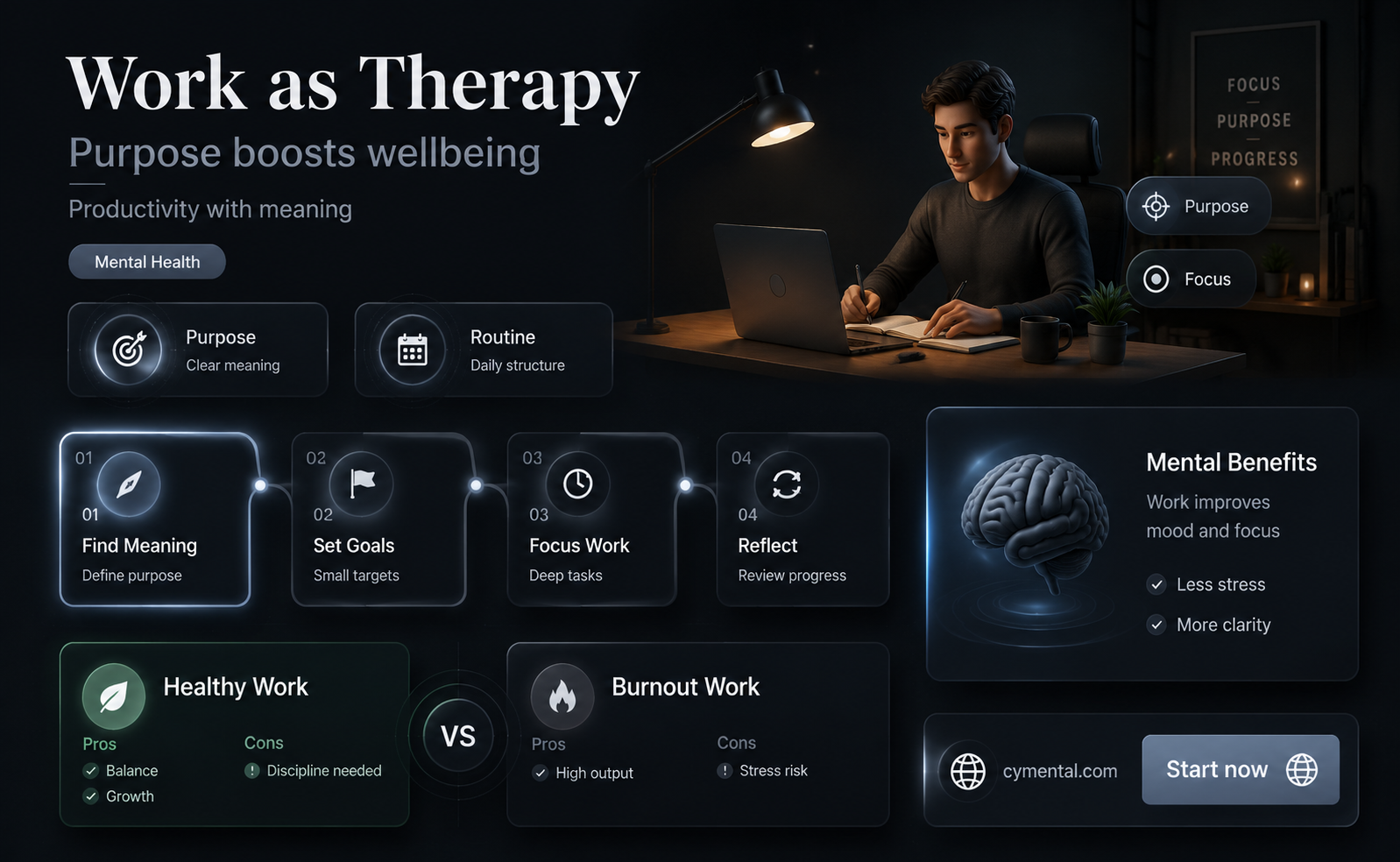
Work can play a significant role in supporting mental health by providing structure, purpose, and social connections, all of which are essential for emotional well-being. Engaging in meaningful tasks fosters a sense of accomplishment and boosts self-esteem, while regular routines help stabilize mood and reduce anxiety. Additionally, workplaces that prioritize mental health through supportive policies, open communication, and access to resources can create a safe environment for employees to thrive. The social interactions at work also combat feelings of isolation, offering opportunities for collaboration and camaraderie. Ultimately, when balanced with self-care, work can be a powerful tool in promoting mental resilience and overall psychological health.
Explore related products


What You'll Learn
- Purpose & Structure: Work provides routine, goals, and a sense of accomplishment, boosting self-worth
- Social Connection: Interacting with colleagues fosters belonging, reduces loneliness, and supports emotional well-being
- Financial Stability: Earning income reduces stress, provides security, and improves overall mental health
- Skill Development: Learning new skills builds confidence, enhances self-esteem, and promotes personal growth
- Distraction & Focus: Work shifts focus from negative thoughts, offering a healthy mental escape

Purpose & Structure: Work provides routine, goals, and a sense of accomplishment, boosting self-worth
Work isn’t just about earning a paycheck—it’s a cornerstone of mental well-being for many. A structured routine, whether it’s clocking in at 9 a.m. or tackling a project deadline, creates predictability in a world often chaotic and uncertain. This predictability reduces anxiety by giving the brain a framework to operate within. For instance, a study by the American Psychological Association found that individuals with consistent daily routines report lower stress levels compared to those with erratic schedules. Even small rituals, like brewing coffee before starting work or reviewing a to-do list, can anchor the mind and foster a sense of control.
Goals are the compass of purpose, and work provides them in spades. Whether it’s mastering a new skill, completing a quarterly target, or simply finishing a task, these objectives give direction and meaning. The act of setting and achieving goals triggers the brain’s reward system, releasing dopamine—a neurotransmitter linked to pleasure and motivation. For example, a software developer who writes 50 lines of code daily not only makes progress but also experiences a daily dose of accomplishment. Over time, this cumulative sense of achievement builds self-efficacy, the belief in one’s ability to succeed, which is a key protector against depression and anxiety.
Accomplishment is the currency of self-worth, and work is a mint that never closes. Completing tasks, no matter how small, reinforces the idea that you are capable and valuable. A janitor who leaves a building spotless, a teacher who helps a student grasp a concept, or a manager who resolves a team conflict—each of these acts contributes to a larger narrative of competence. Research from the University of Warwick reveals that productivity at work increases happiness by up to 12%, not the other way around. This suggests that the act of doing and achieving is itself a mood enhancer, not merely a result of feeling good.
However, balance is critical. While routine and goals are beneficial, rigid structures or unattainable expectations can backfire. Overloading oneself with tasks or clinging to perfectionism can lead to burnout, eroding the very self-worth work aims to build. A practical tip: break goals into micro-steps and celebrate each one. For instance, instead of aiming to “write a report,” set milestones like “research for 30 minutes” or “draft the introduction.” This approach ensures a steady stream of accomplishments without overwhelming the mind.
In essence, work’s purpose and structure act as a scaffold for mental health, offering routine, goals, and accomplishment to bolster self-worth. By embracing these elements mindfully—setting realistic goals, celebrating small wins, and maintaining flexibility—individuals can harness work’s potential to not just earn a living, but to thrive emotionally. It’s not about working harder, but working smarter, with intention and self-compassion.
Can Specific Frequencies Boost Your Mood and Mental Well-being?
You may want to see also
Explore related products


Social Connection: Interacting with colleagues fosters belonging, reduces loneliness, and supports emotional well-being
Human beings are inherently social creatures, and the workplace serves as a vital arena for fulfilling this fundamental need. Interpersonal interactions at work go beyond mere task collaboration; they form the bedrock of a supportive community that can significantly impact mental health. Consider the simple act of sharing a coffee break with a colleague. This seemingly mundane activity provides an opportunity to exchange stories, seek advice, or simply enjoy a moment of camaraderie. Such interactions, when accumulated over time, contribute to a sense of belonging, which is a powerful antidote to the isolation that often underpins mental health struggles.
The benefits of social connection at work are not just anecdotal; they are supported by research. Studies have shown that employees who report having strong workplace friendships are more likely to experience higher levels of job satisfaction and lower levels of stress. For instance, a Gallup study found that employees with a best friend at work are seven times more likely to be engaged in their jobs. This engagement is closely tied to emotional well-being, as it fosters a positive feedback loop where feeling valued and connected leads to increased productivity and overall happiness.
However, fostering meaningful social connections at work requires intentionality. Employers can play a pivotal role by creating environments that encourage interaction. This can be achieved through structured activities like team-building exercises, flexible workspace designs that promote collaboration, or even informal initiatives such as "lunch-and-learn" sessions. Employees, too, can take proactive steps by initiating conversations, showing genuine interest in colleagues' lives, and being open to forming relationships beyond professional boundaries. A practical tip is to allocate at least 15 minutes daily for non-work-related conversations, which can help build rapport without detracting from productivity.
It’s important to acknowledge that not all workplace interactions are inherently positive. Toxic relationships or cliques can exacerbate feelings of loneliness and anxiety. Therefore, fostering healthy social connections involves cultivating empathy, respect, and inclusivity. Managers should be trained to recognize and address interpersonal conflicts promptly, ensuring that the workplace remains a safe space for all. Additionally, employees should be encouraged to set boundaries, ensuring that social interactions enhance, rather than hinder, their well-being.
In conclusion, the workplace is a powerful platform for nurturing social connections that bolster mental health. By fostering a culture of belonging, reducing loneliness, and supporting emotional well-being, organizations can create environments where employees thrive. Whether through structured initiatives or individual efforts, investing in these relationships pays dividends in the form of happier, healthier, and more engaged workers. After all, as the saying goes, "Together, we are better"—and in the context of mental health, this couldn’t be truer.
Empowering Support: Practical Ways to Assist Mentally Challenged Individuals
You may want to see also
Explore related products


Financial Stability: Earning income reduces stress, provides security, and improves overall mental health
Financial stability, achieved through consistent income, acts as a cornerstone for mental well-being. Studies show that individuals with stable finances report lower levels of anxiety and depression. The American Psychological Association (APA) highlights that financial stress is a leading cause of mental health issues, with 72% of Americans citing money as a significant source of stress. By earning an income, individuals gain control over their financial lives, reducing the constant worry about meeting basic needs like housing, food, and healthcare. This control translates into a sense of security, which is essential for maintaining a healthy mental state.
Consider the practical steps to leverage work for financial stability. Start by creating a budget to track income and expenses, ensuring that earnings are allocated efficiently. For those in entry-level positions or gig work, aim to save at least 10% of monthly income to build an emergency fund. This buffer can mitigate the mental strain of unexpected expenses. Additionally, prioritize paying off high-interest debt, as the burden of debt is a known contributor to chronic stress. Employers can support this by offering financial wellness programs, which have been shown to improve employee mental health and productivity.
A comparative analysis reveals that individuals with financial stability are better equipped to invest in their mental health. For instance, they can afford therapy, wellness activities, or stress-reducing hobbies without financial guilt. In contrast, those living paycheck to paycheck often forgo these investments due to budgetary constraints. A study by the Journal of Occupational Health Psychology found that employees with financial security were 30% more likely to engage in mental health care compared to their financially strained counterparts. This underscores the role of income in enabling access to resources that foster mental well-being.
Finally, the persuasive argument for financial stability through work lies in its long-term benefits. Earning an income not only addresses immediate needs but also builds a foundation for future security. Retirement savings, for example, reduce anxiety about later life, while investments in education or skills can lead to higher-paying roles, further enhancing financial and mental health. Employers and policymakers should recognize this connection, promoting initiatives like fair wages, benefits, and career development opportunities. By doing so, they contribute to a workforce that is not only productive but also mentally resilient.
Baking Therapy: How Baking Boosts Mental Health and Well-being
You may want to see also
Explore related products

$20.49 $36.99


$19.56 $20.99


Skill Development: Learning new skills builds confidence, enhances self-esteem, and promotes personal growth
Learning a new skill is like rewiring your brain for success. Each mastered task, no matter how small, creates new neural pathways, fostering a sense of accomplishment that directly counters feelings of inadequacy or stagnation. This neurological shift isn't just metaphorical; studies show that engaging in novel activities increases grey matter density in areas associated with memory, attention, and problem-solving.
Consider the act of learning to code. Initially, the syntax feels like a foreign language, each error message a frustrating roadblock. But with persistence, lines of code transform into functional programs. This process, fraught with challenges and triumphs, becomes a microcosm of personal growth. The confidence gained from debugging a stubborn error translates into a belief in one's ability to tackle other complex problems, both in the workplace and beyond.
Quantifying the impact, a 2018 study published in the *Journal of Occupational Health Psychology* found that employees who engaged in regular skill development reported a 23% increase in job satisfaction and a 17% decrease in symptoms of anxiety and depression. This highlights the tangible mental health benefits of continuous learning.
However, it's crucial to approach skill development with a mindful strategy. Aim for a "growth mindset," embracing challenges as opportunities rather than threats. Break down large goals into manageable steps, celebrating each milestone. For instance, instead of aiming to "become a web developer," start with mastering HTML basics, then gradually progress to CSS and JavaScript. This incremental approach prevents overwhelm and fosters a sense of continuous progress.
Additionally, prioritize skills that align with your interests and values. Learning for the sake of learning can be rewarding, but choosing skills that resonate with your passions amplifies the sense of fulfillment and intrinsic motivation. Whether it's mastering a new language, honing culinary skills, or delving into data analysis, the key is to find activities that spark genuine curiosity and engagement.
Finally, remember that skill development is a lifelong journey, not a destination. The mental health benefits accrue not just from the end result, but from the very act of learning itself. Embrace the process, celebrate the small wins, and allow the continuous acquisition of knowledge to become a cornerstone of your personal and professional well-being.
Supporting Loved Ones: Practical Ways to Help Family with Mental Illness
You may want to see also
Explore related products
$10.99 $18.99


Distraction & Focus: Work shifts focus from negative thoughts, offering a healthy mental escape
Work can act as a powerful cognitive shift, redirecting mental energy away from rumination and toward productive tasks. When absorbed in a challenging project, the brain’s executive functions—planning, problem-solving, and decision-making—take precedence over the default mode network, which often fuels negative self-talk. For instance, a software developer debugging code or a teacher preparing lesson plans experiences a mental immersion that leaves little room for intrusive thoughts. This phenomenon is supported by research in occupational therapy, which highlights how structured tasks can disrupt cycles of anxiety and depression by fostering a sense of purpose and immediate engagement.
However, not all work provides this benefit equally. The type of task matters. Monotonous or unfulfilling work may fail to engage the mind deeply enough to counteract negative thought patterns, while overly stressful tasks can exacerbate them. For optimal mental escape, aim for tasks that strike a balance between challenge and skill level—what psychologists call "flow state." For example, a graphic designer creating a logo or a gardener pruning plants can achieve this state, where focus is intense, and self-awareness fades into the background. Practical tip: Identify 2–3 work tasks that consistently induce this state and prioritize them during periods of heightened mental distress.
Contrast this with passive distractions like scrolling social media, which often amplify negative emotions. Work, when chosen thoughtfully, offers an active form of distraction that builds competence and confidence. A study published in the *Journal of Occupational Health Psychology* found that employees who engaged in meaningful tasks during work hours reported lower levels of end-of-day emotional exhaustion compared to those who did not. The key is intentionality—select tasks that require focus but align with your skills, ensuring the distraction is constructive rather than merely escapist.
Caution must be exercised, though. Over-reliance on work as a mental escape can lead to burnout if not balanced with self-care. Set boundaries by allocating specific time blocks for focused work (e.g., 90-minute intervals with 15-minute breaks) and avoid using work to avoid addressing underlying mental health issues. Pair this strategy with therapeutic practices like mindfulness or journaling for a holistic approach. For individuals aged 18–35, who often face high work demands and mental health challenges, combining structured work with regular check-ins with a mental health professional can maximize benefits while minimizing risks.
In conclusion, work’s ability to shift focus from negative thoughts lies in its capacity to engage the mind actively and purposefully. By selecting tasks that induce flow and setting clear boundaries, individuals can harness work as a healthy mental escape. Remember, the goal is not to suppress emotions but to create space for clarity and productivity. When used mindfully, work becomes more than a duty—it becomes a tool for mental resilience.
Alcohol and Mental Health: Unraveling the Myth of Relief
You may want to see also
Frequently asked questions
Work provides structure, purpose, and a sense of accomplishment, which can boost self-esteem and reduce feelings of worthlessness or anxiety.
Yes, work can reduce depression symptoms by fostering social connections, providing financial stability, and offering a distraction from negative thoughts.
Engaging in meaningful work can act as a healthy coping mechanism, channeling energy into productive tasks and reducing focus on stressors.
Yes, workplaces provide opportunities for social interaction, building relationships, and creating a sense of belonging, which can alleviate loneliness.
Consistent work can enhance mental well-being by promoting routine, personal growth, and a sense of identity, all of which contribute to long-term mental health.