Caleb Wright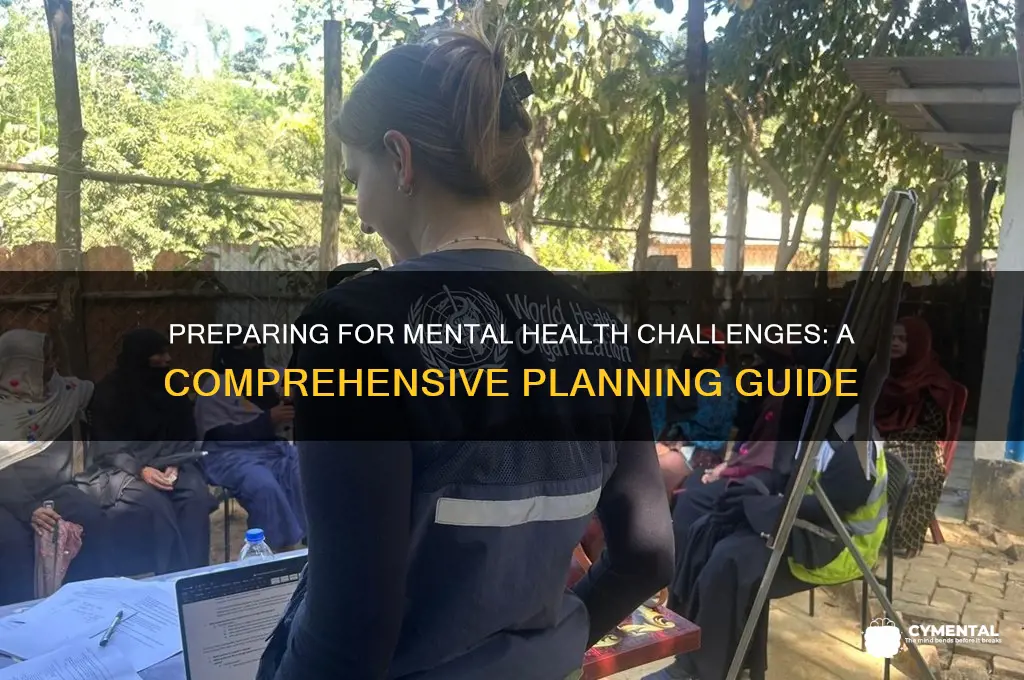
Planning and preparing for mental health issues is essential for maintaining overall well-being and resilience in the face of life’s challenges. It involves proactive steps such as building a strong support network, educating oneself about mental health, and developing healthy coping mechanisms like mindfulness, exercise, and stress management techniques. Creating a personalized self-care routine, setting realistic goals, and identifying early warning signs of mental health struggles are also crucial. Additionally, having a crisis plan in place, including access to professional resources and emergency contacts, can provide a safety net during difficult times. By prioritizing mental health and taking these preparatory measures, individuals can better navigate potential challenges and foster long-term emotional stability.
Explore related products


$14.51 $14.99

$12.23 $12.23


What You'll Learn
- Early Warning Signs: Recognize subtle changes in behavior, mood, or habits that signal potential mental health issues
- Build a Support Network: Identify trusted friends, family, or professionals who can provide emotional and practical assistance
- Create a Crisis Plan: Outline steps to take during a mental health crisis, including emergency contacts and coping strategies
- Healthy Lifestyle Habits: Prioritize sleep, nutrition, exercise, and mindfulness to strengthen mental resilience and stability
- Access Resources: Know local mental health services, hotlines, apps, and tools for immediate and long-term support

Early Warning Signs: Recognize subtle changes in behavior, mood, or habits that signal potential mental health issues
Subtle shifts in behavior, mood, or daily habits often precede more severe mental health challenges, acting as early warning signs that, when recognized, can enable timely intervention. For instance, a person who typically maintains a structured routine might begin skipping meals, neglecting hygiene, or withdrawing from social activities. These changes, though seemingly minor, can signal underlying distress such as depression or anxiety. Observing such patterns requires attentiveness, particularly in loved ones, as individuals experiencing these shifts may not recognize them themselves. Early detection hinges on this awareness, transforming passive observation into proactive support.
Analyzing these changes involves distinguishing between temporary fluctuations and persistent alterations. For example, occasional irritability is normal, but consistent outbursts over several weeks could indicate emerging anger issues or bipolar disorder. Similarly, a sudden drop in academic or work performance might reflect situational stress, but a prolonged decline could point to burnout or a mood disorder. Tracking these patterns over time—using journals, apps, or even casual notes—can provide clarity. Tools like the PHQ-9 (Patient Health Questionnaire) for depression or GAD-7 (Generalized Anxiety Disorder scale) can help quantify symptoms, though they should complement, not replace, professional assessment.
Persuasively, recognizing these signs is not about diagnosing but about fostering a culture of vigilance and empathy. For parents, noticing a teenager spending more time isolated in their room or a sudden disinterest in hobbies could prompt a gentle conversation rather than assumptions of typical adolescent behavior. For colleagues, observing a coworker becoming increasingly absent-minded or overly critical might warrant a check-in rather than labeling it as "just a phase." Such actions demystify mental health, positioning it as a collective responsibility rather than an individual burden.
Comparatively, physical health often receives more attention when it comes to early warning signs—a persistent cough prompts a doctor’s visit, but persistent fatigue or apathy may be dismissed. This disparity underscores the need to normalize monitoring mental health with the same rigor. Just as blood pressure or cholesterol levels are tracked, mood and behavioral changes should be noted, especially in high-risk groups like adolescents (ages 12–18), new parents, or individuals with a family history of mental illness. Bridging this gap requires education, reducing stigma, and integrating mental health checks into routine care.
Practically, preparing for these signs involves creating a supportive environment and actionable steps. Establish open communication channels within families or workplaces, ensuring discussions about mental health are routine, not taboo. Develop a "mental health first aid kit" that includes emergency contacts (therapists, helplines like 988 in the U.S.), coping strategies (deep breathing exercises, mindfulness apps), and a list of trusted confidants. For caregivers, familiarize yourself with local mental health resources, such as community clinics or support groups, and keep them readily accessible. By treating these signs as valid indicators, not mere quirks, individuals and communities can preempt crises and foster resilience.
Navigating Mental Health: Strategies for Overcoming Challenges and Finding Balance
You may want to see also
Explore related products


Build a Support Network: Identify trusted friends, family, or professionals who can provide emotional and practical assistance
Human connection is a cornerstone of resilience, yet many underestimate its role in mental health preparedness. Building a support network isn’t just about having people to talk to; it’s about strategically identifying individuals who can offer both emotional grounding and practical help during crises. Start by mapping your relationships: Who listens without judgment? Who can assist with tasks like picking up prescriptions or driving to appointments? Prioritize those who’ve demonstrated reliability in the past, as consistency is key when mental health falters.
Consider professionals as integral to this network. Therapists, psychiatrists, or even peer support specialists provide structured guidance that friends and family may lack. For instance, a therapist can offer coping strategies, while a psychiatrist can manage medication adjustments. If affordability is a concern, explore sliding-scale clinics or telehealth platforms, which often cost as little as $20–$60 per session. Pairing professional support with personal connections creates a balanced safety net.
Practical assistance is often overlooked but critical. For example, a trusted neighbor could check in daily via text, or a family member could manage your calendar during episodes of fatigue. Assign specific roles based on each person’s strengths: one person might excel at researching resources, while another could organize meals. Clarity in roles prevents overwhelm and ensures everyone knows how to contribute effectively.
Building this network requires vulnerability—communicating your needs openly and setting boundaries. Practice saying, “I’m not okay, and here’s how you can help.” For instance, instead of vague requests, specify: “Can you call me at 7 p.m. to remind me to take my medication?” Equally important is reciprocity; support networks thrive when they’re two-way streets. Even small gestures, like checking in on a friend’s mental health, reinforce mutual care.
Finally, regularly reassess your network. Relationships evolve, and what worked last year might not suffice today. Update your list of contacts, revisit roles, and don’t hesitate to add or remove individuals as needed. Think of this network as a living document, adaptable to your changing needs. By investing in these connections proactively, you’re not just preparing for mental health challenges—you’re fortifying your ability to navigate them with dignity and strength.
Singulair and Mental Health: Frequency of Psychological Side Effects
You may want to see also
Explore related products


Create a Crisis Plan: Outline steps to take during a mental health crisis, including emergency contacts and coping strategies
Mental health crises are unpredictable, but a well-structured crisis plan can provide a lifeline when stability feels out of reach. Start by identifying emergency contacts—a list of trusted individuals who can intervene during a crisis. Include local crisis hotlines (e.g., the National Suicide Prevention Lifeline at 988 in the U.S.), a therapist’s after-hours number, and close friends or family members who understand your needs. Keep this list in multiple accessible formats: on your phone, in a wallet card, and posted visibly at home. Alongside contacts, outline immediate steps to take, such as removing access to harmful items or moving to a safe space, to minimize risk until help arrives.
Next, incorporate coping strategies tailored to your specific triggers and symptoms. For example, if anxiety spikes during a crisis, include grounding techniques like the 5-4-3-2-1 method (naming five things you see, four you can touch, etc.). For depressive episodes, pre-record affirmations or create a playlist of uplifting music. If dissociation is a concern, prepare a sensory kit with textured objects or scented items to reorient yourself. These strategies should be practiced in advance to ensure they feel familiar and effective when needed.
A crisis plan must also account for logistical details that can exacerbate stress during an episode. Prepare a small bag with essentials like medications, insurance information, and a change of clothes, stored in an easily accessible location. If hospitalization is a possibility, include a list of preferred facilities and any relevant medical history. For those with caregivers, ensure they know where to find this bag and how to follow the plan, reducing the burden of decision-making during a crisis.
Finally, review and update your crisis plan regularly. Mental health needs evolve, and what works today may not suffice tomorrow. Schedule quarterly check-ins to reassess emergency contacts, coping strategies, and logistical details. Involve your therapist or support network in this process to gain fresh perspectives and ensure the plan remains aligned with your current state. A crisis plan is not a static document but a living tool, designed to adapt as you navigate the complexities of mental health.
Nurturing Mental Wellness: Practical Strategies for Managing Mental Health Challenges
You may want to see also
Explore related products


Healthy Lifestyle Habits: Prioritize sleep, nutrition, exercise, and mindfulness to strengthen mental resilience and stability
Sleep is the cornerstone of mental resilience, yet it’s often the first sacrifice in a busy schedule. Adults require 7–9 hours of quality sleep per night, but 35% fall short, according to the CDC. Chronic sleep deprivation amplifies stress, anxiety, and depression by disrupting neurotransmitter balance and increasing cortisol levels. To prioritize sleep, establish a consistent bedtime routine: dim lights 1 hour before bed, avoid screens, and keep the bedroom cool (60–67°F). For shift workers or those with insomnia, cognitive behavioral therapy for insomnia (CBT-I) has proven effective, improving sleep in 70–80% of cases.
Nutrition fuels not just the body but the brain, with 95% of serotonin—a mood regulator—produced in the gut. A diet rich in omega-3 fatty acids (found in salmon, flaxseeds), complex carbohydrates (oats, quinoa), and antioxidants (berries, spinach) stabilizes mood and energy. Conversely, processed foods and excessive sugar spike inflammation, linked to depression. Practical tip: plan meals weekly, focusing on whole foods, and limit caffeine after 2 PM to avoid sleep interference. For those with dietary restrictions, consult a dietitian to ensure nutrient adequacy, especially vitamin D and B12, which are critical for mental health.
Exercise is a natural antidepressant, releasing endorphins and reducing symptoms of anxiety and depression by 26–48%, comparable to medication in mild cases. Aim for 150 minutes of moderate aerobic activity (brisk walking, cycling) or 75 minutes of vigorous activity (running, HIIT) weekly. For beginners, start with 10-minute sessions and gradually increase. Mind-body exercises like yoga or tai chi combine physical activity with mindfulness, enhancing both mental and physical resilience. Caution: over-exercising can backfire, increasing stress hormones, so listen to your body and rest when needed.
Mindfulness transforms how we respond to stress, rewiring the brain to focus on the present rather than ruminate on the past or future. Just 8 weeks of daily 10-minute mindfulness meditation reduces activity in the amygdala, the brain’s "fear center," by 5–10%. Start with guided apps like Headspace or Calm, or practice deep breathing: inhale for 4 seconds, hold for 4, exhale for 6. Incorporate mindfulness into daily activities, like eating or walking, by engaging all senses. For skeptics, research shows even non-believers benefit from consistent practice, making it a low-risk, high-reward habit.
Together, these habits form a synergistic foundation for mental stability. Sleep restores, nutrition fuels, exercise strengthens, and mindfulness calms—each pillar reinforcing the others. For instance, better sleep improves exercise performance, while mindfulness enhances dietary choices by reducing emotional eating. Start small: choose one habit to focus on weekly, gradually integrating all four. Consistency, not perfection, is key. By embedding these practices into daily life, you build a resilient mental framework capable of withstanding life’s challenges.
Understanding the Process of Committing Someone for Mental Health Treatment
You may want to see also
Explore related products




Access Resources: Know local mental health services, hotlines, apps, and tools for immediate and long-term support
Mental health crises rarely announce themselves in advance, making proactive resource mapping essential. Like preparing for a natural disaster, knowing where to turn in moments of distress can be the difference between escalation and stabilization. Start by compiling a personalized "mental health first aid kit" that includes local crisis hotlines, emergency psychiatric services, and 24/7 telehealth platforms. For instance, the National Alliance on Mental Illness (NAMI) Helpline (1-800-950-NAMI) offers free support for individuals and families, while Crisis Text Line (text HOME to 741741) provides silent, text-based assistance ideal for public settings. These immediate resources act as lifelines when verbal communication feels impossible.
Beyond crisis intervention, long-term mental health management requires a layered approach to support. Research and bookmark community mental health centers, sliding-scale therapy clinics, and peer support groups tailored to specific conditions (e.g., Depression and Bipolar Support Alliance chapters). Apps like Calm, Headspace, and Sanvello offer evidence-based tools for anxiety and stress reduction, though their effectiveness varies—a 2021 study in *JMIR Mental Health* found Sanvello’s CBT-based exercises reduced depression symptoms by 30% in users over 8 weeks. Pair digital tools with offline resources, such as local wellness workshops or mindfulness classes, to create a holistic support network.
For families and caregivers, understanding age-specific resources is critical. Teens may benefit from platforms like TeenMentalHealth.org or the Trevor Project (1-866-488-7386), which focuses on LGBTQ+ youth. Older adults can access specialized services through the Substance Abuse and Mental Health Services Administration (SAMHSA) Older Adults Behavioral Health Locator. Schools and workplaces often provide Employee Assistance Programs (EAPs) or student counseling services, which are underutilized due to lack of awareness—ensure these are documented in your resource list.
A common pitfall is relying solely on digital tools or delaying professional help due to stigma or cost concerns. While apps and hotlines are invaluable, they are not substitutes for clinical treatment. For example, someone experiencing severe depression may need medication or intensive outpatient therapy, which requires a psychiatrist or licensed therapist. Use apps as adjuncts, not replacements, and regularly update your resource list to reflect changes in availability or new offerings.
Finally, share your compiled resources with trusted individuals in your support network. A laminated card with key contacts, app shortcuts, and emergency steps can be kept in a wallet or pinned to a fridge, ensuring accessibility during moments of cognitive fog. Preparation isn’t about predicting every scenario but creating a safety net robust enough to catch you when you fall. By mapping resources in advance, you transform uncertainty into actionable steps, turning vulnerability into resilience.
Opiates and the Mind: Unraveling the Link to Mental Health Struggles
You may want to see also
Frequently asked questions
Early signs of mental health issues include persistent changes in mood, energy levels, sleep patterns, appetite, or social withdrawal. Pay attention to increased irritability, difficulty concentrating, or expressions of hopelessness. Regular self-reflection and open communication with trusted individuals can help identify these signs early.
A mental health crisis plan should include a list of emergency contacts, coping strategies, and professional resources. Identify triggers, outline steps to de-escalate, and keep important documents (e.g., insurance or medication details) accessible. Share the plan with trusted friends or family members for added support.
Start by identifying reliable friends, family, or colleagues who can offer emotional support. Join support groups or online communities for shared experiences. Maintain open communication with a mental health professional, and consider involving them in your support network for guidance and resources.
Prioritize regular exercise, balanced nutrition, and adequate sleep. Practice mindfulness or meditation to reduce stress. Set boundaries to avoid burnout, and engage in activities that bring joy. Consistent self-care routines can strengthen resilience and improve overall mental well-being.