Noah Parker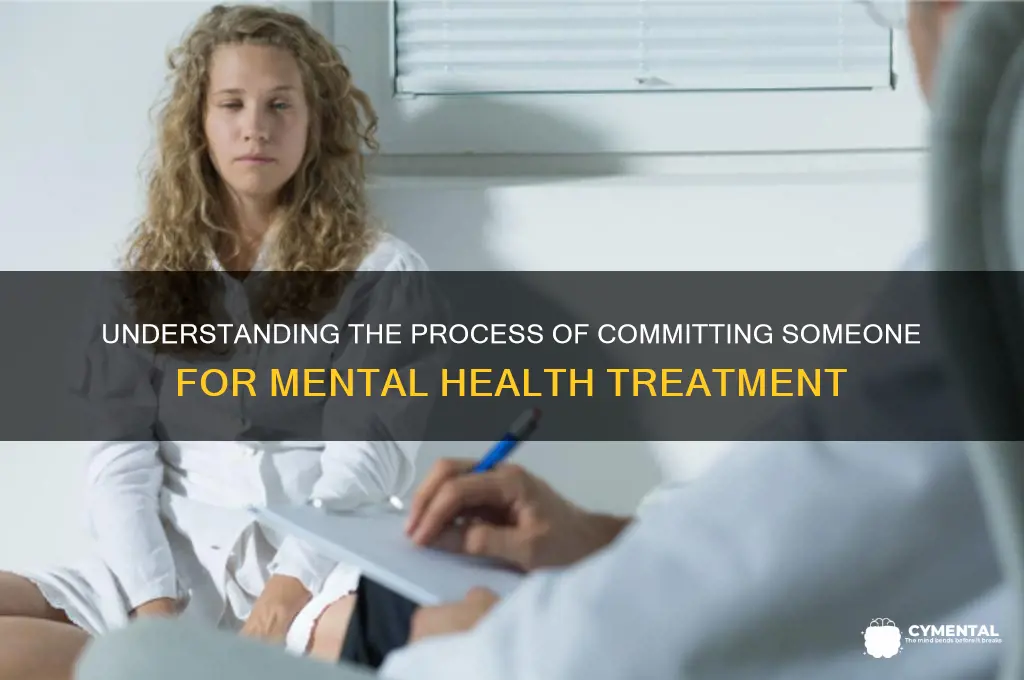
Committing someone for mental health issues is a serious and complex process that involves legal, ethical, and medical considerations. It typically occurs when an individual poses a significant risk to themselves or others due to severe mental illness and is unable to seek help voluntarily. The process varies by jurisdiction but generally requires a formal assessment by mental health professionals, often initiated by concerned family members, friends, or authorities. Involuntary commitment is governed by specific laws to protect the rights of the individual while ensuring public safety and access to necessary treatment. Understanding the steps, criteria, and implications of this process is crucial for anyone involved, as it balances the need for care with respect for personal autonomy.
| Characteristics | Values |
|---|---|
| Legal Criteria | Varies by jurisdiction; generally requires proof of danger to self or others, or inability to care for oneself. |
| Emergency Holds | Short-term detention (24-72 hours) for immediate assessment, allowed in most regions if imminent risk is present. |
| Involuntary Commitment | Long-term hospitalization requires court approval and evidence of severe mental illness. |
| Who Can Initiate | Varies: family members, mental health professionals, law enforcement, or medical personnel. |
| Assessment Process | Conducted by licensed mental health professionals to evaluate risk and necessity of commitment. |
| Patient Rights | Right to legal representation, appeal, and periodic review of commitment status. |
| Duration of Commitment | Varies; typically temporary (days to weeks) but can be extended with court approval. |
| Treatment During Commitment | Mandatory psychiatric evaluation and treatment, including medication and therapy. |
| Discharge Criteria | Improvement in condition, reduced risk, or court order for release. |
| Confidentiality | Protected under health privacy laws (e.g., HIPAA in the U.S.), with exceptions for public safety. |
| Stigma and Ethics | Balancing individual rights with public safety; ethical considerations around coercion and autonomy. |
| Alternative Options | Outpatient treatment, crisis intervention, or voluntary hospitalization encouraged when possible. |
Explore related products






What You'll Learn
- Recognizing Warning Signs: Identify severe symptoms like suicidal thoughts, self-harm, or inability to care for oneself
- Legal Requirements: Understand state-specific laws and criteria for involuntary commitment proceedings
- Gathering Evidence: Document behaviors, incidents, and professional assessments to support the commitment case
- Filing a Petition: Submit legal paperwork to the court, detailing the need for intervention
- Post-Commitment Support: Plan for ongoing care, therapy, and resources after the commitment process

Recognizing Warning Signs: Identify severe symptoms like suicidal thoughts, self-harm, or inability to care for oneself
Suicidal thoughts, self-harm, and an inability to care for oneself are red flags that demand immediate attention. These severe symptoms often indicate a mental health crisis, where the individual’s safety and well-being are at imminent risk. Recognizing these signs early can be the difference between life and death. For instance, phrases like “I wish I wasn’t here” or “Everyone would be better off without me” should never be dismissed as mere venting. They are cries for help that require urgent intervention.
Analyzing these warning signs involves understanding their context and severity. Self-harm, for example, can manifest as cutting, burning, or other forms of physical injury. While some may hide these behaviors, signs like unexplained scars, frequent injuries, or withdrawal from social activities can signal underlying distress. Similarly, an inability to care for oneself—such as neglecting hygiene, skipping meals, or ignoring medical needs—may indicate severe depression or psychosis. These behaviors often reflect a person’s internal struggle to cope with overwhelming emotions or distorted thinking.
Persuasively, it’s crucial to approach these situations with empathy and urgency. If you suspect someone is suicidal, ask directly: “Are you thinking about ending your life?” Contrary to the myth that discussing suicide plants the idea, this question opens a lifeline for communication. For self-harm, focus on creating a safe environment and encouraging professional help. For those unable to care for themselves, practical steps like assisting with daily tasks or arranging for in-home support can provide immediate relief while seeking long-term solutions.
Comparatively, while all these symptoms are severe, suicidal thoughts often require the most immediate action. Unlike self-harm, which may be a coping mechanism, or neglect of self-care, which can escalate gradually, suicidal ideation poses an immediate threat. In such cases, contacting emergency services or a crisis hotline (e.g., 988 in the U.S.) is non-negotiable. For self-harm and self-neglect, involuntary commitment may be necessary if the individual is unable or unwilling to seek help voluntarily, but this should be a last resort after exhausting other options.
Descriptively, imagine a scenario where a friend stops responding to messages, their apartment becomes unkempt, and they mention feeling “worthless.” These details paint a picture of someone spiraling into severe depression. By recognizing these signs, you can intervene by offering support, encouraging therapy, or involving mental health professionals. Practical tips include keeping crisis hotline numbers handy, learning de-escalation techniques, and familiarizing yourself with local mental health resources. Early recognition and action can prevent tragedy and guide the individual toward recovery.
Spirituality and Mental Health: Healing the Mind, Body, and Soul
You may want to see also
Explore related products


Legal Requirements: Understand state-specific laws and criteria for involuntary commitment proceedings
Involuntary commitment for mental health issues is a complex process governed by state-specific laws, each with its own criteria and procedures. Understanding these legal requirements is crucial for anyone considering this step, as it ensures compliance with due process and protects the rights of all involved parties. For instance, in California, the Lanterman-Petris-Short (LPS) Act outlines specific conditions for involuntary commitment, including the requirement that an individual be deemed a danger to themselves or others, or gravely disabled. Conversely, New York’s Mental Hygiene Law allows for emergency admissions if a person is at imminent risk of harm, but it also mandates a court hearing within a specified timeframe. These variations highlight the importance of researching your state’s statutes before initiating any proceedings.
To navigate this process effectively, start by identifying the legal authority responsible for involuntary commitment in your state. In many jurisdictions, this falls under the purview of mental health courts or probate courts. Next, familiarize yourself with the criteria for commitment, which typically include evidence of a severe mental illness, a substantial risk of harm, or an inability to care for oneself. For example, in Texas, a person must be found to have a mental illness and pose a clear and present danger to themselves or others, or be unable to make rational decisions regarding their basic needs. Gathering documentation from medical professionals, law enforcement, or social workers can strengthen your case and demonstrate compliance with these criteria.
One critical aspect often overlooked is the role of the petitioner—the individual or entity filing for involuntary commitment. In some states, such as Florida, only specific parties like law enforcement officers, mental health professionals, or family members are authorized to initiate proceedings. Others, like Illinois, allow any adult with knowledge of the situation to file a petition. Understanding your eligibility as a petitioner is essential to avoid delays or rejections. Additionally, be prepared for the possibility of a court hearing, where a judge will evaluate the evidence and determine whether commitment is warranted. Legal representation, though not always required, can be invaluable in presenting a compelling case.
Caution must be exercised throughout this process, as involuntary commitment is a significant intervention with long-term implications. Missteps, such as failing to meet the legal criteria or submitting incomplete documentation, can result in the dismissal of the petition. Moreover, the ethical considerations are profound, as this action restricts an individual’s autonomy. Always weigh the necessity of commitment against less restrictive alternatives, such as outpatient treatment or voluntary hospitalization. In states like Washington, for example, the law prioritizes the least restrictive environment, requiring proof that other options have been exhausted before approving involuntary commitment.
In conclusion, mastering the legal requirements for involuntary commitment demands diligence, empathy, and a thorough understanding of state-specific laws. By researching the relevant statutes, gathering robust evidence, and adhering to procedural guidelines, you can navigate this challenging process with confidence. Remember, the goal is not only to address immediate safety concerns but also to ensure the individual receives appropriate care while respecting their rights. Consulting with legal or mental health professionals can provide additional clarity and support, making this difficult decision more manageable.
Supporting Refugee Mental Health: Strategies for Inclusive and Compassionate Care
You may want to see also
Explore related products


Gathering Evidence: Document behaviors, incidents, and professional assessments to support the commitment case
Involuntary commitment is a serious intervention, and the threshold for evidence is high. Courts require clear, documented proof that an individual poses a danger to themselves or others due to a severe mental health condition. This isn't about fleeting mood swings or eccentric behavior; it's about patterns of actions that demonstrably threaten safety and well-being. Think self-harm attempts, violent outbursts, severe neglect of basic needs, or psychotic episodes leading to dangerous situations.
Documenting Behaviors: The Devil is in the Details
Don't rely on vague impressions. Keep a detailed log of concerning behaviors, noting dates, times, specific actions, and any witnesses. For example, instead of "He's been acting strangely," record: "March 15th, 2:30 PM: John attempted to jump from the balcony, stating he could fly. Neighbors Mrs. Smith and Mr. Jones witnessed the incident." Include any delusional statements, hallucinations, or threats made, even if they seem nonsensical. Consistency is key; regular, objective documentation paints a clearer picture than sporadic, emotional accounts.
Utilize a notebook, a dedicated phone app, or a secure online platform, ensuring privacy and accuracy.
Incidents: From Triggers to Consequences
Go beyond simply listing events. Analyze the context surrounding each incident. What triggered the behavior? What were the immediate consequences? For instance, did a specific argument escalate into a violent outburst? Did a missed medication dose lead to a psychotic episode? Understanding these patterns can help professionals assess the severity of the situation and identify potential risk factors.
Professional Assessments: The Weight of Expert Opinion
While your observations are crucial, they carry more weight when corroborated by mental health professionals. Seek evaluations from psychiatrists, psychologists, or licensed therapists. These assessments should include a detailed history, symptom analysis, and a professional opinion on the individual's capacity for self-care and potential for harm. Remember, multiple assessments from different professionals strengthen your case.
Don't be afraid to ask for written reports outlining the diagnosis, treatment recommendations, and the professional's opinion on the necessity of involuntary commitment.
Ethical Considerations: Balancing Compassion and Necessity
Gathering evidence for involuntary commitment is a delicate process. It requires empathy and respect for the individual's autonomy while prioritizing their safety and the safety of others. Avoid judgmental language in your documentation and focus on factual observations. Remember, the goal is not punishment but access to necessary treatment.
Addiction and Mental Health: Understanding the Frequent Co-Occurrence
You may want to see also
Explore related products


Filing a Petition: Submit legal paperwork to the court, detailing the need for intervention
In the United States, filing a petition to commit someone for mental health issues is a formal, legally binding process that requires careful preparation and adherence to state-specific laws. The first step involves obtaining and completing the necessary legal paperwork, typically available at your local courthouse or online through the court’s website. This petition must detail the individual’s recent behavior, including specific incidents that demonstrate a risk to themselves or others, such as self-harm attempts, threats of violence, or severe neglect of personal care. Vague statements will not suffice; the court requires concrete examples to justify intervention. For instance, noting that the individual “has stopped eating for three days” or “threatened to harm a family member with a knife” provides the clarity needed to support your case.
Once the petition is drafted, it must be filed with the appropriate court, often the probate or mental health court in your jurisdiction. Filing fees may apply, though waivers are available for those who qualify based on financial need. After filing, a court hearing is scheduled, typically within 72 hours in urgent cases. During this time, the individual in question may be temporarily detained for evaluation if they pose an immediate danger. It’s crucial to remain factual and composed throughout this process, as emotional pleas without evidence can weaken your argument. Additionally, consult with an attorney or legal aid service if possible, as the complexity of mental health commitment laws varies widely by state.
A common misconception is that filing a petition automatically results in commitment. In reality, the court must determine whether the individual meets the legal criteria for involuntary treatment, such as being unable to provide for their basic needs or posing a substantial risk of harm. This decision is often informed by a psychiatric evaluation ordered by the court. For example, in California, the Lanterman-Petris-Short (LPS) Act requires that the individual be “gravely disabled,” a term defined as inability to provide for food, clothing, or shelter due to mental illness. Understanding such criteria is essential to crafting a compelling petition.
While filing a petition is a necessary step, it’s also emotionally taxing for all involved parties. Families often struggle with guilt or fear of damaging relationships, but prioritizing safety is paramount. Practical tips include keeping a detailed journal of concerning behaviors leading up to the petition, as this documentation can serve as evidence. Additionally, involve mental health professionals early in the process; their assessments can strengthen your case and ensure the individual receives appropriate care. Remember, the goal is not punishment but protection and treatment, making the petition a critical tool in securing help for those in crisis.
Compassionate Steps: Guiding Mental Health Admissions with Care and Understanding
You may want to see also
Explore related products


Post-Commitment Support: Plan for ongoing care, therapy, and resources after the commitment process
Committing someone to mental health treatment is often seen as a last resort, but it’s just the beginning of a long-term recovery journey. Once the immediate crisis is addressed, the focus must shift to post-commitment support, a critical yet frequently overlooked phase. Without a structured plan for ongoing care, therapy, and resources, individuals risk relapse or continued instability. This phase requires collaboration among families, healthcare providers, and community organizations to ensure continuity and effectiveness.
Consider the case of a 28-year-old with severe bipolar disorder who was committed after a psychotic episode. Post-commitment, a multidisciplinary team developed a plan including weekly psychotherapy, monthly psychiatric check-ins, and a mood stabilizer regimen (e.g., lithium at 900 mg daily, adjusted based on blood levels). Additionally, the individual enrolled in a supported employment program, which provided job coaching and flexible work hours. This combination of medical, therapeutic, and vocational support significantly improved their stability and quality of life. Such tailored plans demonstrate how post-commitment care can transform outcomes when executed thoughtfully.
While the specifics of post-commitment support vary, certain elements are universally essential. First, medication management must be prioritized, with regular monitoring to ensure adherence and minimize side effects. Second, therapy—whether cognitive-behavioral, dialectical behavior, or family-focused—should be ongoing to address underlying issues and build coping skills. Third, community resources like peer support groups, housing assistance, and crisis hotlines provide a safety net during transitions. For instance, organizations like the National Alliance on Mental Illness (NAMI) offer free family education programs, equipping caregivers with tools to support their loved ones effectively.
However, implementing post-commitment support is not without challenges. Stigma, lack of access to care, and financial barriers often hinder progress. For example, a 45-year-old with schizophrenia may struggle to afford long-term therapy or transportation to appointments. In such cases, advocating for Medicaid coverage or sliding-scale clinics becomes crucial. Families must also be proactive in navigating these obstacles, leveraging case managers or social workers to coordinate services. Without addressing these barriers, even the most well-designed plans can fall apart.
Ultimately, post-commitment support is about fostering independence and resilience, not perpetual dependency. It requires a shift from crisis management to long-term wellness, with regular reassessment of goals and strategies. For a teenager with major depression, this might mean transitioning from intensive outpatient treatment to weekly therapy and school-based counseling as symptoms stabilize. By investing in comprehensive, sustained care, we not only prevent future crises but also empower individuals to reclaim their lives. The commitment process is a starting point—what follows determines its success.
Understanding Mental Health Challenges in Tennessee: Prevalence and Insights
You may want to see also
Frequently asked questions
The process varies by jurisdiction but typically involves filing a petition with a court or mental health authority, providing evidence of the individual's inability to care for themselves or posing a danger to themselves or others, and a professional evaluation to determine the need for involuntary commitment.
Depending on local laws, the process can be initiated by family members, mental health professionals, law enforcement, or other designated individuals who have concerns about the person's mental health and safety.
The duration varies by jurisdiction and the individual's condition. Initial holds are often short (e.g., 72 hours for evaluation), but long-term commitments may be extended if a court determines ongoing treatment is necessary.
The individual typically has the right to legal representation, the right to contest the commitment, the right to be informed of the reasons for the commitment, and the right to receive appropriate treatment and care during their stay.