Lucas Bennett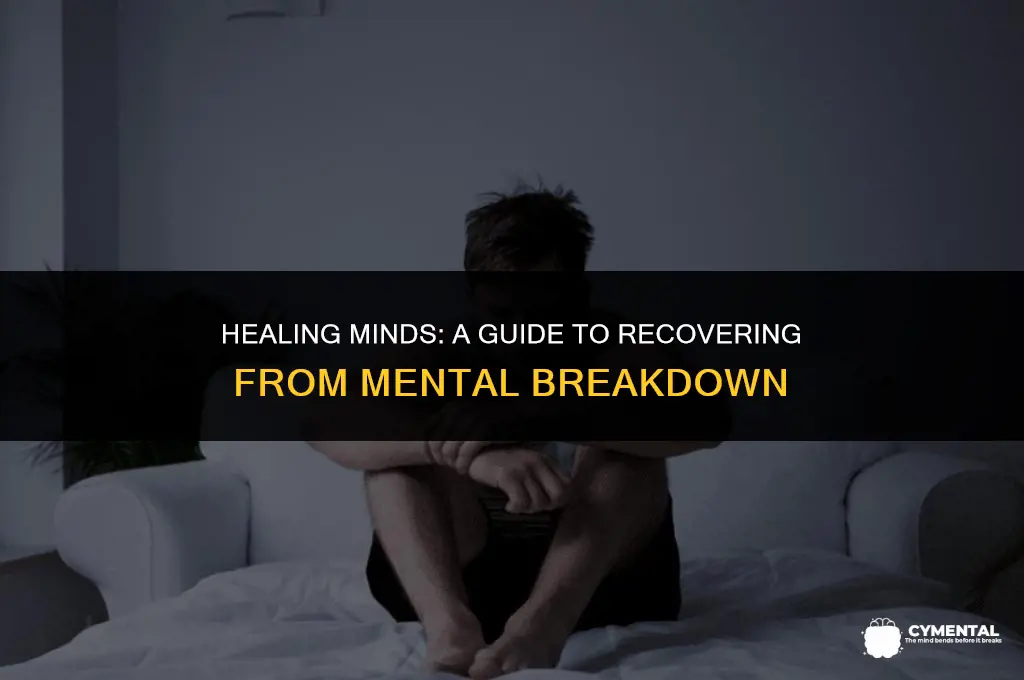
Recovering from a mental breakdown is a journey that requires patience, self-compassion, and the right support. It's essential to acknowledge that seeking help is a sign of strength, not weakness. The first step towards recovery is often reaching out to a mental health professional who can provide an accurate diagnosis and tailored treatment plan. This may include therapy, medication, or a combination of both. Alongside professional help, incorporating self-care practices such as regular exercise, healthy eating, and sufficient sleep can significantly aid in the recovery process. Building a strong support network of friends and family who can offer emotional support and practical assistance is also crucial. Remember, recovery is not linear, and it's okay to have setbacks. The key is to be gentle with yourself and to keep moving forward, one step at a time.
Explore related products


What You'll Learn
- Seek Professional Help: Consult a mental health professional for guidance and support
- Practice Self-Care: Engage in activities that promote physical and emotional well-being
- Build a Support Network: Connect with friends, family, or support groups for encouragement
- Develop Coping Strategies: Learn techniques to manage stress and negative emotions effectively
- Set Realistic Goals: Break down recovery into achievable steps and celebrate progress

Seek Professional Help: Consult a mental health professional for guidance and support
Recognizing the need for professional help is a crucial step in the journey towards recovery from a mental breakdown. Mental health professionals are trained to provide the necessary guidance and support to help individuals navigate their challenges and regain stability. Seeking professional help can involve various approaches, such as therapy, counseling, medication, or a combination of these methods. It is essential to find a professional who specializes in the specific issues you are facing to ensure you receive the most effective care.
One of the primary benefits of consulting a mental health professional is the opportunity to develop a personalized treatment plan. This plan will be tailored to your unique needs and circumstances, taking into account factors such as your symptoms, medical history, and personal goals. A mental health professional can also provide you with valuable insights and coping strategies to help you manage your symptoms and improve your overall well-being.
In addition to individual therapy, group therapy can be a beneficial option for those recovering from a mental breakdown. Group therapy allows you to connect with others who are experiencing similar challenges, providing a sense of community and support. It can also help you develop important social skills and learn from the experiences of others.
Medication may also be a component of your treatment plan, depending on the severity of your symptoms and the specific diagnosis. Psychiatric medications can help alleviate symptoms such as depression, anxiety, and psychosis, allowing you to better engage in therapy and other recovery activities. It is important to work closely with your mental health professional to monitor the effectiveness of any medications and adjust your treatment plan as needed.
Ultimately, seeking professional help is a sign of strength and a crucial step towards recovery. By consulting a mental health professional, you can gain the guidance and support you need to overcome your challenges and regain control of your life. Remember, recovery is possible, and with the right help, you can achieve it.
Understanding Mental Hygiene Warrants: A Comprehensive Guide
You may want to see also
Explore related products


$18.59 $19.95


Practice Self-Care: Engage in activities that promote physical and emotional well-being
Engaging in self-care is a crucial step in the recovery process from a mental breakdown. It involves actively participating in activities that nurture both your physical and emotional health. This can include a wide range of practices, from regular exercise and healthy eating to mindfulness meditation and creative expression. The key is to find activities that resonate with you personally and make them a consistent part of your routine.
One effective way to practice self-care is through physical activity. Exercise has been shown to release endorphins, which are natural mood elevators. It can also help reduce stress and anxiety, improve sleep, and boost self-esteem. Aim for at least 30 minutes of moderate-intensity exercise most days of the week. This could be anything from brisk walking or cycling to swimming or yoga. The important thing is to choose an activity you enjoy and can stick with over time.
Another important aspect of self-care is maintaining a healthy diet. Eating well can have a significant impact on your mood and energy levels. Focus on incorporating whole, nutrient-dense foods into your meals, such as fruits, vegetables, whole grains, lean proteins, and healthy fats. Limit processed and sugary foods, which can exacerbate mood swings and energy crashes. Staying hydrated is also essential, so aim to drink plenty of water throughout the day.
Mindfulness practices, such as meditation and deep breathing exercises, can also be incredibly beneficial for mental health. These techniques can help you become more aware of your thoughts and emotions, allowing you to better manage stress and anxiety. Set aside a few minutes each day for mindfulness practice. Start with short sessions and gradually increase the duration as you become more comfortable with the practice.
Lastly, engaging in activities that bring you joy and fulfillment is an important part of self-care. This could be anything from reading or painting to spending time with loved ones or pursuing a new hobby. Make time for these activities in your schedule, even if it's just a small amount of time each day. Remember, self-care is not selfish; it's essential for your well-being and recovery.
Understanding Mental Status Exams for Disability Benefits
You may want to see also
Explore related products


Build a Support Network: Connect with friends, family, or support groups for encouragement
One of the most critical steps in recovering from a mental breakdown is establishing a robust support network. This involves connecting with friends, family, or support groups who can offer encouragement, understanding, and practical help during the recovery process. Building this network can be challenging, especially when one's mental health is compromised, but it is essential for long-term recovery and stability.
To start building a support network, it is important to identify individuals who are supportive and non-judgmental. These could be close friends, family members, or even colleagues who have shown empathy and understanding in the past. Reaching out to these individuals and explaining the situation can be the first step in creating a support system. It is also beneficial to join support groups, either in-person or online, where individuals can connect with others who have experienced similar struggles. These groups often provide a safe space to share feelings, receive advice, and learn coping strategies from others who have successfully navigated mental health challenges.
In addition to emotional support, a support network can also provide practical assistance. This could include help with daily tasks, such as grocery shopping or household chores, or assistance with managing finances or legal matters. Having a support network in place can also help individuals adhere to treatment plans, attend therapy sessions, and take medication as prescribed.
It is important to note that building a support network is not a one-time event but an ongoing process. As individuals recover and their needs change, their support network may also evolve. It is essential to communicate openly with support network members about changing needs and to be willing to accept help when it is offered.
In conclusion, building a support network is a crucial component of recovering from a mental breakdown. By connecting with supportive individuals and groups, individuals can access the emotional and practical help they need to navigate the recovery process and achieve long-term stability.
Preparing Your Mind: A Guide to Mental Readiness for Incarceration
You may want to see also
Explore related products


Develop Coping Strategies: Learn techniques to manage stress and negative emotions effectively
Developing effective coping strategies is crucial in the journey to recover from a mental breakdown. One practical technique is the use of mindfulness meditation, which involves focusing on the present moment to reduce stress and anxiety. Studies have shown that regular mindfulness practice can lead to significant reductions in symptoms of depression and anxiety. To get started, find a quiet place to sit comfortably for 10-15 minutes each day, focusing on your breath and gently bringing your attention back to the present whenever your mind wanders.
Another valuable coping strategy is cognitive restructuring, a technique used in cognitive-behavioral therapy (CBT) to challenge and change negative thought patterns. This involves identifying distorted thoughts, examining the evidence for and against them, and replacing them with more balanced and realistic thoughts. For example, if you find yourself thinking, "I'm a complete failure," you could challenge this thought by listing your accomplishments and recognizing that everyone makes mistakes. Over time, this practice can help shift your perspective and reduce feelings of hopelessness.
Physical activity is also an essential component of managing stress and negative emotions. Exercise releases endorphins, which are natural mood lifters, and can help reduce symptoms of anxiety and depression. Aim for at least 30 minutes of moderate-intensity exercise most days of the week, such as brisk walking, cycling, or swimming. Additionally, maintaining a healthy diet rich in fruits, vegetables, whole grains, and lean proteins can support your mental health and provide the necessary nutrients for optimal brain function.
Social support is another critical factor in developing coping strategies. Connecting with friends, family, or a support group can provide emotional support, reduce feelings of isolation, and offer practical help during difficult times. If you're struggling to build a support network, consider joining a local community group or seeking out online resources and forums where you can connect with others who share similar experiences.
Lastly, it's essential to prioritize self-care and set healthy boundaries. This may involve saying no to commitments that feel overwhelming, taking breaks when needed, and engaging in activities that bring you joy and relaxation. Remember that taking care of yourself is not selfish; it's a necessary step in managing stress and maintaining your mental health. By incorporating these coping strategies into your daily routine, you can build resilience and better navigate the challenges of recovering from a mental breakdown.
Mastering the Mindset: Your Guide to Interview Preparation
You may want to see also
Explore related products






Set Realistic Goals: Break down recovery into achievable steps and celebrate progress
One of the most effective strategies for recovering from a mental breakdown is to set realistic goals. This involves breaking down the recovery process into smaller, manageable steps that can be achieved over time. By doing so, individuals can avoid feeling overwhelmed and instead focus on making steady progress. For example, someone might start by setting a goal to get out of bed and take a shower every day, then gradually add in other activities such as going for a walk or talking to a friend.
It's important to celebrate progress along the way, no matter how small the achievements may seem. This can help to build motivation and reinforce positive behaviors. Celebrating progress can take many forms, such as treating oneself to a favorite meal, watching a movie, or simply taking a moment to reflect on the progress that has been made. By acknowledging and celebrating small victories, individuals can stay motivated and committed to their recovery goals.
Another key aspect of setting realistic goals is to be flexible and adaptable. Recovery is not a linear process, and there will likely be setbacks and challenges along the way. By being flexible and willing to adjust goals as needed, individuals can better navigate these challenges and stay on track with their recovery. For instance, if someone finds that they are struggling to meet a particular goal, they might need to break it down into even smaller steps or adjust the timeframe for achieving it.
In addition to setting realistic goals, it's also important to prioritize self-care during the recovery process. This can include getting enough sleep, eating a healthy diet, and engaging in activities that promote relaxation and stress relief. By taking care of their physical and emotional needs, individuals can better position themselves to achieve their recovery goals.
Finally, seeking support from others can be a valuable asset in the recovery process. This can include talking to friends and family, joining a support group, or working with a mental health professional. Having a strong support system in place can provide encouragement, guidance, and accountability, all of which can help individuals stay on track with their recovery goals.
Unlocking Mental Commitment: A Guide to Its Four Essential Components
You may want to see also
Frequently asked questions
Signs of a mental breakdown can include extreme stress, anxiety, depression, irritability, sleep disturbances, appetite changes, social withdrawal, and feelings of hopelessness or worthlessness. It's important to recognize these signs early to seek appropriate help.
Seeking help during a mental breakdown can involve reaching out to a mental health professional, such as a therapist or psychiatrist, who can provide therapy, medication, or other forms of treatment. Additionally, contacting a support hotline or seeking support from friends and family can be beneficial.
Self-care strategies to aid in recovery from a mental breakdown include practicing relaxation techniques like meditation or deep breathing, engaging in regular physical activity, maintaining a healthy diet, getting adequate sleep, and avoiding substances like alcohol and drugs that can exacerbate symptoms.
The duration of recovery from a mental breakdown varies from person to person and depends on factors such as the severity of the breakdown, the individual's access to support and treatment, and their overall mental health history. With appropriate help and self-care, many people can recover within a few weeks to a few months.