Noah Parker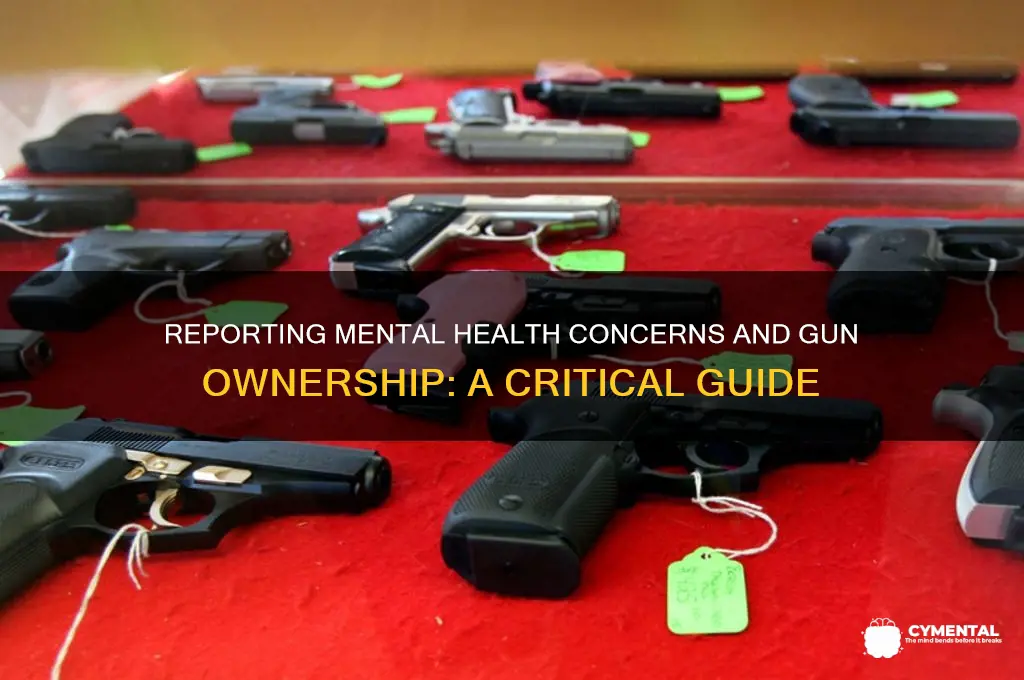
Reporting mental health issues related to gun ownership is a critical step in ensuring public safety and providing necessary support to individuals in crisis. If you or someone you know is experiencing mental health challenges and has access to firearms, it is essential to act responsibly and seek help promptly. Many jurisdictions have protocols in place to address these concerns, often involving law enforcement, mental health professionals, or community resources. Reporting can be done anonymously in some cases, and the goal is to prevent potential harm while connecting the individual with appropriate care. It is important to approach this situation with empathy and understanding, recognizing that mental health issues are treatable and that early intervention can make a significant difference. Always prioritize safety and follow local guidelines when addressing these sensitive matters.
| Characteristics | Values |
|---|---|
| Reporting Process | Varies by state; typically involves contacting local law enforcement, mental health professionals, or using state-specific reporting systems. |
| Legal Basis | Often grounded in state laws (e.g., red flag laws, extreme risk protection orders) allowing temporary firearm removal from individuals deemed a risk to themselves or others. |
| Eligibility to Report | Anyone (family, law enforcement, healthcare providers) can report in most states with red flag laws. |
| Evidence Required | Varies; may include documented threats, self-harm attempts, or professional assessments indicating risk. |
| Firearm Removal Duration | Temporary (e.g., 1-12 months) depending on state law and court decisions. |
| Due Process | Requires a court hearing where the individual can contest the order; evidence must demonstrate clear and present danger. |
| States with Red Flag Laws (2023) | 19 states + D.C. (e.g., California, Florida, New York, Colorado). |
| Federal Support | Bipartisan Safer Communities Act (2022) provides funding for states to implement crisis intervention programs. |
| Confidentiality | Protected under HIPAA for healthcare providers; law enforcement reports may be part of public record depending on jurisdiction. |
| Mental Health Resources | Often paired with crisis intervention teams, counseling, and support services for reported individuals. |
| Penalties for False Reports | Varies; may include fines or criminal charges for knowingly filing false reports. |
| Effectiveness | Studies suggest red flag laws reduce firearm suicides and mass shootings, but data is limited. |
Explore related products


What You'll Learn
- Recognizing warning signs in individuals with access to firearms
- Legal obligations for reporting threats involving guns and mental health
- Safe communication strategies when addressing gun-related mental health concerns
- Resources for anonymous reporting of mental health and firearm risks
- Collaboration with law enforcement and mental health professionals in crisis situations

Recognizing warning signs in individuals with access to firearms
Individuals with access to firearms who exhibit sudden changes in behavior or mood may be signaling an underlying mental health crisis. Look for signs such as increased aggression, withdrawal from social activities, or expressions of hopelessness. These shifts, especially when combined with a history of mental health issues, can indicate a heightened risk. If you notice someone becoming uncharacteristically irritable or making ominous statements about death or violence, take these as red flags. Document specific instances and behaviors to provide clear, actionable information when reporting concerns.
Recognizing warning signs requires a balance between vigilance and empathy. Avoid jumping to conclusions based on isolated incidents, but do not dismiss patterns of troubling behavior. For instance, a person who starts obsessively researching firearms or stockpiling ammunition alongside depressive episodes warrants attention. Engage in non-confrontational conversations to assess their well-being, using open-ended questions like, “How are you managing everything lately?” or “I’ve noticed you seem different—is there something going on?” Your goal is to gather insights while offering support, not to provoke defensiveness.
Legal and ethical considerations complicate reporting, but inaction can have dire consequences. Familiarize yourself with local laws regarding mental health reporting and firearm restrictions. In some jurisdictions, you can file an anonymous report with law enforcement or mental health authorities, who may intervene to assess the individual’s risk. If the person is an immediate threat to themselves or others, call emergency services without hesitation. Remember, reporting is not about punishing the individual but about preventing harm and connecting them with necessary resources.
Practical steps can mitigate risks while awaiting professional intervention. If you share a household with someone exhibiting warning signs, consider securing firearms in a locked safe or storing them temporarily with a trusted third party. Encourage the individual to voluntarily surrender their firearms until their mental health stabilizes. Offer to accompany them to a mental health appointment or help them access crisis hotlines. By combining proactive measures with compassionate communication, you can address the situation effectively while prioritizing safety for all involved.
Nurturing Mental Wellness: Practical Strategies for Managing Mental Health Challenges
You may want to see also
Explore related products



Legal obligations for reporting threats involving guns and mental health
Reporting threats involving guns and mental health is a critical responsibility that intersects legal, ethical, and safety concerns. In many jurisdictions, individuals are legally obligated to report credible threats of violence, particularly when firearms are involved. For example, in the United States, the Brady Handgun Violence Prevention Act requires background checks for firearm purchases, and some states have "red flag" laws allowing law enforcement to temporarily confiscate firearms from individuals deemed a danger to themselves or others. Failure to report known threats can result in liability, especially if harm occurs and it’s determined the threat was foreseeable. Understanding these obligations is essential for anyone who becomes aware of such risks.
The process of reporting varies by location but generally involves contacting local law enforcement or a designated mental health crisis team. In California, for instance, individuals can file a Gun Violence Restraining Order (GVRO) if they believe someone poses an immediate threat. Similarly, in Australia, the National Firearms Agreement mandates reporting concerns about firearm owners’ mental health to police. When reporting, provide specific details: the individual’s name, the nature of the threat, any observed behavior indicating instability, and evidence of firearm access. Vague or unsubstantiated claims may not trigger action, so clarity and precision are key.
A common challenge is balancing the duty to report with concerns about stigmatizing individuals with mental health issues. Not all people experiencing mental health crises are violent, and over-reporting can lead to unnecessary interventions. To navigate this, focus on observable behaviors rather than assumptions about mental health. For example, report statements like, “I’m going to use my gun to hurt someone,” rather than general concerns about depression or anxiety. This approach ensures compliance with legal obligations while minimizing harm to those who do not pose a threat.
Legal obligations often extend beyond initial reporting. In some cases, follow-up actions may be required, such as testifying in court proceedings related to firearm restrictions. Additionally, certain professions—teachers, healthcare providers, and law enforcement officers—may have heightened duties under mandatory reporting laws. For instance, under Florida’s Baker Act, mental health professionals must initiate involuntary examination if a patient meets specific criteria, including threats involving weapons. Familiarize yourself with profession-specific requirements to avoid legal repercussions.
Ultimately, reporting threats involving guns and mental health is a delicate but necessary act. It requires awareness of local laws, a focus on concrete evidence, and a commitment to public safety. While the process may feel intrusive, it serves as a vital safeguard against preventable tragedies. By understanding and fulfilling these legal obligations, individuals can contribute to a safer community without unnecessarily targeting those living with mental health conditions.
Empowering Teens: Strategies for Supporting Mental Health Challenges
You may want to see also
Explore related products


Safe communication strategies when addressing gun-related mental health concerns
Reporting mental health concerns related to gun ownership requires a delicate balance of empathy, clarity, and urgency. Begin by choosing a private, calm setting to discuss your observations. Avoid accusatory language; instead, use "I" statements to express concern, such as, "I’ve noticed changes in your behavior, and I’m worried about your safety." This approach minimizes defensiveness and fosters openness. If the person is receptive, suggest professional help, emphasizing resources like the National Suicide Prevention Lifeline (988) or local mental health crisis teams. Always prioritize de-escalation, ensuring both parties feel heard and respected.
When formal reporting is necessary, know the legal frameworks in your state. Many jurisdictions have red flag laws allowing law enforcement to temporarily remove firearms from individuals deemed at risk. Contact your local police department’s non-emergency line to report concerns, providing specific examples of behavior that indicate a risk of harm to self or others. Avoid vague statements; details like "They mentioned harming themselves while handling a gun" carry more weight. Be prepared to cooperate with authorities, but also advocate for mental health intervention alongside any legal action.
A comparative analysis of communication strategies reveals that indirect approaches often yield better outcomes. For instance, framing the conversation around "ensuring safety" rather than "taking away guns" can reduce resistance. Compare this to direct confrontation, which may trigger denial or anger. Similarly, involving a trusted third party, such as a mutual friend or clergy member, can soften the impact of the discussion. Studies show that individuals are more likely to accept help when it comes from someone they perceive as neutral or supportive.
Instructing family members or friends on how to respond during a crisis is critical. Develop a safety plan that includes removing firearms from the home temporarily, even if it means storing them with a trusted individual. Teach the use of calming techniques, such as deep breathing or grounding exercises, to de-escalate tense situations. For adolescents (ages 12–17), limit unsupervised access to firearms and educate them on recognizing warning signs in peers. Always keep crisis hotline numbers visible in the home, and ensure everyone knows how to contact emergency services discreetly if needed.
Persuasive arguments for proactive communication highlight the dual responsibility of protecting lives and preserving relationships. By addressing mental health concerns early, you not only prevent potential tragedies but also demonstrate care and commitment to the individual’s well-being. Share statistics, such as the fact that access to firearms increases the risk of suicide by 400%, to underscore the urgency of intervention. Encourage ongoing dialogue about mental health, normalizing it as a routine part of family or community discussions. This proactive stance can create a culture of safety that benefits everyone involved.
Recognizing Mental Health Issues: Essential Signs and Early Detection Tips
You may want to see also
Explore related products


Resources for anonymous reporting of mental health and firearm risks
In the United States, the intersection of mental health and firearm ownership is a critical public safety concern. For those seeking to report potential risks anonymously, several resources and mechanisms are available. These channels are designed to balance individual privacy with community safety, ensuring that concerns are addressed without compromising personal identities.
Analytical Perspective:
Anonymous reporting systems for mental health and firearm risks often leverage third-party platforms or hotlines to shield the reporter’s identity. For instance, the National Threat Assessment Center (NTAC) provides guidelines for identifying concerning behaviors, while organizations like the Crisis Text Line (text “HOME” to 741741) allow individuals to report worries about someone’s mental state and potential access to firearms. These platforms typically triage reports based on severity, forwarding high-risk cases to law enforcement or mental health professionals. A key challenge, however, is ensuring these reports lead to intervention without violating civil liberties, as false or biased reports can have serious consequences.
Instructive Steps:
To report concerns anonymously, follow these steps:
- Identify the Platform: Use national hotlines like the National Suicide Prevention Lifeline (988) or state-specific firearm risk reporting systems, such as those in California or New York.
- Provide Specific Details: Include observable behaviors (e.g., threats of violence, erratic actions) and any known firearm ownership. Avoid speculation or assumptions.
- Follow Up if Necessary: Some systems allow for anonymous follow-up inquiries to check on the status of the report, though this varies by jurisdiction.
- Know the Limits: Anonymous reports may not always result in immediate action, as authorities must verify threats before intervening.
Comparative Analysis:
Unlike direct reporting to law enforcement, anonymous systems offer a lower-stakes option for individuals hesitant to get involved personally. For example, the Sandy Hook Promise’s “Say Something” program encourages anonymous tips about potential school violence, including firearm-related threats. In contrast, state-level red flag laws (e.g., Florida’s Risk Protection Orders) require formal petitions but often allow submissions from healthcare providers or family members. Anonymous reporting bridges the gap, providing a middle ground for those unwilling or unable to file formal reports.
Descriptive Example:
Consider a scenario where a coworker exhibits signs of severe depression and mentions owning a handgun. An anonymous report to a mental health hotline could describe the individual’s recent withdrawal, unexplained absences, and a comment about “ending it all.” The hotline operator would assess the risk, potentially contacting local authorities or mental health crisis teams to conduct a welfare check. This process ensures the reporter remains unidentified while triggering a professional evaluation of the situation.
Persuasive Takeaway:
Anonymous reporting is not a perfect solution, but it is a vital tool in preventing firearm-related tragedies linked to mental health crises. By lowering barriers to reporting, these systems empower bystanders to act without fear of retaliation or involvement in legal proceedings. While critics argue anonymity can lead to misuse, the potential to save lives outweighs these risks. Communities must be educated about these resources, ensuring they are used responsibly and effectively to protect both individuals and the public.
Supporting Educators: Strategies for Teachers Managing Mental Health Challenges
You may want to see also
Explore related products




Collaboration with law enforcement and mental health professionals in crisis situations
Effective collaboration between law enforcement and mental health professionals during crisis situations involving firearms hinges on clear protocols and shared training. Departments must establish Memoranda of Understanding (MOUs) outlining roles, communication channels, and escalation procedures. For instance, a crisis intervention team (CIT) model pairs officers with mental health clinicians, ensuring on-scene expertise. Training should include de-escalation techniques, mental health first aid, and scenario-based exercises simulating high-stress encounters. This structured approach minimizes misunderstandings and maximizes safety for all involved.
Consider the case of a 28-year-old man with schizophrenia who barricaded himself with a firearm after discontinuing medication. Without collaboration, officers might default to forceful entry, escalating the situation. However, with a CIT response, a mental health professional could assess the individual’s state, communicate through a trusted intermediary, and negotiate a peaceful resolution. This example underscores the value of integrating clinical insight into law enforcement tactics, reducing the risk of injury or fatality.
While collaboration is critical, challenges persist. Law enforcement operates on immediacy, prioritizing containment, whereas mental health professionals focus on long-term stabilization. Bridging this gap requires cross-disciplinary education. Officers should understand psychosis, trauma responses, and substance-induced behaviors, while clinicians must grasp tactical constraints and legal mandates. Regular joint drills, such as role-playing active shooter scenarios with mentally ill subjects, foster mutual respect and operational cohesion.
Practical tips for implementation include designating a 24/7 mental health liaison within police departments, equipping officers with crisis hotlines for real-time consultation, and creating regional databases of individuals with known mental health histories and firearm access. For families or caregivers, red flag laws in 19 states allow temporary firearm removal if a court deems an individual a danger to self or others. These measures, when paired with collaborative frameworks, transform reactive responses into proactive strategies.
Ultimately, successful collaboration demands ongoing evaluation and adaptation. Post-incident reviews should analyze communication breakdowns, decision-making timelines, and outcomes. Metrics like reduction in use-of-force incidents or increased voluntary hospitalizations can quantify effectiveness. By treating each crisis as a learning opportunity, law enforcement and mental health professionals can refine their partnership, saving lives while upholding public safety and individual rights.
Social Media's Impact: Rising Mental Health Issues in the Digital Age
You may want to see also
Frequently asked questions
Contact your local law enforcement agency or a mental health crisis hotline immediately. Many states have red flag laws (also known as Extreme Risk Protection Orders) that allow authorities to temporarily remove firearms from individuals deemed a risk. Provide specific details about the person’s behavior and concerns.
Yes, many jurisdictions allow anonymous reports. You can call local law enforcement, a crisis hotline, or use online reporting tools if available. However, providing your contact information can help authorities gather more details if needed.
Include the person’s name, location, specific behaviors or threats that concern you, and any details about their firearm ownership. Mention any recent changes in behavior, threats of self-harm or violence, or signs of severe mental distress.
Yes, reach out to local mental health organizations, crisis intervention teams, or gun safety programs. Encourage the individual to seek professional help, and consider offering support while ensuring your own safety. If the situation escalates, contact authorities immediately.


![Byrna SD [Self Defense] Kinetic Launcher Ultimate Bundle - Non Lethal Kinetic Projectile Launcher, Home & Personal Defense | Proudly Assembled in The USA](https://m.media-amazon.com/images/I/81wu-phEIPL._AC_UL320_.jpg)