Madison Cole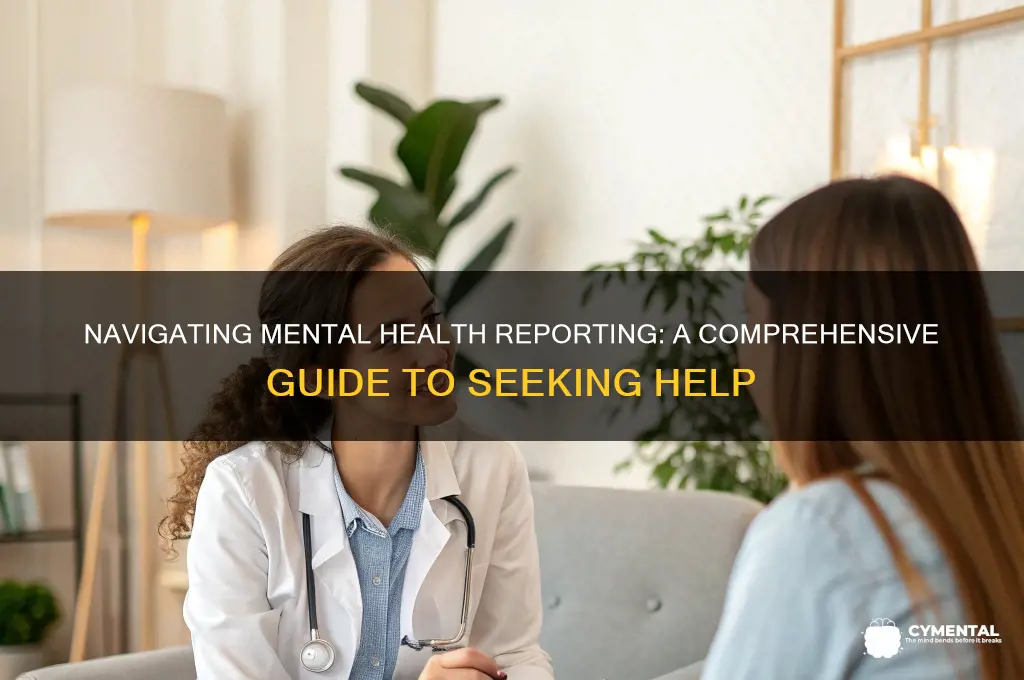
Reporting mental health issues is a crucial step toward receiving the necessary support and treatment, yet many individuals may feel uncertain about how to initiate this process. It begins with recognizing the signs and symptoms, such as persistent sadness, anxiety, or changes in behavior, and acknowledging the need for help. The first point of contact is often a trusted healthcare provider, such as a primary care physician or a mental health professional, who can conduct an assessment and recommend appropriate resources. Additionally, many workplaces, schools, and community organizations offer confidential support services or hotlines for immediate assistance. It’s important to approach the conversation openly and honestly, focusing on specific concerns and experiences. Remember, seeking help is a sign of strength, and early intervention can significantly improve outcomes and quality of life.
Explore related products


What You'll Learn
- Recognizing symptoms and signs of mental health issues in oneself or others
- Choosing the right person or authority to report concerns effectively
- Preparing what to say and how to communicate the issue clearly
- Understanding confidentiality and legal obligations when reporting mental health concerns
- Following up on the report and accessing support resources for next steps

Recognizing symptoms and signs of mental health issues in oneself or others
Mental health issues often manifest through subtle changes in behavior, mood, or physical health, making early recognition crucial. For instance, persistent sadness or irritability lasting more than two weeks could signal depression, while sudden social withdrawal might indicate anxiety or trauma. Tracking these shifts in oneself or others requires attentiveness to baseline behaviors and an understanding of how deviations may correlate with underlying conditions.
To identify symptoms in others, observe patterns rather than isolated incidents. A colleague who consistently misses deadlines, appears fatigued, and avoids social interactions may be struggling with burnout or depression. Similarly, a teenager exhibiting drastic changes in academic performance, sleep patterns, or appetite could be experiencing stress, anxiety, or even an eating disorder. Practical tips include asking open-ended questions like, "How have you been feeling lately?" and creating a safe, non-judgmental space for honest responses.
Self-assessment is equally vital but often more challenging due to the subjective nature of self-perception. Keep a journal to monitor mood fluctuations, energy levels, and sleep quality over time. For example, if you notice a persistent inability to concentrate or a growing sense of hopelessness, these could be red flags for conditions like ADHD or depression. Tools like the PHQ-9 (Patient Health Questionnaire) for depression or GAD-7 (Generalized Anxiety Disorder) for anxiety can provide structured self-evaluation, though they should not replace professional diagnosis.
When recognizing symptoms, it’s essential to differentiate between temporary stress and chronic mental health issues. For instance, feeling overwhelmed before an exam is normal, but if anxiety persists and interferes with daily functioning, it may require intervention. Age-specific considerations are also critical: children may express anxiety through physical complaints like stomachaches, while older adults might exhibit memory issues or apathy, which could be mistaken for aging rather than depression.
Finally, knowing when and how to act on observed symptoms is key. If you notice severe signs like suicidal ideation, self-harm, or psychotic episodes, immediate intervention is necessary. Contact emergency services or a mental health crisis hotline (e.g., 988 in the U.S.). For less acute concerns, encourage professional help by offering to accompany the individual to a therapist or providing resources like the Substance Abuse and Mental Health Services Administration (SAMHSA) helpline. Early recognition paired with compassionate action can make a significant difference in outcomes.
Debunking the Myth: Military Service and Mental Health Misconceptions
You may want to see also
Explore related products




Choosing the right person or authority to report concerns effectively
Identifying the appropriate individual or authority to report mental health concerns is crucial for ensuring timely and effective intervention. The first step involves understanding the nature of the issue and the relationship you have with the person in question. For instance, if you’re concerned about a colleague, a trusted supervisor or HR representative may be the best initial point of contact. In contrast, for a family member, a primary care physician or a mental health professional could provide a more direct pathway to support. The key is to align the reporter’s role with the recipient’s expertise and authority to act.
Consider the urgency and severity of the situation when choosing whom to approach. In cases of immediate risk, such as suicidal ideation or self-harm, emergency services (e.g., calling 911 in the U.S.) or crisis hotlines (like the National Suicide Prevention Lifeline at 988) are non-negotiable first steps. For less acute but still concerning issues, school counselors, workplace wellness programs, or community mental health centers offer structured support systems. Each of these options has specific protocols and resources tailored to different scenarios, making them more effective than a generic approach.
The cultural and personal dynamics of the relationship also play a significant role. For example, adolescents may feel more comfortable confiding in a school counselor than a parent, while older adults might prefer a trusted clergy member or family doctor. Tailoring the choice to the individual’s comfort level increases the likelihood of cooperation and reduces resistance. It’s essential to weigh confidentiality concerns, as some authorities (like therapists) are bound by stricter privacy laws than others (like employers).
Finally, educate yourself on the roles and limitations of potential reporters. For instance, while a teacher can escalate concerns to school administrators, they may not have the training to provide direct mental health interventions. Similarly, a manager can facilitate access to employee assistance programs but cannot diagnose or treat conditions. Understanding these boundaries ensures realistic expectations and prevents delays in care. By thoughtfully selecting the right person or authority, you maximize the chances of a compassionate and competent response.
Navigating Mental Health Disclosure in Job Applications: Tips for Success
You may want to see also
Explore related products

$0.53 $14.95


Preparing what to say and how to communicate the issue clearly
Effective communication about mental health begins with clarity. Before approaching someone, whether it’s a healthcare professional, employer, or trusted individual, organize your thoughts into a concise narrative. Start by identifying the core issue—anxiety, depression, burnout, or another concern—and outline specific symptoms or behaviors that have impacted your daily life. For instance, instead of saying, “I feel stressed,” specify, “I’ve been experiencing panic attacks three times a week, which interfere with my work and sleep.” This precision helps the listener understand the severity and nature of your struggle.
A persuasive approach involves framing your communication as a collaborative problem-solving conversation. Begin with a statement that invites empathy and action, such as, “I’ve been dealing with persistent feelings of hopelessness, and I’d like your support in finding resources to address this.” Use “I” statements to own your experience without sounding accusatory. For example, “I’ve noticed my productivity has dropped because of difficulty concentrating” is more effective than “You haven’t been understanding my situation.” This method encourages dialogue rather than defensiveness, making it easier for the other party to engage constructively.
Comparing mental health communication to preparing for a medical appointment can provide a useful framework. Just as you’d list symptoms, medications, and questions for a doctor, create a structured script for discussing your mental health. Include a brief history of the issue, its impact on your functioning, and any steps you’ve already taken (e.g., self-help strategies or previous therapy). For instance, “I’ve tried meditation and exercise, but my insomnia persists, and I’m seeking professional guidance.” This organized approach ensures you cover all critical points and leaves room for the listener’s input.
Descriptive language can bridge the gap between abstract emotions and tangible experiences. Instead of relying on vague terms like “overwhelmed,” paint a picture of what that feels like in your body and mind. For example, “My chest tightens, my thoughts race, and I can’t focus on tasks for more than 10 minutes at a time.” Such vivid descriptions help others grasp the intensity of your experience, fostering deeper understanding and empathy. Pair this with practical requests, such as, “I’d appreciate it if we could check in weekly to see how I’m progressing.”
Finally, rehearse your message to build confidence and ensure it’s clear and concise. Practice with a trusted friend or even aloud to yourself, refining the language until it feels natural. Anticipate questions or reactions and prepare responses, such as, “If you’re unsure how to help, I’d appreciate if you could research local therapists with me.” Remember, the goal isn’t perfection but authenticity. By preparing thoughtfully, you empower yourself to communicate effectively, increasing the likelihood of receiving the support you need.
Supporting Friends: A Guide to Reporting Mental Health Concerns Responsibly
You may want to see also
Explore related products




Understanding confidentiality and legal obligations when reporting mental health concerns
Confidentiality is a cornerstone of mental health reporting, but it’s not absolute. In most jurisdictions, mental health professionals are mandated reporters, legally obligated to disclose information if a patient poses an imminent risk of harm to themselves or others. This duty often supersedes confidentiality, creating a delicate balance between protecting privacy and ensuring public safety. For instance, if a therapist learns of a credible suicide plan, they must take action, which may include notifying emergency services or contacting the individual’s emergency contact. Understanding this legal framework is critical for both professionals and individuals seeking to report concerns responsibly.
Consider the scenario of a school counselor who notices a student exhibiting signs of severe depression and self-harm. While confidentiality is paramount in building trust, the counselor must weigh this against the student’s safety. In the U.S., the Health Insurance Portability and Accountability Act (HIPAA) allows for disclosure without consent if there’s a serious and imminent threat. However, the counselor should document their decision-making process meticulously, ensuring compliance with both ethical and legal standards. This example highlights the need for clear protocols and training in navigating confidentiality obligations.
For non-professionals reporting mental health concerns, the rules are less stringent but still require careful consideration. If you’re concerned about a friend or family member, you can encourage them to seek help without violating their privacy. However, if you believe they are in immediate danger, contacting emergency services or a crisis hotline is appropriate. In the UK, for instance, the Samaritans offers confidential support, but if you’re reporting to a healthcare provider, be aware that they may have legal obligations to act on the information. Always prioritize safety, but be mindful of the boundaries of your role.
A comparative analysis of international laws reveals varying approaches to confidentiality in mental health reporting. In Canada, the Personal Health Information Protection Act (PHIPA) permits disclosure without consent in emergencies, similar to HIPAA. In contrast, Germany’s Federal Data Protection Act emphasizes stricter privacy protections, limiting disclosures even in crisis situations. These differences underscore the importance of understanding local laws when reporting concerns. For professionals working internationally or online, this requires staying informed about the legal landscape in each relevant jurisdiction.
In conclusion, navigating confidentiality and legal obligations in mental health reporting demands a nuanced approach. Professionals must balance ethical duties with legal mandates, while non-professionals should focus on encouraging help-seeking behaviors and acting only in emergencies. Practical tips include familiarizing oneself with local laws, documenting decisions thoroughly, and leveraging crisis resources when necessary. By understanding these complexities, individuals can ensure that their actions are both compassionate and compliant, fostering trust while safeguarding lives.
Addressing America's Mental Health Crisis: Strategies for Support and Change
You may want to see also
Explore related products



Following up on the report and accessing support resources for next steps
After reporting a mental health issue, the journey toward healing and stability is just beginning. Follow-up is critical to ensure the initial report translates into actionable support. Start by confirming receipt of your report with the relevant authority or organization, whether it’s a workplace HR department, a school counselor, or a healthcare provider. Request a timeline for next steps and clarify who will be coordinating your care. For instance, if you’ve reported concerns to a primary care physician, ask if they will refer you to a specialist or if you need to schedule a follow-up appointment yourself. Document all communications—dates, names, and outcomes—to maintain clarity and accountability.
Accessing support resources requires proactive engagement with available systems. Begin by familiarizing yourself with the mental health services covered by your insurance or accessible through public health programs. For example, many insurance plans in the U.S. cover up to 20 therapy sessions annually, but this varies by provider and policy. If cost is a barrier, explore community mental health centers, which often offer sliding-scale fees based on income. Online platforms like BetterHelp or 7 Cups provide immediate support, though they may not replace long-term therapy. Additionally, peer support groups, such as those offered by the National Alliance on Mental Illness (NAMI), can provide a sense of community and shared understanding.
A common challenge in follow-up is navigating the complexity of mental health systems. To streamline this, prioritize resources that align with your specific needs. For instance, if you’re experiencing anxiety, cognitive-behavioral therapy (CBT) is evidence-based and widely available. If trauma is a factor, seek providers trained in Eye Movement Desensitization and Reprocessing (EMDR) or trauma-focused CBT. For adolescents, family-based interventions like the Maudsley Approach can be effective for eating disorders. Always verify a provider’s credentials and specialization before committing to treatment.
Persuasively, it’s essential to advocate for yourself or your loved one throughout this process. Mental health systems can be fragmented, and delays in care are common. If you’re not receiving timely responses or feel your needs aren’t being met, escalate your concerns. Contact a patient advocate or ombudsman if you’re within a hospital or institutional setting. For workplace reports, involve a union representative or legal advisor if discrimination or retaliation occurs. Remember, persistence is not just a virtue—it’s a necessity in securing the care you deserve.
Finally, integrate self-care into your follow-up strategy. While professional support is vital, small daily practices can stabilize your mental health during transitions. Maintain a consistent sleep schedule, as disruptions can exacerbate symptoms like depression or anxiety. Incorporate mindfulness or meditation for 10–15 minutes daily, using apps like Headspace or Calm for guidance. Physical activity, even a 20-minute walk, releases endorphins that counteract stress. Keep a journal to track progress and identify triggers, which can inform discussions with your care team. By combining systemic follow-up with personal resilience, you create a robust framework for recovery.
Supporting Your Son's Mental Health: Practical Steps for Parents
You may want to see also
Frequently asked questions
If you or someone else is experiencing mental health issues, start by contacting a healthcare professional, such as a primary care doctor, therapist, or psychiatrist. You can also call a mental health hotline or crisis line for immediate support. For emergencies, dial emergency services (e.g., 911 in the U.S.).
When reporting mental health concerns, provide details about the symptoms, behaviors, or changes observed, including their duration and severity. Share any relevant medical history, medications, or previous mental health treatments. If reporting for someone else, ensure you have their consent or act in their best interest if they are at risk of harm.
Yes, many mental health services and hotlines offer confidential support. When speaking with a healthcare professional, your information is protected by privacy laws like HIPAA in the U.S. Online platforms and apps may also provide anonymous options, but always verify their confidentiality policies before sharing sensitive information.