Caleb Wright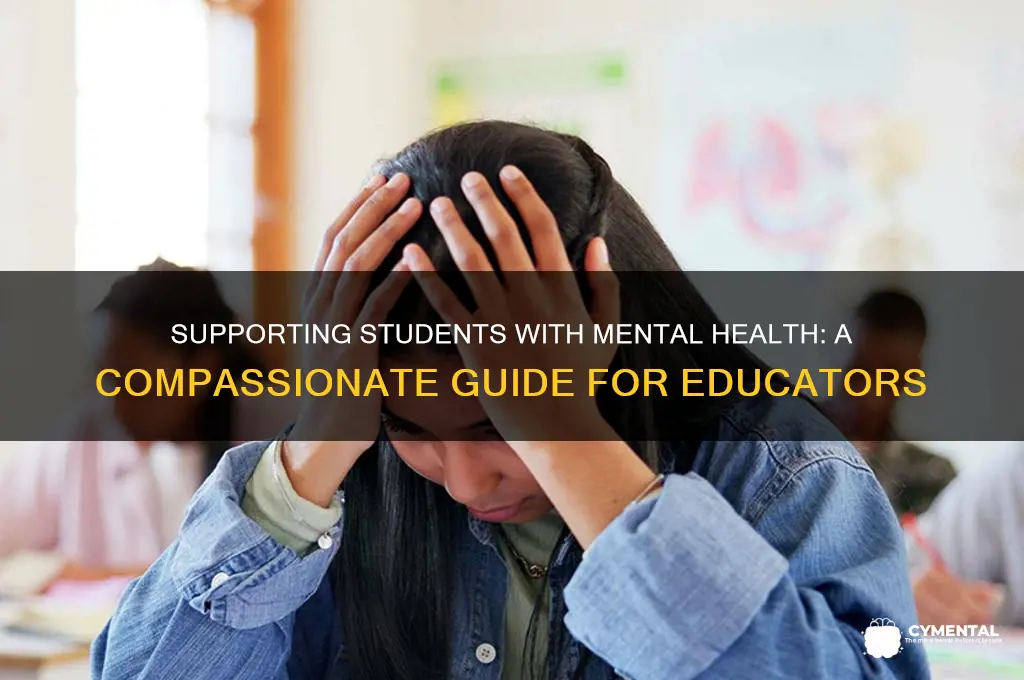
Supporting a student with mental health issues requires a compassionate, informed, and proactive approach. Educators, parents, and peers play a crucial role in creating a safe and inclusive environment where students feel comfortable seeking help. It begins with fostering open communication, actively listening without judgment, and validating their experiences. Encouraging professional support, such as counseling or therapy, while respecting their autonomy, is essential. Schools can implement mental health awareness programs, provide resources, and train staff to recognize signs of distress. Additionally, promoting self-care, maintaining consistent routines, and offering flexibility in academic expectations can significantly alleviate stress. By working together, we can ensure students feel supported, understood, and empowered to navigate their mental health challenges.
Explore related products




What You'll Learn
- Active Listening: Show empathy, give full attention, avoid judgment, and validate their feelings without interrupting
- Encourage Professional Help: Gently suggest counseling, therapy, or mental health resources available at school or locally
- Create Safe Spaces: Foster trust, ensure confidentiality, and provide a supportive environment for open communication
- Promote Self-Care: Encourage healthy habits like sleep, exercise, and mindfulness to manage stress effectively
- Collaborate with Parents: Involve families, share concerns, and work together to provide consistent support for the student

Active Listening: Show empathy, give full attention, avoid judgment, and validate their feelings without interrupting
Students struggling with mental health often feel isolated and misunderstood. Active listening can be a powerful tool to bridge this gap, offering them a safe space to express themselves without fear of judgment. It’s not about fixing their problems but about being fully present, empathetic, and validating their emotions. This approach requires intentionality—putting aside distractions, maintaining eye contact (when culturally appropriate), and avoiding interruptions. For instance, instead of jumping in with advice like, “You should just think positively,” try saying, “It sounds like this has been really overwhelming for you. I’m here to listen.”
Empathy is the cornerstone of active listening, but it’s often misunderstood. It’s not about mirroring emotions or saying, “I know exactly how you feel,” which can come across as dismissive. Instead, it’s about acknowledging their experience from their perspective. For a teenager dealing with anxiety, this might sound like, “It makes sense that you’re feeling this way, given everything you’re going through.” Validation follows naturally—affirming their feelings as real and understandable, even if you don’t fully grasp them. Research shows that validation reduces emotional distress, making it a critical step in supporting mental health.
Practical implementation of active listening involves specific techniques. Start by paraphrasing what the student has said to confirm understanding, such as, “So, what I’m hearing is that you’re feeling trapped between schoolwork and family expectations.” Use open-ended questions to encourage deeper sharing, like, “What’s been the hardest part of this for you?” Avoid judgmental language or unsolicited advice, as these can shut down communication. For younger students (ages 10–14), simpler language and more frequent check-ins may be necessary, while older teens (15–18) may appreciate more nuanced conversations.
One common pitfall is the urge to “fix” the problem. Resist this. Active listening is about holding space, not solving. For example, if a student shares they’re struggling with self-harm, instead of saying, “You need to stop that right now,” respond with, “That sounds incredibly painful. Thank you for trusting me with this.” This approach builds trust and encourages further openness. Remember, the goal is to make the student feel heard, not to provide immediate solutions.
Finally, active listening is a skill that improves with practice. Educators and caregivers can enhance their ability by setting aside dedicated time for conversations, minimizing distractions (e.g., turning off phones), and reflecting on their own biases. For instance, if you notice yourself feeling impatient, take a mental step back and refocus on the student’s words. Over time, this practice not only supports the student’s mental health but also strengthens the relationship, fostering a sense of safety and understanding that can be transformative.
Unraveling Narcissists with Mommy Issues: A Mental Breakdown Guide
You may want to see also
Explore related products


Encourage Professional Help: Gently suggest counseling, therapy, or mental health resources available at school or locally
Students grappling with mental health issues often face a silent struggle, unsure of where to turn or how to articulate their pain. As a supporter, your role isn’t to diagnose or fix, but to guide them toward resources that can. Gently suggesting professional help—whether counseling, therapy, or local mental health services—can be a lifeline, but it requires sensitivity and strategy. Start by normalizing the conversation around mental health, framing therapy not as a last resort but as a proactive step toward well-being. For instance, you might say, “Many people find it helpful to talk to someone who’s trained to listen and offer strategies—have you considered checking out the counseling services at school?”
The key lies in timing and approach. Avoid confronting a student during moments of heightened distress; instead, choose a calm, private moment when they’re more receptive. Use open-ended questions to explore their feelings and subtly introduce the idea of professional support. For example, “It sounds like you’ve been carrying a lot—do you think talking to a counselor might help you sort through some of this?” Be specific about available resources: mention the school’s mental health center, local clinics, or even telehealth options for those who prefer remote sessions. Providing concrete details, like hours of operation or contact information, removes barriers and makes the next step feel more attainable.
One common hesitation students face is the stigma surrounding therapy, often fueled by misconceptions about cost, accessibility, or what it entails. Address these concerns directly. Many schools offer free or low-cost counseling services, and local community health centers often operate on sliding scales. Share anecdotes (with confidentiality in mind) about peers who’ve benefited from therapy to humanize the process. For younger students (ages 13–18), parental involvement may be necessary, so encourage them to include their guardians in the conversation, emphasizing that seeking help is a sign of strength, not weakness.
Finally, remember that your role is to support, not to push. If a student resists the idea of professional help, don’t force it. Instead, express your willingness to revisit the topic when they’re ready and continue offering emotional support in the meantime. Keep an eye out for red flags—such as worsening symptoms or talk of self-harm—that may require immediate intervention. By approaching the conversation with empathy, specificity, and patience, you can help students see professional help not as a daunting leap, but as a natural step toward healing and growth.
Supporting Children’s Mental Health: Practical Strategies for Parents and Caregivers
You may want to see also
Explore related products


Create Safe Spaces: Foster trust, ensure confidentiality, and provide a supportive environment for open communication
Students struggling with mental health often face a silent battle, fearing judgment or repercussions if they speak up. Creating safe spaces within educational environments is crucial to breaking this silence. These spaces must be designed to foster trust, ensure confidentiality, and encourage open communication, allowing students to feel secure in sharing their experiences and seeking help.
Building Trust Through Consistency and Empathy
Trust is the foundation of any safe space. Educators and support staff must demonstrate consistent, empathetic behavior to signal that students’ concerns are taken seriously. For instance, a teacher who regularly checks in with a student in a non-intrusive manner—such as a brief, “How are you doing today?”—can gradually build rapport. Avoid making promises you cannot keep, and acknowledge limitations honestly. For example, if a student discloses suicidal thoughts, respond with, “Thank you for telling me. I’m here to help, and we’ll contact the school counselor together right now.” This approach validates the student’s feelings while ensuring immediate, appropriate action.
Ensuring Confidentiality: Clear Boundaries and Protocols
Confidentiality is non-negotiable in safe spaces. Students must know their disclosures will not be shared without their consent, except in cases of immediate danger. Schools should establish clear protocols for handling sensitive information, such as training staff to say, “What we discuss stays between us unless it involves your safety or someone else’s.” Posting confidentiality guidelines in counseling offices or classrooms reinforces this commitment. For younger students (ages 10–14), use simple language like, “Your secrets are safe here unless someone’s in trouble.” For older teens, emphasize legal protections and their right to privacy.
Designing Supportive Environments: Physical and Emotional Considerations
A safe space is as much about the environment as it is about the people. Physically, designate quiet, comfortable areas where students can speak privately—think soft lighting, comfortable seating, and minimal distractions. For virtual settings, ensure video calls are conducted in a private room with a neutral background. Emotionally, train staff to use active listening techniques, such as reflecting feelings (“It sounds like you’re feeling overwhelmed”) and avoiding judgmental language. For group settings, establish ground rules like “One mic at a time” and “No interrupting” to ensure every voice is heard respectfully.
Practical Tips for Implementation
Start small by identifying key staff members—such as counselors, nurses, or trusted teachers—to serve as safe space advocates. Provide them with training in mental health first aid and communication skills. For example, a 2-hour workshop on crisis intervention can equip staff with actionable steps. Encourage peer support programs where trained student volunteers create informal safe spaces during lunch or after school. Finally, regularly assess the effectiveness of these spaces through anonymous feedback forms, asking questions like, “Did you feel heard?” and “Would you return if needed?” Adjust strategies based on responses to continually improve the environment.
By prioritizing trust, confidentiality, and thoughtful design, schools can transform safe spaces from abstract concepts into tangible lifelines for students navigating mental health challenges.
Contacting Your Precinct for Mental Health Support: A Step-by-Step Guide
You may want to see also
Explore related products




Promote Self-Care: Encourage healthy habits like sleep, exercise, and mindfulness to manage stress effectively
Students facing mental health challenges often struggle with self-care, viewing it as a luxury rather than a necessity. This misconception can exacerbate stress, anxiety, and depression, creating a vicious cycle of neglect. Promoting self-care isn’t about adding more tasks to their plate; it’s about reframing essential habits like sleep, exercise, and mindfulness as tools for resilience. For instance, a study by the American Psychological Association found that 75% of students report sleep deprivation as a significant stressor, yet fewer than 20% actively prioritize improving their sleep hygiene. This gap highlights the need for targeted, actionable guidance.
Step 1: Prioritize Sleep as a Non-Negotiable
Encourage students to aim for 7–9 hours of sleep per night, as recommended by the National Sleep Foundation for adolescents and young adults. Practical tips include establishing a consistent bedtime routine, limiting screen time an hour before bed, and creating a sleep-conducive environment (cool, dark, quiet). For those with irregular schedules, suggest incremental adjustments—like going to bed 15 minutes earlier each night—to avoid overwhelming them with drastic changes. Caution against the myth of "catching up on sleep" over the weekend, as this disrupts circadian rhythms and can worsen insomnia.
Step 2: Integrate Movement into Daily Life
Exercise doesn’t have to mean marathon training. Suggest 20–30 minutes of moderate activity, such as brisk walking, yoga, or dancing, 3–4 times a week. For students who feel time-crunched, recommend breaking it into 10-minute sessions or incorporating movement into study breaks. Highlight the science: physical activity releases endorphins, reduces cortisol, and improves mood. For reluctant starters, frame it as an experiment—try it for two weeks and track mood changes using a journal or app like Daylio.
Step 3: Teach Mindfulness as a Skill, Not a Trend
Mindfulness isn’t about emptying the mind but observing thoughts without judgment. Start small: suggest 5-minute guided meditations (apps like Headspace or Calm offer student discounts) or mindful breathing exercises (inhale for 4 seconds, hold for 4, exhale for 6). For skeptics, emphasize its practicality—mindfulness has been shown to reduce symptoms of anxiety and depression by 30–40% in college students, according to a Harvard Medical School study. Pair it with daily activities, like eating or walking, to make it feel less daunting.
Cautions and Adaptations
Avoid a one-size-fits-all approach. For students with chronic illnesses or disabilities, exercise might need to be modified or replaced with gentle stretching or seated movements. Similarly, mindfulness can trigger discomfort for those with trauma histories; in such cases, consult a mental health professional for tailored strategies. Be mindful of language—phrases like "just relax" can feel dismissive. Instead, ask, "What’s one small step you could take today to feel more grounded?"
Promoting self-care isn’t solely the student’s burden. Educators, peers, and institutions play a role by normalizing these practices and providing resources. For example, schools can offer nap pods, fitness classes, or mindfulness workshops. By framing self-care as a proactive investment in mental health, rather than a selfish indulgence, we empower students to build habits that sustain them not just through crises, but for life. Start with one habit, celebrate small wins, and remember: progress, not perfection, is the goal.
Navigating Mental Health Conversations: A Guide for Students and Professors
You may want to see also
Explore related products




Collaborate with Parents: Involve families, share concerns, and work together to provide consistent support for the student
Parents are often the first to notice subtle changes in their child's behavior, making them invaluable allies in identifying and addressing mental health issues. A student's home environment significantly influences their well-being, and involving families creates a holistic support system. For instance, a teacher might observe increased irritability in a teenager, while parents notice sleep disturbances and withdrawal from family activities. By sharing these observations, educators and families can piece together a more comprehensive understanding of the student's struggles. This collaborative approach ensures that support is consistent across both school and home settings, which is crucial for effective intervention.
To initiate this collaboration, educators should establish open lines of communication with parents early in the school year, not just when issues arise. Regular updates, whether through emails, parent-teacher conferences, or brief phone calls, build trust and encourage parents to share their concerns without hesitation. When discussing mental health, use specific, non-judgmental language. For example, instead of saying, “Your child seems depressed,” frame it as, “I’ve noticed that your child has been less engaged in class discussions and seems more withdrawn lately. Have you observed similar changes at home?” This approach invites dialogue rather than defensiveness.
Once concerns are shared, educators and parents must work together to create a unified support plan. For younger students (ages 6–12), this might involve establishing consistent routines, such as designated homework times and bedtime schedules, both at home and in after-school programs. For adolescents (ages 13–18), the focus could shift to fostering open communication about emotions and providing access to counseling services. Schools can offer resources like workshops on mental health literacy for parents, while families can reinforce coping strategies discussed in therapy sessions. For example, if a student is learning mindfulness techniques at school, parents can encourage daily practice at home, such as 5–10 minutes of guided breathing exercises before bedtime.
However, collaboration requires sensitivity to potential challenges. Not all families have the same level of awareness or resources regarding mental health. Educators must approach these conversations with cultural humility, acknowledging that families may have different beliefs or experiences related to mental health. For instance, some families may view seeking professional help as a sign of weakness, while others may face financial barriers to accessing therapy. Schools can bridge these gaps by providing free or low-cost counseling services, offering multilingual resources, and involving community organizations that align with the family’s cultural background.
Ultimately, the goal of parent-educator collaboration is to create a safety net for the student, ensuring they feel supported in all aspects of their life. By sharing insights, aligning strategies, and addressing barriers together, families and schools can foster resilience and promote long-term mental well-being. This partnership not only benefits the student but also empowers parents to become active participants in their child’s mental health journey, strengthening family bonds in the process.
Loving Through Challenges: Supporting Partners with Mental Health Issues
You may want to see also
Frequently asked questions
Look for signs such as persistent sadness, sudden changes in behavior, withdrawal from social activities, declining academic performance, or physical symptoms like fatigue. Approach them with empathy and ask open-ended questions to encourage them to share their feelings.
Validate their feelings by acknowledging their experience and letting them know it’s okay to feel that way. Use phrases like, “I’m here for you” or “Thank you for sharing that with me.” Avoid judgment or unsolicited advice, and focus on listening actively.
Offer emotional support by being a compassionate listener, but avoid diagnosing or counseling beyond your expertise. Encourage them to seek professional help, such as school counselors or mental health services, and help connect them with appropriate resources.
Foster a safe and inclusive space by promoting open communication, reducing stigma, and being mindful of language. Provide flexible deadlines or accommodations when needed, and educate yourself about mental health to better understand their challenges.
Gently emphasize the benefits of professional support and share resources in a non-pressuring way. Offer to accompany them to their first appointment if they feel more comfortable. Be patient and continue to show your support while respecting their autonomy.