Ava Ramirez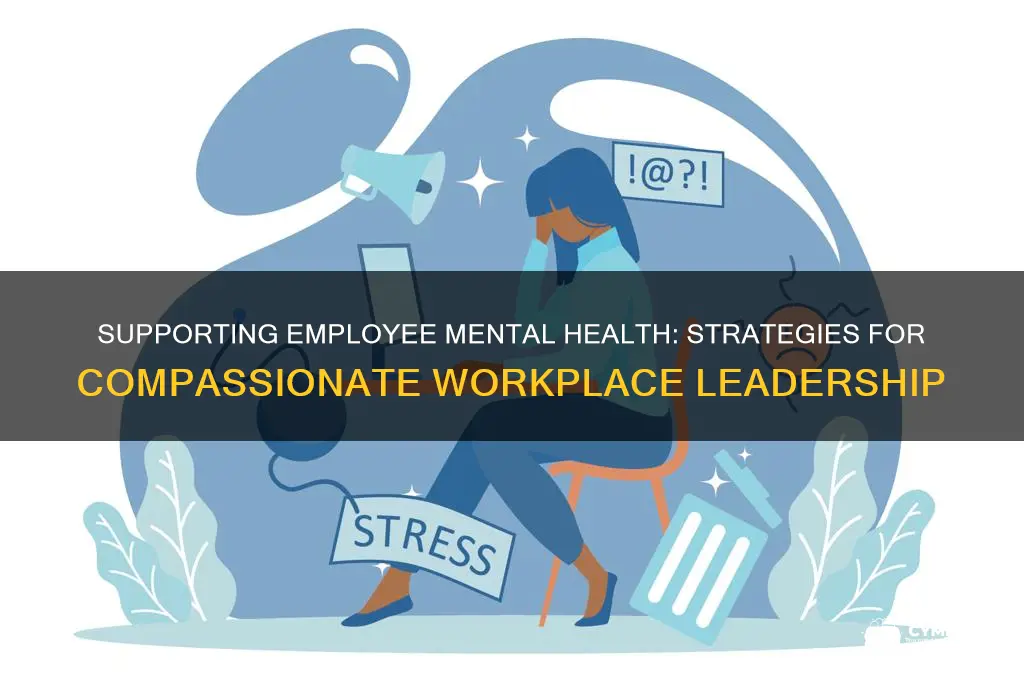
Supporting an employee with mental health issues requires a compassionate, proactive, and informed approach. Employers and colleagues play a crucial role in creating a safe and inclusive workplace environment where individuals feel comfortable seeking help without fear of stigma or judgment. Key steps include fostering open communication, offering flexible work arrangements, and providing access to mental health resources such as counseling services or employee assistance programs. Training managers to recognize signs of distress and respond empathetically is essential, as is maintaining confidentiality and respecting the employee’s privacy. By prioritizing mental well-being, organizations not only support their employees but also enhance productivity, morale, and overall workplace culture.
Explore related products


What You'll Learn
- Create a safe, non-judgmental environment for open conversations about mental health
- Offer flexible work arrangements to accommodate mental health needs
- Provide access to professional mental health resources and support programs
- Train managers to recognize signs of mental health struggles and respond effectively
- Promote work-life balance and reduce stigma through awareness campaigns

Create a safe, non-judgmental environment for open conversations about mental health
A single misplaced word can shut down a conversation about mental health. Consider the difference between "What’s wrong with you?" and "How can I support you right now?" The former invites judgment; the latter fosters trust. To create a safe space, leaders must scrutinize their language. Replace dismissive phrases like "just stay positive" with empathetic questions like "What does a good day look like for you?" Train managers to use open-ended inquiries and active listening techniques, such as paraphrasing ("So, you’re feeling overwhelmed by deadlines?") to validate emotions without imposing solutions.
Physical and digital spaces signal safety as much as words do. A cluttered, noisy office or a public Slack channel can deter employees from sharing vulnerabilities. Designate quiet rooms for private conversations, and ensure virtual meetings have a "wellness check-in" at the start. For remote teams, create anonymous feedback channels where employees can share struggles without fear of repercussions. Even small details matter: a poster in the break room with a helpline number or a monthly email highlighting mental health resources normalizes the conversation and shows commitment.
Policies alone don’t create safety—actions do. Suppose an employee discloses anxiety during a performance review. A manager might respond by adjusting deadlines or offering flexible hours, but if the team later hears, "They’re slacking off," the trust is broken. To prevent this, establish clear confidentiality protocols and enforce them. Share success stories (with consent) of employees who’ve thrived after seeking support, but avoid oversharing details. Consistency is key: if leadership preaches openness but penalizes someone for taking a mental health day, the message becomes hollow.
Cultivating a non-judgmental culture requires ongoing effort, not a one-time workshop. Start by integrating mental health discussions into regular team meetings, not just during "awareness weeks." Encourage peer-to-peer support by training volunteers as mental health allies, identifiable by a discreet badge or email signature. Measure progress through anonymous surveys every six months, asking questions like, "Do you feel comfortable discussing mental health with your manager?" If responses reveal gaps, address them publicly—admitting flaws builds credibility. Over time, this shifts the narrative from "mental health is a personal issue" to "mental health is a shared responsibility."
Election 2020: Mental Health Policies and Presidential Priorities
You may want to see also
Explore related products


Offer flexible work arrangements to accommodate mental health needs
Flexibility in the workplace can be a powerful tool for supporting employees with mental health issues, offering a sense of control and autonomy that may be lacking in their personal lives. For instance, allowing an employee to start their day later to accommodate morning anxiety or providing the option to work from home on particularly stressful days can significantly reduce their overall stress levels. This approach not only benefits the employee but also the employer, as it can lead to increased productivity and job satisfaction. A study by the World Health Organization (WHO) found that flexible work arrangements can reduce absenteeism and presenteeism, resulting in a 10-15% increase in productivity.
To implement flexible work arrangements effectively, consider the following steps: assess the employee's needs through open and honest conversations, establish clear guidelines and expectations for flexible work, and regularly review and adjust the arrangement as needed. For example, an employee with depression may require a reduced workload or adjusted deadlines during particularly challenging periods. By working together to create a customized plan, employers can demonstrate their commitment to supporting their employees' mental health. Additionally, providing resources such as access to mental health professionals or online therapy platforms can further enhance the effectiveness of flexible work arrangements.
One common concern among employers is the potential for abuse or decreased productivity when offering flexible work arrangements. However, research suggests that employees who are granted flexibility are often more motivated and engaged, leading to increased productivity and job satisfaction. A report by the Society for Human Resource Management (SHRM) found that companies with flexible work policies experienced a 20% increase in employee retention and a 15% increase in job satisfaction. To mitigate risks, employers can set clear boundaries, monitor progress, and maintain open lines of communication with employees. By doing so, they can create a culture of trust and accountability that supports both the employee's mental health and the organization's goals.
A comparative analysis of different industries reveals that technology and creative sectors are often more adept at offering flexible work arrangements, while traditional industries like manufacturing and healthcare may face greater challenges. However, even in these sectors, innovative solutions are emerging. For instance, some hospitals are implementing "quiet rooms" or "recharge stations" where employees can take short breaks to practice mindfulness or engage in stress-reducing activities. By adapting flexible work arrangements to the unique needs and constraints of their industry, employers can create a more inclusive and supportive environment for employees with mental health issues.
In conclusion, offering flexible work arrangements to accommodate mental health needs requires a nuanced and individualized approach. By combining empathy, clear communication, and practical strategies, employers can create a workplace culture that prioritizes mental health and well-being. As a practical tip, consider providing employees with a list of suggested flexible work options, such as adjusted hours, remote work, or job sharing, and encouraging them to propose their own ideas. This collaborative approach can foster a sense of ownership and empowerment, ultimately leading to better outcomes for both the employee and the organization. Remember, the goal is not to provide a one-size-fits-all solution, but to create a tailored and responsive support system that meets the unique needs of each employee.
Identifying Mental Health Concerns in Your Wife: A Compassionate Guide
You may want to see also
Explore related products


Provide access to professional mental health resources and support programs
Employees struggling with mental health issues often face a critical barrier: lack of access to professional support. While workplace initiatives like wellness programs are valuable, they cannot replace the expertise of trained mental health professionals. Providing direct access to these resources is a cornerstone of effective employee support.
This means going beyond generic EAPs (Employee Assistance Programs) that often offer limited sessions or broad, non-specialized counseling. Consider partnering with providers offering diverse therapeutic modalities, such as cognitive-behavioral therapy, dialectical behavior therapy, or trauma-informed care, to cater to varying employee needs.
A tiered approach can be highly effective. Start with a baseline offering of confidential counseling sessions (ideally 6-12 per year) covered by the company. Supplement this with access to psychiatrists for medication management when appropriate, ensuring employees can receive comprehensive care. Additionally, explore partnerships with digital mental health platforms that provide evidence-based tools like cognitive behavioral therapy modules, mindfulness exercises, and peer support communities. These platforms can offer 24/7 accessibility and anonymity, addressing potential stigma concerns.
Cost should not be a barrier to care. Negotiate discounted rates with providers or consider subsidizing a portion of therapy costs for employees. Transparency is key: clearly communicate the available resources, eligibility criteria, and how to access them. Regularly promote these programs through multiple channels (email, intranet, team meetings) to ensure awareness and encourage utilization.
Remember, providing access is just the first step. Foster a culture where seeking help is encouraged and destigmatized. Train managers to recognize signs of distress and confidently direct employees to available resources. By combining accessible professional support with a supportive workplace environment, you create a powerful framework for employee well-being.
Supporting Neighbours: Reporting Mental Health Concerns in the UK Responsibly
You may want to see also
Explore related products


Train managers to recognize signs of mental health struggles and respond effectively
Managers often serve as the first line of defense in identifying mental health struggles among employees, yet many lack the training to recognize subtle signs or respond appropriately. According to a survey by Mind, 56% of employers reported seeing an increase in mental health issues among staff, but only 24% felt well-equipped to handle them. This gap highlights the urgent need for targeted training programs that go beyond generic awareness and equip managers with actionable skills.
Effective training begins with education on the behavioral and emotional indicators of mental health issues. Managers should learn to spot changes such as increased absenteeism, decreased productivity, withdrawal from social interactions, or uncharacteristic irritability. For example, an employee who once thrived in team meetings might suddenly become silent or disengaged. Training should also emphasize the importance of context—distinguishing between a temporary dip in performance and a persistent pattern that warrants intervention. Role-playing scenarios can be particularly useful, allowing managers to practice identifying signs in a safe, simulated environment.
Once managers can recognize these signs, they must know how to respond without overstepping boundaries or causing further distress. Training should include clear guidelines on initiating conversations, such as using open-ended questions like, “I’ve noticed you seem more stressed lately—how are you doing?” rather than making assumptions. Managers should also be taught to focus on observable behaviors rather than diagnosing conditions, which is outside their expertise. For instance, instead of saying, “You seem depressed,” they could say, “I’ve noticed you’ve been less involved in team discussions lately—is there anything I can do to support you?”
A critical component of this training is understanding the company’s resources and policies. Managers should be familiar with employee assistance programs (EAPs), mental health benefits, and external support services. They must also know how to refer employees to these resources without pressuring them. For example, a manager might say, “We have a confidential EAP that offers counseling—would you like me to provide more information?” Training should stress the importance of confidentiality and the manager’s role as a facilitator, not a therapist.
Finally, training should address the manager’s own well-being. Supporting employees with mental health issues can be emotionally taxing, and managers need tools to manage their stress and avoid burnout. This includes self-care strategies, such as setting boundaries, seeking peer support, and accessing their own mental health resources. By prioritizing their well-being, managers can model healthy behaviors and sustain their ability to support their teams effectively.
Incorporating these elements into manager training creates a workplace culture that is proactive, empathetic, and equipped to address mental health challenges. It transforms managers from passive observers into active allies, fostering an environment where employees feel seen, supported, and valued.
Unraveling Narcissists with Mommy Issues: A Mental Breakdown Guide
You may want to see also
Explore related products


Promote work-life balance and reduce stigma through awareness campaigns
Work-life balance isn’t just a buzzword—it’s a cornerstone of mental health. Employees who struggle to separate their professional and personal lives are more prone to burnout, anxiety, and depression. Awareness campaigns can reframe this issue by normalizing boundaries and demonstrating their long-term benefits. For instance, a campaign could highlight data showing that employees who take regular breaks are 20% more productive. Pair this with actionable tips, like scheduling "focus blocks" for deep work and "buffer zones" to transition between tasks and personal time. The goal is to shift the narrative from "always on" to "strategically engaged."
Stigma thrives in silence, but awareness campaigns can dismantle it by giving mental health a voice. Start by sharing real stories from employees who’ve sought support, emphasizing their courage and the positive outcomes. Use visuals and language that humanize the issue—for example, a poster series with phrases like, "It’s okay to not be okay" paired with images of diverse employees in candid moments. Caution: avoid tokenism. Ensure the campaign is backed by tangible resources, such as an anonymous helpline or access to counseling services. Authenticity builds trust, which is critical for encouraging employees to seek help without fear of judgment.
Awareness isn’t a one-time event—it’s an ongoing conversation. Structure campaigns as seasonal initiatives, each with a specific focus. For instance, a fall campaign could target stress management during peak workloads, while a spring campaign might emphasize self-care and rejuvenation. Incorporate interactive elements like workshops, panel discussions, or even gamified challenges (e.g., a "Mental Health Month" leaderboard for tracking self-care activities). Consistency keeps the issue top-of-mind, while variety prevents complacency. Remember: the goal is to embed mental health into the organizational culture, not just tick a box.
Finally, measure the impact of your campaigns to ensure they’re making a difference. Distribute anonymous surveys before and after each initiative to gauge shifts in stigma levels and work-life balance perceptions. Track participation rates in mental health resources and correlate them with productivity or absenteeism data. For example, if a campaign leads to a 15% increase in counseling sessions and a 10% drop in sick days, that’s a clear win. Use this data to refine future campaigns, proving that awareness isn’t just feel-good rhetoric—it’s a strategic investment in employee well-being.
Supporting Foster Teens: Strategies for Navigating Mental Health Challenges
You may want to see also
Frequently asked questions
Approach the employee privately and express genuine concern in a non-judgmental way. Use open-ended questions like, "How are you doing?" or "Is there anything I can support you with?" Ensure the conversation is voluntary and emphasize confidentiality.
Foster an open and stigma-free culture by promoting mental health awareness, providing access to resources like EAPs (Employee Assistance Programs), and offering flexible work arrangements. Train managers to recognize signs of distress and respond empathetically.
Focus on reasonable accommodations, such as adjusted deadlines or workload redistribution, while ensuring the employee feels valued and supported. Regularly check in with them to assess their needs and adjust plans as necessary, prioritizing their well-being without compromising team goals.