Harper Lewis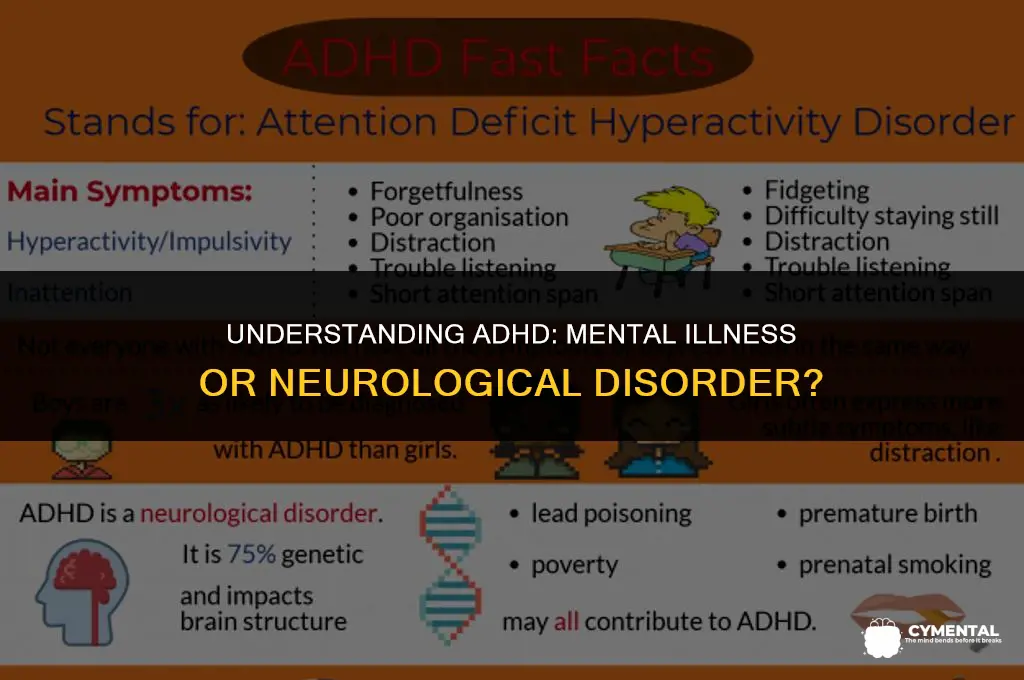
Attention Deficit Hyperactivity Disorder (ADHD) is a neurodevelopmental disorder characterized by symptoms such as inattention, hyperactivity, and impulsiveness. While it is often referred to as a mental illness, ADHD is more accurately described as a neurological disorder due to its origins in brain structure and function. Research has shown that individuals with ADHD have differences in brain regions responsible for attention and impulse control, such as the prefrontal cortex and basal ganglia. These differences can lead to difficulties in regulating behavior, sustaining attention, and controlling impulses. Understanding ADHD as a neurological disorder rather than solely a mental illness can help reduce stigma and improve treatment approaches, which often involve a combination of medication and behavioral interventions.
Explore related products



What You'll Learn
- Definition and Classification: Understanding ADHD as a neurodevelopmental disorder recognized by DSM-5
- Brain Structure and Function: Exploring differences in brain regions and neurotransmitter activity associated with ADHD
- Symptoms and Diagnosis: Identifying key symptoms like inattention, hyperactivity, and impulsivity; diagnostic criteria and tools
- Treatment Approaches: Overview of common treatments including medication (stimulants, non-stimulants) and behavioral therapies
- Societal Impact and Misconceptions: Addressing stigma, misconceptions, and the impact of ADHD on education, employment, and relationships

Definition and Classification: Understanding ADHD as a neurodevelopmental disorder recognized by DSM-5
ADHD, or Attention Deficit Hyperactivity Disorder, is classified as a neurodevelopmental disorder according to the Diagnostic and Statistical Manual of Mental Disorders, Fifth Edition (DSM-5). This classification places ADHD alongside other conditions such as autism spectrum disorder, intellectual disability, and specific learning disorders. The DSM-5 criteria for ADHD include a persistent pattern of inattention and/or hyperactivity-impulsivity that interferes with functioning or development.
The DSM-5 provides specific diagnostic criteria for ADHD, which include at least six symptoms of inattention or hyperactivity-impulsivity, or both, that have been present for at least six months to a degree that is inconsistent with developmental level and that negatively impact social, academic, or occupational functioning. The symptoms of inattention include careless mistakes, difficulty sustaining attention, not listening when spoken to directly, and forgetfulness. Symptoms of hyperactivity-impulsivity include fidgeting, restlessness, interrupting others, and difficulty waiting one's turn.
ADHD is recognized as a neurological disorder because it involves differences in brain structure and function. Research has shown that individuals with ADHD have differences in the areas of the brain responsible for attention, impulse control, and executive functioning. These differences can lead to the characteristic symptoms of ADHD, such as difficulty focusing, impulsivity, and hyperactivity.
Understanding ADHD as a neurodevelopmental disorder is important for several reasons. First, it helps to reduce stigma and promote a more compassionate view of individuals with ADHD. Second, it highlights the need for appropriate accommodations and support in educational and workplace settings. Finally, it underscores the importance of evidence-based treatments, such as medication and behavioral therapy, which can help individuals with ADHD manage their symptoms and improve their quality of life.
In conclusion, ADHD is a neurodevelopmental disorder recognized by the DSM-5, characterized by symptoms of inattention and hyperactivity-impulsivity that interfere with functioning or development. Understanding ADHD as a neurological condition is crucial for promoting empathy, providing appropriate support, and ensuring access to effective treatments.
Exploring the Controversial Link Between Liberalism and Mental Health
You may want to see also
Explore related products


Brain Structure and Function: Exploring differences in brain regions and neurotransmitter activity associated with ADHD
Recent neuroimaging studies have revealed distinct differences in brain structure and function between individuals with ADHD and those without the disorder. One key area of interest is the prefrontal cortex, responsible for executive functions such as decision-making, planning, and impulse control. In ADHD, this region often appears smaller and less active, which may contribute to the characteristic symptoms of inattention and impulsivity.
Another important brain region implicated in ADHD is the basal ganglia, a group of structures deep within the brain that play a crucial role in motor control and reward processing. Research suggests that the basal ganglia in individuals with ADHD may be less responsive to dopamine, a neurotransmitter involved in motivation and reward. This could help explain why people with ADHD often struggle with motivation and may be more prone to seeking out novel, stimulating experiences.
In addition to structural differences, functional MRI (fMRI) studies have also identified alterations in brain activity patterns in ADHD. For example, one study found that individuals with ADHD exhibited increased activity in the default mode network, a set of brain regions that are typically active when a person is at rest or daydreaming. This heightened activity may contribute to the distractibility and mind-wandering commonly seen in ADHD.
Furthermore, research has shown that ADHD is associated with imbalances in various neurotransmitters, including dopamine, norepinephrine, and serotonin. These chemical messengers play essential roles in regulating mood, attention, and behavior. In ADHD, abnormalities in neurotransmitter systems may lead to difficulties with focus, impulse control, and emotional regulation.
Understanding these differences in brain structure and function is crucial for developing effective treatments for ADHD. Medications such as stimulants, which increase dopamine and norepinephrine levels, have been shown to improve symptoms in many individuals with ADHD. Additionally, behavioral interventions that target executive function skills and impulse control may help individuals with ADHD better manage their symptoms and improve their overall quality of life.
In conclusion, while ADHD is often thought of as a behavioral disorder, it is clear that there are underlying neurological differences that contribute to its symptoms. By exploring these differences in brain structure and function, researchers can gain a better understanding of the disorder and develop more targeted, effective treatments.
Navigating Mental Health: A Compassionate Guide to Treatment and Recovery
You may want to see also
Explore related products


Symptoms and Diagnosis: Identifying key symptoms like inattention, hyperactivity, and impulsivity; diagnostic criteria and tools
Identifying ADHD involves recognizing a pattern of symptoms that significantly impact daily functioning. The core symptoms include inattention, hyperactivity, and impulsivity. Inattention manifests as difficulty sustaining focus, overlooking details, and struggling to follow instructions. Hyperactivity is characterized by excessive fidgeting, restlessness, and a constant need for movement. Impulsivity leads to hasty actions without considering consequences, interrupting others, and difficulty waiting one's turn.
Diagnosis typically involves a comprehensive evaluation by a healthcare professional, often a psychologist or psychiatrist. The process includes a thorough review of the individual's medical history, behavioral observations, and input from parents, teachers, or other caregivers. Standardized assessment tools, such as the ADHD Rating Scale or the Conners Rating Scales, are commonly used to quantify symptom severity and aid in diagnosis.
In addition to these tools, clinicians may use interviews and questionnaires to gather more detailed information about the individual's experiences and behaviors. The Diagnostic and Statistical Manual of Mental Disorders (DSM-5) provides specific criteria that must be met for an ADHD diagnosis, including the presence of at least five symptoms of inattention and/or hyperactivity-impulsivity, and evidence that these symptoms interfere with social, academic, or occupational functioning.
It's important to note that ADHD symptoms can vary widely among individuals, and the disorder often co-occurs with other conditions, such as anxiety or depression. Accurate diagnosis requires a nuanced understanding of these complexities and a tailored approach to each individual's unique presentation of symptoms.
Early identification and intervention are crucial, as untreated ADHD can lead to significant impairments in various aspects of life, including academic achievement, social relationships, and overall well-being. With appropriate diagnosis and treatment, however, individuals with ADHD can learn to manage their symptoms and thrive in their personal and professional lives.
Unveiling the Most Prevalent Mental Health Condition: A Comprehensive Guide
You may want to see also
Explore related products


Treatment Approaches: Overview of common treatments including medication (stimulants, non-stimulants) and behavioral therapies
Medication is a cornerstone in the treatment of ADHD, with stimulants being the most commonly prescribed. These include amphetamine-based drugs like Adderall and methylphenidate-based medications such as Ritalin. Stimulants work by increasing the levels of certain neurotransmitters in the brain, like dopamine and norepinephrine, which help improve focus and reduce impulsivity. Non-stimulant medications, such as atomoxetine (Strattera), are also used, particularly for those who do not respond well to stimulants or have certain medical conditions that contraindicate their use.
Behavioral therapies play a crucial role in managing ADHD symptoms, especially in children. These therapies often involve training parents and teachers to use consistent, structured approaches to discipline and reward positive behaviors. Cognitive-behavioral therapy (CBT) is another effective approach, helping individuals with ADHD to identify and change negative thought patterns and behaviors. Additionally, mindfulness and relaxation techniques can help reduce stress and improve focus.
For many individuals with ADHD, a combination of medication and behavioral therapy is most effective. This multimodal approach addresses both the biological and psychological aspects of the disorder. It's important to note that treatment plans should be tailored to the individual's specific needs and circumstances, and regular monitoring and adjustments are often necessary to ensure optimal outcomes.
In recent years, there has been growing interest in alternative and complementary treatments for ADHD. These include dietary interventions, such as eliminating certain food additives or following a Mediterranean diet, as well as supplements like omega-3 fatty acids and herbal remedies. While some of these approaches show promise, more research is needed to fully understand their efficacy and safety.
It's also crucial to address the stigma surrounding ADHD and its treatment. Many individuals may be hesitant to seek help due to misconceptions about the disorder or concerns about being labeled as having a mental illness. Educating the public about the neurobiological basis of ADHD and the effectiveness of evidence-based treatments can help reduce this stigma and encourage more people to seek the help they need.
Exploring the Enigma: Elon Musk's Mental Health in the Spotlight
You may want to see also
Explore related products


Societal Impact and Misconceptions: Addressing stigma, misconceptions, and the impact of ADHD on education, employment, and relationships
ADHD, or Attention Deficit Hyperactivity Disorder, is often misunderstood and stigmatized in society. This lack of understanding can lead to significant challenges for individuals with ADHD in various aspects of their lives, including education, employment, and relationships. It is crucial to address these misconceptions and the societal impact they have to foster a more inclusive and supportive environment for those affected by ADHD.
In the educational setting, students with ADHD often face difficulties due to the stigma associated with the disorder. Teachers and peers may view them as disruptive or unintelligent, leading to a lack of support and understanding. This can result in lower academic achievement and higher dropout rates. To combat this, schools should implement comprehensive ADHD support programs that educate staff and students about the disorder, provide accommodations for affected students, and promote a culture of acceptance and understanding.
The workplace is another area where individuals with ADHD may encounter challenges. Employers may be hesitant to hire someone with ADHD due to misconceptions about their ability to focus and complete tasks. This can lead to unemployment or underemployment for many individuals with ADHD. To address this issue, companies should focus on the strengths that individuals with ADHD often possess, such as creativity and problem-solving skills. Providing flexible work arrangements and accommodations can also help individuals with ADHD thrive in the workplace.
Relationships can also be affected by the stigma surrounding ADHD. Friends and family members may not understand the disorder, leading to feelings of isolation and frustration for those with ADHD. Additionally, the disorder can impact romantic relationships, as partners may struggle to understand and support their loved one's needs. To improve relationships, it is essential to educate loved ones about ADHD and encourage open communication about the challenges and needs of the individual with the disorder.
In conclusion, addressing the stigma and misconceptions surrounding ADHD is crucial to improving the lives of those affected by the disorder. By fostering a more inclusive and supportive environment in education, employment, and relationships, individuals with ADHD can reach their full potential and lead fulfilling lives. It is essential to continue raising awareness about ADHD and working towards a society that understands and supports those with the disorder.
Exploring Procrastination: Is It a Mental Disorder?
You may want to see also
Frequently asked questions
ADHD, or Attention Deficit Hyperactivity Disorder, is classified as a neurodevelopmental disorder. It is not considered a mental illness in the traditional sense but rather a condition that affects brain development and function.
The main symptoms of ADHD include inattention, hyperactivity, and impulsivity. Individuals with ADHD may have difficulty focusing on tasks, staying organized, controlling impulses, and remaining still when required.
ADHD is typically diagnosed through a combination of behavioral observations, interviews with the individual and their family members, and sometimes cognitive testing. A healthcare professional, such as a psychiatrist or psychologist, will assess the symptoms and their impact on daily life to make a diagnosis.
Treatment options for ADHD may include behavioral therapy, medication, or a combination of both. Behavioral therapy can help individuals develop coping strategies and improve organizational skills, while medications like stimulants can help manage symptoms by affecting brain chemicals.