Caleb Wright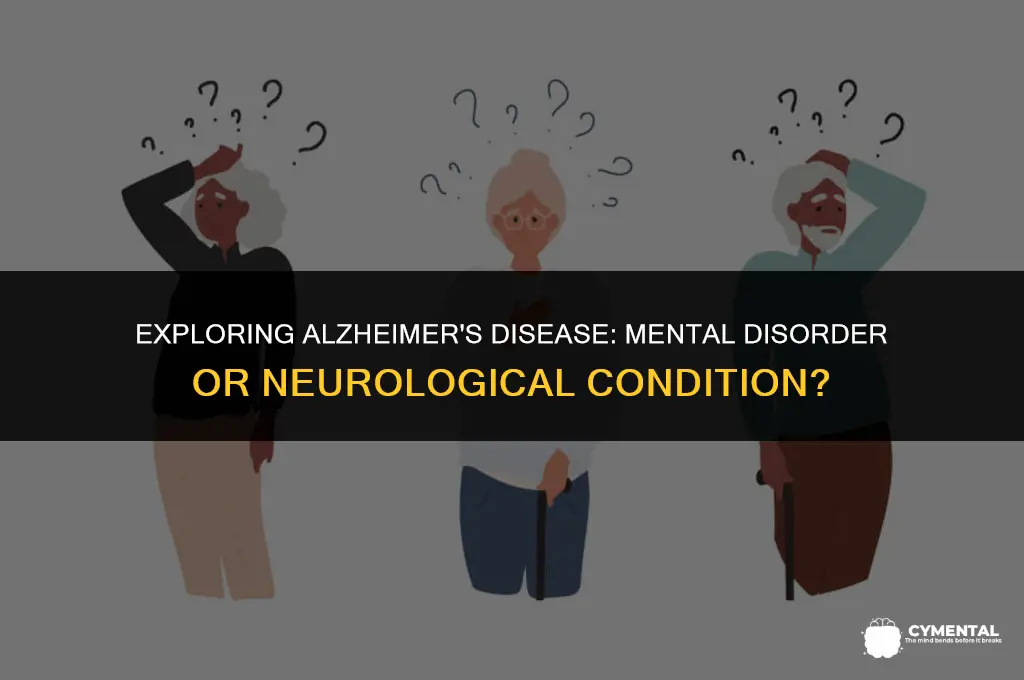
Alzheimer's disease is a progressive neurodegenerative condition that affects memory, thinking, and behavior. While it is often associated with aging, it is not a normal part of the aging process. Alzheimer's disease is characterized by the buildup of amyloid plaques and tau tangles in the brain, which lead to the death of brain cells and the subsequent loss of cognitive function. It is the most common cause of dementia, accounting for approximately 60-80% of cases. Although Alzheimer's disease is primarily considered a neurological disorder, its impact on mental health and behavior raises questions about its classification as a mental disorder.
| Characteristics | Values |
|---|---|
| Definition | Alzheimer's disease is a progressive neurodegenerative disorder characterized by memory loss, cognitive decline, and behavioral changes. |
| Classification | It is classified as a mental disorder under the category of neurocognitive disorders in the Diagnostic and Statistical Manual of Mental Disorders (DSM-5). |
| Prevalence | It is the most common cause of dementia, accounting for approximately 60-80% of cases. |
| Age of Onset | Typically begins in older adulthood, with the risk increasing with age. Early-onset Alzheimer's can occur before age 65. |
| Symptoms | Memory loss, difficulty with language, problem-solving, and other cognitive functions. Mood and personality changes are also common. |
| Causes | Exact cause is unknown, but risk factors include age, family history, genetics, and lifestyle factors such as diet and exercise. |
| Diagnosis | Diagnosed through a combination of medical history, cognitive tests, and imaging studies such as MRI or CT scans. |
| Treatment | Currently, there is no cure for Alzheimer's disease. Treatments focus on managing symptoms and slowing the progression of the disease. |
| Medications | Cholinesterase inhibitors and memantine are commonly prescribed to help manage symptoms. |
| Prognosis | The disease is progressive and ultimately fatal, with life expectancy varying depending on the individual and the severity of the disease. |
| Impact on Daily Life | Alzheimer's disease significantly impacts daily life, affecting a person's ability to perform routine tasks, communicate, and maintain independence. |
| Caregiver Support | Caregivers play a crucial role in supporting individuals with Alzheimer's disease, providing emotional, physical, and financial support. |
| Research | Ongoing research aims to better understand the causes of Alzheimer's disease, develop more effective treatments, and find a cure. |
| Public Awareness | Public awareness campaigns aim to educate people about Alzheimer's disease, reduce stigma, and promote early diagnosis and intervention. |
| Organizations | Organizations such as the Alzheimer's Association provide resources, support, and advocacy for individuals affected by Alzheimer's disease and their caregivers. |
Explore related products


What You'll Learn
- Definition and Classification: Alzheimer's disease is a progressive neurological disorder affecting memory, thinking, and behavior
- Causes and Risk Factors: Genetic, lifestyle, and environmental factors contribute to the development of Alzheimer's disease
- Symptoms and Stages: Memory loss, confusion, and mood changes are common symptoms, progressing through mild, moderate, and severe stages
- Diagnosis and Treatment: Diagnosis involves cognitive tests and imaging. Treatment focuses on managing symptoms and slowing disease progression
- Impact and Support: Alzheimer's disease affects individuals and families, requiring emotional and practical support systems

Definition and Classification: Alzheimer's disease is a progressive neurological disorder affecting memory, thinking, and behavior
Alzheimer's disease is a progressive neurological disorder that significantly impacts memory, thinking, and behavior. It is characterized by the accumulation of amyloid plaques and tau tangles in the brain, leading to the death of brain cells and the subsequent decline in cognitive function. This condition is the most common cause of dementia, accounting for approximately 60-80% of all cases.
The classification of Alzheimer's disease has evolved over time, with the current diagnostic criteria focusing on the presence of specific biomarkers and the exclusion of other potential causes of cognitive decline. The National Institute on Aging and the Alzheimer's Association have established a framework for diagnosing Alzheimer's disease, which includes evaluating cognitive function, assessing biomarkers such as amyloid and tau levels in the cerebrospinal fluid or through imaging studies, and ruling out other conditions that may mimic the symptoms of Alzheimer's disease.
Alzheimer's disease is typically classified into several stages, including mild cognitive impairment, early-onset Alzheimer's disease, and late-onset Alzheimer's disease. Mild cognitive impairment is characterized by a decline in cognitive function that is greater than expected for a person's age and education level but does not significantly impact daily activities. Early-onset Alzheimer's disease occurs in individuals under the age of 65 and is often associated with genetic mutations. Late-onset Alzheimer's disease, which is the most common form, occurs in individuals over the age of 65 and is thought to be influenced by a combination of genetic, environmental, and lifestyle factors.
The symptoms of Alzheimer's disease can vary widely from person to person, but typically include memory loss, difficulty with problem-solving and decision-making, changes in mood and behavior, and difficulty with language and communication. As the disease progresses, individuals may experience a decline in their ability to perform daily activities and may require increasing levels of care and support.
There is currently no cure for Alzheimer's disease, but there are several medications and therapies available to help manage the symptoms and slow the progression of the disease. These include cholinesterase inhibitors, which help to increase the levels of acetylcholine in the brain, and memantine, which works by blocking the action of glutamate, a neurotransmitter that can cause damage to brain cells. In addition to medication, cognitive and behavioral therapies can be helpful in managing the symptoms of Alzheimer's disease and improving the quality of life for individuals with the condition.
Research into the causes and potential treatments for Alzheimer's disease is ongoing, with a focus on identifying new biomarkers, developing more effective medications, and exploring the potential benefits of lifestyle interventions such as exercise, diet, and cognitive stimulation. As our understanding of Alzheimer's disease continues to evolve, it is likely that new diagnostic criteria and treatment approaches will emerge, offering hope for individuals affected by this devastating condition.
Exploring the Complexity: Can Animals Experience Mental Disorders?
You may want to see also
Explore related products


$11.43 $18.99



Causes and Risk Factors: Genetic, lifestyle, and environmental factors contribute to the development of Alzheimer's disease
Alzheimer's disease, a progressive neurodegenerative condition, is influenced by a complex interplay of genetic, lifestyle, and environmental factors. While the exact cause remains elusive, researchers have identified several key contributors that increase the risk of developing this debilitating disease.
Genetically, certain mutations and variations in genes such as APOE, PSEN1, and PSEN2 have been linked to an increased risk of Alzheimer's. The APOE gene, in particular, plays a significant role, with the APOE ε4 allele being associated with a higher likelihood of developing the disease. However, it's essential to note that genetic predisposition does not guarantee the onset of Alzheimer's, and many individuals with these genetic markers never develop the condition.
Lifestyle factors also play a crucial role in the development of Alzheimer's disease. Physical inactivity, smoking, and excessive alcohol consumption have all been identified as potential risk factors. Conversely, engaging in regular exercise, maintaining a healthy diet, and participating in mentally stimulating activities may help reduce the risk of cognitive decline. Sleep quality and duration are also believed to be important, with chronic sleep deprivation potentially contributing to the development of Alzheimer's.
Environmental factors, such as exposure to air pollution, pesticides, and heavy metals, have also been implicated in the pathogenesis of Alzheimer's disease. Additionally, social isolation and loneliness may increase the risk of cognitive decline, highlighting the importance of maintaining strong social connections throughout life.
Understanding these risk factors is crucial for developing effective prevention and treatment strategies. By identifying individuals at high risk, healthcare professionals can implement targeted interventions aimed at reducing the likelihood of developing Alzheimer's disease. Furthermore, ongoing research into the causes and risk factors of Alzheimer's is essential for advancing our knowledge of this complex condition and developing new therapeutic approaches.
Exploring the Controversial Link Between Liberalism and Mental Health
You may want to see also
Explore related products





Symptoms and Stages: Memory loss, confusion, and mood changes are common symptoms, progressing through mild, moderate, and severe stages
Alzheimer's disease manifests through a range of symptoms that progress over time. Memory loss is often the most recognized symptom, but it is accompanied by confusion and mood changes that can significantly impact a person's daily life. These symptoms do not appear suddenly but rather develop gradually, making it possible to identify different stages of the disease.
In the mild stage, individuals may experience forgetfulness, particularly for recent events or conversations. They might also have difficulty with problem-solving or decision-making. At this stage, the changes are often subtle and can be mistaken for normal aging. However, as the disease progresses to the moderate stage, memory loss becomes more pronounced, and individuals may struggle with tasks that require concentration or the ability to follow instructions. Mood changes, such as irritability or anxiety, may also become more evident.
The severe stage of Alzheimer's disease is characterized by a significant decline in cognitive function. Individuals may have difficulty recognizing familiar people or places and may experience hallucinations or delusions. They may also lose the ability to communicate effectively, relying on caregivers for basic needs. The progression through these stages can vary from person to person, influenced by factors such as genetics, overall health, and lifestyle.
Understanding the symptoms and stages of Alzheimer's disease is crucial for early diagnosis and intervention. While there is no cure for the disease, treatments are available that can help manage symptoms and improve quality of life. Additionally, recognizing the signs of Alzheimer's can help caregivers provide the necessary support and care as the disease progresses.
Exploring Organic Disorders: A Dive into Mental Health Classifications
You may want to see also
Explore related products




Diagnosis and Treatment: Diagnosis involves cognitive tests and imaging. Treatment focuses on managing symptoms and slowing disease progression
Alzheimer's disease, a progressive neurodegenerative condition, is diagnosed through a combination of cognitive tests and imaging studies. Cognitive tests assess memory, thinking, and problem-solving abilities, while imaging techniques such as MRI and CT scans help identify changes in brain structure associated with the disease. Early diagnosis is crucial for effective management and treatment planning.
Treatment for Alzheimer's disease primarily focuses on managing symptoms and slowing the progression of the disease. Medications such as cholinesterase inhibitors and memantine are commonly prescribed to improve memory and cognitive function. These medications work by increasing the levels of neurotransmitters in the brain that are involved in memory and learning. In addition to medication, lifestyle modifications such as regular exercise, a healthy diet, and cognitive stimulation can also help manage symptoms and improve overall quality of life.
It is important to note that there is currently no cure for Alzheimer's disease, and treatment is aimed at alleviating symptoms and improving daily functioning. Caregivers play a vital role in the treatment process, providing emotional support, assistance with daily activities, and monitoring medication adherence. As the disease progresses, caregivers may need to seek additional support and resources to ensure the best possible care for their loved ones.
In conclusion, the diagnosis and treatment of Alzheimer's disease involve a multifaceted approach that includes cognitive testing, imaging studies, medication, lifestyle modifications, and caregiver support. Early diagnosis and intervention are key to managing symptoms and improving the quality of life for individuals with Alzheimer's disease.
Overcoming Stigmas: Strategies to Mitigate Bias Against Mental Health Disorders
You may want to see also
Explore related products

![Fun and Relaxing Activities for Adults: Puzzles for People with Dementia [Large-Print] (Easy Activities)](https://m.media-amazon.com/images/I/71TZXb-jUEL._AC_UL320_.jpg)


Impact and Support: Alzheimer's disease affects individuals and families, requiring emotional and practical support systems
Alzheimer's disease casts a profound impact not only on the individuals diagnosed but also on their families and caregivers. The emotional toll of witnessing a loved one's cognitive decline can be overwhelming, often leading to feelings of grief, anxiety, and helplessness. As the disease progresses, the practical challenges intensify, requiring a robust support system to manage the complexities of caregiving.
One of the critical aspects of supporting individuals with Alzheimer's is understanding the importance of early diagnosis and intervention. Early detection allows for better management of symptoms and provides an opportunity for individuals to participate in clinical trials or receive newly developed treatments. Moreover, it enables families to plan for the future, including financial arrangements, legal considerations, and long-term care options.
Caregivers often find themselves juggling multiple responsibilities, from medication management to providing emotional support. It is essential to recognize the signs of caregiver burnout, such as fatigue, irritability, and social withdrawal. Seeking support from healthcare professionals, joining caregiver support groups, and taking regular breaks can help mitigate these risks and ensure that caregivers are equipped to provide the best possible care.
In addition to the emotional and practical challenges, Alzheimer's disease also presents unique ethical dilemmas. As the disease progresses, individuals may lose the capacity to make informed decisions about their care. This underscores the importance of advance care planning, where individuals can express their preferences for medical treatment and end-of-life care. Families and caregivers must navigate these complex decisions with sensitivity and respect for the individual's autonomy.
Ultimately, the impact of Alzheimer's disease extends beyond the individual, affecting entire families and communities. By fostering a supportive environment, promoting early diagnosis, and addressing the ethical considerations, we can work towards improving the quality of life for those affected by this devastating disease.
Understanding Personality Disorders: A Guide to Their Unique Traits
You may want to see also
Frequently asked questions
Alzheimer's disease is not typically classified as a mental disorder in the traditional sense. It is a neurodegenerative disease that affects memory, thinking, and behavior. While it can have psychiatric symptoms, such as depression and anxiety, the primary issue is the progressive loss of cognitive function due to physical changes in the brain.
The main symptoms of Alzheimer's disease include memory loss, difficulty with problem-solving and decision-making, confusion with time and place, trouble with speaking and writing, and changes in personality and behavior. As the disease progresses, individuals may also experience hallucinations, delusions, and agitation.
Alzheimer's disease is diagnosed through a combination of medical history, physical examination, neurological tests, and imaging studies such as MRI or CT scans. Doctors may also use cognitive tests to assess memory, language, and thinking skills. A definitive diagnosis can only be made after death through an autopsy to examine the brain for the presence of amyloid plaques and tau tangles, which are characteristic of the disease.
While there is no cure for Alzheimer's disease, there are several treatments available to manage its symptoms. Medications such as cholinesterase inhibitors and memantine can help improve memory and cognitive function. Additionally, non-drug interventions like cognitive training, behavioral therapy, and caregiver support can also be beneficial in managing the disease. Research into new treatments, including immunotherapy and gene therapy, is ongoing.