Madison Cole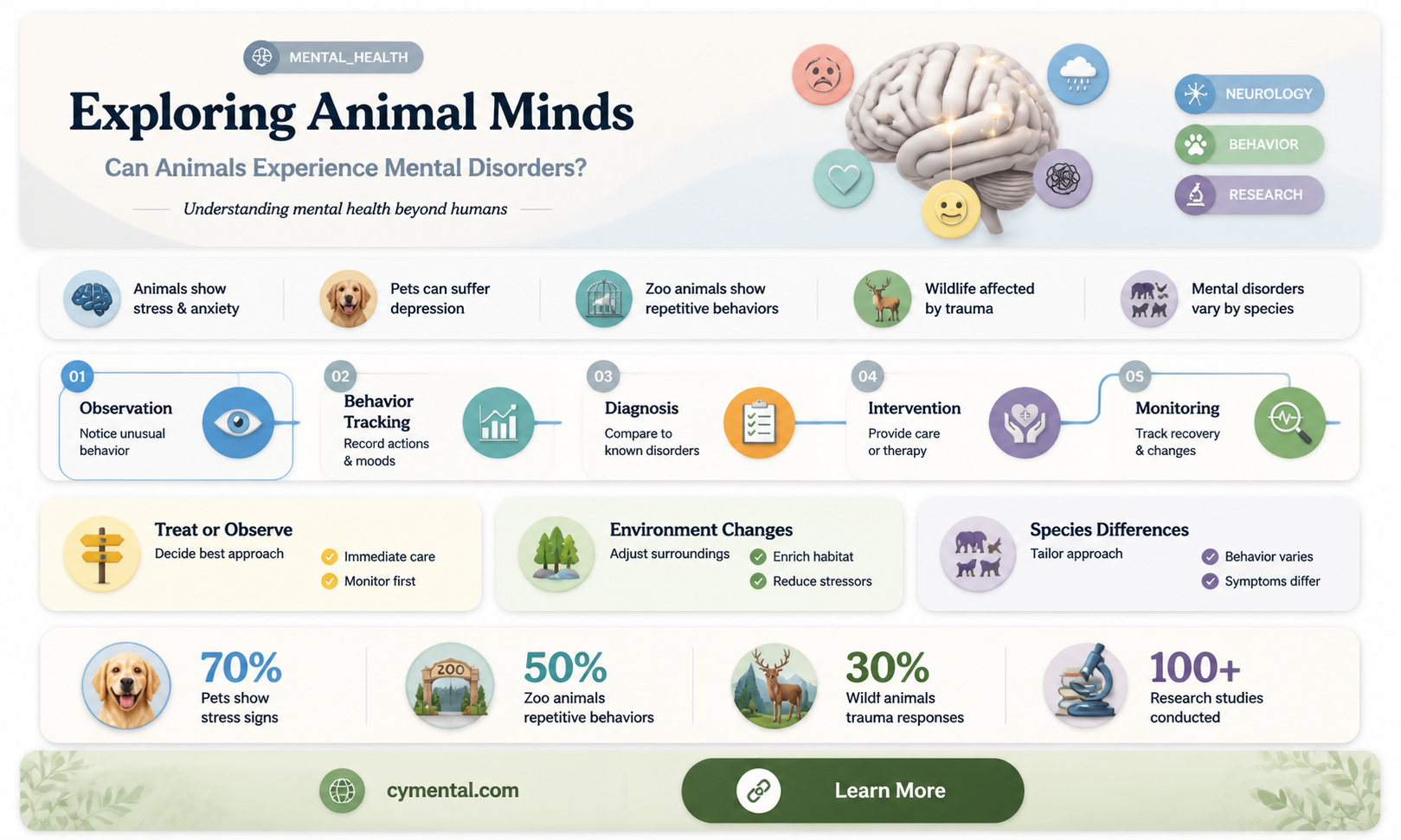
The question of whether animals can have mental disorders is a complex and intriguing topic that has garnered significant attention in recent years. While it may seem intuitive to attribute human-like mental states to animals, the scientific community has been cautious in making such claims. However, there is growing evidence to suggest that animals do experience a range of emotional and psychological states, including anxiety, depression, and even post-traumatic stress disorder (PTSD). For instance, studies have shown that elephants exhibit signs of grief and mourning when faced with the loss of a loved one, while primates have been observed to experience stress and anxiety in response to social conflicts. As our understanding of animal cognition and behavior continues to evolve, it is essential to explore the possibility of mental disorders in animals and to develop appropriate methods for diagnosing and treating these conditions. This not only has implications for animal welfare but also for our broader understanding of mental health and well-being across species.
| Characteristics | Values |
|---|---|
| Definition | Mental disorders in animals are behavioral or psychological conditions that cause distress or impairment in daily functioning. |
| Diagnosis | Diagnosed by veterinarians or animal behaviorists through observation, behavioral assessments, and sometimes medical tests. |
| Types of Disorders | Anxiety disorders, depressive disorders, obsessive-compulsive disorders, post-traumatic stress disorder (PTSD), and others. |
| Symptoms | Symptoms vary by disorder but can include changes in appetite, sleep disturbances, social withdrawal, aggression, and repetitive behaviors. |
| Causes | Causes are multifaceted and can include genetic predisposition, environmental factors, trauma, and medical conditions. |
| Treatment | Treatment options include behavioral therapy, medication, environmental enrichment, and management strategies. |
| Research | Ongoing research aims to better understand the prevalence, causes, and effective treatments for mental disorders in animals. |
| Species Affected | Mental disorders can affect a wide range of animal species, including pets, farm animals, and wildlife. |
| Stigma | There is often a stigma associated with mental disorders in animals, which can hinder diagnosis and treatment. |
| Importance | Addressing mental disorders in animals is crucial for their well-being and can also have implications for human mental health research. |
Explore related products


What You'll Learn
- Animal Depression: Signs, causes, and treatment options for depression in animals
- Anxiety in Pets: Recognizing and managing anxiety disorders in domestic animals
- Obsessive-Compulsive Disorders: Understanding repetitive behaviors in animals and potential treatments
- Animal Psychosis: Exploring rare cases of psychotic disorders in non-human species
- Trauma and PTSD: How animals experience and recover from traumatic events

Animal Depression: Signs, causes, and treatment options for depression in animals
Depression in animals is a complex and often misunderstood condition. While it's common for pet owners to recognize physical ailments in their animals, mental health issues can be more challenging to identify. One of the key signs of depression in animals is a change in behavior, such as increased lethargy, loss of interest in activities they once enjoyed, or withdrawal from social interactions. These changes can be subtle and may be mistaken for other conditions, making it crucial for pet owners to be observant and proactive in seeking veterinary advice.
The causes of depression in animals can vary widely. Environmental factors, such as changes in living conditions or the loss of a companion animal, can trigger depressive episodes. Additionally, underlying health issues, such as chronic pain or hormonal imbalances, can contribute to the development of depression. In some cases, genetic predispositions may also play a role. Understanding these potential causes can help pet owners and veterinarians develop more effective treatment plans.
Treatment options for animal depression include a combination of behavioral, environmental, and medical interventions. Behavioral therapy, such as positive reinforcement training and environmental enrichment, can help stimulate mental activity and improve mood. Environmental changes, like providing a more stimulating living space or increasing social interactions, can also be beneficial. In some cases, medication may be necessary to address underlying health issues or to directly treat the symptoms of depression. It's important to note that treatment should always be tailored to the individual animal, taking into account their specific needs and circumstances.
One unique aspect of treating depression in animals is the importance of the human-animal bond. Research has shown that a strong bond between a pet and their owner can have a significant positive impact on the pet's mental health. Owners can support their pets by providing consistent care, engaging in regular play and exercise, and offering emotional support. This bond can also help owners recognize early signs of depression and seek appropriate treatment more quickly.
In conclusion, animal depression is a serious condition that requires careful observation, understanding, and treatment. By recognizing the signs, understanding the causes, and exploring various treatment options, pet owners and veterinarians can work together to improve the mental health and well-being of animals. It's essential to approach each case with compassion and patience, recognizing that every animal is unique and deserves individualized care.
Exploring the Possibilities: Can Mental Disorders Be Cured?
You may want to see also
Explore related products


Anxiety in Pets: Recognizing and managing anxiety disorders in domestic animals
Anxiety in pets is a growing concern among pet owners, as more people become aware of the possibility of mental health issues in animals. Recognizing anxiety disorders in domestic animals is crucial for their well-being, as untreated anxiety can lead to behavioral problems, health issues, and a decreased quality of life. Common signs of anxiety in pets include excessive barking or meowing, destructive behavior, pacing, and withdrawal from social interactions.
One effective way to manage anxiety in pets is through behavioral modification techniques. This can involve gradually exposing the pet to the source of their anxiety in a controlled environment, using positive reinforcement to help them associate the stimulus with positive experiences. For example, if a dog is anxious about loud noises, the owner can start by playing a recording of the noise at a low volume and rewarding the dog for remaining calm. Over time, the volume can be increased, helping the dog to become desensitized to the noise.
In addition to behavioral modification, there are also medications available to help manage anxiety in pets. These medications, such as selective serotonin reuptake inhibitors (SSRIs) and benzodiazepines, can be prescribed by a veterinarian and may be used in conjunction with behavioral therapy. It is important to note that medication should always be used under the guidance of a veterinarian, as there can be side effects and potential interactions with other medications.
Another important aspect of managing anxiety in pets is providing a stable and predictable environment. This can involve establishing a consistent routine for feeding, exercise, and playtime, as well as providing a safe and comfortable space for the pet to retreat to when they feel overwhelmed. Reducing stressors in the environment, such as loud noises or unfamiliar people, can also help to alleviate anxiety in pets.
Finally, it is essential for pet owners to be patient and understanding when dealing with anxiety in their pets. Anxiety disorders can be complex and may take time to resolve. By working closely with a veterinarian and implementing a combination of behavioral modification techniques, medication, and environmental changes, pet owners can help their pets to lead happier, healthier lives.
Unraveling Kate Bender's Psyche: Mental Health Theories Explored
You may want to see also
Explore related products


Obsessive-Compulsive Disorders: Understanding repetitive behaviors in animals and potential treatments
Obsessive-Compulsive Disorder (OCD) is characterized by repetitive, intrusive thoughts (obsessions) and repetitive behaviors (compulsions) that an individual feels compelled to perform. While traditionally viewed as a human condition, evidence suggests that animals can also exhibit OCD-like behaviors. For instance, some animals may repeatedly check or investigate their environment, engage in excessive grooming, or perform ritualistic actions. These behaviors can interfere with their daily functioning and overall well-being.
Understanding OCD in animals is crucial for several reasons. Firstly, it can help us better comprehend the underlying neurobiological mechanisms of the disorder, which may have implications for human treatment. Secondly, it can lead to the development of more effective interventions for animals suffering from OCD-like behaviors, improving their quality of life. Thirdly, studying OCD in animals can provide insights into the evolutionary origins of the disorder and its adaptive significance.
Potential treatments for OCD in animals may include behavioral therapies, such as exposure and response prevention (ERP), which involves gradually exposing the animal to the stimulus that triggers the compulsive behavior while preventing them from performing the behavior. Medications, such as selective serotonin reuptake inhibitors (SSRIs), may also be used in conjunction with behavioral therapies. Additionally, environmental enrichment and modifications can help reduce stress and anxiety, which may contribute to the development of OCD-like behaviors.
It is important to note that diagnosing OCD in animals can be challenging, as it requires careful observation and interpretation of their behaviors. Veterinarians and animal behaviorists play a crucial role in identifying and treating OCD in animals. By working together, we can improve our understanding of this complex disorder and develop more effective interventions for both animals and humans.
Understanding the Nuances: Mental Disorder vs. Mental Illness
You may want to see also
Explore related products


Animal Psychosis: Exploring rare cases of psychotic disorders in non-human species
Recent studies have shed light on the intriguing possibility that animals, like humans, can experience psychotic disorders. While the concept of animal psychosis may seem far-fetched, researchers have documented several cases that challenge our understanding of mental health in non-human species. One notable example involves a study on rhesus macaques, where scientists observed behaviors akin to human psychosis, such as social withdrawal and repetitive actions, in response to stressful environments.
Further evidence comes from the realm of veterinary medicine, where clinicians have reported cases of animals exhibiting symptoms similar to those seen in human psychotic disorders. For instance, a 2018 study published in the Journal of Veterinary Behavior described a case of a cat displaying signs of psychosis, including hallucinations and disorganized behavior, which were successfully treated with antipsychotic medication. Such findings raise important questions about the nature of consciousness and mental health across species.
The exploration of animal psychosis also has significant implications for our understanding of the evolutionary origins of mental disorders. By studying these rare cases, researchers hope to gain insights into the underlying biological mechanisms that contribute to psychotic disorders, potentially leading to new treatments and interventions for both humans and animals. Moreover, this line of inquiry challenges us to reconsider our ethical obligations towards animals, particularly those in captivity or subjected to human-induced stress.
In conclusion, the study of animal psychosis represents a fascinating and rapidly evolving field that holds promise for advancing our knowledge of mental health and its disorders. As researchers continue to uncover new evidence and insights, it is essential that we approach this topic with an open mind and a commitment to understanding the complexities of animal cognition and emotion.
Exploring the Complex Relationship Between Religion and Mental Health
You may want to see also
Explore related products


$29.67 $39.95

$10.49 $18.99


Trauma and PTSD: How animals experience and recover from traumatic events
Animals, much like humans, can experience trauma and develop post-traumatic stress disorder (PTSD). This is evident in the way they react to traumatic events, such as natural disasters, abuse, or combat. For instance, elephants that have been subjected to poaching or habitat destruction may exhibit signs of PTSD, including increased aggression, social withdrawal, and heightened alertness. Similarly, dogs that have been exposed to combat or other traumatic situations may develop PTSD, leading to symptoms such as anxiety, fear, and avoidance behaviors.
The recovery process for animals with PTSD is complex and multifaceted. It often involves a combination of behavioral therapy, medication, and environmental enrichment. For example, elephants in rehabilitation centers may be provided with a safe and nurturing environment, along with opportunities for social interaction and mental stimulation. This can help them to rebuild trust and develop coping mechanisms for dealing with stress. Dogs, on the other hand, may benefit from training programs that teach them new skills and help them to regain confidence. Medications such as selective serotonin reuptake inhibitors (SSRIs) may also be used to help alleviate symptoms of anxiety and depression.
One unique aspect of animal PTSD is the role of social support in the recovery process. Many animals, particularly those that live in groups, rely on social bonds for emotional support and protection. For example, elephants have been known to form close relationships with each other, and they often provide comfort and reassurance to those that are distressed. Similarly, dogs are pack animals, and they may find solace in the company of other dogs or humans. This social support can be a critical factor in helping animals to recover from trauma and PTSD.
Another important consideration is the impact of human behavior on animal PTSD. Human actions, such as poaching, habitat destruction, and animal abuse, are often the root cause of trauma in animals. Therefore, it is essential to address these issues in order to prevent further harm and promote recovery. This can involve implementing conservation measures, enforcing laws against animal abuse, and educating the public about the importance of protecting animals and their habitats.
In conclusion, animal PTSD is a complex and multifaceted issue that requires a comprehensive approach to treatment and recovery. By providing a safe and nurturing environment, social support, and appropriate medical care, it is possible to help animals recover from traumatic events and improve their overall well-being. Additionally, addressing the root causes of animal trauma, such as human behavior, is critical to preventing further harm and promoting a more compassionate and sustainable relationship between humans and animals.
Exploring the Psychology Behind Fabricating False Scenarios
You may want to see also
Frequently asked questions
Yes, animals can have mental disorders. While the concept of mental illness in animals is still evolving, research has shown that animals can exhibit symptoms similar to those seen in human mental disorders, such as anxiety, depression, and obsessive-compulsive behaviors.
Diagnosing mental disorders in animals involves observing their behavior, physical health, and environment. Veterinarians and animal behaviorists look for changes in eating, sleeping, social interactions, and activity levels. They may also conduct physical exams and consider the animal's medical history and living conditions.
Some common mental disorders observed in animals include separation anxiety, noise phobias, obsessive-compulsive disorder (OCD), and depression. These disorders can manifest in various ways, such as excessive barking, destructive behavior, withdrawal, or changes in appetite.
Yes, animals can be treated for mental disorders. Treatment may include behavioral therapy, medication, environmental changes, and training. For example, a dog with separation anxiety might benefit from gradual exposure to being alone, while a cat with OCD might need medication and environmental enrichment.
Addressing mental disorders in animals is crucial for their overall well-being and quality of life. Untreated mental health issues can lead to physical health problems, social difficulties, and even euthanasia in severe cases. By recognizing and treating these disorders, we can help animals live happier, healthier lives.