Harper Lewis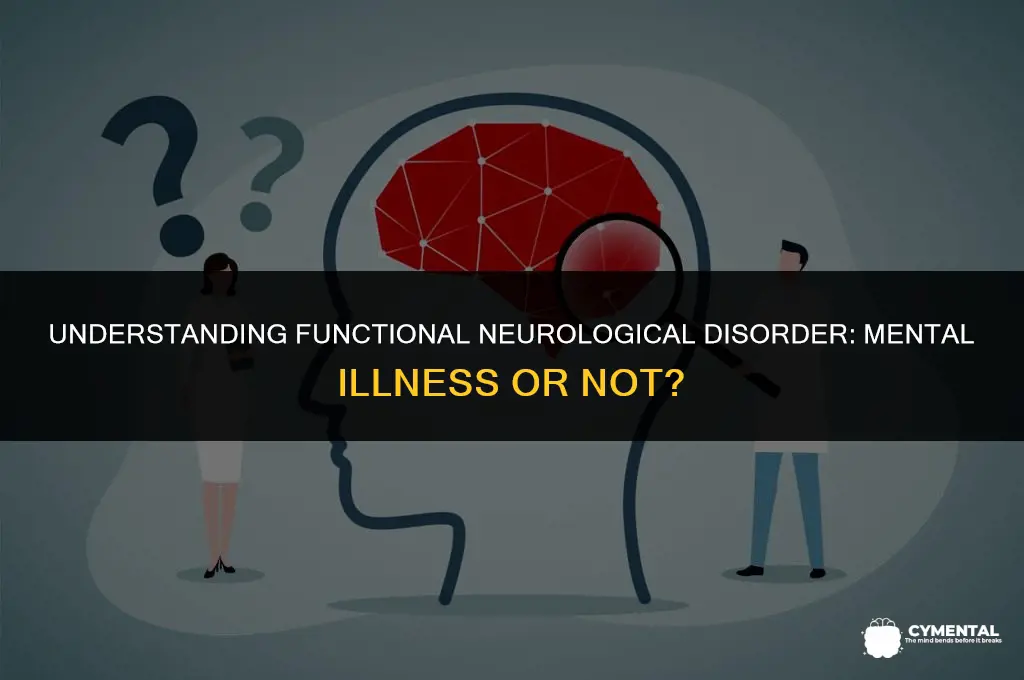
Functional Neurological Disorder (FND) is a complex condition that has sparked considerable debate within the medical and psychological communities regarding its classification as a mental illness. Characterized by symptoms such as seizures, paralysis, or sensory disturbances that cannot be attributed to a structural neurological cause, FND has often been viewed through a psychosomatic lens. However, recent research suggests that FND may have underlying neurological mechanisms, challenging the traditional dichotomy between 'real' neurological disorders and 'psychological' conditions. This evolving understanding raises important questions about the nature of mental illness, the mind-body connection, and the implications for diagnosis and treatment.
| Characteristics | Values |
|---|---|
| Definition | Functional neurological disorder (FND) is a condition in which a person experiences neurological symptoms, such as seizures, paralysis, or sensory disturbances, that are not caused by a structural or biochemical abnormality in the brain or nervous system. |
| Classification | FND is classified as a mental illness, specifically a somatic symptom disorder, in the Diagnostic and Statistical Manual of Mental Disorders (DSM-5). |
| Prevalence | FND is estimated to affect approximately 1 in 100,000 people worldwide, with a higher prevalence in women than in men. |
| Age of onset | FND typically begins in adulthood, with the average age of onset being around 30 years old. |
| Symptoms | Symptoms of FND can vary widely and may include seizures, paralysis, weakness, sensory disturbances, speech problems, and cognitive difficulties. |
| Diagnosis | Diagnosis of FND is typically made through a process of elimination, in which other possible causes of the symptoms are ruled out. This may involve neurological examinations, imaging studies, and psychological evaluations. |
| Treatment | Treatment for FND often involves a multidisciplinary approach, including medications, physical therapy, occupational therapy, and psychotherapy. |
| Prognosis | The prognosis for FND varies depending on the individual and the severity of their symptoms. Some people may experience a full recovery, while others may have ongoing symptoms that impact their daily lives. |
| Comorbidities | People with FND may also experience other mental health conditions, such as depression, anxiety, or post-traumatic stress disorder (PTSD). |
| Impact on daily life | FND can have a significant impact on a person's daily life, affecting their ability to work, socialize, and perform everyday tasks. |
| Research | Research into FND is ongoing, with a focus on better understanding the underlying causes of the condition and developing more effective treatments. |
| Awareness | Awareness of FND is relatively low, even among healthcare professionals, which can lead to misdiagnosis or delayed diagnosis. |
| Support | Support for people with FND is available through various organizations and online communities, providing resources and connections with others who understand the condition. |
| Stigma | People with FND may face stigma and discrimination due to the mental health component of the condition, which can lead to feelings of isolation and shame. |
| Education | Education about FND is important for healthcare professionals, patients, and the general public to improve understanding and reduce stigma. |
Explore related products


What You'll Learn
- Definition and Classification: Understanding FND as a mental health condition
- Symptoms and Diagnosis: Identifying common symptoms and diagnostic criteria
- Causes and Risk Factors: Exploring potential causes and risk factors
- Treatment Approaches: Discussing various treatment options and strategies
- Impact on Daily Life: Examining how FND affects individuals' daily functioning

Definition and Classification: Understanding FND as a mental health condition
Functional Neurological Disorder (FND) is a complex condition that sits at the intersection of neurology and psychiatry. It is characterized by symptoms that appear to be neurological in nature but are not explained by any underlying neurological disease or injury. Instead, these symptoms are thought to be a manifestation of psychological distress or dysfunction. Understanding FND as a mental health condition involves recognizing that the symptoms, while real and distressing to the individual, are not due to a physical abnormality in the brain or nervous system.
The classification of FND has evolved over time, reflecting changes in our understanding of the mind-body connection. Historically, FND was often dismissed as "hysteria" or "conversion disorder," terms that carried a stigma and were not particularly helpful in understanding or treating the condition. More recently, FND has been recognized as a legitimate mental health condition, with its own set of diagnostic criteria and treatment approaches. The DSM-5, for example, classifies FND under the category of "Somatic Symptom and Related Disorders," which acknowledges the physical symptoms while also emphasizing the psychological factors that contribute to their development and maintenance.
One of the challenges in understanding FND is that it can present with a wide range of symptoms, which can vary from person to person. These symptoms can include motor symptoms, such as weakness or paralysis, sensory symptoms, such as numbness or pain, and even cognitive symptoms, such as memory problems or difficulty concentrating. Because these symptoms can mimic those of other neurological conditions, diagnosing FND often requires a process of elimination, where other potential causes are ruled out before a diagnosis of FND is considered.
Treatment for FND typically involves a multidisciplinary approach, combining elements of both neurological and psychiatric care. Cognitive-behavioral therapy (CBT) has been shown to be particularly effective in helping individuals with FND to manage their symptoms and improve their overall quality of life. Medications may also be used, although their effectiveness can vary depending on the individual and the specific symptoms they are experiencing. In some cases, physical therapy or occupational therapy may also be beneficial in helping individuals to regain function and mobility.
In conclusion, understanding FND as a mental health condition requires a nuanced approach that acknowledges the complex interplay between the mind and the body. By recognizing FND as a legitimate condition with its own set of diagnostic criteria and treatment approaches, we can better support individuals who are struggling with this challenging disorder.
Unraveling the Complexity: Fibromyalgia and Mental Health Connection
You may want to see also
Explore related products


Symptoms and Diagnosis: Identifying common symptoms and diagnostic criteria
Functional neurological disorder (FND) presents with a range of symptoms that can be both physical and psychological. Common physical symptoms include unexplained pain, fatigue, dizziness, and movement disorders such as tremors or dystonia. Psychological symptoms may encompass anxiety, depression, and cognitive difficulties. These symptoms can vary widely in severity and impact, making FND a complex condition to diagnose.
Diagnosis of FND typically involves a thorough medical evaluation to rule out other neurological conditions. This process includes a detailed patient history, physical examination, and various diagnostic tests such as MRI scans, EEGs, and blood tests. Mental health professionals may also be involved to assess psychological symptoms and rule out other mental health disorders. The diagnostic criteria for FND are continually evolving, but generally, a diagnosis is made when symptoms are consistent with FND and other potential causes have been excluded.
One unique aspect of FND diagnosis is the importance of identifying any underlying psychological factors that may be contributing to the physical symptoms. This can involve exploring past trauma, stress levels, and coping mechanisms. In some cases, symptoms of FND may be triggered or exacerbated by psychological distress, making it crucial to address both the physical and mental aspects of the disorder.
Another key consideration in diagnosing FND is the potential for misdiagnosis. Due to the wide range of symptoms and the lack of specific diagnostic tests, FND can sometimes be mistaken for other conditions such as multiple sclerosis, Parkinson's disease, or even mental health disorders like depression or anxiety. It is essential for healthcare providers to have a high index of suspicion for FND and to consider it as a possible diagnosis when other explanations do not fully account for the patient's symptoms.
In conclusion, diagnosing FND requires a comprehensive and multidisciplinary approach that takes into account both physical and psychological factors. By carefully evaluating symptoms, ruling out other conditions, and addressing underlying psychological issues, healthcare providers can improve the accuracy of FND diagnoses and provide more effective treatment for patients.
Understanding Bipolar Disorder: Debunking Myths About This Serious Mental Illness
You may want to see also
Explore related products


Causes and Risk Factors: Exploring potential causes and risk factors
Functional neurological disorder (FND) is a condition that affects the nervous system and results in physical symptoms that cannot be explained by an underlying neurological disease. While the exact causes of FND are still not fully understood, research has identified several potential risk factors that may contribute to its development.
One of the most significant risk factors for FND is a history of trauma, either physical or emotional. This trauma can occur at any point in a person's life, from childhood to adulthood, and may involve experiences such as abuse, neglect, or a significant loss. Trauma can have a profound impact on the brain and nervous system, leading to changes in the way that the body processes and responds to stress.
Another potential risk factor for FND is the presence of other mental health conditions, such as anxiety or depression. These conditions can affect the way that the brain processes information and may contribute to the development of FND symptoms. Additionally, individuals with FND may be more likely to experience other mental health conditions as a result of their symptoms, which can further complicate their overall health and well-being.
Research has also suggested that there may be a genetic component to FND, as the condition tends to run in families. This genetic link may be related to differences in the way that the brain and nervous system develop and function, which can increase a person's susceptibility to FND.
Environmental factors, such as exposure to toxins or infections, may also play a role in the development of FND. These factors can affect the brain and nervous system, leading to changes in the way that the body processes and responds to stress.
In conclusion, while the exact causes of FND are still not fully understood, research has identified several potential risk factors that may contribute to its development. These risk factors include a history of trauma, the presence of other mental health conditions, genetic predisposition, and environmental factors. Understanding these risk factors can help healthcare providers to better diagnose and treat FND, and may also help individuals to take steps to reduce their own risk of developing the condition.
Unraveling the Complex Mind: Jeffrey Dahmer's Mental Health Disorders
You may want to see also
Explore related products


Treatment Approaches: Discussing various treatment options and strategies
Treatment for functional neurological disorder (FND) often involves a multidisciplinary approach, combining medical, psychological, and physical therapies. One key strategy is cognitive behavioral therapy (CBT), which helps patients identify and change negative thought patterns that may contribute to their symptoms. CBT can be particularly effective in managing the emotional distress associated with FND, such as anxiety and depression.
Another important treatment option is physical therapy, which can help improve mobility and reduce pain in patients with FND. Therapists may use a variety of techniques, including exercises to strengthen muscles, improve balance and coordination, and increase flexibility. In some cases, physical therapy may also involve the use of assistive devices, such as braces or walkers, to help patients with mobility issues.
Medication can also play a role in treating FND, although the specific drugs used may vary depending on the individual patient's symptoms. For example, antidepressants may be prescribed to help manage mood symptoms, while anticonvulsants may be used to treat seizure-like episodes. It's important to note that medication should always be used in conjunction with other treatment approaches, such as CBT and physical therapy, for the best results.
In addition to these traditional treatment methods, some patients with FND may also benefit from alternative therapies, such as acupuncture, massage, or yoga. These approaches can help reduce stress and promote relaxation, which can be beneficial for managing FND symptoms. However, it's important for patients to discuss these options with their healthcare provider to ensure they are safe and appropriate for their individual needs.
Finally, it's crucial for patients with FND to have a strong support system in place. This may include family, friends, and healthcare professionals who can provide emotional support and help patients navigate the challenges of living with FND. Support groups can also be a valuable resource, allowing patients to connect with others who understand their experiences and share coping strategies.
Unveiling the Enigma: The Rarest Mental Disorder Explored
You may want to see also
Explore related products


Impact on Daily Life: Examining how FND affects individuals' daily functioning
Functional Neurological Disorder (FND) can significantly impact an individual's daily life, affecting their ability to perform routine tasks and maintain independence. One of the primary challenges faced by those with FND is the unpredictability of symptoms, which can include sudden onset of weakness, tremors, or seizures. This unpredictability can lead to difficulties in planning and executing daily activities, such as cooking, cleaning, or even getting dressed.
Moreover, FND can affect an individual's cognitive functioning, leading to problems with concentration, memory, and decision-making. These cognitive challenges can make it difficult for individuals to manage their finances, maintain employment, or engage in social activities. The emotional toll of FND should not be underestimated, as individuals may experience anxiety, depression, or frustration due to their symptoms and the limitations they impose.
In addition to these direct effects, FND can also have a significant impact on an individual's relationships with family and friends. Loved ones may struggle to understand the nature of FND and its symptoms, leading to feelings of isolation and misunderstanding. Furthermore, the need for ongoing medical care and therapy can place a strain on both the individual and their support system.
It is essential for those with FND to develop strategies to manage their symptoms and maintain their quality of life. This may include working with healthcare professionals to develop a treatment plan, engaging in physical and cognitive therapy, and utilizing assistive devices or technologies to aid in daily tasks. Additionally, connecting with support groups and educating loved ones about FND can help to foster understanding and reduce feelings of isolation.
In conclusion, FND can have a profound impact on an individual's daily life, affecting their physical, cognitive, and emotional well-being. However, with the right support and strategies, individuals with FND can learn to manage their symptoms and maintain a fulfilling and independent life.
Understanding IED: A Comprehensive Guide to Intermittent Explosive Disorder
You may want to see also
Frequently asked questions
Functional neurological disorder (FND) is a condition where patients experience neurological symptoms, such as seizures, paralysis, or sensory disturbances, without an identifiable structural or biochemical cause. While FND is not a mental illness in the traditional sense, it is often associated with psychological factors and may be treated with psychotherapy and other mental health interventions.
Common symptoms of functional neurological disorder (FND) include seizures, paralysis or weakness, sensory disturbances (such as numbness or tingling), and movement disorders (like tremors or dystonia). These symptoms can vary widely in severity and presentation, and may come and go or change over time.
Functional neurological disorder (FND) is typically diagnosed through a process of elimination. Doctors will conduct a thorough medical evaluation, including a review of the patient's medical history, physical examination, and various tests (such as EEG, MRI, or blood tests) to rule out other potential causes of the symptoms. If no structural or biochemical cause is found, and the symptoms are deemed to be functionally impairing, a diagnosis of FND may be made.
Treatment for functional neurological disorder (FND) often involves a multidisciplinary approach. Psychotherapy, particularly cognitive-behavioral therapy (CBT), is a common treatment, as it can help patients identify and address any underlying psychological factors contributing to their symptoms. Medications, such as antidepressants or anticonvulsants, may also be used to manage symptoms. Additionally, physical therapy and occupational therapy can help patients improve their functioning and quality of life.