Noah Parker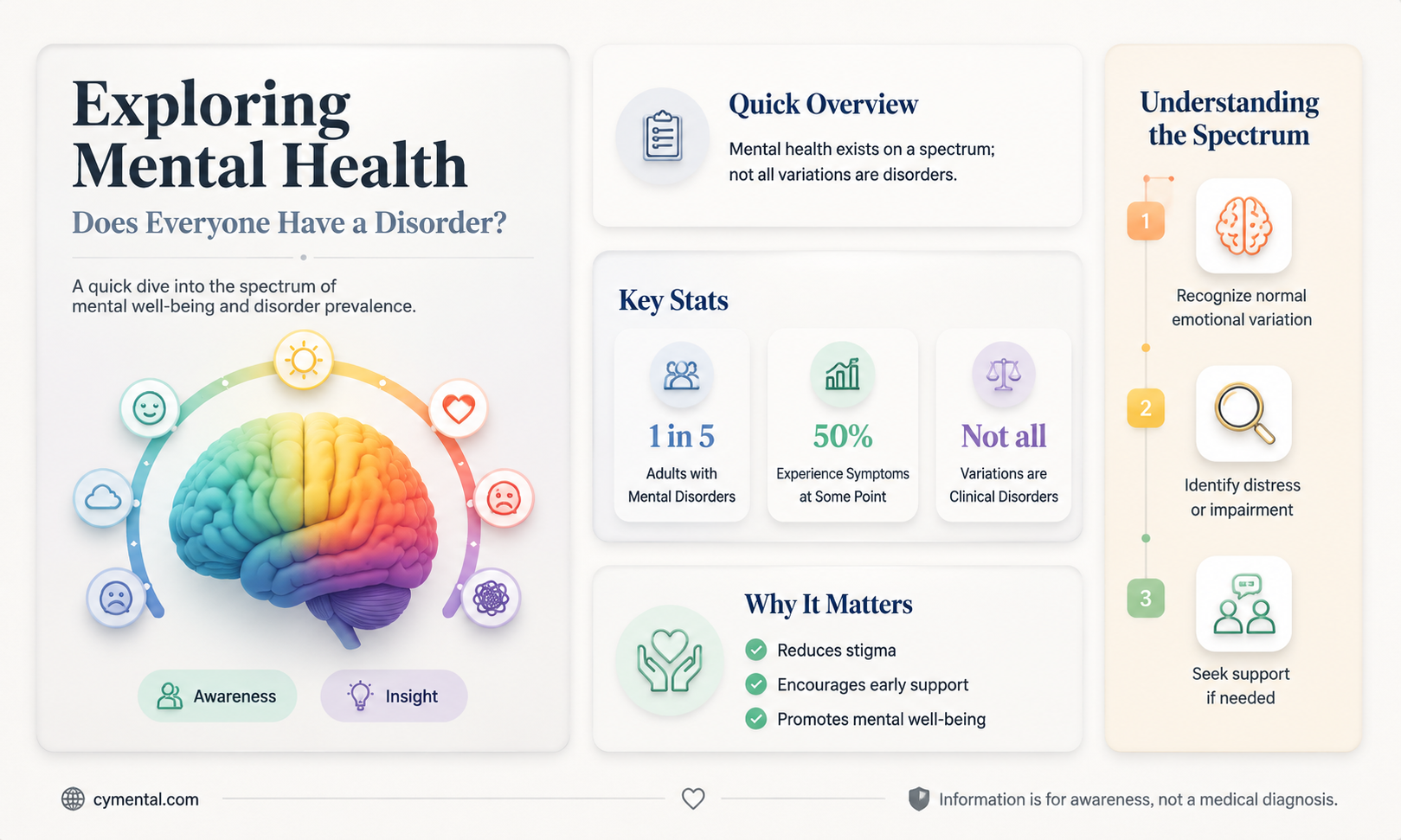
The question of whether everyone has a mental disorder is a complex and nuanced topic that has been the subject of much debate in the field of psychology and psychiatry. While it is clear that mental disorders are common and affect a significant portion of the population, the idea that everyone has a mental disorder is not universally accepted. Some argue that the criteria for diagnosing mental disorders are too broad and that many people who are considered to have a disorder may simply be experiencing normal variations in mood, behavior, or cognition. Others contend that the prevalence of mental disorders is overestimated due to factors such as overdiagnosis, misdiagnosis, and the medicalization of normal human experiences. Ultimately, the question of whether everyone has a mental disorder raises important issues about the nature of mental health, the boundaries between normal and abnormal, and the implications of labeling individuals with a mental disorder.
| Characteristics | Values |
|---|---|
| Definition | A mental disorder is a condition that affects a person's thinking, feeling, or behavior. It may interfere with daily functioning and can cause significant distress or impairment. |
| Prevalence | According to the World Health Organization (WHO), approximately 1 in 4 people worldwide will experience a mental disorder at some point in their lives. |
| Types | Common mental disorders include anxiety disorders, mood disorders (such as depression), schizophrenia, bipolar disorder, obsessive-compulsive disorder (OCD), and post-traumatic stress disorder (PTSD). |
| Causes | Mental disorders can be caused by a combination of genetic, environmental, and psychological factors. Trauma, stress, and substance abuse can also contribute to the development of mental health issues. |
| Symptoms | Symptoms vary depending on the specific disorder but may include changes in mood, behavior, or thinking patterns. For example, anxiety disorders may cause excessive worry or fear, while mood disorders may lead to persistent feelings of sadness or hopelessness. |
| Diagnosis | Mental disorders are typically diagnosed by mental health professionals, such as psychiatrists or psychologists, through a combination of interviews, questionnaires, and observation. |
| Treatment | Treatment options may include psychotherapy (talk therapy), medication, or a combination of both. Lifestyle changes, such as regular exercise and a healthy diet, can also be beneficial in managing symptoms. |
| Prognosis | The prognosis for mental disorders varies depending on the specific condition and individual factors. With proper treatment and support, many people can recover or manage their symptoms effectively. |
| Stigma | Despite growing awareness, mental health issues are still often stigmatized, leading to discrimination and barriers to seeking help. |
| Prevention | While not all mental disorders can be prevented, reducing stress, building resilience, and seeking early intervention can help mitigate the risk of developing mental health issues. |
| Impact on society | Mental disorders have a significant impact on society, affecting not only individuals but also families, communities, and economies. They are a leading cause of disability worldwide. |
| Research | Ongoing research is crucial in understanding the causes, mechanisms, and effective treatments for mental disorders. Advances in neuroscience and psychology are continually expanding our knowledge in this area. |
Explore related products


What You'll Learn
- Defining mental disorders: Understanding the criteria and thresholds used to diagnose mental health conditions
- Prevalence of mental disorders: Examining the statistics and rates of mental illness in different populations
- Types of mental disorders: Exploring the range of conditions, from anxiety and depression to psychosis and personality disorders
- Causes of mental disorders: Investigating the genetic, environmental, and psychological factors that contribute to mental health issues
- Treatment and support: Discussing the various approaches to managing mental disorders, including therapy, medication, and self-care strategies

Defining mental disorders: Understanding the criteria and thresholds used to diagnose mental health conditions
The process of defining mental disorders is complex and multifaceted, involving a careful consideration of various criteria and thresholds. Mental health professionals rely on diagnostic manuals, such as the Diagnostic and Statistical Manual of Mental Disorders (DSM-5), to guide their assessments and diagnoses. These manuals provide detailed descriptions of symptoms, behaviors, and other indicators that must be met to qualify for a specific mental disorder diagnosis.
One of the key challenges in defining mental disorders is determining the appropriate threshold for diagnosis. For example, how many symptoms must be present, and to what degree, in order to diagnose a condition like depression or anxiety? The DSM-5 and other diagnostic tools use a combination of symptom clusters, severity ratings, and duration criteria to establish these thresholds. However, there is ongoing debate among mental health experts about the validity and reliability of these thresholds, with some arguing that they may be too broad or too narrow, leading to either overdiagnosis or underdiagnosis.
Another important consideration in defining mental disorders is the cultural and contextual factors that can influence symptom presentation and interpretation. What may be considered a symptom of a mental disorder in one culture or setting may not be viewed the same way in another. As a result, mental health professionals must be aware of these cultural nuances and take them into account when making diagnoses.
In addition to the challenges of defining mental disorders, there is also the issue of stigma and labeling. Being diagnosed with a mental disorder can carry significant social and emotional consequences, and some individuals may be reluctant to seek help or disclose their diagnosis due to fear of discrimination or judgment. This highlights the importance of using language and terminology that is respectful and non-stigmatizing when discussing mental health conditions.
Ultimately, the process of defining mental disorders is an ongoing and evolving one, as our understanding of mental health and illness continues to grow and change. Mental health professionals must stay up-to-date with the latest research and diagnostic guidelines, while also being mindful of the individual and cultural factors that can influence the diagnosis and treatment of mental disorders.
Understanding the Nuances: Is a Disorder a Disease?
You may want to see also
Explore related products


Prevalence of mental disorders: Examining the statistics and rates of mental illness in different populations
According to the World Health Organization (WHO), approximately one in four people globally will experience a mental disorder at some point in their lives. This statistic underscores the widespread nature of mental illness, affecting individuals across all demographics and socioeconomic backgrounds. The prevalence of mental disorders varies by region, with some areas reporting higher rates due to factors such as economic instability, social unrest, and limited access to healthcare services.
In the United States, the National Institute of Mental Health (NIMH) reports that in 2020, an estimated 52.9 million adults (20.6% of the population) experienced a mental illness. The most common disorders include anxiety disorders, mood disorders, and substance use disorders. Notably, the prevalence of mental illness among young adults (ages 18-25) is significantly higher, with nearly one in three experiencing a mental disorder.
The prevalence of mental disorders also differs by gender, with women generally experiencing higher rates of mental illness than men. For example, women are more likely to be diagnosed with depression and anxiety disorders, while men are more likely to experience substance use disorders and antisocial personality disorder. These gender disparities may be influenced by a range of factors, including biological differences, social roles, and cultural expectations.
Furthermore, certain populations are at a higher risk of developing mental disorders due to their unique circumstances. For instance, individuals who have experienced trauma, such as military veterans or survivors of natural disasters, are more likely to develop post-traumatic stress disorder (PTSD). Similarly, marginalized communities, including racial and ethnic minorities and LGBTQ+ individuals, may face increased stress and discrimination, contributing to higher rates of mental illness.
Understanding the prevalence of mental disorders is crucial for informing public health policies and allocating resources for mental health services. By recognizing the widespread nature of mental illness and the disparities in prevalence among different populations, we can work towards reducing stigma, improving access to care, and promoting overall mental well-being.
Unraveling the Complexities: Pathological Lying and Mental Health
You may want to see also
Explore related products

Types of mental disorders: Exploring the range of conditions, from anxiety and depression to psychosis and personality disorders
Mental disorders encompass a broad spectrum of conditions that affect mood, thinking, and behavior. Anxiety disorders, such as generalized anxiety disorder and panic disorder, are characterized by excessive worry and fear. Depressive disorders, including major depressive disorder and dysthymia, involve persistent feelings of sadness and loss of interest. Psychotic disorders, like schizophrenia and schizoaffective disorder, disrupt a person's perception of reality, often leading to hallucinations and delusions. Personality disorders, such as borderline personality disorder and narcissistic personality disorder, involve long-standing patterns of thinking and acting that differ from societal norms and cause distress or impairment.
Each type of mental disorder has its own set of diagnostic criteria and treatment approaches. For example, anxiety disorders may be treated with cognitive-behavioral therapy (CBT) and medication, while depressive disorders often respond to antidepressants and psychotherapy. Psychotic disorders typically require antipsychotic medications and may involve hospitalization during acute episodes. Personality disorders can be more challenging to treat, as they often involve deeply ingrained patterns of behavior and thought, but therapy and medication can still be beneficial in managing symptoms and improving functioning.
It's important to note that mental disorders are not uncommon; in fact, they affect a significant portion of the population at some point in their lives. According to the World Health Organization (WHO), one in four people will experience a mental health disorder each year. This prevalence underscores the importance of understanding and addressing mental health issues, as they can have a profound impact on individuals, families, and communities.
While some mental disorders may be more severe and require intensive treatment, others may be milder and more manageable with the right support and resources. Early diagnosis and intervention are key in improving outcomes for people with mental disorders. By increasing awareness and reducing stigma, we can encourage more individuals to seek help and support when they need it.
In conclusion, the range of mental disorders is diverse, with each condition having its own unique characteristics and treatment approaches. By understanding these differences and promoting a supportive and informed approach to mental health, we can help individuals with mental disorders lead fulfilling and productive lives.
Understanding Stockholm Syndrome: A Complex Psychological Phenomenon
You may want to see also
Causes of mental disorders: Investigating the genetic, environmental, and psychological factors that contribute to mental health issues
Mental disorders are complex conditions that arise from a combination of genetic, environmental, and psychological factors. While it's a common misconception that mental disorders are solely the result of personal weakness or a troubled upbringing, the reality is far more nuanced. Research has shown that genetic predispositions can play a significant role in the development of mental health issues, with certain disorders running in families and identifiable genetic markers associated with increased risk.
Environmental factors also contribute to the development of mental disorders. Traumatic experiences, such as abuse, neglect, or exposure to violence, can have a profound impact on an individual's mental health. Additionally, chronic stress, social isolation, and unhealthy lifestyle choices can exacerbate underlying vulnerabilities and contribute to the onset of mental health issues.
Psychological factors, such as cognitive distortions, maladaptive coping mechanisms, and negative thought patterns, can also play a role in the development and maintenance of mental disorders. For example, individuals with depression may exhibit a tendency to focus on negative aspects of their lives, while those with anxiety disorders may engage in excessive worry and catastrophizing.
It's important to note that the interplay between these factors is complex and not fully understood. While certain genetic markers may increase the risk of developing a mental disorder, environmental and psychological factors can also influence the expression of these genes. Furthermore, the presence of one or more risk factors does not guarantee the development of a mental disorder, as many individuals with these factors do not go on to experience mental health issues.
Understanding the causes of mental disorders is crucial for developing effective prevention and treatment strategies. By recognizing the complex interplay of genetic, environmental, and psychological factors, we can work towards creating more comprehensive and personalized approaches to mental health care. This may involve genetic testing to identify individuals at high risk, early intervention programs to address environmental stressors, and cognitive-behavioral therapies to help individuals develop healthier coping mechanisms and thought patterns.
In conclusion, the causes of mental disorders are multifaceted and involve a complex interplay of genetic, environmental, and psychological factors. By gaining a deeper understanding of these factors, we can work towards developing more effective prevention and treatment strategies, ultimately improving the lives of those affected by mental health issues.
Understanding ADHD: Mental Illness or Neurological Disorder?
You may want to see also
Treatment and support: Discussing the various approaches to managing mental disorders, including therapy, medication, and self-care strategies
While the prevalence of mental disorders is a subject of ongoing debate, the importance of effective treatment and support cannot be overstated. For those experiencing mental health challenges, a multifaceted approach often yields the best results. This may include a combination of therapy, medication, and self-care strategies tailored to the individual's unique needs.
Therapy, for instance, can take many forms, from cognitive-behavioral therapy (CBT) to dialectical behavior therapy (DBT) and beyond. Each type of therapy offers distinct techniques and strategies for managing symptoms and improving overall mental health. Medication, too, can be a valuable tool in the treatment of mental disorders, with various classes of drugs available to address different conditions. However, it is crucial to approach medication with caution, as side effects and potential interactions must be carefully considered.
Self-care strategies, such as mindfulness practices, exercise, and social support, can also play a significant role in managing mental health. These approaches empower individuals to take an active role in their own well-being, fostering a sense of control and agency. Moreover, self-care can help mitigate the stigma often associated with mental illness, encouraging individuals to seek help and support when needed.
It is essential to recognize that treatment and support for mental disorders are not one-size-fits-all. What works for one person may not work for another, and it is crucial to approach each individual's needs with flexibility and compassion. By combining various treatment modalities and self-care strategies, it is possible to develop a comprehensive and effective plan for managing mental health challenges.
Ultimately, the goal of treatment and support should be to promote recovery, resilience, and overall well-being. This requires a holistic approach that addresses not only the symptoms of mental disorders but also the underlying causes and contributing factors. By working together, mental health professionals, individuals, and communities can create a supportive environment that fosters healing and growth.
Exploring the Intricacies: Is Love a Mental Disorder?
You may want to see also
Frequently asked questions
No, not everyone has a mental disorder. Mental disorders are diagnosed based on specific criteria and symptoms that significantly impact a person's daily life. While many people may experience mental health challenges at some point, a mental disorder is a diagnosable condition that requires professional evaluation.
Mental disorders are more common than one might think. According to the World Health Organization (WHO), approximately 1 in 4 people worldwide will experience a mental disorder at some point in their lives. This highlights the importance of mental health awareness and support.
Yes, many mental disorders can be effectively treated. Treatment options may include therapy, medication, lifestyle changes, or a combination of these approaches. Early diagnosis and intervention can significantly improve outcomes and help individuals manage their symptoms and lead fulfilling lives.
If you suspect you might have a mental disorder, it's important to seek professional help. Start by talking to your primary care doctor or a mental health professional. They can evaluate your symptoms, provide a diagnosis, and recommend appropriate treatment options. Remember, seeking help is a sign of strength, and with the right support, you can take steps towards better mental health.