Harper Lewis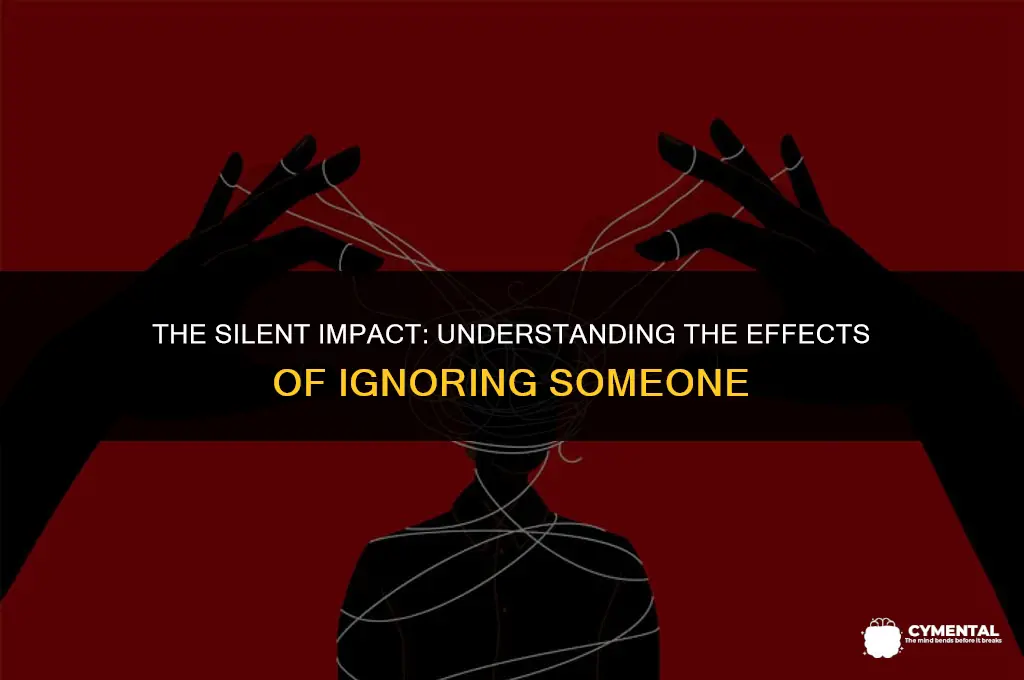
Ignoring someone can indeed be considered a form of mental abuse, particularly when it is intentional and persistent. This behavior can lead to feelings of isolation, worthlessness, and anxiety in the person being ignored. It undermines their sense of self-esteem and can severely impact their emotional well-being. In some cases, ignoring someone can be a tactic used to exert control or manipulate them, which are hallmarks of abusive behavior. It's important to recognize the signs of mental abuse and understand that it can take many forms, including neglect and dismissal. If you or someone you know is experiencing this type of treatment, it's crucial to seek support and address the issue.
| Characteristics | Values |
|---|---|
| Definition | Ignoring someone to the extent that it causes emotional distress or harm |
| Types | Active (consciously ignoring), Passive (unconsciously neglecting) |
| Impact | Can lead to feelings of worthlessness, anxiety, depression, and isolation |
| Signs | Avoiding eye contact, not responding to messages or calls, giving the silent treatment |
| Causes | Power dynamics, control issues, unresolved conflicts, lack of empathy |
| Prevention | Open communication, setting boundaries, seeking support from friends or professionals |
| Treatment | Therapy, counseling, self-care practices, rebuilding self-esteem |
Explore related products


$10.8


What You'll Learn
- Definition and Context: Understanding what constitutes mental abuse and how ignoring someone fits into this category
- Impact on Victims: Exploring the emotional and psychological effects of being ignored on individuals
- Forms of Ignoring: Different ways someone can be ignored, including social media, conversations, and physical presence
- Intent and Harm: Discussing whether ignoring someone is intentional and the potential harm it can cause
- Seeking Help and Support: Resources and strategies for those experiencing mental abuse through being ignored

Definition and Context: Understanding what constitutes mental abuse and how ignoring someone fits into this category
Mental abuse is a form of psychological maltreatment that involves actions or behaviors intended to demean, belittle, or harm another person's mental well-being. It can manifest in various ways, including verbal abuse, manipulation, intimidation, and neglect. Ignoring someone can be a subtle yet powerful form of mental abuse, as it can make the victim feel invisible, unimportant, and unworthy of attention or care.
In the context of mental abuse, ignoring someone can be a deliberate tactic used by the abuser to exert control and dominance over the victim. By withholding attention, the abuser can create a sense of dependency and desperation in the victim, making them more susceptible to further manipulation and abuse. This behavior can also be a way for the abuser to punish the victim for perceived wrongdoings or to reinforce negative beliefs about the victim's self-worth.
It's important to note that not all instances of ignoring someone constitute mental abuse. In some cases, it may be a legitimate response to a situation, such as setting boundaries or taking time to process emotions. However, when ignoring someone becomes a pattern or is used in conjunction with other abusive behaviors, it can be a sign of mental abuse.
To understand how ignoring someone fits into the category of mental abuse, it's helpful to consider the impact it has on the victim's mental health. Being ignored can lead to feelings of isolation, loneliness, and low self-esteem. It can also exacerbate existing mental health conditions, such as depression and anxiety. In severe cases, prolonged neglect can result in psychological trauma and long-term emotional scars.
In conclusion, ignoring someone can be a form of mental abuse when it is used intentionally to harm or control another person. It's essential to recognize the signs of mental abuse and to seek help if you or someone you know is experiencing it. Remember, mental abuse is never acceptable, and there is support available for those who need it.
Nurturing Resilience: How to Comfort a Mentally Exhausted Friend
You may want to see also
Explore related products


Impact on Victims: Exploring the emotional and psychological effects of being ignored on individuals
The act of being ignored can have profound emotional and psychological repercussions on individuals. When someone is consistently disregarded or dismissed, it can lead to feelings of worthlessness and low self-esteem. This can be particularly damaging in relationships, where one person's silence or lack of attention can make the other feel invisible and unimportant. Over time, this can erode the victim's sense of identity and autonomy, making them more susceptible to further forms of abuse.
Moreover, being ignored can also trigger anxiety and depression. The uncertainty and ambiguity that come with not knowing why one is being ignored can lead to obsessive thoughts and rumination. This can further exacerbate feelings of helplessness and hopelessness, making it difficult for the victim to seek help or support. In severe cases, prolonged emotional neglect can even lead to suicidal ideation, as the individual may feel that their existence is meaningless or that they are a burden to others.
It's important to note that the impact of being ignored can vary depending on the context and the individual's personal history. For example, someone who has experienced trauma or abuse in the past may be more vulnerable to the effects of emotional neglect. Additionally, the severity and duration of the neglect can also play a role in determining the extent of the damage.
In terms of practical steps, victims of emotional neglect can benefit from seeking therapy or counseling to address the underlying issues and develop coping strategies. It's also crucial to establish healthy boundaries in relationships and to surround oneself with supportive and validating individuals. By recognizing the signs of emotional abuse and taking proactive measures to protect one's mental health, individuals can begin to heal and reclaim their sense of self-worth.
Empowering Mental Health Advocacy: A Guide to Petitioning for Support in Arizona
You may want to see also
Explore related products


Forms of Ignoring: Different ways someone can be ignored, including social media, conversations, and physical presence
Ignoring someone can manifest in various forms, each with its own unique impact on the individual being ignored. In the realm of social media, ignoring can take the form of not responding to messages, comments, or posts. This digital silence can be particularly painful, as it is often visible to a wider audience, amplifying the sense of rejection. Additionally, the constant connectivity of social media platforms can make it difficult for the ignored person to escape the reminder of their exclusion.
In conversations, ignoring someone might involve not acknowledging their contributions, interrupting them, or changing the subject to exclude them from the discussion. This can lead to feelings of invisibility and worthlessness, as the person being ignored is effectively being told that their thoughts and opinions do not matter. Over time, this can erode their confidence and willingness to participate in social interactions.
Physical presence can also be a medium for ignoring someone. Avoiding eye contact, not initiating physical touch, or deliberately positioning oneself away from the person can all be forms of non-verbal communication that convey disinterest or disdain. This type of ignoring can be particularly damaging, as it often occurs in public settings where the ignored person may feel exposed and humiliated.
Each of these forms of ignoring can contribute to a pattern of mental abuse, where the consistent message is that the individual is unimportant, unworthy, or invisible. It is essential to recognize these behaviors and address them, as they can have long-lasting negative effects on the mental health and well-being of the person being ignored. By fostering open communication and promoting empathy, we can work towards creating a more inclusive and supportive environment for everyone.
Navigating Involuntary Commitment: A Guide to Mental Health Support in Florida
You may want to see also
Explore related products




Intent and Harm: Discussing whether ignoring someone is intentional and the potential harm it can cause
Ignoring someone can indeed be intentional, and the harm it can cause should not be underestimated. When a person deliberately chooses to disregard another's presence, comments, or needs, it can be a form of psychological manipulation or abuse. This behavior can be particularly damaging in relationships where there is an expectation of communication and mutual respect.
The intent behind ignoring someone can vary. It might be used as a way to assert dominance, to punish the other person, or to avoid dealing with uncomfortable emotions or situations. Regardless of the motive, the act of ignoring can lead to feelings of isolation, low self-esteem, and anxiety in the person being ignored. Over time, this can erode their sense of self-worth and lead to depression or other mental health issues.
It's important to recognize that not all instances of ignoring are intentional or harmful. In some cases, a person might be preoccupied, stressed, or simply not aware of the other's presence or needs. However, when ignoring becomes a pattern or is used as a tool to control or manipulate, it crosses the line into intentional harm.
To address this issue, it's crucial to communicate openly and honestly about feelings and needs. If someone feels they are being ignored, they should express their concerns in a calm and assertive manner. On the other hand, if someone is accused of ignoring, they should be willing to listen and understand the other's perspective, and make an effort to change their behavior if necessary.
In conclusion, while ignoring someone might seem like a harmless act, it can have serious consequences when done intentionally. It's essential to be aware of the potential harm and to take steps to address it through open communication and a willingness to understand and respect each other's needs and feelings.
Navigating Mental Health Commitments: A Compassionate Guide for Families
You may want to see also
Explore related products


Seeking Help and Support: Resources and strategies for those experiencing mental abuse through being ignored
Recognizing the signs of mental abuse through being ignored is the first step towards seeking help and support. This form of abuse can be subtle and insidious, often leaving the victim feeling confused, worthless, and isolated. It's crucial to understand that being ignored is not a minor issue but a serious form of emotional neglect that can have long-lasting effects on one's mental health.
For those experiencing mental abuse through being ignored, reaching out to a trusted friend or family member can be a vital first step. Sharing your feelings and experiences with someone who cares about you can help you feel heard and validated. This can be particularly important if the abuse is happening within a close relationship, such as a marriage or partnership, where the victim may feel trapped and alone.
Professional help is also available for those suffering from mental abuse. Therapists and counselors can provide a safe and supportive environment for victims to explore their feelings and develop strategies for coping with the abuse. Cognitive-behavioral therapy (CBT) is one effective approach that can help individuals identify and challenge negative thought patterns that may have developed as a result of being ignored.
In addition to seeking personal support, it's important for victims of mental abuse to educate themselves about their rights and the resources available to them. Understanding the dynamics of abuse and recognizing the tactics used by abusers can empower victims to take control of their situation and make informed decisions about their next steps.
Finally, creating a support network can be an invaluable resource for those experiencing mental abuse. Connecting with others who have gone through similar experiences can provide a sense of community and help victims feel less isolated. Online support groups and forums can be particularly helpful for those who may not have access to local resources or who prefer the anonymity of online communication.
Remember, seeking help and support is a sign of strength, not weakness. If you or someone you know is experiencing mental abuse through being ignored, don't hesitate to reach out for help. There are resources and strategies available that can help you overcome this form of abuse and reclaim your mental health and well-being.
Navigating Mental Health Petitions in Michigan: A Comprehensive Guide
You may want to see also
Frequently asked questions
Yes, ignoring someone can be a form of mental abuse. It can make the person feel worthless, unimportant, and unheard.
Being ignored can lead to feelings of loneliness, depression, anxiety, and low self-esteem. It can also cause a person to question their own worth and value.
Signs that someone is being ignored in a relationship include feeling unheard, unseen, and unimportant. They may also feel like they are walking on eggshells around the other person or feel like they can't express themselves freely.
Addressing the issue of ignoring in a relationship involves open and honest communication. It's important to express how you feel and why you feel that way. It's also important to listen to the other person's perspective and work together to find a solution.
Yes, ignoring someone can be a form of emotional manipulation. It can be used to control and manipulate the other person's emotions and behavior.