Caleb Wright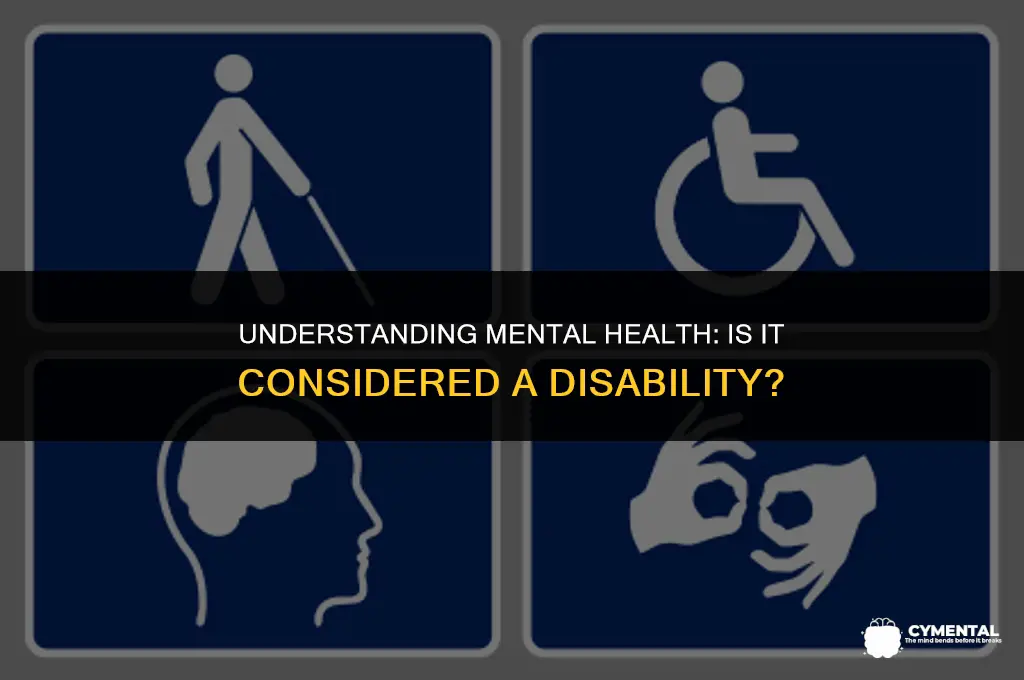
Mental health is a crucial aspect of overall well-being, and its impact on individuals' lives cannot be overstated. When considering whether mental health conditions should be classified as disabilities, it is essential to recognize the complexities involved. Disabilities are typically defined as physical or mental impairments that substantially limit one's ability to perform daily activities or participate fully in society. In the context of mental health, conditions such as depression, anxiety, bipolar disorder, and schizophrenia can indeed impair an individual's functioning and quality of life. However, the question of whether mental health should be considered a disability is not straightforward, as it involves nuanced considerations about the nature of mental health conditions, their impact on individuals, and the societal implications of such a classification.
Explore related products


What You'll Learn
- Definition of Disability: Exploring how mental health conditions fit within legal and societal definitions of disability
- Types of Mental Health Conditions: Discussing which mental health disorders are commonly recognized as disabilities
- Impact on Daily Life: Analyzing how mental health issues can affect daily functioning and qualify as disabilities
- Legal Protections: Reviewing laws and policies that protect individuals with mental health disabilities from discrimination
- Stigma and Perception: Examining societal attitudes towards mental health and their influence on disability recognition

Definition of Disability: Exploring how mental health conditions fit within legal and societal definitions of disability
The legal and societal definitions of disability have evolved significantly over the years, with mental health conditions increasingly being recognized as a crucial aspect of these definitions. In many jurisdictions, disability laws and policies now explicitly include mental health conditions, acknowledging their impact on an individual's ability to participate fully in society. This shift reflects a broader understanding that mental health is an integral part of overall well-being and that conditions such as depression, anxiety, and schizophrenia can be just as debilitating as physical impairments.
One of the key challenges in defining disability in the context of mental health is the subjective nature of these conditions. Unlike physical disabilities, which can often be objectively measured and diagnosed, mental health conditions are more nuanced and can manifest differently in each individual. This has led to debates about the criteria used to determine whether a mental health condition qualifies as a disability. Some argue that the focus should be on the functional impact of the condition, while others believe that the diagnosis itself should be sufficient.
In the United States, the Americans with Disabilities Act (ADA) provides a framework for understanding disability in the context of mental health. The ADA defines disability as a physical or mental impairment that substantially limits one or more major life activities, such as thinking, concentrating, or interacting with others. This definition has been instrumental in ensuring that individuals with mental health conditions are protected from discrimination and have access to accommodations in the workplace and other settings.
However, despite these legal protections, there remains a significant stigma surrounding mental health conditions and disability. Many individuals with mental health conditions face discrimination and are reluctant to disclose their conditions for fear of being judged or treated differently. This stigma can have a profound impact on an individual's ability to seek help and access the support they need.
In conclusion, the definition of disability in the context of mental health is complex and multifaceted. While legal frameworks have made significant strides in recognizing mental health conditions as a legitimate aspect of disability, there is still much work to be done in addressing the stigma and ensuring that individuals with mental health conditions are fully supported and included in society.
Unveiling the Truth: Men's Mental Health Matters Every Day
You may want to see also
Explore related products


Types of Mental Health Conditions: Discussing which mental health disorders are commonly recognized as disabilities
Mental health conditions encompass a wide range of disorders that can significantly impact an individual's daily functioning and overall well-being. When discussing which mental health disorders are commonly recognized as disabilities, it is essential to consider the severity and persistence of symptoms, as well as the individual's ability to perform essential life activities.
One of the most commonly recognized mental health disabilities is Major Depressive Disorder (MDD). Characterized by persistent feelings of sadness, hopelessness, and a loss of interest in previously enjoyable activities, MDD can severely impair an individual's ability to work, maintain relationships, and engage in daily tasks. According to the World Health Organization (WHO), depression is a leading cause of disability worldwide, affecting over 264 million people.
Another mental health condition frequently considered a disability is Schizophrenia. This chronic disorder is marked by symptoms such as delusions, hallucinations, and disorganized thinking, which can significantly disrupt an individual's perception of reality and ability to function in society. Schizophrenia often requires long-term treatment and support, and individuals with this condition may face challenges in securing and maintaining employment or participating in social activities.
Anxiety disorders, such as Generalized Anxiety Disorder (GAD) and Post-Traumatic Stress Disorder (PTSD), are also commonly recognized as disabilities. These conditions can cause excessive worry, fear, and avoidance behaviors, making it difficult for individuals to cope with everyday stressors and engage in normal activities. The WHO estimates that anxiety disorders affect approximately 260 million people globally, with women being more likely to experience these conditions than men.
In addition to these disorders, other mental health conditions such as Bipolar Disorder, Obsessive-Compulsive Disorder (OCD), and Attention Deficit Hyperactivity Disorder (ADHD) may also be considered disabilities, depending on the severity and impact of symptoms on an individual's life. It is important to note that the recognition of mental health conditions as disabilities can vary by country and region, with different criteria and standards used to determine eligibility for disability benefits and accommodations.
In conclusion, mental health conditions such as Major Depressive Disorder, Schizophrenia, and Anxiety Disorders are commonly recognized as disabilities due to their significant impact on an individual's ability to function in daily life. Understanding these conditions and their effects is crucial for promoting awareness, reducing stigma, and ensuring that individuals with mental health disabilities receive the support and accommodations they need to thrive.
Where to Purchase Mental Health Awareness Ribbons: A Comprehensive Guide
You may want to see also
Explore related products





Impact on Daily Life: Analyzing how mental health issues can affect daily functioning and qualify as disabilities
Mental health issues can significantly impact an individual's daily life, often in ways that are not immediately visible. These challenges can manifest in various forms, such as difficulty concentrating, maintaining relationships, or performing routine tasks. For instance, someone with severe depression may struggle to get out of bed in the morning, while a person with anxiety might find it hard to leave their home due to overwhelming fears.
The impact of mental health issues on daily functioning can be profound. Simple activities like cooking, cleaning, or managing finances can become daunting tasks. Social interactions, which are crucial for emotional well-being, can also be affected, leading to isolation and loneliness. Furthermore, mental health conditions can exacerbate physical health problems, as the stress and strain of mental illness can weaken the immune system and lead to chronic pain or other somatic symptoms.
In terms of qualifying as disabilities, mental health issues are recognized under various disability laws and policies. The Americans with Disabilities Act (ADA), for example, protects individuals with mental health conditions from discrimination in employment, public accommodations, and other areas of life. To qualify for these protections, a mental health condition must substantially limit one or more major life activities. This means that the condition must significantly impact an individual's ability to perform tasks that are essential for daily living, such as caring for oneself, working, or interacting with others.
Determining whether a mental health issue qualifies as a disability often involves a complex evaluation process. Mental health professionals, such as psychiatrists and psychologists, play a crucial role in this process by providing diagnoses, assessments, and treatment plans. Additionally, legal experts and disability advocates may be involved to ensure that individuals receive the appropriate accommodations and support.
In conclusion, mental health issues can have a far-reaching impact on daily life, affecting everything from personal relationships to physical health. Recognizing these challenges as potential disabilities is essential for providing individuals with the necessary support and accommodations to lead fulfilling lives. By understanding the specific ways in which mental health conditions can affect daily functioning, we can better advocate for policies and practices that promote inclusivity and accessibility for all individuals, regardless of their mental health status.
Unveiling Men's Mental Health Month: A Time for Awareness and Action
You may want to see also
Explore related products


Legal Protections: Reviewing laws and policies that protect individuals with mental health disabilities from discrimination
Individuals with mental health disabilities are afforded various legal protections to safeguard them from discrimination. These protections are enshrined in national and international laws, ensuring that people with mental health conditions are treated equally and with respect. For instance, the Americans with Disabilities Act (ADA) in the United States prohibits discrimination against individuals with disabilities, including mental health disorders, in areas such as employment, public accommodations, and healthcare. Similarly, the Convention on the Rights of Persons with Disabilities (CRPD) is an international treaty that promotes the rights and dignity of persons with disabilities, including those with mental health conditions.
These legal frameworks not only protect individuals from overt discrimination but also from more subtle forms of bias and stigma. They mandate that reasonable accommodations be made to ensure that people with mental health disabilities can participate fully in society. For example, an employer may be required to provide flexible work arrangements or mental health support services to an employee with a mental health condition.
Despite these legal protections, challenges remain in ensuring their effective implementation. Stigma and lack of awareness about mental health conditions can lead to discrimination and exclusion. Moreover, the intersectionality of mental health with other factors such as race, gender, and socioeconomic status can compound the discrimination faced by individuals.
To address these challenges, advocacy and awareness-raising efforts are crucial. Organizations and individuals must work together to educate the public about mental health conditions and the legal rights of those affected. Additionally, policymakers must continue to review and strengthen laws and policies to ensure that they provide comprehensive protection against discrimination.
In conclusion, legal protections play a vital role in safeguarding the rights of individuals with mental health disabilities. However, their effectiveness depends on the collective efforts of society to combat stigma, promote awareness, and ensure that these laws are enforced and respected. By working together, we can create a more inclusive and supportive environment for all individuals, regardless of their mental health status.
Unlocking Mental Wellness: The Essential Degrees for Counselors
You may want to see also
Explore related products


Stigma and Perception: Examining societal attitudes towards mental health and their influence on disability recognition
Societal attitudes towards mental health play a significant role in shaping the recognition and treatment of mental health conditions as disabilities. Stigma, defined as the negative stereotypes and prejudices associated with a particular condition, can lead to discrimination and marginalization of individuals with mental health issues. This stigma often stems from a lack of understanding and education about mental health, perpetuating harmful misconceptions that those affected are somehow flawed or weak.
The perception of mental health as a disability is influenced by various factors, including cultural norms, media representation, and legal frameworks. In many cultures, mental illness is viewed as a personal failing rather than a legitimate medical condition, leading to a reluctance to acknowledge it as a disability. Media portrayals often reinforce these negative stereotypes, depicting individuals with mental health issues as dangerous or unpredictable. Legal recognition of mental health conditions as disabilities varies widely across different jurisdictions, with some offering comprehensive protections while others provide limited or no recognition.
The impact of stigma and perception on disability recognition is profound. Individuals with mental health conditions may face barriers to accessing healthcare, employment, and social services due to discriminatory attitudes. This can lead to increased social isolation, poverty, and overall poorer health outcomes. Furthermore, the reluctance to recognize mental health issues as disabilities can hinder efforts to provide adequate support and accommodations, perpetuating a cycle of disadvantage and marginalization.
Challenging stigma and changing perceptions is crucial to promoting the recognition of mental health conditions as disabilities. This requires a multifaceted approach, including public education campaigns, anti-discrimination legislation, and increased representation of individuals with mental health issues in media and public discourse. By fostering a more inclusive and understanding society, we can work towards ensuring that those affected by mental health conditions receive the support and recognition they deserve.
Navigating Mental Health: The Essential Role of Case Management
You may want to see also
Frequently asked questions
Mental health conditions can be considered disabilities if they significantly impact a person's daily life and ability to function. This includes conditions like depression, anxiety, bipolar disorder, and schizophrenia.
Examples of mental health conditions that may qualify as disabilities include major depressive disorder, generalized anxiety disorder, post-traumatic stress disorder (PTSD), obsessive-compulsive disorder (OCD), and eating disorders such as anorexia nervosa or bulimia nervosa.
A mental health condition becomes classified as a disability when it substantially limits one or more major life activities, such as working, socializing, or managing daily tasks. The condition must also be chronic or long-lasting, and not simply a temporary issue.
One common misconception is that mental health conditions are not "real" disabilities. Another misconception is that people with mental health conditions are unable to work or contribute to society. In reality, many people with mental health conditions can and do lead productive lives with the right support and treatment.