Lucas Bennett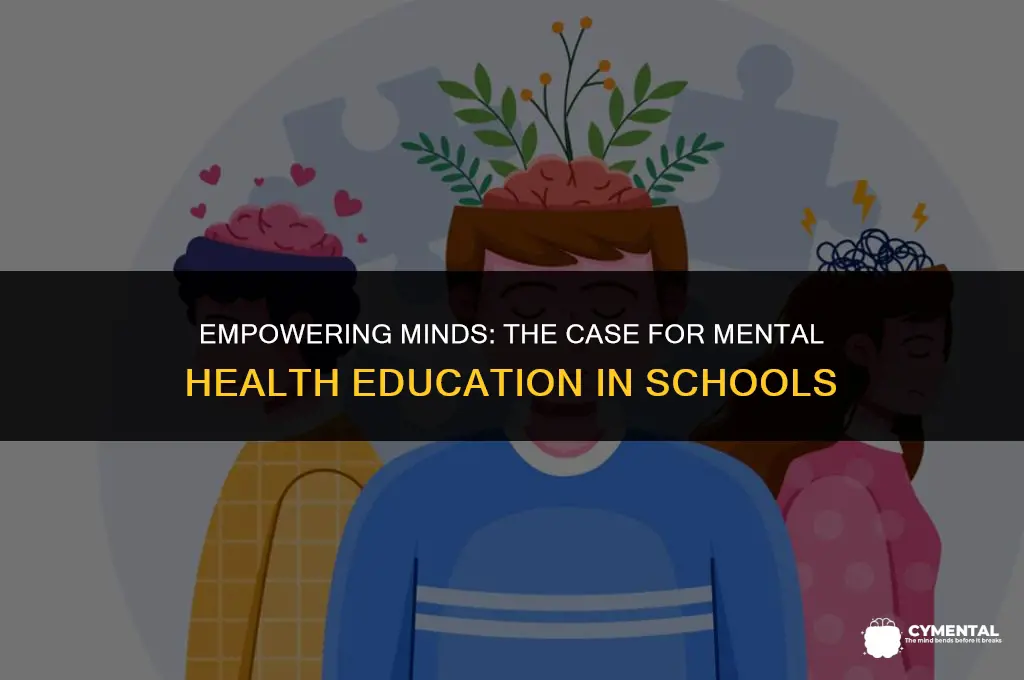
Mental health education in schools has become a topic of increasing importance in recent years. With rising concerns about the well-being of young people, many educators and policymakers argue that teaching mental health should be a priority in educational curricula. This approach aims to equip students with the knowledge and skills necessary to understand and manage their own mental health, as well as to support their peers. By integrating mental health education into the school system, advocates believe that we can help reduce stigma, promote early intervention, and foster a more supportive and inclusive school environment. However, there are also challenges to consider, such as ensuring that teachers are adequately trained to address mental health issues and balancing the need for education with the potential for overburdening an already strained educational system.
Explore related products


What You'll Learn

Benefits of early mental health education
Early mental health education can significantly reduce the stigma associated with mental illness. By introducing concepts such as anxiety, depression, and emotional regulation in a school setting, students are more likely to view mental health challenges as common and treatable rather than something to be ashamed of. This shift in perception can lead to increased empathy and support among peers, creating a more inclusive and understanding school environment.
Moreover, teaching mental health in schools can empower students with the tools they need to manage their own well-being. Skills such as mindfulness, stress management, and problem-solving are valuable life skills that can help students navigate the challenges of adolescence and beyond. By integrating these skills into the curriculum, schools can promote resilience and help students develop healthy coping mechanisms.
Another benefit of early mental health education is the potential for early intervention and prevention. By educating students and staff about the signs and symptoms of mental health issues, schools can identify and address problems before they escalate. This can lead to better outcomes for students who may be struggling with mental health challenges, as early intervention is often more effective than treatment at a later stage.
Furthermore, mental health education can improve academic performance. Research has shown that students who receive mental health education are more likely to achieve higher grades and have better attendance rates. This is likely due to the fact that students who are mentally healthy and able to manage their emotions are better able to focus on their studies and engage in the learning process.
In addition to these benefits, early mental health education can also foster a sense of community and belonging among students. By promoting open conversations about mental health, schools can create a culture where students feel comfortable seeking help and supporting one another. This can lead to stronger social connections and a more positive school climate.
Overall, the benefits of early mental health education are numerous and far-reaching. By incorporating mental health education into the school curriculum, we can promote a healthier, more resilient, and more compassionate generation of students.
Understanding Outpatient Mental Health: A Comprehensive Guide
You may want to see also
Explore related products


Potential impact on academic performance
Research indicates that mental health education can have a profound impact on academic performance. By teaching students about mental health, schools can help reduce the stigma associated with mental illness, leading to earlier identification and treatment of mental health issues. This, in turn, can improve students' ability to focus, learn, and retain information, ultimately resulting in better academic outcomes.
One study found that students who received mental health education showed significant improvements in their grades, with the greatest gains seen in math and science. Another study revealed that mental health education can help reduce absenteeism and dropout rates, as students are better equipped to manage their mental health and seek help when needed.
In addition to these direct academic benefits, mental health education can also foster a more supportive and inclusive school environment. By promoting empathy and understanding, mental health education can help reduce bullying and create a culture where students feel safe and valued. This, in turn, can lead to increased motivation and engagement, further enhancing academic performance.
However, it is important to note that the effectiveness of mental health education depends on the quality and delivery of the instruction. Programs that are evidence-based, age-appropriate, and culturally sensitive are more likely to produce positive outcomes. Furthermore, mental health education should be integrated into the overall curriculum, rather than being treated as a separate or optional subject.
In conclusion, the potential impact of mental health education on academic performance is significant. By addressing mental health issues and promoting a supportive school environment, mental health education can help students achieve their full academic potential. As such, it is essential that schools prioritize mental health education and ensure that it is delivered in a way that is effective and accessible to all students.
Empowering Voices: A Guide to Becoming a Mental Health Advocate
You may want to see also
Explore related products


Teacher training and support
Effective teacher training is crucial for the successful implementation of mental health education in schools. Educators need to be equipped with the knowledge and skills to address students' mental health needs appropriately. This includes understanding the signs and symptoms of common mental health issues, knowing how to create a supportive classroom environment, and being able to refer students to professional help when necessary.
One approach to teacher training is through workshops and seminars that focus on mental health awareness and intervention strategies. These sessions can be led by mental health professionals and should cover topics such as stress management, emotional regulation, and crisis intervention. Additionally, teachers should be trained in evidence-based practices for promoting mental well-being, such as mindfulness and cognitive-behavioral techniques.
Ongoing support for teachers is also essential. This can include regular check-ins with school counselors or mental health specialists, access to resources and materials for teaching mental health concepts, and opportunities for peer support and collaboration. Teachers should feel empowered to seek help when they are unsure how to handle a student's mental health concern.
Furthermore, teacher training should address the importance of self-care and stress management for educators themselves. Teaching can be a high-stress profession, and it is vital that teachers are able to maintain their own mental health in order to effectively support their students. This may involve training in stress reduction techniques, time management strategies, and boundary setting.
In conclusion, teacher training and support are key components of any successful mental health education program in schools. By providing educators with the necessary knowledge, skills, and resources, we can ensure that students receive the support they need to thrive academically and emotionally.
Effective Strategies for Marketing Mental Health Services
You may want to see also
Explore related products



Addressing stigma and promoting awareness
One effective strategy for addressing stigma and promoting awareness about mental health in schools is through the implementation of peer-led initiatives. These programs empower students to become mental health advocates and educators, fostering a culture of understanding and support among their peers. By training students to lead workshops, organize events, and facilitate discussions, schools can create a grassroots movement that challenges misconceptions and encourages open dialogue about mental health issues.
Another crucial aspect of addressing stigma is the involvement of parents and the broader community. Schools can host information sessions, workshops, and support groups for parents, providing them with the knowledge and tools to recognize and respond to mental health concerns in their children. Additionally, collaborating with local mental health organizations and professionals can help schools develop comprehensive programs that extend beyond the classroom, ensuring that students have access to resources and support outside of school hours.
To further promote awareness, schools can incorporate mental health education into their curricula, making it a mandatory component of health or social studies classes. This approach ensures that all students receive accurate information about mental health, learn to recognize the signs of common mental health issues, and understand the importance of seeking help when needed. By treating mental health education as a core subject, schools can help to normalize discussions about mental well-being and reduce the stigma associated with seeking support.
In addition to these strategies, schools can also leverage technology to promote mental health awareness and address stigma. Online platforms, social media campaigns, and mobile apps can be used to disseminate information, share personal stories, and provide resources for students, parents, and staff. These digital tools can help to reach a wider audience and engage individuals who may be hesitant to participate in face-to-face discussions or events.
Ultimately, addressing stigma and promoting awareness about mental health in schools requires a multifaceted approach that involves students, parents, educators, and the broader community. By working together and implementing a variety of strategies, schools can create a supportive and inclusive environment that encourages open dialogue, reduces stigma, and ensures that all students have access to the mental health resources they need.
Understanding the Cost of Mental Health Evaluations: A Comprehensive Guide
You may want to see also
Explore related products






Integrating mental health into existing curricula
One effective strategy is to use a holistic approach that addresses the social, emotional, and psychological aspects of mental health. This could include teaching students about stress management techniques, mindfulness practices, and healthy coping mechanisms. By integrating these topics into existing subjects, educators can create a more cohesive and comprehensive learning experience that reinforces the importance of mental health in all aspects of life.
Another key consideration is the need for teacher training and support. Educators must be equipped with the necessary tools and resources to effectively teach mental health concepts and respond to students' needs. This could involve providing professional development opportunities, access to mental health experts, and ongoing support to ensure that teachers feel confident and capable in addressing mental health issues in the classroom.
Furthermore, it is essential to involve parents and the wider community in the integration process. By fostering a collaborative environment, schools can ensure that mental health education extends beyond the classroom and into the home, reinforcing the importance of mental well-being in all aspects of life. This could involve hosting workshops, providing resources, and encouraging open communication between parents, teachers, and students.
In conclusion, integrating mental health into existing curricula is a complex but crucial task that requires a thoughtful and comprehensive approach. By weaving mental health education into various subjects, providing teacher training and support, and involving parents and the community, schools can create a more holistic and effective learning environment that prioritizes the mental well-being of all students.
Exploring Mental Health Coverage Under CHAMPVA: What You Need to Know
You may want to see also
Frequently asked questions
Yes, mental health education in schools is crucial as it helps students understand and manage their emotions, develop resilience, and foster a supportive community.
Teaching mental health in schools can lead to improved academic performance, reduced stigma around mental illness, increased awareness of mental health issues, and better overall well-being for students.
Mental health education can be integrated into various subjects such as health classes, physical education, and social studies. It can also be incorporated through workshops, guest speakers, and school-wide initiatives.
Some potential challenges include limited resources, lack of trained staff, resistance from parents or community members, and the need to balance mental health education with other academic priorities.