Noah Parker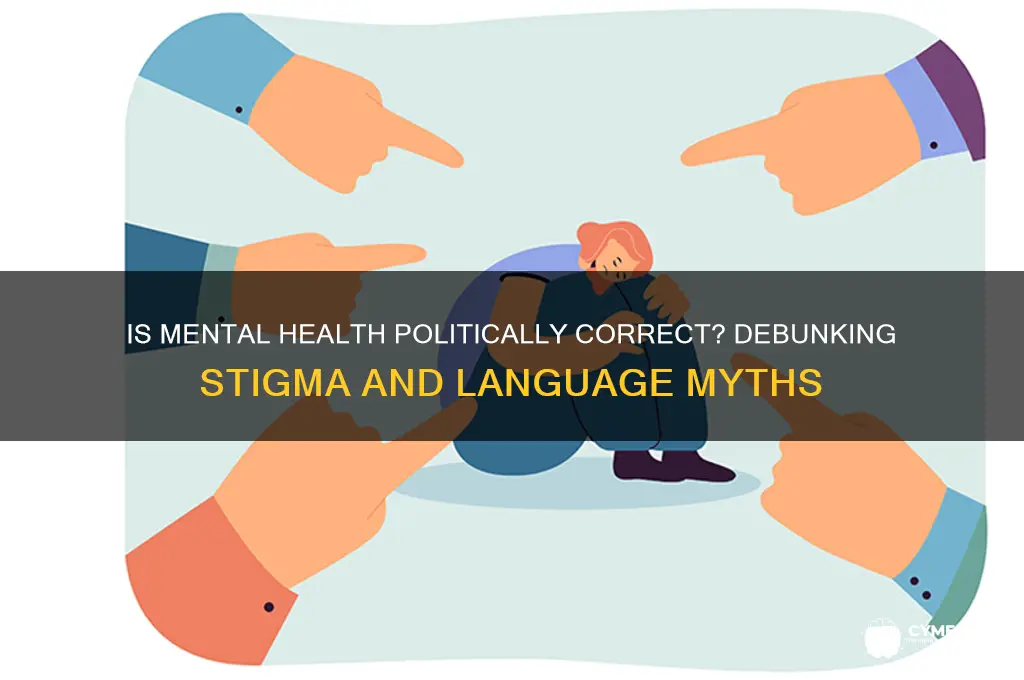
The question of whether mental health issues are politically correct (PC) reflects a broader societal tension between sensitivity and open dialogue. On one hand, the push for PC language aims to reduce stigma and create a more inclusive environment for those struggling with mental health challenges. Terms like person with depression instead of depressed person emphasize the individual over their condition, fostering empathy. On the other hand, critics argue that excessive focus on PC language can stifle honest conversations, making it harder to address mental health issues candidly. Striking a balance between compassion and authenticity is crucial, as the ultimate goal should be to normalize discussions around mental health without sacrificing the ability to speak openly and effectively about these complex issues.
Explore related products


$6.69 $15.99


What You'll Learn
- Stigma Reduction Strategies: Combating stereotypes, promoting empathy, and encouraging open conversations about mental health challenges
- Workplace Mental Health Policies: Implementing supportive measures, flexible schedules, and accessible resources for employee well-being
- Digital Mental Health Tools: Utilizing apps, online therapy, and AI-driven platforms for accessible mental health support
- Cultural Sensitivity in Care: Addressing diverse mental health needs and ensuring inclusive, respectful treatment approaches
- Policy and Funding Advocacy: Pushing for increased government funding and policies to improve mental health services

Stigma Reduction Strategies: Combating stereotypes, promoting empathy, and encouraging open conversations about mental health challenges
Mental health stigma thrives on silence and misinformation. To dismantle it, we must amplify authentic voices. Share personal stories, not as spectacles, but as windows into shared humanity. Platforms like podcasts, blogs, and social media campaigns featuring individuals from diverse backgrounds discussing their experiences normalize struggles and challenge monolithic narratives. Pair these narratives with factual data – 1 in 4 adults experience mental illness annually – to ground empathy in reality.
Language shapes perception. Avoid terms like "crazy," "psycho," or "commit suicide." Opt for "person with schizophrenia," "died by suicide," or "experiencing depression." This person-first language emphasizes individuality over diagnosis. Encourage media outlets and public figures to adopt similar guidelines, ensuring responsible representation that combats sensationalism.
Think of it as linguistic precision, not political correctness – a tool for fostering understanding, not censorship.
Empathy flourishes through shared experiences. Host workshops, support groups, or community events that create safe spaces for dialogue. Activities like art therapy, mindfulness exercises, or panel discussions allow participants to connect on a deeper level, transcending superficial stereotypes. For younger audiences, integrate mental health education into school curricula, using age-appropriate language and interactive formats like role-playing or peer-led discussions.
Stigma reduction requires sustained effort. Partner with local organizations, mental health professionals, and policymakers to develop long-term strategies. Advocate for increased funding for mental health services, particularly in underserved communities. Push for workplace policies that prioritize mental well-being, such as flexible schedules, access to counseling, and anti-stigma training for managers. Remember, systemic change is the ultimate antidote to deeply ingrained prejudice.
Overcoming Mental Health Challenges: Effective Strategies for Healing and Recovery
You may want to see also
Explore related products



Workplace Mental Health Policies: Implementing supportive measures, flexible schedules, and accessible resources for employee well-being
Mental health issues are no longer a taboo topic in the workplace, but simply acknowledging their existence isn’t enough. Companies must move beyond performative gestures and implement concrete policies that prioritize employee well-being. This means embedding mental health support into the fabric of organizational culture, not treating it as an afterthought.
Step 1: Audit Your Current Policies
Begin by evaluating existing workplace policies through a mental health lens. Are sick days inclusive of mental health days? Do performance reviews account for burnout? For example, a tech company might discover that its rigid 9-to-5 schedule exacerbates stress for remote workers. By identifying these gaps, employers can tailor policies to address specific stressors.
Step 2: Introduce Flexible Schedules with Boundaries
Flexibility doesn’t mean chaos. Implement structured options like compressed workweeks, asynchronous communication norms, or core hours (e.g., 10 AM–3 PM mandatory availability). A study by the Harvard Business Review found that employees with control over their schedules reported 20% lower stress levels. Pair flexibility with clear expectations to prevent overwork—for instance, discourage after-hours emails unless urgent.
Step 3: Provide Accessible, Stigma-Free Resources
Offer mental health resources that are easy to access and free from judgment. Subsidized therapy sessions, EAPs (Employee Assistance Programs), and anonymous helplines are effective, but ensure employees know how to use them. For instance, a manufacturing firm might post QR codes linking to mental health apps in break rooms, bypassing the need for formal sign-ups.
Caution: Avoid Tokenism
Wellness initiatives like yoga classes or mindfulness apps are valuable but insufficient on their own. Avoid treating them as a substitute for systemic change. A retail company, for example, might offer free meditation apps while ignoring chronic understaffing—a recipe for resentment. Pair visible perks with deeper structural reforms, such as workload redistribution or manager training on mental health first aid.
Track the effectiveness of your policies through regular, anonymous employee surveys and turnover data. A financial services firm that introduced four-day workweeks saw a 35% drop in burnout rates within six months. Such metrics prove that investing in mental health isn’t just ethical—it’s good business. By treating mental health policies as a dynamic, data-driven strategy, companies can foster resilience, loyalty, and productivity in their workforce.
Navigating California Disability Benefits for Mental Health Challenges
You may want to see also
Explore related products


Digital Mental Health Tools: Utilizing apps, online therapy, and AI-driven platforms for accessible mental health support
The rise of digital mental health tools has transformed how individuals access support, blending convenience with innovation. Apps like Calm and Headspace offer guided meditation and sleep stories, while platforms such as BetterHelp and Talkspace connect users with licensed therapists via text, video, or audio. AI-driven tools like Woebot use natural language processing to provide cognitive-behavioral therapy techniques in real-time conversations. These solutions cater to diverse needs, from stress management to severe anxiety, often at a fraction of traditional therapy costs. For instance, a monthly subscription to Calm ($69.99/year) or a weekly BetterHelp session ($60–$90) can be more affordable than in-person therapy, which averages $100–$200 per session.
However, the effectiveness of these tools varies. A 2020 study in *JAMA Psychiatry* found that app-based interventions significantly reduced symptoms of depression and anxiety in mild to moderate cases, particularly among users aged 18–35. Yet, they are not a one-size-fits-all solution. For severe conditions like bipolar disorder or schizophrenia, digital tools should complement, not replace, professional care. Users must also navigate privacy concerns, as data from mental health apps can be vulnerable to breaches. For example, in 2021, a popular mental health app exposed user data due to weak encryption, highlighting the need for stringent security measures.
To maximize benefits, users should approach these tools strategically. Start by identifying specific needs—whether it’s improving sleep, managing stress, or addressing anxiety. For instance, if insomnia is the issue, apps like Sleep Cycle analyze sleep patterns and offer personalized recommendations. Pairing apps with online therapy can provide a holistic approach; a 2021 study in *Nature* found that combining app-based mindfulness with virtual therapy sessions improved outcomes by 30% compared to standalone methods. Additionally, set realistic expectations—digital tools are most effective with consistent use, such as 10–15 minutes daily for meditation apps or weekly check-ins with online therapists.
Despite their potential, digital mental health tools are not without limitations. AI platforms, while accessible, lack human empathy and may misinterpret nuanced emotional cues. For example, Woebot’s scripted responses can feel impersonal during complex conversations. Online therapy, while convenient, may not suit individuals who thrive on in-person interactions. Moreover, the digital divide excludes those without reliable internet or tech literacy, disproportionately affecting older adults and low-income populations. Policymakers and developers must address these gaps by creating inclusive, user-friendly interfaces and ensuring affordability.
In conclusion, digital mental health tools offer unprecedented accessibility and flexibility, but their success hinges on informed, tailored use. By combining apps, online therapy, and AI platforms with traditional care, individuals can create a comprehensive support system. Practical steps include researching app privacy policies, setting consistent usage goals, and consulting professionals for severe conditions. As technology evolves, these tools will likely become more sophisticated, but their true value lies in empowering users to take proactive steps toward mental well-being.
Navigating Conversations: Gently Sharing Your Mental Health Journey with Others
You may want to see also
Explore related products


Cultural Sensitivity in Care: Addressing diverse mental health needs and ensuring inclusive, respectful treatment approaches
Mental health care is not one-size-fits-all, yet many treatment models fail to account for cultural diversity. This oversight can lead to misdiagnosis, mistrust, and ineffective care. For instance, symptoms of depression in Western cultures often focus on sadness and guilt, while in some Asian cultures, somatic complaints like fatigue or headaches may predominate. Clinicians who lack cultural awareness might misinterpret these presentations, underscoring the need for tailored approaches that honor diverse expressions of mental distress.
To address this gap, practitioners must adopt culturally sensitive practices. Start by conducting a thorough cultural assessment during intake, exploring factors like language, religion, family structure, and migration history. For example, a first-generation immigrant may face unique stressors, such as acculturative stress or intergenerational conflict, which require specific interventions. Incorporating interpreters or bilingual staff can improve communication, but ensure they are trained in mental health terminology to avoid inaccuracies. Additionally, familiarize yourself with culturally specific coping mechanisms—a Latino client might find solace in *familismo* (family support), while a Native American individual may benefit from traditional healing practices like smudging.
However, cultural sensitivity goes beyond surface-level adaptations. It requires challenging biases and systemic barriers. For instance, minority communities often face stigma around mental health, rooted in historical trauma or societal misconceptions. Providers should engage in ongoing self-reflection to identify and address implicit biases. Institutions must also advocate for policy changes, such as increasing diversity in mental health research or funding community-based programs that align with cultural values. A study in *JAMA Psychiatry* found that Black patients were more likely to engage in therapy when treated by Black therapists, highlighting the importance of representation in care.
Finally, collaboration with community leaders can bridge gaps between clinical practice and cultural norms. For example, partnering with religious figures in Muslim communities can help destigmatize mental health care by framing it as a spiritual duty. Similarly, involving elders in Indigenous communities can ensure treatments align with traditional beliefs. Practical steps include offering flexible appointment times to accommodate cultural or religious observances, providing materials in multiple languages, and creating safe spaces for clients to discuss cultural identity without fear of judgment. By embedding cultural sensitivity into every aspect of care, providers can foster trust, improve outcomes, and ensure mental health services are truly inclusive.
Loving Through Challenges: Supporting Partners with Mental Health Issues
You may want to see also
Explore related products




Policy and Funding Advocacy: Pushing for increased government funding and policies to improve mental health services
Mental health issues are increasingly recognized as a public health crisis, yet government funding and policies often lag behind the growing demand for services. This disparity leaves millions without access to adequate care, exacerbating individual suffering and societal costs. Advocacy for increased funding and policy reform is not just a moral imperative but a strategic investment in public well-being. By prioritizing mental health, governments can reduce healthcare expenditures, improve productivity, and foster more resilient communities.
To effectively advocate for change, start by understanding the current landscape. Research existing mental health policies and funding allocations in your region. Identify gaps in services, such as insufficient access to therapy, lack of crisis intervention programs, or inadequate support for marginalized populations. Use data to build a compelling case—for instance, studies show that every dollar invested in mental health treatment yields a $4 return in improved health and productivity. Armed with evidence, engage policymakers through targeted campaigns, leveraging social media, petitions, and public forums to amplify your message.
Crafting policy proposals requires specificity and practicality. Advocate for initiatives like mandatory mental health coverage in insurance plans, increased funding for community-based programs, and the integration of mental health services into primary care. Propose pilot programs for innovative solutions, such as teletherapy for rural areas or school-based mental health screenings for adolescents. Pair these proposals with clear funding mechanisms, such as reallocating a portion of healthcare budgets or introducing dedicated mental health taxes. Ensure your advocacy includes diverse voices, particularly those from underserved communities, to create policies that are inclusive and equitable.
Caution must be taken to avoid common pitfalls in advocacy. Avoid overly broad demands that lack actionable steps, as they can dilute your message. Instead, focus on achievable goals with measurable outcomes. Be prepared to counter arguments about budget constraints by highlighting the long-term economic benefits of mental health investment. Finally, sustain momentum by building coalitions with organizations, healthcare providers, and affected individuals. Consistent pressure, coupled with a well-researched and compassionate approach, can drive the policy changes needed to transform mental health care.
Is It Rude to Ask About Mental Health Issues?
You may want to see also
Frequently asked questions
Yes, "mental health issue" is generally considered a politically correct and respectful term, as it focuses on the condition rather than stigmatizing the individual.
Alternatives like "mental health challenge," "mental health condition," or "lived experience of mental health" are often preferred for their person-centered approach.
Yes, "mentally ill" can be seen as reductive and stigmatizing, while "mental health issue" is more neutral and emphasizes the condition over the person.
Yes, open discussions about mental health are increasingly encouraged in professional settings to reduce stigma and promote well-being.
No, terms like "crazy" or "insane" are considered offensive and stigmatizing, and should be avoided in favor of more respectful language.