Harper Lewis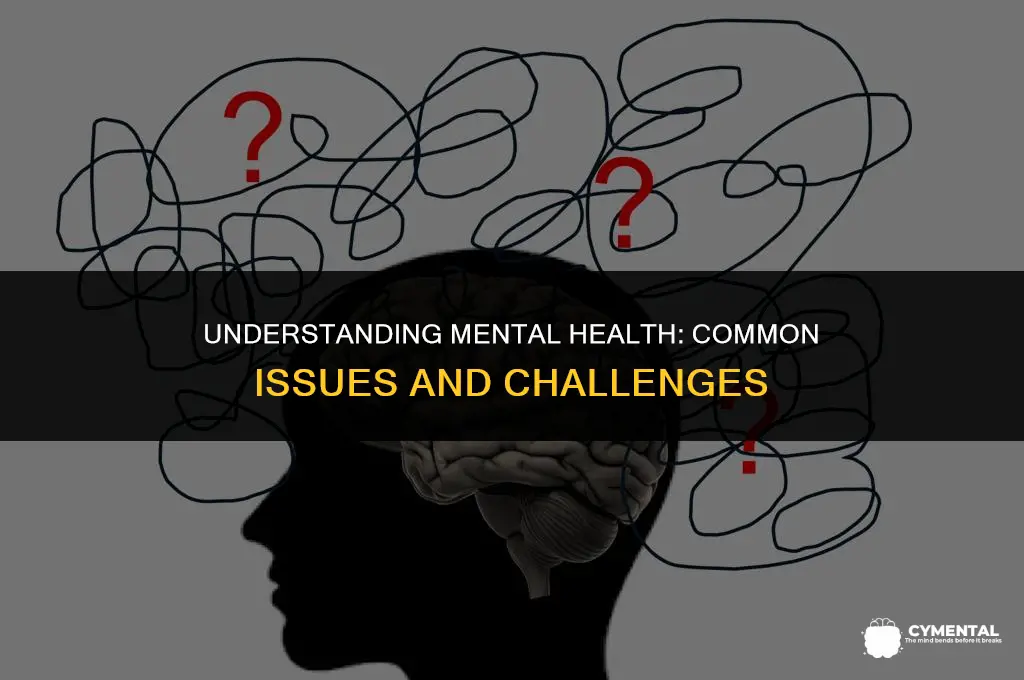
Mental health issues are a prevalent concern affecting individuals worldwide, transcending age, gender, and cultural boundaries. Common mental health issues include anxiety disorders, characterized by excessive worry and fear; depressive disorders, marked by persistent feelings of sadness and loss of interest; and bipolar disorder, which involves extreme mood swings. Other significant issues include schizophrenia, which can cause a disconnection from reality, and eating disorders, such as anorexia nervosa and bulimia nervosa, which involve abnormal eating behaviors and body image concerns. These conditions can significantly impact daily functioning, relationships, and overall well-being, underscoring the importance of awareness, early intervention, and access to mental health services.
Explore related products


What You'll Learn
- Anxiety Disorders: Excessive worry, fear, and anxiety that interfere with daily life and relationships
- Depressive Disorders: Persistent feelings of sadness, hopelessness, and loss of interest in activities
- Bipolar Disorder: Mood swings between mania and depression, affecting energy, activity, and judgment
- Post-Traumatic Stress Disorder (PTSD): Flashbacks, nightmares, and severe anxiety after experiencing trauma
- Eating Disorders: Unhealthy eating habits and distorted body image, such as anorexia, bulimia, and binge eating

Anxiety Disorders: Excessive worry, fear, and anxiety that interfere with daily life and relationships
Anxiety disorders are characterized by persistent and excessive worry, fear, and anxiety that significantly impact an individual's daily life and relationships. These disorders are among the most common mental health issues, affecting millions of people worldwide. The hallmark of anxiety disorders is the disproportionate and often irrational fear response to various stimuli, which can lead to avoidance behaviors and significant distress.
One unique aspect of anxiety disorders is their ability to manifest in various forms, each with distinct symptoms and triggers. For example, generalized anxiety disorder (GAD) involves chronic worry and anxiety about everyday situations, while panic disorder is characterized by sudden, intense panic attacks. Social anxiety disorder involves an excessive fear of social situations, leading to avoidance and isolation. Specific phobias, such as arachnophobia or acrophobia, involve an intense fear of specific objects or situations.
The impact of anxiety disorders on daily life can be profound. Individuals may experience physical symptoms such as rapid heartbeat, sweating, and trembling. They may also have difficulty concentrating, sleeping, and maintaining relationships. Anxiety disorders can lead to avoidance behaviors, where individuals may skip social events, work, or other activities due to fear. This can result in significant impairment in various areas of life, including work, school, and personal relationships.
Treatment for anxiety disorders typically involves a combination of psychotherapy and medication. Cognitive-behavioral therapy (CBT) is a common form of psychotherapy that helps individuals identify and change negative thought patterns and behaviors. Medications such as selective serotonin reuptake inhibitors (SSRIs) and benzodiazepines can also be effective in reducing symptoms of anxiety. In some cases, lifestyle changes such as regular exercise, meditation, and relaxation techniques can also help manage symptoms.
It is essential to recognize that anxiety disorders are treatable conditions, and seeking help is a crucial step towards recovery. With proper treatment and support, individuals can learn to manage their symptoms and lead fulfilling lives. Understanding the unique aspects of anxiety disorders, including their various forms and impacts, is critical in promoting awareness and reducing stigma associated with mental health issues.
Understanding ASD: Mental Health Implications and Societal Perspectives Explored
You may want to see also
Explore related products


Depressive Disorders: Persistent feelings of sadness, hopelessness, and loss of interest in activities
Depressive disorders are characterized by persistent feelings of sadness, hopelessness, and a significant loss of interest in activities that were once enjoyable. These symptoms can permeate various aspects of an individual's life, affecting their emotional well-being, physical health, and social interactions. Unlike temporary feelings of sadness or grief, depressive disorders are chronic conditions that require professional treatment and support.
One unique aspect of depressive disorders is the way they can manifest differently in various individuals. For some, depression may present as a constant feeling of emptiness or worthlessness, while others may experience irritability, anger, or even physical symptoms such as chronic pain or digestive issues. The severity of symptoms can also vary greatly, ranging from mild to severe, and may interfere with daily functioning and responsibilities.
It is essential to recognize that depressive disorders are not a sign of weakness or a character flaw. They are legitimate medical conditions that can be caused by a combination of genetic, environmental, and psychological factors. Seeking help for depression is a crucial step towards recovery, and treatment options may include psychotherapy, medication, or a combination of both. Lifestyle changes, such as regular exercise, a healthy diet, and stress management techniques, can also play a significant role in managing symptoms and improving overall well-being.
In addition to individual experiences, depressive disorders can have a broader impact on society. They are a leading cause of disability worldwide and can result in significant economic burdens due to lost productivity and healthcare costs. Furthermore, depression can contribute to social isolation and strained relationships, affecting not only the individual but also their family, friends, and community.
Understanding depressive disorders and their complexities is crucial for promoting mental health awareness and reducing the stigma associated with seeking help. By recognizing the signs and symptoms of depression and encouraging open conversations about mental health, we can work towards creating a more supportive and compassionate society for those affected by these challenging conditions.
Supporting Your Adult Daughter Through Undiagnosed Mental Health Challenges
You may want to see also
Explore related products


$26.99 $37.99


Bipolar Disorder: Mood swings between mania and depression, affecting energy, activity, and judgment
Bipolar disorder is a mental health condition characterized by extreme mood swings that can significantly impact a person's daily life. These mood swings can range from manic episodes, where individuals feel overly energetic and impulsive, to depressive episodes, where they may feel sad, hopeless, and lethargic. The severity and frequency of these episodes can vary widely from person to person, making bipolar disorder a complex and challenging condition to manage.
One of the key features of bipolar disorder is the way it affects energy levels and activity. During manic episodes, individuals may experience a surge of energy, leading them to engage in activities at an unusually high pace. This can include everything from excessive spending and risky behavior to increased productivity and creativity. However, this heightened energy is often unsustainable and can lead to burnout and exhaustion. In contrast, depressive episodes can cause individuals to feel drained and unable to engage in even simple tasks, leading to significant disruptions in daily functioning.
Judgment is another critical area affected by bipolar disorder. During manic episodes, individuals may experience impaired judgment, leading them to make decisions that are impulsive, risky, or ill-advised. This can result in consequences such as financial problems, strained relationships, and legal issues. In depressive episodes, judgment can also be affected, as individuals may struggle with feelings of worthlessness and hopelessness, leading to poor decision-making and a lack of motivation to seek help.
It's important to note that bipolar disorder is a treatable condition, and with the right combination of medication, therapy, and lifestyle changes, individuals can learn to manage their symptoms and lead fulfilling lives. However, treatment must be tailored to the individual's specific needs and circumstances, and ongoing monitoring and adjustments are often necessary to ensure continued stability.
In conclusion, bipolar disorder is a complex and challenging mental health condition that can significantly impact a person's energy, activity, and judgment. However, with proper treatment and support, individuals can learn to manage their symptoms and lead healthy, productive lives.
Supporting Foster Teens: Strategies for Navigating Mental Health Challenges
You may want to see also
Explore related products


Post-Traumatic Stress Disorder (PTSD): Flashbacks, nightmares, and severe anxiety after experiencing trauma
Post-Traumatic Stress Disorder (PTSD) is a mental health condition that can develop after a person experiences a traumatic event. This can include events such as military combat, natural disasters, serious accidents, or violent personal assaults. PTSD is characterized by a range of symptoms that can significantly impact a person's daily life and well-being.
One of the most common symptoms of PTSD is the experience of flashbacks. Flashbacks are vivid, intrusive memories of the traumatic event that can feel as though they are happening all over again. These flashbacks can be triggered by a variety of stimuli, such as certain sounds, smells, or visual cues that remind the person of the trauma. During a flashback, a person may feel intense emotions, such as fear or anger, and may have difficulty distinguishing between the past and the present.
Nightmares are another common symptom of PTSD. These nightmares often involve the traumatic event or related themes and can be extremely distressing. They can disrupt sleep patterns and contribute to feelings of exhaustion and irritability. In some cases, nightmares may be so severe that they cause a person to avoid sleep altogether, leading to further health problems.
Severe anxiety is also a hallmark of PTSD. This anxiety can manifest in a variety of ways, such as excessive worry, fear, or a sense of impending doom. It can be difficult to control and may lead to avoidance behaviors, where a person tries to steer clear of situations or places that they associate with the trauma. This avoidance can further limit a person's ability to function in their daily life and can lead to feelings of isolation and depression.
In addition to these core symptoms, PTSD can also involve other mental health issues, such as depression, substance abuse, or other anxiety disorders. It is important to note that PTSD is a treatable condition, and there are a variety of effective therapies and medications available to help manage its symptoms. If you or someone you know is experiencing symptoms of PTSD, it is crucial to seek professional help and support.
Exploring the Complex Relationship Between Religion and Mental Health
You may want to see also
Explore related products

$9.99


Eating Disorders: Unhealthy eating habits and distorted body image, such as anorexia, bulimia, and binge eating
Eating disorders are a group of mental health conditions characterized by unhealthy eating habits and a distorted body image. These disorders can have serious physical and emotional consequences, and they often require professional treatment to overcome. Anorexia nervosa, bulimia nervosa, and binge eating disorder are three of the most common types of eating disorders.
Anorexia nervosa is an eating disorder characterized by a severe restriction of food intake, leading to a significantly low body weight. People with anorexia often have an intense fear of gaining weight and may see themselves as overweight, even when they are dangerously thin. They may also engage in excessive exercise, use laxatives or diuretics, or induce vomiting to lose weight. Anorexia can lead to serious health problems, including osteoporosis, anemia, and heart damage.
Bulimia nervosa is an eating disorder characterized by episodes of binge eating, followed by purging behaviors such as vomiting, using laxatives or diuretics, or excessive exercise. People with bulimia may feel a lack of control over their eating and may eat large amounts of food in a short period of time. They may also feel guilty or ashamed about their eating habits and may try to hide their behaviors from others. Bulimia can lead to serious health problems, including electrolyte imbalances, dehydration, and damage to the digestive system.
Binge eating disorder is an eating disorder characterized by episodes of binge eating, without the purging behaviors associated with bulimia. People with binge eating disorder may eat large amounts of food in a short period of time, even when they are not hungry. They may feel a lack of control over their eating and may experience feelings of guilt or shame about their behaviors. Binge eating disorder can lead to serious health problems, including obesity, diabetes, and heart disease.
Treatment for eating disorders often involves a combination of psychotherapy, medication, and nutritional counseling. Cognitive-behavioral therapy (CBT) is a common type of psychotherapy used to treat eating disorders, as it helps individuals identify and change negative thought patterns and behaviors. Medications such as antidepressants and mood stabilizers may also be used to treat eating disorders, as they can help reduce symptoms of depression and anxiety. Nutritional counseling is important to help individuals develop healthy eating habits and to ensure they are getting the nutrients they need to recover from their eating disorder.
In addition to professional treatment, there are also things that individuals can do to help prevent eating disorders. These include promoting a healthy body image, encouraging balanced eating habits, and avoiding fad diets or extreme weight loss measures. It is also important to be aware of the warning signs of eating disorders and to seek help if you or someone you know is struggling with unhealthy eating habits or a distorted body image.
Breaking Free: Addressing Social Media Dependence as a Mental Health Concern
You may want to see also
Frequently asked questions
Some common mental health issues include anxiety disorders, depression, bipolar disorder, schizophrenia, and post-traumatic stress disorder (PTSD).
Signs of mental health issues can vary, but may include changes in mood, behavior, or thoughts, such as feeling sad or anxious for extended periods, withdrawing from social activities, or having trouble sleeping.
Treatments for mental health issues can include therapy (such as cognitive behavioral therapy or talk therapy), medication, lifestyle changes (like exercise and healthy eating), and support groups.
You can support someone by listening without judgment, offering encouragement, helping them find professional help, and being patient and understanding. It's also important to take care of yourself while supporting someone else.