Lucas Bennett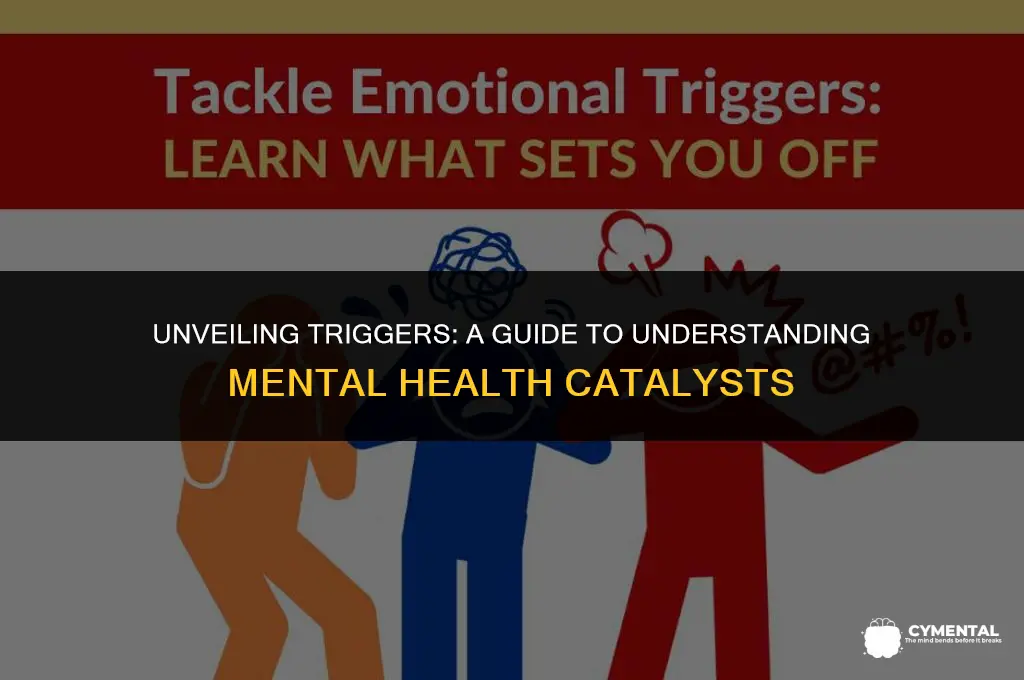
Triggers in mental health refer to specific stimuli that can cause a sudden and significant shift in a person's emotional state, often leading to symptoms of anxiety, depression, or other mental health conditions. These triggers can be diverse, ranging from certain sounds, smells, or visual cues to more complex situations like social interactions or memories. Understanding and identifying one's triggers is a crucial step in managing mental health, as it allows individuals to develop coping strategies and seek appropriate support. By recognizing and addressing triggers, individuals can work towards reducing the frequency and intensity of their symptoms, ultimately improving their overall well-being.
Explore related products


What You'll Learn
- Definition and Examples: Understanding what constitutes a trigger and common examples in daily life
- Types of Triggers: Exploring different categories such as emotional, environmental, and sensory triggers
- Impact on Mental Health: Discussing how triggers can affect various mental health conditions like anxiety and PTSD
- Coping Mechanisms: Strategies and techniques to manage and reduce the impact of triggers
- Seeking Professional Help: When to consider therapy or other professional interventions for trigger-related issues

Definition and Examples: Understanding what constitutes a trigger and common examples in daily life
Triggers are stimuli that can cause a sudden and intense reaction in individuals, often leading to emotional distress or a flashback to a traumatic event. They can be sensory, such as a specific sound or smell, or they can be more abstract, like a particular situation or even a thought. Understanding what constitutes a trigger is crucial for managing mental health conditions such as post-traumatic stress disorder (PTSD), anxiety, and depression.
Common examples of triggers in daily life include loud noises, which might remind someone of a traumatic event like a car accident or a gunshot. Certain smells, such as the scent of smoke or perfume, can also evoke strong emotional responses. Visual triggers might include images or videos that depict violence or other distressing content. Even certain words or phrases can serve as triggers, especially if they are associated with a past trauma.
Triggers can also be situational, such as being in a crowded place or experiencing a sudden change in routine. For some individuals, even everyday activities like driving or shopping can become triggering if they are associated with a past traumatic experience. It's important to note that triggers are highly personal and can vary greatly from person to person. What might be a trigger for one individual might not have any effect on another.
Recognizing and understanding one's own triggers is a key step in managing mental health. By identifying triggers, individuals can take steps to avoid or cope with them more effectively. This might involve developing coping strategies, such as deep breathing or mindfulness techniques, or seeking support from a mental health professional. In some cases, medication might be prescribed to help manage the symptoms associated with triggers.
In addition to personal triggers, it's also important to be aware of cultural and societal triggers. For example, certain holidays or events might be triggering for individuals who have experienced trauma related to those occasions. Similarly, media coverage of traumatic events can serve as a trigger for those who have experienced similar situations. Being aware of these potential triggers can help individuals prepare and cope more effectively.
Overall, understanding what constitutes a trigger and recognizing common examples in daily life is essential for managing mental health and promoting well-being. By being aware of triggers and developing effective coping strategies, individuals can reduce the impact of triggers on their lives and work towards recovery and resilience.
Exploring the Genetic Links to Mental Health: What You Need to Know
You may want to see also
Explore related products


Types of Triggers: Exploring different categories such as emotional, environmental, and sensory triggers
Emotional triggers are a significant aspect of mental health, as they can evoke strong responses and impact an individual's well-being. These triggers often stem from past experiences, relationships, or traumatic events, and can manifest as intense emotions such as anxiety, fear, or sadness. For example, a person who has experienced a traumatic breakup may find that certain songs or places trigger memories of the event, leading to feelings of distress. Understanding and identifying emotional triggers is crucial for managing mental health, as it allows individuals to develop coping mechanisms and seek appropriate support.
Environmental triggers, on the other hand, are external factors that can influence an individual's mental state. These triggers can include social situations, cultural norms, or even physical surroundings. For instance, a person with social anxiety may find that crowded spaces or public speaking engagements trigger feelings of panic or discomfort. Environmental triggers can be particularly challenging to navigate, as they often involve interactions with others or situations that are difficult to avoid. Developing strategies to manage environmental triggers, such as practicing relaxation techniques or seeking support from a therapist, can be instrumental in improving mental health outcomes.
Sensory triggers are another category of triggers that can have a profound impact on mental health. These triggers involve stimuli that affect the senses, such as sight, sound, smell, taste, or touch. For example, a person with post-traumatic stress disorder (PTSD) may find that certain sounds, such as loud noises or sirens, trigger flashbacks or feelings of fear. Sensory triggers can be particularly insidious, as they can occur unexpectedly and may be difficult to identify. Working with a mental health professional to develop coping strategies, such as grounding techniques or exposure therapy, can be helpful in managing sensory triggers and improving overall well-being.
In conclusion, understanding the different types of triggers – emotional, environmental, and sensory – is essential for maintaining good mental health. By recognizing and addressing these triggers, individuals can develop effective coping mechanisms and seek appropriate support, ultimately leading to improved mental well-being and resilience.
Understanding ADHD: Is It a Mental Health Condition?
You may want to see also
Explore related products


$21.38 $22.99


Impact on Mental Health: Discussing how triggers can affect various mental health conditions like anxiety and PTSD
Triggers can have a profound impact on mental health, particularly for individuals suffering from anxiety and post-traumatic stress disorder (PTSD). When a person encounters a trigger, it can activate a fight-or-flight response, leading to a cascade of physiological and psychological symptoms. For those with anxiety, triggers can cause an increase in heart rate, rapid breathing, and a sense of impending doom. In individuals with PTSD, triggers can lead to flashbacks, nightmares, and intense emotional distress.
One of the most challenging aspects of triggers is their ability to affect mental health conditions in a cumulative manner. Repeated exposure to triggers can lead to an increase in the severity and frequency of symptoms, making it difficult for individuals to cope with daily life. For example, a person with PTSD may experience a flashback after seeing a car accident, and this flashback can be so vivid that it feels as though they are reliving the traumatic event. Over time, these flashbacks can become more frequent and intense, leading to a decline in mental health.
Triggers can also have a significant impact on an individual's ability to function in society. For those with anxiety, triggers can lead to avoidance behaviors, where they may avoid certain situations or places that they associate with their anxiety. This can lead to social isolation, difficulty in maintaining relationships, and problems with work or school performance. In individuals with PTSD, triggers can lead to hypervigilance, where they are constantly on the lookout for potential threats, making it difficult to relax or feel safe.
It is essential to recognize the impact of triggers on mental health and to develop strategies for coping with them. One effective approach is cognitive-behavioral therapy (CBT), which helps individuals identify and challenge negative thought patterns associated with their triggers. Another approach is exposure therapy, where individuals are gradually exposed to their triggers in a controlled environment, helping them to desensitize and reduce their emotional response.
In addition to therapy, there are several self-help strategies that individuals can use to cope with triggers. These include practicing relaxation techniques, such as deep breathing and meditation, and engaging in physical activity, which can help to reduce stress and anxiety. It is also important to maintain a healthy lifestyle, including getting enough sleep, eating a balanced diet, and avoiding substances that can exacerbate symptoms.
In conclusion, triggers can have a significant impact on mental health, particularly for individuals suffering from anxiety and PTSD. It is essential to recognize the signs and symptoms of trigger-related distress and to develop strategies for coping with them. With the right support and resources, individuals can learn to manage their triggers and improve their overall mental health and well-being.
Exploring PHP: A Developer's Journey Through Mental Health
You may want to see also
Explore related products


Coping Mechanisms: Strategies and techniques to manage and reduce the impact of triggers
Coping mechanisms are essential strategies for managing and reducing the impact of triggers in mental health. These mechanisms serve as protective measures, helping individuals navigate through challenging situations without exacerbating their mental health conditions. One effective coping mechanism is cognitive restructuring, which involves identifying and challenging negative thought patterns that may arise in response to a trigger. By reframing these thoughts in a more positive or realistic light, individuals can reduce the emotional impact of the trigger.
Another valuable strategy is mindfulness practice. Mindfulness involves being present in the moment and observing one's thoughts and feelings without judgment. This technique can help individuals become more aware of their triggers and learn to respond to them in a more measured and controlled manner. Regular mindfulness practice can also reduce overall stress levels, making it easier to cope with triggers when they occur.
Physical activity is another powerful coping mechanism. Engaging in exercise or other forms of physical activity can help reduce stress and anxiety, improve mood, and increase overall resilience. Activities such as yoga, which combine physical movement with mindfulness, can be particularly beneficial for managing triggers.
Social support is also a crucial component of effective coping. Connecting with friends, family, or mental health professionals can provide individuals with the emotional support and validation they need to navigate through difficult times. Sharing experiences and feelings with others can help reduce the sense of isolation that often accompanies mental health struggles.
Finally, developing a personalized self-care routine can be an effective way to manage triggers. This might include activities such as reading, listening to music, taking a warm bath, or engaging in a hobby. By prioritizing self-care, individuals can build up their emotional reserves and become better equipped to handle triggers when they arise.
In conclusion, coping mechanisms are vital tools for managing and reducing the impact of triggers in mental health. By employing strategies such as cognitive restructuring, mindfulness, physical activity, social support, and self-care, individuals can develop the resilience they need to navigate through challenging situations and maintain their mental well-being.
Exploring Mental Health Themes in Young Adult Literature
You may want to see also
Explore related products


Seeking Professional Help: When to consider therapy or other professional interventions for trigger-related issues
Recognizing when to seek professional help for trigger-related issues is a critical step in managing mental health. Triggers can be intensely personal and vary widely from person to person, making it essential to understand the signs that indicate a need for professional intervention. Common indicators include an inability to cope with daily life, experiencing severe emotional distress, or engaging in harmful behaviors as a coping mechanism. If triggers are causing significant disruptions in relationships, work, or personal well-being, it may be time to consider therapy or other professional support.
Therapy can provide a safe and structured environment to explore and understand triggers, develop coping strategies, and work through underlying issues. Cognitive Behavioral Therapy (CBT) is often effective in helping individuals identify and reframe negative thought patterns associated with triggers. Eye Movement Desensitization and Reprocessing (EMDR) is another therapeutic approach that can be beneficial, particularly for trauma-related triggers. In some cases, medication may also be prescribed to help manage symptoms associated with triggers, such as anxiety or depression.
When seeking professional help, it's important to find a mental health provider who is experienced in dealing with trigger-related issues. This could include psychologists, psychiatrists, licensed therapists, or counselors. It's also crucial to feel comfortable with the provider, as building trust is essential for effective therapy. Many people find it helpful to ask for referrals from friends, family, or other healthcare professionals when looking for a mental health provider.
In addition to therapy, there are other professional interventions that can be beneficial for managing triggers. Support groups, for example, can provide a sense of community and understanding, as well as practical advice from others who have experienced similar challenges. Online resources and apps can also be helpful tools for tracking triggers, practicing relaxation techniques, and accessing educational materials about mental health.
Ultimately, seeking professional help for trigger-related issues is a sign of strength and a proactive step towards improving mental health. By working with a qualified mental health provider, individuals can develop the skills and strategies needed to manage triggers effectively and lead a more balanced and fulfilling life.
Understanding Mental Health Awareness Day: A Global Initiative for Well-being
You may want to see also
Frequently asked questions
Triggers in mental health are events, situations, or stimuli that can cause a sudden and significant increase in symptoms or distress for individuals with mental health conditions. These can vary widely from person to person and may include things like loud noises, crowded spaces, certain smells, or even specific words or phrases.
Triggers can affect people with mental health conditions by causing a sudden onset of symptoms such as anxiety, panic attacks, flashbacks, or dissociation. They can also lead to an increase in existing symptoms, making them more intense or difficult to manage. Understanding and identifying triggers is an important part of managing mental health conditions and developing coping strategies.
Some common examples of triggers for people with anxiety disorders include public speaking, social situations, driving, flying, or being in enclosed spaces. Other triggers might include caffeine, nicotine, or other substances that can exacerbate anxiety symptoms. It's important to note that triggers can be highly individualized, and what may be a trigger for one person may not be for another.