Harper Lewis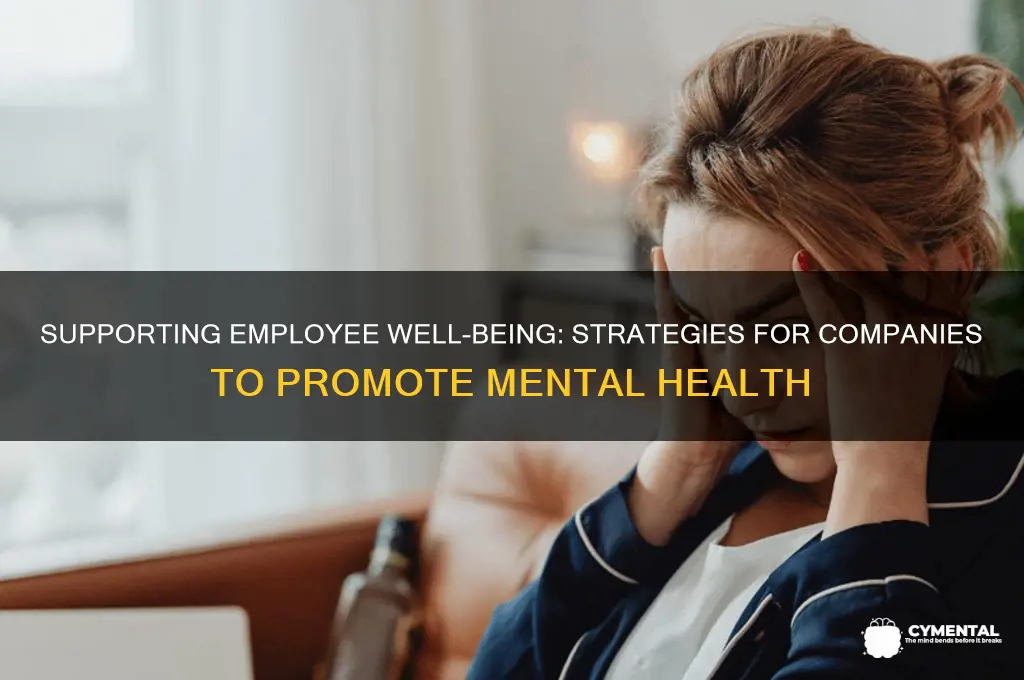
In today’s fast-paced and often stressful work environment, prioritizing employee mental health has become a critical responsibility for companies. Beyond ethical considerations, supporting mental well-being directly impacts productivity, retention, and overall organizational success. Companies can take proactive steps such as fostering a culture of openness and reducing stigma around mental health discussions, offering flexible work arrangements to alleviate stress, and providing access to resources like counseling services or wellness programs. Additionally, regular training for managers to recognize signs of mental health issues and implementing policies that promote work-life balance can significantly contribute to a healthier, more resilient workforce. By investing in these initiatives, organizations not only demonstrate their commitment to employee welfare but also create a more sustainable and thriving workplace.
| Characteristics | Values |
|---|---|
| Promote Work-Life Balance | Flexible work hours, remote work options, and paid time off policies. |
| Provide Mental Health Resources | Access to counseling services, Employee Assistance Programs (EAPs), and mental health apps. |
| Foster a Supportive Culture | Encourage open conversations about mental health, reduce stigma, and train managers to recognize signs of distress. |
| Offer Wellness Programs | Yoga, meditation sessions, fitness programs, and stress management workshops. |
| Regular Check-Ins | One-on-one meetings to discuss workload, stress levels, and personal well-being. |
| Reduce Workload and Stress | Set realistic deadlines, avoid overloading employees, and provide workload management training. |
| Financial Wellness Support | Financial planning workshops, access to financial advisors, and competitive compensation. |
| Inclusive and Diverse Environment | Promote diversity, equity, and inclusion (DEI) initiatives to create a sense of belonging. |
| Recognition and Appreciation | Regularly acknowledge employees' contributions through rewards, bonuses, or public recognition. |
| Professional Development Opportunities | Provide training, mentorship, and career growth opportunities to reduce job-related stress. |
| Physical Workspace Improvements | Ergonomic setups, natural lighting, and quiet spaces for relaxation. |
| Crisis Management Protocols | Clear procedures for handling mental health crises, including emergency contacts and resources. |
| Anonymous Feedback Mechanisms | Surveys or platforms for employees to share concerns without fear of retaliation. |
| Health Insurance Coverage | Comprehensive health plans that include mental health services and therapy sessions. |
| Peer Support Programs | Employee resource groups or peer mentoring to foster community and support. |
| Regular Mental Health Training | Workshops on stress management, resilience, and mental health awareness for all employees. |
Explore related products

$17.23 $37


What You'll Learn
- Offer Mental Health Days: Allow paid time off specifically for mental health recovery and self-care
- Provide EAP Access: Offer Employee Assistance Programs for counseling and support services at no cost
- Promote Work-Life Balance: Encourage flexible schedules, remote work, and clear boundaries to reduce burnout
- Train Managers: Equip leaders to recognize signs of distress and provide empathetic, supportive responses
- Foster Open Culture: Create safe spaces for employees to discuss mental health without stigma or judgment

Offer Mental Health Days: Allow paid time off specifically for mental health recovery and self-care
Mental health days are not just a trend but a necessary shift in how companies approach employee well-being. By offering paid time off specifically for mental health recovery, organizations acknowledge that emotional and psychological health is as vital as physical health. This practice sends a powerful message: it’s okay to prioritize self-care without fear of judgment or repercussions. For instance, LinkedIn introduced "Wellness Days," allowing employees to take paid time off for mental health, resulting in a 14% increase in employee satisfaction within six months. This example underscores the tangible benefits of such policies.
Implementing mental health days requires clarity and structure. Start by defining what qualifies as a mental health day—whether it’s stress, burnout, or simply the need for a break. Encourage employees to use this time for activities that recharge them, such as therapy, meditation, or spending time in nature. Pair this policy with a communication strategy that normalizes its use. For example, leaders can openly discuss their own mental health days to model vulnerability and reduce stigma. Without clear guidelines, employees may hesitate to take advantage of this benefit, fearing it might reflect poorly on their performance.
One common concern is the potential for abuse, but evidence suggests otherwise. Companies like Etsy and Deloitte report that mental health days have not led to decreased productivity or increased absenteeism. Instead, employees return more focused and energized. To maximize effectiveness, limit the number of mental health days per year—for instance, 3 to 5 days annually—to strike a balance between flexibility and accountability. Additionally, integrate this policy with existing wellness programs, such as EAPs or mindfulness workshops, to create a holistic support system.
The persuasive case for mental health days lies in their long-term impact. Burnout costs the U.S. economy $125 billion to $190 billion annually in healthcare spending, according to Harvard Business Review. By investing in preventive measures like mental health days, companies can reduce turnover, improve morale, and foster a culture of trust. Employees who feel supported are more likely to stay loyal and perform at their best. For small businesses, even offering one paid mental health day per quarter can make a significant difference without straining resources.
Finally, measure the success of this initiative through feedback and data. Conduct anonymous surveys to gauge employee perceptions of the policy and its impact on their well-being. Track metrics like absenteeism, productivity, and retention rates before and after implementation. Adjust the policy based on insights—for example, if employees feel pressured to provide a reason for their mental health day, consider making it a no-questions-asked benefit. By treating mental health days as an evolving strategy, companies can ensure they remain effective and relevant in addressing employee needs.
IV Therapy and Mental Health: Exploring Potential Benefits and Limitations
You may want to see also
Explore related products



Provide EAP Access: Offer Employee Assistance Programs for counseling and support services at no cost
Employee Assistance Programs (EAPs) are a cornerstone of workplace mental health support, offering confidential counseling and resources to employees at no cost. These programs typically cover a range of issues, from stress and anxiety to financial or legal concerns, providing a holistic approach to employee well-being. By removing financial barriers, EAPs ensure that employees can access professional help without hesitation, fostering a culture of proactive mental health care.
Consider the implementation process: first, partner with a reputable EAP provider that aligns with your company’s values and employee needs. Ensure the program offers 24/7 access to licensed counselors, either in-person, via phone, or through digital platforms. Second, communicate the availability of the EAP clearly and frequently. Use multiple channels—emails, intranet, posters, and team meetings—to emphasize its confidentiality and benefits. Third, train managers to recognize signs of distress and guide employees toward the EAP without stigmatizing the process.
A cautionary note: while EAPs are valuable, they are not a one-size-fits-all solution. Some employees may prefer alternative support systems, such as peer groups or wellness apps. Additionally, ensure the EAP provider has a diverse network of counselors to address cultural, linguistic, and specialized needs. Regularly solicit feedback from employees to assess the program’s effectiveness and make adjustments as needed.
The takeaway is clear: EAPs are a practical, cost-effective way to demonstrate a company’s commitment to employee mental health. By offering accessible, confidential support, organizations can reduce absenteeism, improve productivity, and cultivate a healthier, more resilient workforce. It’s an investment in both people and performance, with long-term benefits that far outweigh the initial setup costs.
Music's Mind-Body Harmony: How Playing Instruments Boosts Brain Health
You may want to see also
Explore related products


Promote Work-Life Balance: Encourage flexible schedules, remote work, and clear boundaries to reduce burnout
Burnout is a pervasive issue in modern workplaces, often stemming from the blurring of lines between professional and personal life. Companies can mitigate this by fostering a culture that prioritizes work-life balance. Start by offering flexible schedules that allow employees to align their work hours with their most productive times or personal commitments. For instance, a parent might opt for a 6 a.m. to 3 p.m. shift to accommodate childcare responsibilities, while a night owl could thrive with a 10 a.m. to 7 p.m. schedule. Such flexibility not only reduces stress but also demonstrates trust in employees’ ability to manage their time effectively.
Remote work, when feasible, is another powerful tool for promoting balance. A 2021 study by Stanford University found that remote workers reported higher job satisfaction and productivity, with reduced turnover rates. However, it’s crucial to establish clear boundaries to prevent the “always-on” mentality. Encourage employees to designate a specific workspace at home and set defined work hours. For example, a company might implement a policy where emails sent after 6 p.m. are not expected to be answered until the next business day. This ensures that remote work enhances, rather than disrupts, personal time.
Clear boundaries are equally vital in traditional office settings. Managers should model healthy behavior by avoiding late-night emails or weekend check-ins unless absolutely necessary. Companies can also introduce policies like “meeting-free Fridays” or mandatory lunch breaks to encourage downtime. For instance, Buffer, a remote-first company, enforces a “no-meeting Wednesday” to allow employees uninterrupted focus time. Such practices signal that the company values employees’ time and well-being, fostering loyalty and reducing burnout.
However, implementing these strategies requires careful consideration. Flexible schedules and remote work can sometimes lead to overwork if not managed properly. To counteract this, companies should regularly check in with employees to ensure they’re not overextending themselves. Tools like time-tracking software or wellness surveys can provide insights into workload management. Additionally, offering resources such as mental health days or access to counseling services can further support employees in maintaining balance. By taking a proactive, structured approach, companies can create an environment where work-life balance isn’t just encouraged—it’s achievable.
Exercise and Mental Health: Boosting Mood, Reducing Stress, and Enhancing Well-being
You may want to see also
Explore related products


Train Managers: Equip leaders to recognize signs of distress and provide empathetic, supportive responses
Managers often serve as the first line of defense in identifying and addressing employee mental health issues. Yet, many lack the training to recognize subtle signs of distress or respond effectively. A 2021 study by the American Psychological Association found that 62% of employees would feel more comfortable discussing mental health concerns with their manager if they believed their manager was trained to handle such conversations. This highlights a critical gap: equipping leaders with the skills to act as empathetic, informed allies.
Consider a scenario where an employee begins arriving late, seems withdrawn during meetings, and stops contributing ideas. An untrained manager might interpret this as laziness or disengagement, potentially leading to disciplinary action. A manager trained in mental health awareness, however, might recognize these as potential signs of burnout or depression. They could then initiate a private, non-judgmental conversation, offering support and resources rather than criticism. This shift in approach not only helps the employee but also fosters a culture of trust and psychological safety.
Training programs for managers should focus on three key areas: awareness, communication, and action. Awareness involves educating leaders about common mental health challenges, such as anxiety, depression, and burnout, and their workplace manifestations. For instance, increased irritability, decreased productivity, or changes in appearance can all be indicators. Communication training should emphasize active listening, empathy, and the use of open-ended questions. Phrases like “I’ve noticed you seem a bit overwhelmed lately—how can I support you?” can open doors to meaningful dialogue. Finally, managers need actionable steps, such as knowing how to refer employees to EAPs (Employee Assistance Programs), adjusting workloads, or advocating for flexible work arrangements.
However, training alone is not enough. Companies must also create an environment where managers feel empowered to act. This includes providing ongoing support, such as access to mental health professionals for guidance, and ensuring that managers’ own well-being is prioritized. After all, leaders cannot pour from an empty cup. Regular check-ins with HR or senior leadership can help managers process their experiences and avoid compassion fatigue.
The ROI of investing in manager training is clear. A 2020 Deloitte report estimated that for every $1 spent on workplace mental health programs, there is a $4 return in improved productivity and reduced absenteeism. Beyond the numbers, however, lies a deeper impact: employees who feel seen, heard, and supported are more likely to stay with the company, engage fully in their work, and contribute to a positive organizational culture. By equipping managers with the right tools, companies can transform them from bystanders into catalysts for mental well-being.
Social Services and Mental Health: A Path to Healing and Support
You may want to see also
Explore related products


Foster Open Culture: Create safe spaces for employees to discuss mental health without stigma or judgment
Creating a culture where mental health discussions are normalized begins with leadership modeling vulnerability. When executives openly share their own experiences or struggles, it signals to employees that transparency is not only accepted but encouraged. For instance, a CEO might mention during a town hall how therapy has helped them manage stress, or a manager could acknowledge taking a mental health day. These actions dismantle the stigma by positioning mental health as a universal concern, not a personal failing. Without such leadership, even the most well-intentioned policies can feel hollow, leaving employees hesitant to engage.
Safe spaces require more than good intentions—they need structure. Companies can establish dedicated channels for mental health conversations, such as anonymous feedback systems, peer support groups, or regular "wellness check-in" meetings. For example, some organizations implement biweekly optional sessions led by trained facilitators where employees can discuss challenges without fear of repercussions. Pairing these initiatives with clear guidelines—like confidentiality protocols and zero-tolerance for judgmental behavior—ensures participants feel protected. Without structure, even willing employees may avoid sharing due to uncertainty about boundaries.
Language matters in fostering openness. Phrases like "suck it up" or "just stay positive" can inadvertently reinforce stigma, even if unintended. Companies should provide training on inclusive communication, emphasizing empathy and active listening. For instance, instead of asking, "Are you okay?" managers might say, "How are you managing your workload this week?"—a question that acknowledges stress without assuming distress. Such shifts in dialogue create an environment where employees feel seen and heard, not scrutinized.
Measuring success in open cultures isn’t about metrics but momentum. While tracking participation rates in wellness programs can be useful, the true indicator of progress is qualitative: Do employees feel comfortable sharing? Are managers responding supportively? Regular pulse surveys or focus groups can gauge this, but the most telling sign is when employees proactively advocate for mental health initiatives or volunteer their own stories. This organic growth, not forced participation, marks a culture where stigma has genuinely begun to erode.
Boost Productivity: Mental Mapping Strategies for Workplace Success
You may want to see also
Frequently asked questions
Companies can implement Employee Assistance Programs (EAPs), offer mental health days, provide access to counseling services, promote work-life balance, and foster a supportive workplace culture.
Companies can reduce stress by setting clear expectations, providing manageable workloads, encouraging breaks, offering flexible work arrangements, and recognizing employee achievements.
Leadership can model healthy behaviors, openly discuss mental health, provide training for managers to recognize signs of distress, and ensure policies prioritize employee well-being.
Companies can raise awareness through training, share success stories, ensure confidentiality in mental health discussions, and actively promote open conversations about mental health.
Companies should consider offering mental health insurance coverage, access to therapy or counseling, wellness programs, mindfulness resources, and paid time off for mental health needs.