Lucas Bennett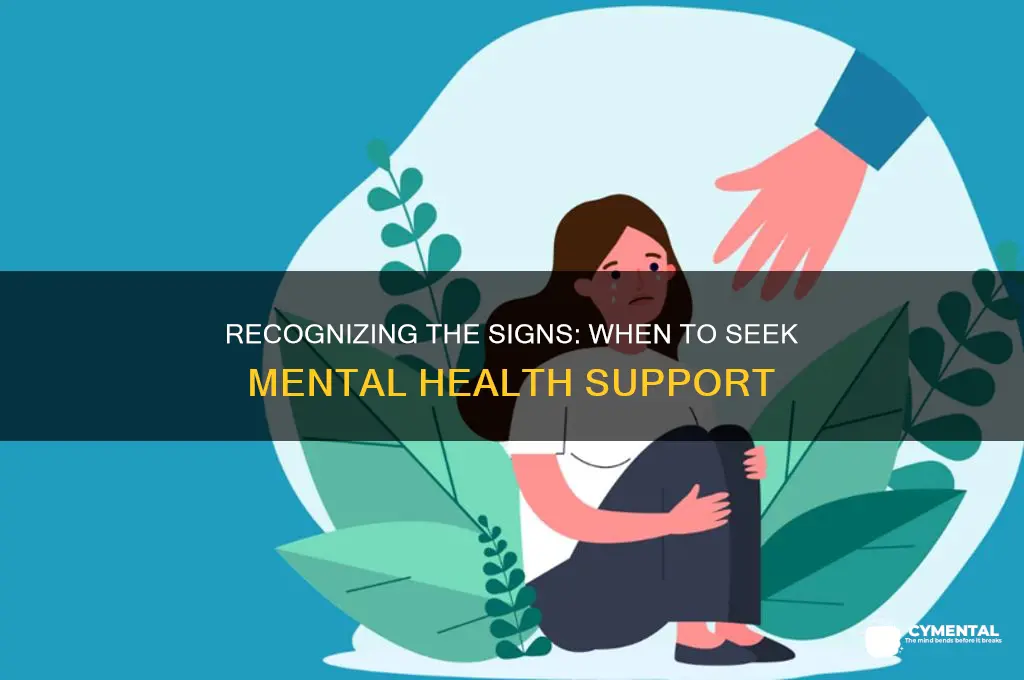
Recognizing when you need mental health support is crucial for overall well-being, yet it can be challenging to identify the signs. Common indicators include persistent feelings of sadness, anxiety, or hopelessness that interfere with daily life, significant changes in sleep or appetite, withdrawal from social activities, difficulty concentrating, or frequent irritability. Physical symptoms like unexplained aches or fatigue, as well as thoughts of self-harm or suicide, are also red flags. If you notice these signs lasting for weeks or impacting your ability to function, seeking professional help from a therapist, counselor, or mental health specialist can provide the necessary support and guidance to improve your mental health.
Explore related products


What You'll Learn
- Persistent sadness or hopelessness lasting more than two weeks, affecting daily life
- Extreme mood swings or irritability disrupting relationships and work performance
- Withdrawal from social activities, isolation, and loss of interest in hobbies
- Overwhelming anxiety, panic attacks, or constant fear without clear triggers
- Thoughts of self-harm, suicide, or persistent feelings of worthlessness or guilt

Persistent sadness or hopelessness lasting more than two weeks, affecting daily life
Persistent sadness or hopelessness that lingers for more than two weeks is a red flag that should not be ignored. Unlike fleeting feelings of disappointment or grief, this prolonged emotional state can signal an underlying mental health issue, such as depression. It’s not just about feeling "down"—it’s about a pervasive sense of despair that seeps into every aspect of life, from work to relationships to self-care. If you notice this in yourself or someone else, it’s crucial to take it seriously, as untreated depression can worsen over time and lead to severe consequences, including physical health problems or suicidal thoughts.
Consider this scenario: a 30-year-old professional begins to feel unmotivated at work, skips social gatherings, and loses interest in hobbies they once loved. They wake up each morning with a heavy feeling in their chest, struggling to find a reason to get out of bed. Friends and family might brush it off as a "phase," but when these symptoms persist beyond two weeks, it’s a clear sign that professional help is needed. The two-week marker is significant because it distinguishes between normal emotional fluctuations and a potential mental health disorder. Ignoring it could mean missing the window for early intervention, which is often more effective and less invasive.
From a practical standpoint, here’s what you can do if you or someone you know is experiencing this: first, track the duration and intensity of the sadness. Keep a journal to note how it affects daily activities, such as eating, sleeping, and concentration. Second, reach out to a mental health professional, such as a therapist or psychiatrist, who can provide a proper diagnosis and treatment plan. Treatment options may include therapy (e.g., cognitive-behavioral therapy), medication (e.g., antidepressants like SSRIs, typically starting at a low dose of 10–20 mg for adults), or lifestyle changes (e.g., regular exercise, a balanced diet, and adequate sleep). Early action can prevent the condition from escalating and improve overall quality of life.
Comparatively, while it’s normal to feel sad after a breakup or job loss, persistent hopelessness is different. It’s not situational but chronic, often accompanied by other symptoms like fatigue, irritability, or thoughts of worthlessness. For instance, a teenager who stops participating in school activities, isolates themselves, and expresses feelings of hopelessness about the future may be showing signs of depression, not just teenage moodiness. Recognizing the difference is key to providing the right support. Unlike temporary setbacks, this requires a structured approach to healing, often involving professional guidance.
Finally, the takeaway is clear: persistent sadness or hopelessness lasting more than two weeks is not something to "tough out." It’s a call to action. Mental health is as important as physical health, and seeking help is a sign of strength, not weakness. Whether it’s for yourself or someone else, acknowledging the problem and taking steps to address it can make a profound difference. Remember, early intervention is often the most effective way to manage and overcome these challenges, restoring hope and balance to daily life.
Music Therapy: Healing Minds, Transforming Mental Disabilities with Harmony
You may want to see also
Explore related products


Extreme mood swings or irritability disrupting relationships and work performance
Extreme mood swings or irritability can be more than just a bad day; they may signal a deeper mental health issue that requires attention. Imagine a scenario where a person shifts from euphoria to deep anger within minutes, lashing out at colleagues or loved ones without apparent cause. Such volatility often stems from conditions like bipolar disorder, borderline personality disorder, or even untreated anxiety and depression. Recognizing these patterns is crucial, as they can erode trust in relationships and hinder productivity at work, creating a cycle of isolation and frustration.
To address this, start by tracking mood fluctuations in a journal, noting triggers, duration, and intensity. For instance, does irritability spike after sleepless nights or during high-stress periods? This data can help identify underlying causes and inform discussions with a mental health professional. Practical steps include setting boundaries in relationships to prevent emotional outbursts and practicing stress-reduction techniques like mindfulness or deep breathing exercises. Employers can also play a role by fostering a supportive work environment that encourages mental health days and open communication.
Comparatively, while occasional mood swings are normal, persistent and disruptive irritability warrants intervention. For example, a study published in the *Journal of Occupational Health Psychology* found that employees with unmanaged mood disorders were 50% more likely to experience workplace conflicts. Unlike typical stress responses, these episodes often feel uncontrollable and disproportionate to the situation. If left unaddressed, they can lead to job loss, strained friendships, or even legal issues due to aggressive behavior.
Persuasively, seeking help isn’t a sign of weakness but a proactive step toward stability. Therapies like cognitive-behavioral therapy (CBT) or dialectical behavior therapy (DBT) are proven effective in managing mood swings by teaching emotional regulation skills. Medications, such as mood stabilizers or antidepressants, may also be prescribed based on the diagnosis. For instance, lithium is commonly used for bipolar disorder, while selective serotonin reuptake inhibitors (SSRIs) can alleviate irritability linked to depression. Combining therapy and medication often yields the best outcomes, but consistency is key—adhering to treatment plans and attending regular check-ins with a provider are essential.
In conclusion, extreme mood swings or irritability disrupting relationships and work performance are red flags that demand action. By monitoring symptoms, adopting coping strategies, and seeking professional help, individuals can regain control over their emotions and repair damaged connections. Remember, mental health is as vital as physical health—prioritizing it isn’t just beneficial; it’s necessary for a fulfilling life.
Acting as Therapy: Unlocking Mental Health Benefits Through Performance
You may want to see also
Explore related products


Withdrawal from social activities, isolation, and loss of interest in hobbies
Withdrawal from social activities, isolation, and a waning interest in once-beloved hobbies often signal a deeper struggle with mental health. These behaviors can manifest subtly—skipping a weekly book club, declining invitations without a clear reason, or letting a guitar gather dust in the corner. While occasional solitude is healthy, persistent avoidance of social interactions or abandonment of passions may indicate depression, anxiety, or burnout. Recognizing these changes early is crucial, as they can exacerbate feelings of disconnection and hopelessness if left unaddressed.
Consider the mechanics of this withdrawal: it’s often a coping mechanism for overwhelming emotions. For instance, someone battling anxiety might avoid social gatherings to escape the fear of judgment, while a person experiencing depression may lack the energy to engage in activities they once enjoyed. Over time, this retreat can create a self-perpetuating cycle, where isolation deepens emotional distress, which in turn fuels further withdrawal. Breaking this cycle requires both self-awareness and proactive steps, such as setting small, manageable goals—like attending one social event per week or dedicating 15 minutes daily to a hobby.
From a comparative perspective, these signs differ from introversion or the need for personal space. Introverts recharge through solitude but typically maintain meaningful connections and engage in activities they enjoy. In contrast, withdrawal driven by mental health issues often feels forced or joyless. For example, an introverted artist might paint alone for hours, finding fulfillment, whereas someone struggling mentally might stare at a blank canvas, unable to summon creativity or motivation. Understanding this distinction is key to identifying when professional help is warranted.
Practical strategies can mitigate the impact of these behaviors. Start by acknowledging the issue without self-judgment—it’s not a personal failure but a symptom of a larger challenge. Reach out to a trusted friend or family member; sharing feelings can alleviate the burden of isolation. If social activities feel overwhelming, begin with low-pressure interactions, like a walk with a friend or joining an online community centered around a hobby. For those struggling to reignite interest in hobbies, try breaking tasks into smaller steps—for instance, reading one chapter instead of an entire book.
Ultimately, withdrawal, isolation, and loss of interest are not character flaws but red flags that warrant attention. They serve as a call to action, urging individuals to seek support, whether through therapy, support groups, or lifestyle adjustments. Ignoring these signs can lead to prolonged suffering, but addressing them opens the door to healing and reconnection. Remember, reaching out for help is not a sign of weakness but a courageous step toward reclaiming a fulfilling life.
Supporting Your Mentally Ill Daughter: Practical Ways to Help and Heal
You may want to see also
Explore related products


Overwhelming anxiety, panic attacks, or constant fear without clear triggers
Experiencing overwhelming anxiety, panic attacks, or constant fear without clear triggers can be a debilitating and confusing struggle. These symptoms often manifest as a racing heart, shortness of breath, trembling, and an intense sense of impending doom, even when there’s no apparent danger. For instance, someone might find themselves paralyzed by fear while walking in a familiar park or suddenly overwhelmed by panic during a routine work meeting. Such episodes can feel unpredictable and uncontrollable, leaving individuals isolated and questioning their own sanity. Recognizing these signs is the first step toward seeking help, as they may indicate underlying conditions like generalized anxiety disorder, panic disorder, or even post-traumatic stress disorder (PTSD).
From an analytical perspective, the absence of clear triggers complicates both self-understanding and professional diagnosis. Unlike situational anxiety, which arises from specific stressors like public speaking or financial worries, this form of anxiety seems to emerge from nowhere, making it harder to manage. Research suggests that such symptoms may stem from a hyperactive amygdala—the brain’s alarm system—or imbalances in neurotransmitters like serotonin and gamma-aminobutyric acid (GABA). Practical strategies, such as keeping a symptom journal, can help identify subtle patterns or physiological cues (e.g., caffeine intake, sleep deprivation) that might contribute to these episodes, even if they aren’t immediately obvious.
Persuasively, it’s crucial to emphasize that these experiences are not a sign of weakness or a character flaw. Approximately 40 million adults in the U.S. alone struggle with anxiety disorders, yet only 36.9% receive treatment, often due to stigma or lack of awareness. Ignoring these symptoms can lead to severe consequences, including avoidance behaviors, strained relationships, and even physical health issues like hypertension or chronic pain. Seeking professional help—whether through therapy, medication, or both—is not just advisable but essential. Cognitive-behavioral therapy (CBT), for example, has a success rate of 50–75% in treating anxiety disorders, while medications like SSRIs (selective serotonin reuptake inhibitors) can provide significant relief when prescribed at appropriate dosages (typically starting at 10–20 mg daily for adults).
Comparatively, while occasional anxiety is a normal part of life, the persistent and unprovoked nature of these symptoms sets them apart. Imagine the difference between feeling nervous before a job interview and feeling paralyzed by fear while watching TV at home. The latter disrupts daily functioning and erodes quality of life. Unlike stress, which often resolves once the triggering situation passes, this type of anxiety lingers, creating a chronic state of hypervigilance. It’s akin to living with a fire alarm that goes off randomly, even when there’s no smoke or flames.
Descriptively, the physical and emotional toll of these symptoms cannot be overstated. During a panic attack, the body’s fight-or-flight response is activated, flooding the system with adrenaline and cortisol. This can lead to symptoms like chest pain, dizziness, and even feelings of detachment from reality (depersonalization). Emotionally, the constant fear of having another episode can create a cycle of dread, where individuals become afraid of their own fear. For example, someone might avoid crowded places not because they’re inherently dangerous, but because they fear experiencing a panic attack in public. Breaking this cycle requires a multifaceted approach, combining self-care practices (e.g., mindfulness, regular exercise) with professional intervention to address the root causes.
In conclusion, overwhelming anxiety, panic attacks, or constant fear without clear triggers are not just “in your head”—they are real, treatable conditions that deserve attention. By understanding the nature of these symptoms, seeking professional guidance, and adopting practical strategies, individuals can regain control over their lives. Remember, acknowledging the problem is not a sign of defeat but a courageous step toward healing. If you or someone you know is struggling, reach out to a mental health professional today. Help is available, and recovery is possible.
Marijuana's Therapeutic Potential: Easing Mental Health Struggles Naturally
You may want to see also
Explore related products


Thoughts of self-harm, suicide, or persistent feelings of worthlessness or guilt
Persistent thoughts of self-harm or suicide are urgent red flags that demand immediate attention. These thoughts often emerge as a distorted coping mechanism in response to overwhelming emotional pain, trauma, or chronic stress. They are not a sign of weakness but a symptom of severe mental distress, frequently linked to conditions like depression, anxiety, or PTSD. If you or someone you know is experiencing these thoughts, it’s critical to seek professional help without delay. Contact a mental health professional, a crisis hotline (e.g., 988 in the U.S.), or a trusted individual who can assist in accessing emergency resources.
Feelings of worthlessness or guilt, when persistent and disproportionate, can be equally debilitating. These emotions often stem from cognitive distortions, such as catastrophizing failures or internalizing external criticism. For example, someone might obsess over a minor mistake at work, believing it proves they are fundamentally incompetent. Over time, this can erode self-esteem and foster a sense of hopelessness. Practical steps to address this include cognitive-behavioral techniques, such as journaling to challenge negative self-talk or engaging in activities that foster a sense of accomplishment, even small ones like completing a household task.
Comparing these signs to physical health emergencies can help underscore their seriousness. Just as chest pain requires immediate medical attention, thoughts of self-harm or unrelenting guilt necessitate prompt mental health intervention. Ignoring these symptoms can lead to irreversible consequences, much like untreated physical ailments. However, unlike physical symptoms, mental health struggles are often invisible, making self-awareness and proactive communication vital. For instance, setting a daily check-in with a friend or therapist can provide accountability and a safe space to express these feelings.
A persuasive argument for addressing these signs lies in the potential for recovery and improved quality of life. Evidence-based treatments, such as dialectical behavior therapy (DBT) for self-harm or mindfulness-based cognitive therapy (MBCT) for persistent guilt, have proven effective in reducing symptoms and restoring emotional balance. Medications, like selective serotonin reuptake inhibitors (SSRIs), may also be prescribed in conjunction with therapy. The key is early intervention—the sooner these thoughts and feelings are addressed, the greater the likelihood of successful management. Remember, seeking help is not an admission of failure but a courageous step toward healing.
Supporting Your Friend: A Guide to Accessing Mental Health Assistance
You may want to see also
Frequently asked questions
Feeling overwhelmed, persistent sadness, drastic changes in mood, and difficulty managing daily tasks are key indicators.
If anxiety disrupts your daily life, causes physical symptoms, or leads to avoidance behaviors, it’s time to seek help.
Yes, significant changes like insomnia or oversleeping, especially when paired with other symptoms, can signal a need for support.
Yes, unexplained or excessive irritability, especially if it affects relationships, may indicate an underlying mental health issue.
Consistently avoiding social interactions or losing interest in activities you once enjoyed can be a red flag for mental health concerns.