Ava Ramirez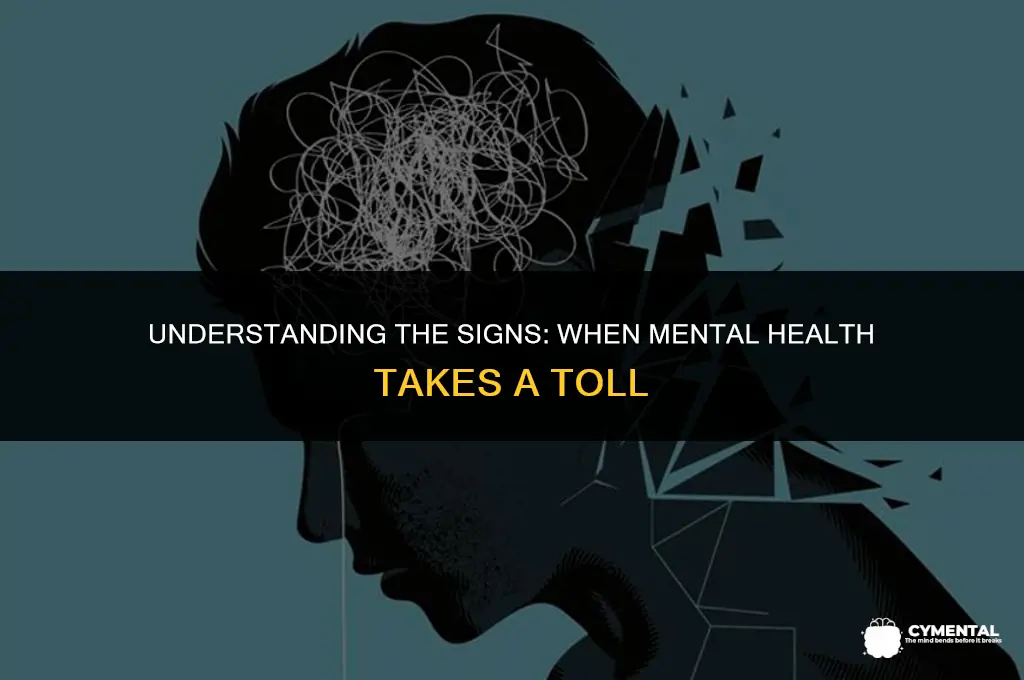
When your mental health is bad, it can manifest in various ways, impacting your thoughts, feelings, and behaviors. You might experience persistent sadness, anxiety, or irritability, and may struggle with concentration or decision-making. Physical symptoms such as headaches, stomachaches, or sleep disturbances can also be indicators of poor mental health. It's important to recognize these signs and seek support, as ignoring them can lead to more severe consequences. Taking care of your mental health is crucial for overall well-being, and there are many resources and strategies available to help you cope and improve your mental state.
Explore related products


$6.79 $14.99


What You'll Learn
- Difficulty concentrating: Struggling to focus or maintain attention on tasks or conversations
- Mood swings: Experiencing rapid or extreme changes in emotions, such as sudden sadness or irritability
- Social withdrawal: Avoiding social interactions or feeling isolated from friends and family
- Physical symptoms: Manifesting mental distress through headaches, stomachaches, or other unexplained physical ailments
- Negative self-talk: Engaging in persistent, harmful self-criticism or pessimistic thoughts about oneself

Difficulty concentrating: Struggling to focus or maintain attention on tasks or conversations
Difficulty concentrating is a common symptom of poor mental health, and it can manifest in various ways. For instance, you might find yourself zoning out during conversations, struggling to complete tasks at work or school, or having trouble following instructions. This lack of focus can be frustrating and may lead to feelings of inadequacy or failure.
One possible reason for difficulty concentrating is that your brain is preoccupied with other thoughts or worries. This can happen when you're experiencing anxiety, depression, or stress. In such cases, your mind may be racing with negative thoughts, making it hard to focus on the task at hand. Another possibility is that you're not getting enough sleep, which can impair your cognitive function and make it difficult to concentrate.
To address difficulty concentrating, it's essential to identify the underlying cause. If you're experiencing anxiety or depression, seeking professional help from a therapist or counselor can be beneficial. They can help you develop coping strategies and provide support as you work through your mental health challenges. Additionally, making lifestyle changes such as getting regular exercise, eating a balanced diet, and practicing relaxation techniques like meditation or deep breathing can help improve your focus and concentration.
In some cases, difficulty concentrating may be a symptom of a more severe mental health condition, such as attention deficit hyperactivity disorder (ADHD) or bipolar disorder. If you suspect that your difficulty concentrating is related to a more serious condition, it's crucial to consult with a healthcare professional for an accurate diagnosis and appropriate treatment.
Remember, difficulty concentrating is not a sign of weakness or failure. It's a common symptom of poor mental health, and with the right support and strategies, you can improve your focus and concentration. Don't hesitate to seek help if you're struggling – taking care of your mental health is essential for your overall well-being.
Boosting Mental Health: The Benefits of a Later School Start Time
You may want to see also
Explore related products


Mood swings: Experiencing rapid or extreme changes in emotions, such as sudden sadness or irritability
Mood swings can be a bewildering and often distressing symptom of deteriorating mental health. Characterized by sudden shifts from euphoria to dysphoria, or from calmness to irritability, these emotional rollercoasters can disrupt daily life and relationships. One moment, an individual might feel on top of the world, full of energy and optimism, only to plummet into a deep sadness or anger within a short span of time. These rapid changes can be exhausting and may leave one feeling out of control.
Several factors can contribute to mood swings, including hormonal imbalances, stress, lack of sleep, and certain medications. In some cases, mood swings may be a sign of an underlying mental health condition such as bipolar disorder, depression, or anxiety. It's crucial to recognize that mood swings are not just a normal part of life but can be indicative of a deeper issue that requires attention and care.
To manage mood swings, it's essential to identify triggers and develop coping strategies. Keeping a mood journal can help track patterns and pinpoint what might be causing the swings. Regular exercise, a balanced diet, and sufficient sleep are fundamental in maintaining emotional stability. Mindfulness practices and relaxation techniques, such as meditation and deep breathing, can also be beneficial in reducing the intensity and frequency of mood swings.
In addition to self-care, seeking professional help is often necessary. A mental health professional can provide a proper diagnosis and recommend appropriate treatment, which may include therapy, medication, or a combination of both. It's important to remember that mood swings are treatable, and with the right support and strategies, individuals can learn to manage their emotions more effectively and improve their overall well-being.
Support from friends and family can also play a significant role in managing mood swings. Educating loved ones about the condition and how it affects you can foster understanding and empathy. Building a strong support network can provide a sense of security and help individuals navigate the challenges posed by mood swings.
In conclusion, mood swings are a complex symptom that can significantly impact one's quality of life. By understanding the underlying causes, developing effective coping strategies, and seeking professional help when needed, individuals can learn to manage their mood swings and lead a more balanced and fulfilling life.
Nature's Balm: How Outdoor Time Boosts Mental Well-being
You may want to see also
Explore related products


Social withdrawal: Avoiding social interactions or feeling isolated from friends and family
Social withdrawal is a common symptom of deteriorating mental health, characterized by a persistent desire to avoid social interactions and a feeling of isolation from friends and family. This behavior can stem from various underlying conditions, such as depression, anxiety, or personality disorders, and can significantly impact an individual's quality of life.
One of the key indicators of social withdrawal is a noticeable change in behavior, where a person may stop participating in activities they once enjoyed or avoid social gatherings altogether. This can lead to a sense of loneliness and disconnection, which can further exacerbate mental health issues. It's important to note that social withdrawal is not the same as introversion or a preference for solitude; rather, it's a symptom that can interfere with daily functioning and relationships.
The consequences of social withdrawal can be far-reaching, affecting not only the individual but also their social network. Friends and family may feel hurt or confused by the person's behavior, leading to strained relationships and a sense of abandonment. In the workplace, social withdrawal can impact productivity and collaboration, potentially leading to job-related problems.
Addressing social withdrawal often requires a multifaceted approach, including therapy, medication, and social support. Cognitive-behavioral therapy (CBT) can be particularly effective in helping individuals identify and challenge negative thought patterns that contribute to social avoidance. Medications such as antidepressants or anti-anxiety drugs may also be prescribed to alleviate symptoms. Additionally, social support groups can provide a safe space for individuals to connect with others who are experiencing similar struggles, helping to combat feelings of isolation.
It's crucial for individuals experiencing social withdrawal to seek professional help, as untreated mental health conditions can worsen over time. With the right support and treatment, however, it is possible to overcome social withdrawal and improve overall mental well-being. Remember, reaching out for help is a sign of strength, not weakness, and can be the first step towards a more fulfilling and connected life.
Understanding Psychological Trauma: A Behavioral Health Perspective
You may want to see also
Physical symptoms: Manifesting mental distress through headaches, stomachaches, or other unexplained physical ailments
The mind-body connection is a powerful one, and when mental health suffers, the body often responds in kind. Physical symptoms such as headaches, stomachaches, and other unexplained ailments can be a manifestation of mental distress. This is not to say that these symptoms are not real or valid; rather, they are a physical expression of the body's response to psychological stress.
For example, chronic headaches can be a sign of tension and anxiety, as the body's muscles tighten in response to stress. Similarly, stomachaches can be a result of the body's fight-or-flight response, which can lead to digestive issues. Other unexplained physical ailments, such as fatigue, muscle pain, or sleep disturbances, can also be linked to mental health struggles.
It's important to note that while these physical symptoms can be a sign of mental distress, they can also be caused by other factors. Therefore, it's crucial to consult with a healthcare professional to rule out any underlying medical conditions. However, if no medical cause is found, it may be helpful to explore the possibility that these symptoms are related to mental health.
In terms of treatment, addressing the underlying mental health issues can often lead to relief from physical symptoms. This may involve therapy, medication, or other forms of mental health support. Additionally, practicing stress-reduction techniques such as meditation, yoga, or deep breathing exercises can help to alleviate both mental and physical symptoms.
Ultimately, recognizing the connection between mental health and physical symptoms is an important step in taking care of one's overall well-being. By acknowledging and addressing these symptoms, individuals can work towards improving their mental health and, in turn, their physical health.
Unveiling Mental Health Disparities Among LGBTQ Youth: A Comprehensive Look
You may want to see also
Negative self-talk: Engaging in persistent, harmful self-criticism or pessimistic thoughts about oneself
Negative self-talk is a pervasive issue that can significantly impact one's mental health. It involves engaging in persistent, harmful self-criticism or pessimistic thoughts about oneself. This pattern of thinking can lead to a range of negative outcomes, including decreased self-esteem, increased anxiety, and depression.
One of the challenges with negative self-talk is that it often becomes a habitual way of thinking. Individuals may not even realize they are engaging in it, as it can be a deeply ingrained pattern. However, there are certain red flags to look out for. For instance, if you frequently find yourself thinking thoughts like "I'm not good enough," "I can't do anything right," or "I'm a failure," these are signs that you may be struggling with negative self-talk.
The impact of negative self-talk can be far-reaching. It can affect various aspects of a person's life, from their relationships to their work performance. For example, someone who constantly criticizes themselves may be less likely to take on new challenges or opportunities, fearing failure or rejection. This can lead to a cycle of stagnation and further reinforce negative thoughts.
Breaking the cycle of negative self-talk requires a conscious effort to change one's thought patterns. One effective strategy is to practice mindfulness. This involves becoming more aware of your thoughts and learning to observe them without judgment. By doing so, you can begin to recognize when you are engaging in negative self-talk and take steps to reframe those thoughts in a more positive and realistic light.
Another helpful approach is to challenge negative thoughts by asking yourself questions like "Is this thought really true?" or "What evidence do I have to support this thought?" Often, negative self-talk is based on distorted or exaggerated perceptions, and by questioning these thoughts, you can begin to see them for what they are.
In conclusion, negative self-talk is a common issue that can have a significant impact on mental health. By becoming more aware of your thoughts and learning to challenge and reframe negative patterns, you can take steps towards improving your mental well-being. Remember, changing thought patterns takes time and practice, but with persistence, it is possible to develop a more positive and compassionate mindset.
Understanding Forehead Scars in Mental Health Patients: A Compassionate Look
You may want to see also