Ava Ramirez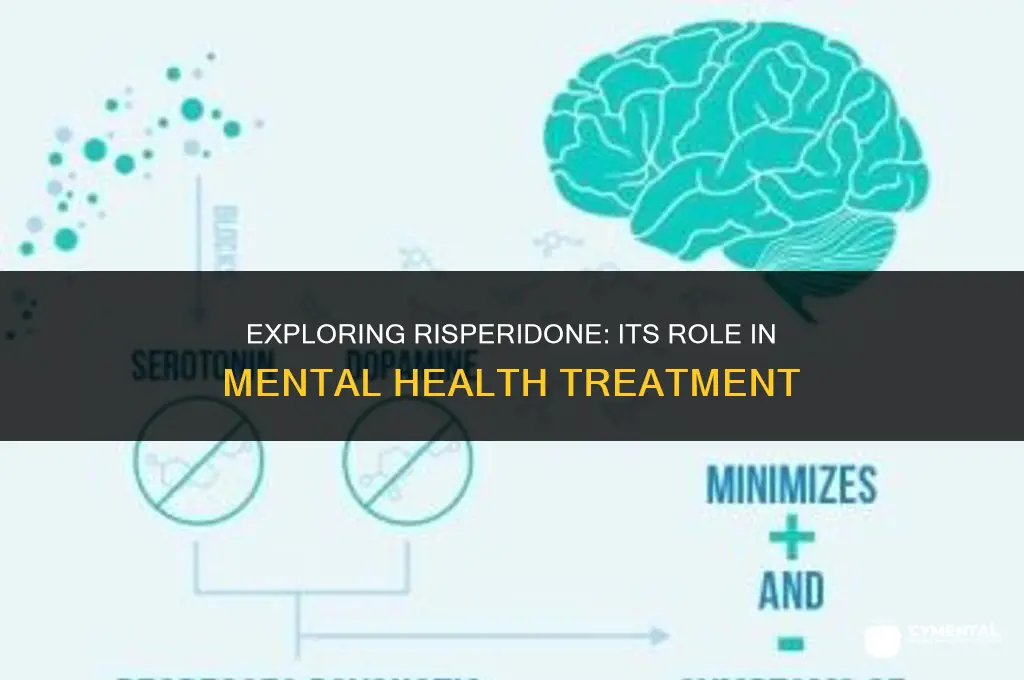
Risperidone is an antipsychotic medication commonly used in the treatment of various mental health conditions. It is primarily prescribed to manage symptoms of schizophrenia, such as hallucinations, delusions, and disorganized thinking. Additionally, risperidone is utilized to treat symptoms of bipolar disorder, including manic episodes, and can also be employed as a mood stabilizer. In some cases, it may be prescribed off-label to address symptoms of anxiety disorders, obsessive-compulsive disorder (OCD), and post-traumatic stress disorder (PTSD). Risperidone works by affecting the levels of certain neurotransmitters in the brain, such as dopamine and serotonin, which play a crucial role in regulating mood, behavior, and cognition.
Explore related products

What You'll Learn
- Schizophrenia Treatment: Risperidone helps manage symptoms like delusions and hallucinations in schizophrenia patients
- Bipolar Disorder: It stabilizes mood swings in bipolar disorder, reducing manic and depressive episodes
- Autism Spectrum Disorder: Risperidone can alleviate irritability and aggression in individuals with autism
- Attention Deficit Hyperactivity Disorder (ADHD): It may be prescribed off-label to manage ADHD symptoms when other medications fail
- Anxiety Disorders: Risperidone can be used adjunctively to treat anxiety disorders, particularly when accompanied by other mental health conditions

Schizophrenia Treatment: Risperidone helps manage symptoms like delusions and hallucinations in schizophrenia patients
Risperidone is an antipsychotic medication commonly prescribed to manage symptoms of schizophrenia, a chronic brain disorder characterized by delusions, hallucinations, and disorganized thinking. By targeting dopamine receptors in the brain, Risperidone helps to regulate the neurotransmitter activity associated with these symptoms, providing relief to patients and improving their overall quality of life.
One of the key benefits of Risperidone is its ability to effectively manage both positive and negative symptoms of schizophrenia. Positive symptoms, such as delusions and hallucinations, are often the most distressing for patients and can significantly impact their daily functioning. Risperidone works by blocking dopamine receptors, which helps to reduce the intensity and frequency of these symptoms. Additionally, Risperidone can also help to alleviate negative symptoms, such as social withdrawal and lack of motivation, by promoting a more balanced neurotransmitter activity in the brain.
Risperidone is typically prescribed as part of a comprehensive treatment plan for schizophrenia, which may include other medications, therapy, and support services. The dosage of Risperidone varies depending on the individual patient's needs and response to the medication, and it is important for patients to work closely with their healthcare provider to determine the optimal dosage and treatment plan.
While Risperidone can be an effective treatment for schizophrenia, it is not without its risks and side effects. Common side effects include weight gain, drowsiness, and movement disorders such as tardive dyskinesia. It is important for patients to be aware of these potential side effects and to discuss any concerns with their healthcare provider.
In conclusion, Risperidone is a valuable tool in the treatment of schizophrenia, offering relief from both positive and negative symptoms and improving overall quality of life for patients. By working closely with their healthcare provider, patients can determine the optimal dosage and treatment plan to manage their symptoms effectively while minimizing the risks of side effects.
Global Mental Health Crisis: Which Nation Fails Its Citizens Most?
You may want to see also
Bipolar Disorder: It stabilizes mood swings in bipolar disorder, reducing manic and depressive episodes
Risperidone is an antipsychotic medication that plays a crucial role in managing bipolar disorder. It helps stabilize mood swings, reducing the frequency and severity of manic and depressive episodes. This medication works by affecting the levels of certain neurotransmitters in the brain, such as dopamine and serotonin, which are involved in regulating mood and behavior.
For individuals with bipolar disorder, risperidone can be particularly effective in treating acute manic episodes. It can help alleviate symptoms such as elevated mood, increased energy, racing thoughts, and impulsive behavior. Additionally, risperidone may be used as a maintenance treatment to prevent future manic episodes and to help manage depressive symptoms.
The dosage of risperidone for bipolar disorder typically ranges from 2.5 mg to 6 mg per day, although the exact dose may vary depending on the individual's response to the medication and their specific symptoms. It is important to note that risperidone should be taken exactly as prescribed by a healthcare provider, and any changes in dosage should be discussed with them first.
While risperidone can be an effective treatment for bipolar disorder, it is not without its potential side effects. Common side effects may include drowsiness, dizziness, weight gain, and increased appetite. More serious side effects, such as tardive dyskinesia (a condition characterized by involuntary movements of the muscles), are less common but can occur with long-term use.
In conclusion, risperidone is a valuable medication in the treatment of bipolar disorder, helping to stabilize mood swings and reduce the impact of manic and depressive episodes. However, it is important for individuals taking risperidone to be aware of its potential side effects and to work closely with their healthcare provider to manage their symptoms effectively.
Duration of Mental Health First Aid Certification: What You Need to Know
You may want to see also
Autism Spectrum Disorder: Risperidone can alleviate irritability and aggression in individuals with autism
Risperidone, an atypical antipsychotic medication, has been found to be effective in managing symptoms of irritability and aggression in individuals with Autism Spectrum Disorder (ASD). This is particularly significant as these symptoms can often lead to challenges in daily functioning and social interactions for those with ASD. The medication works by affecting the levels of certain neurotransmitters in the brain, such as dopamine and serotonin, which are believed to play a role in regulating mood and behavior.
Clinical studies have shown that risperidone can lead to a significant reduction in irritability and aggression in children and adolescents with ASD. In one study, for example, risperidone was found to reduce irritability in 70% of children with ASD, compared to 37% of those receiving a placebo. This improvement was observed within 6-8 weeks of starting the medication. Another study found that risperidone was effective in reducing aggression in 60% of children with ASD, compared to 40% of those receiving a placebo.
The recommended dosage of risperidone for individuals with ASD typically ranges from 0.5 mg to 3 mg per day, depending on the individual's age, weight, and response to the medication. It is usually started at a low dose and gradually increased as needed. Common side effects of risperidone include drowsiness, weight gain, and increased appetite. More serious side effects, such as tardive dyskinesia (a movement disorder) and metabolic changes, can occur but are less common.
It is important to note that risperidone is not a cure for ASD, but rather a treatment for specific symptoms. It should be used as part of a comprehensive treatment plan that may include behavioral therapy, educational interventions, and other medications. Parents and caregivers should work closely with a healthcare provider to determine if risperidone is an appropriate treatment option for their child with ASD.
In conclusion, risperidone can be a valuable tool in managing irritability and aggression in individuals with ASD. However, it is crucial to carefully consider the potential benefits and risks of the medication and to use it as part of a broader treatment approach. With proper monitoring and management, risperidone can help improve the quality of life for those with ASD and their families.
Do Mental Health Days Count as Sick Days?
You may want to see also
Attention Deficit Hyperactivity Disorder (ADHD): It may be prescribed off-label to manage ADHD symptoms when other medications fail
Risperidone, an atypical antipsychotic medication, is primarily used to treat symptoms of schizophrenia and bipolar disorder. However, in some cases, it may be prescribed off-label to manage symptoms of Attention Deficit Hyperactivity Disorder (ADHD) when other medications have failed. This practice is not uncommon, as ADHD can sometimes present with symptoms that overlap with those of other psychiatric conditions, such as impulsivity and hyperactivity.
When used off-label for ADHD, risperidone is typically prescribed at lower doses than those used for schizophrenia or bipolar disorder. The medication works by affecting the levels of certain neurotransmitters in the brain, such as dopamine and serotonin, which are believed to play a role in regulating attention and impulse control. While risperidone can be effective in managing ADHD symptoms, it is important to note that it is not FDA-approved for this use, and its efficacy and safety in treating ADHD have not been extensively studied.
One of the challenges in using risperidone off-label for ADHD is the potential for side effects, which can include weight gain, drowsiness, and increased risk of developing tardive dyskinesia, a condition characterized by involuntary movements of the face and body. Additionally, risperidone can interact with other medications, such as stimulants commonly used to treat ADHD, which can increase the risk of adverse effects.
Despite these risks, some healthcare providers may consider prescribing risperidone off-label for ADHD when other treatment options have been exhausted. This decision is typically made on a case-by-case basis, taking into account the individual's specific symptoms, medical history, and response to previous treatments. It is important for patients and their healthcare providers to carefully weigh the potential benefits and risks of using risperidone off-label for ADHD and to closely monitor for any adverse effects.
In conclusion, while risperidone is not FDA-approved for the treatment of ADHD, it may be prescribed off-label in certain cases when other medications have failed. The decision to use risperidone off-label for ADHD should be made carefully, considering the potential benefits and risks, and with close monitoring for any adverse effects.
Journaling for Mental Health: Unlocking Your Inner Thoughts and Emotions
You may want to see also
Anxiety Disorders: Risperidone can be used adjunctively to treat anxiety disorders, particularly when accompanied by other mental health conditions
Risperidone, an atypical antipsychotic medication, has been found to be effective in treating anxiety disorders when used adjunctively with other primary anxiety treatments. This is particularly beneficial for individuals who experience anxiety alongside other mental health conditions, such as bipolar disorder or schizophrenia. The medication works by modulating the activity of certain neurotransmitters in the brain, such as dopamine and serotonin, which are known to play a role in regulating mood and anxiety levels.
In clinical practice, risperidone is often prescribed to patients who have not responded adequately to other anxiety treatments, such as selective serotonin reuptake inhibitors (SSRIs) or benzodiazepines. It can help to alleviate symptoms of anxiety, such as excessive worry, fear, and avoidance behaviors, by promoting a sense of calm and stability. The medication is typically started at a low dose and gradually increased as needed to achieve the desired therapeutic effect.
One of the advantages of using risperidone adjunctively is that it can help to address multiple symptoms simultaneously. For example, in individuals with bipolar disorder, risperidone can help to stabilize mood swings while also reducing anxiety levels. This can lead to improved overall functioning and quality of life. However, it is important to note that risperidone can have side effects, such as weight gain, drowsiness, and extrapyramidal symptoms, which should be carefully monitored and managed by a healthcare provider.
In addition to its use in treating anxiety disorders, risperidone is also commonly prescribed for other mental health conditions, such as schizophrenia, bipolar disorder, and irritability associated with autism spectrum disorder. Its versatility in treating a range of symptoms makes it a valuable tool in the management of complex mental health cases. However, as with any medication, it is essential to carefully consider the potential benefits and risks before starting treatment with risperidone.
Understanding Mental Health: Decoding the Acronym SUD
You may want to see also
Frequently asked questions
Risperidone is primarily used to treat schizophrenia, bipolar disorder, and irritability associated with autism. It helps to manage symptoms such as hallucinations, delusions, and mood swings.
Risperidone works by blocking the effects of dopamine and serotonin, two neurotransmitters involved in mood and perception. By modulating these chemicals, it helps to stabilize mood, reduce psychotic symptoms, and improve overall mental functioning.
Common side effects of risperidone include weight gain, drowsiness, and movement disorders such as tremors or stiffness. These side effects can be managed through regular monitoring by a healthcare provider, adjusting the dosage, and incorporating lifestyle changes such as exercise and a balanced diet.