Harper Lewis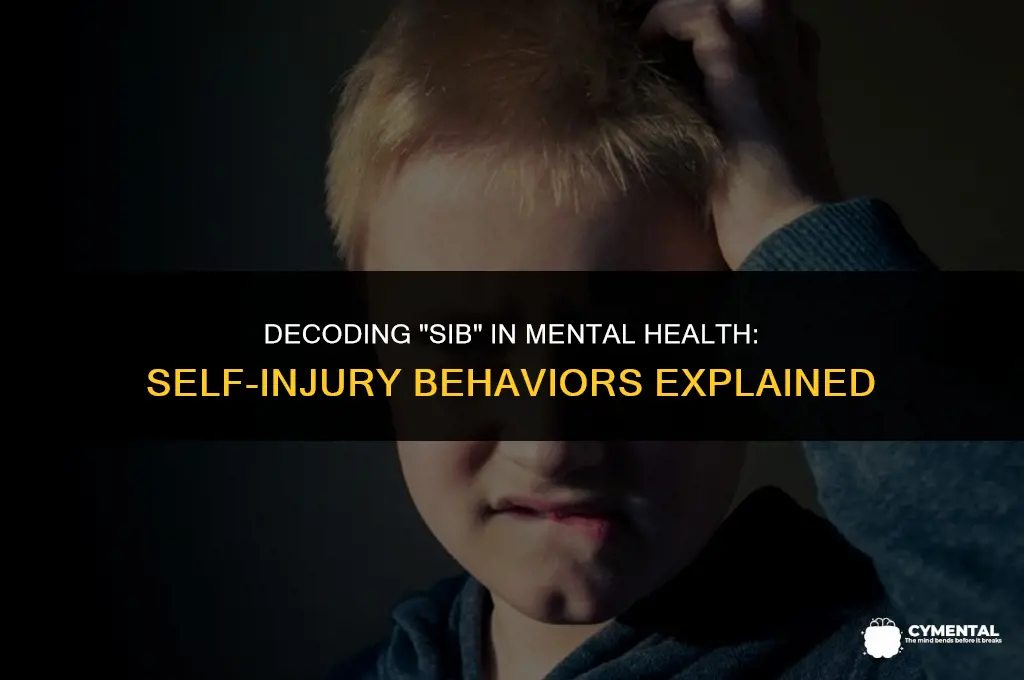
In the realm of mental health, the term SIB stands for Self-Injurious Behavior. This refers to any deliberate act that an individual performs to harm themselves physically, often as a coping mechanism for emotional distress. SIB can manifest in various forms, including cutting, burning, hitting, or scratching, and is frequently associated with conditions such as depression, anxiety, post-traumatic stress disorder (PTSD), and borderline personality disorder. It's crucial to approach this topic with sensitivity and understanding, recognizing that individuals who engage in SIB are often struggling with intense emotional pain and may require support and professional intervention to address the underlying issues and develop healthier coping strategies.
| Characteristics | Values |
|---|---|
| Definition | SIB stands for Self-Injurious Behavior |
| Types | Includes cutting, burning, hitting, scratching, and pulling out hair |
| Causes | Often associated with mental health conditions such as depression, anxiety, PTSD, and borderline personality disorder |
| Risk Factors | History of trauma, substance abuse, and social isolation |
| Diagnosis | Identified through physical examination, psychological evaluation, and behavioral observation |
| Treatment | Cognitive-behavioral therapy, dialectical behavior therapy, and medication management |
| Prevention | Education and awareness, early intervention, and support networks |
| Prognosis | With proper treatment, individuals can learn to manage their symptoms and improve their quality of life |
Explore related products


What You'll Learn
- Definition: SIB stands for self-injurious behavior, a coping mechanism for emotional distress
- Types: Includes cutting, burning, hitting, and scratching, among other forms of self-harm
- Causes: Often linked to mental health conditions like depression, anxiety, and borderline personality disorder
- Risk Factors: Adolescents and young adults are more susceptible; other factors include trauma and substance abuse
- Treatment: Cognitive-behavioral therapy, medication, and support groups are common interventions for SIB

Definition: SIB stands for self-injurious behavior, a coping mechanism for emotional distress
Self-injurious behavior (SIB) is a complex and multifaceted issue within the realm of mental health. It refers to the deliberate, direct injuring of one's own body tissue, often as a coping mechanism for emotional distress. This behavior can manifest in various forms, including cutting, burning, hitting, or scratching oneself. While SIB is not typically associated with suicidal intent, it can be a sign of underlying psychological turmoil and is often linked to conditions such as depression, anxiety, and post-traumatic stress disorder (PTSD).
One of the key aspects of understanding SIB is recognizing it as a maladaptive coping strategy. Individuals who engage in SIB may do so as a way to manage overwhelming emotions, to feel a sense of control, or to distract themselves from psychological pain. The physical pain caused by self-injury can provide a temporary relief from emotional suffering, creating a reinforcing cycle that can be difficult to break. It is essential for mental health professionals to approach SIB with empathy and understanding, recognizing that it is a symptom of deeper emotional issues rather than a deliberate act of self-harm.
In terms of prevalence, SIB is more common than one might think. It is estimated that approximately 1 in 5 individuals will engage in some form of self-injurious behavior at some point in their lives. SIB can affect people of all ages, genders, and backgrounds, although it is more commonly observed in adolescents and young adults. The secrecy and stigma surrounding SIB can make it challenging for individuals to seek help, often leading to a cycle of shame and continued self-harm.
Treatment for SIB typically involves a combination of therapeutic approaches, including cognitive-behavioral therapy (CBT), dialectical behavior therapy (DBT), and trauma-focused therapies. These interventions aim to help individuals develop healthier coping mechanisms, address underlying emotional issues, and reduce the frequency and severity of self-injurious behaviors. In some cases, medication may also be used to manage associated symptoms of depression or anxiety.
It is crucial for those supporting individuals with SIB to be patient, understanding, and non-judgmental. Encouraging open communication and providing a safe, supportive environment can be instrumental in helping individuals overcome self-injurious behaviors and develop more adaptive ways of managing emotional distress. By fostering a sense of hope and empowerment, it is possible to help individuals break free from the cycle of SIB and move towards a path of healing and recovery.
Understanding the 1013 Crisis in Mental Health: A Comprehensive Guide
You may want to see also
Explore related products


Types: Includes cutting, burning, hitting, and scratching, among other forms of self-harm
Self-injurious behavior (SIB) encompasses a range of actions that individuals may engage in to harm themselves physically. These behaviors can include cutting, burning, hitting, scratching, and other forms of self-mutilation. It's important to recognize that SIB is often a coping mechanism for individuals experiencing intense emotional distress, trauma, or mental health challenges.
Cutting is one of the most common forms of SIB. Individuals may use sharp objects like knives, razors, or broken glass to make incisions on their skin. This behavior can be a way to release pent-up emotions, punish oneself, or feel a sense of control in a chaotic situation. Burning is another form of SIB, where individuals may use hot objects, chemicals, or fire to cause burns on their skin. This can be a way to numb emotional pain or create a physical distraction from internal turmoil.
Hitting oneself is another form of SIB that can manifest as punching, slapping, or banging one's head or body against hard surfaces. This behavior may be a way to physically express anger, frustration, or self-hatred. Scratching is a less severe but still harmful form of SIB, where individuals may use their nails or sharp objects to scratch their skin, often resulting in visible marks or scars.
It's crucial to approach individuals engaging in SIB with empathy and understanding, rather than judgment or punishment. Providing a safe and supportive environment where they can express their feelings and explore healthier coping mechanisms is essential. Mental health professionals can offer therapy, counseling, and other resources to help individuals address the underlying causes of their SIB and develop more adaptive ways of managing their emotions.
Innovative Minds: Crafting a Mental Health App for Wellness
You may want to see also
Explore related products

$4.59 $13.99


Causes: Often linked to mental health conditions like depression, anxiety, and borderline personality disorder
Self-injurious behavior (SIB) is often intricately linked to various mental health conditions, serving as a coping mechanism or a manifestation of underlying psychological distress. Depression, anxiety, and borderline personality disorder are among the most common conditions associated with SIB. In the context of depression, individuals may engage in SIB as a way to externalize their internal pain or to feel something other than the numbing effects of their depression. For those with anxiety, SIB might serve as a means to distract themselves from overwhelming thoughts or to regain a sense of control in their lives.
Borderline personality disorder (BPD) presents a particularly complex relationship with SIB. Individuals with BPD often experience intense emotional instability, and SIB can be a way to regulate these emotions or to punish themselves for perceived wrongdoings. The impulsive nature of BPD can also lead to SIB as a spontaneous reaction to stress or emotional triggers. Understanding these underlying conditions is crucial in developing effective treatment strategies for SIB, as addressing the root cause can significantly impact an individual's recovery process.
Moreover, SIB can be a symptom of other mental health conditions such as post-traumatic stress disorder (PTSD), where it may serve as a way to cope with traumatic memories or flashbacks. In some cases, SIB can also be associated with dissociative disorders, where individuals may engage in self-harm as a way to reconnect with their bodies or to feel more grounded in reality. It is essential to consider the broader mental health context when assessing and treating SIB, as this behavior is often a sign of deeper psychological struggles.
Treatment for SIB typically involves a combination of psychotherapy, medication, and skills training. Cognitive-behavioral therapy (CBT) can help individuals identify and challenge negative thought patterns that contribute to SIB, while dialectical behavior therapy (DBT) focuses on teaching skills for emotional regulation and distress tolerance. Medications such as antidepressants or mood stabilizers may also be prescribed to address underlying conditions. Additionally, providing a supportive and non-judgmental environment is crucial in helping individuals feel safe and understood, which can be a significant factor in their recovery journey.
In conclusion, SIB is a complex behavior that is often linked to various mental health conditions, serving as a coping mechanism or a manifestation of underlying psychological distress. Understanding these connections is vital in developing effective treatment strategies that address the root causes of SIB and support individuals in their recovery process. By providing a comprehensive approach that includes psychotherapy, medication, and skills training, it is possible to help individuals overcome SIB and improve their overall mental health and well-being.
Exploring the Path to Becoming a Mental Health Tech Professional
You may want to see also
Explore related products



![The Apple (1998) ( Sib ) ( La Pomme ) [ NON-USA FORMAT, PAL, Reg.2 Import - United Kingdom ]](https://m.media-amazon.com/images/I/711Pvx7ZmTL._AC_UY218_.jpg)
Risk Factors: Adolescents and young adults are more susceptible; other factors include trauma and substance abuse
Adolescents and young adults are particularly vulnerable to the development of mental health disorders, including those related to substance abuse and trauma. This increased susceptibility can be attributed to several factors, including the ongoing development of the brain and the heightened sensitivity to environmental stressors during these critical life stages. As the brain continues to mature, it is more susceptible to the negative impacts of substance abuse, which can lead to long-lasting changes in brain function and behavior.
Trauma, whether experienced directly or vicariously, can also have a profound impact on the mental health of adolescents and young adults. Exposure to traumatic events can lead to the development of post-traumatic stress disorder (PTSD), anxiety, and depression, among other mental health concerns. Furthermore, trauma can increase the likelihood of substance abuse as individuals may turn to drugs or alcohol as a coping mechanism.
It is essential to recognize the unique risk factors that contribute to the development of mental health disorders in adolescents and young adults. By understanding these factors, mental health professionals can develop targeted interventions and prevention strategies to mitigate the negative impacts of substance abuse and trauma on this vulnerable population. Early identification and intervention are critical in addressing these issues and promoting positive mental health outcomes.
In addition to the direct effects of substance abuse and trauma, there are also indirect consequences that can further exacerbate mental health issues in adolescents and young adults. For example, substance abuse can lead to social and legal problems, which can in turn contribute to increased stress and anxiety. Similarly, trauma can lead to difficulties in forming and maintaining healthy relationships, which can further impact mental health and well-being.
To effectively address the mental health needs of adolescents and young adults, it is crucial to adopt a comprehensive approach that takes into account the complex interplay between biological, psychological, and environmental factors. This may involve a combination of individual therapy, group therapy, and community-based interventions, as well as efforts to address broader social and structural issues that contribute to mental health disparities.
Ultimately, by increasing awareness of the unique risk factors faced by adolescents and young adults and developing targeted interventions to address these factors, we can work towards promoting better mental health outcomes for this vulnerable population. It is essential to prioritize early identification, prevention, and intervention to mitigate the negative impacts of substance abuse and trauma and support the overall well-being of young people.
Establishing Hope: A Guide to Opening a Mental Health Facility
You may want to see also
Explore related products


Treatment: Cognitive-behavioral therapy, medication, and support groups are common interventions for SIB
Cognitive-behavioral therapy (CBT) is a frontline treatment for self-injurious behavior (SIB), focusing on identifying and altering negative thought patterns and behaviors. In CBT sessions, individuals learn to recognize triggers for self-injury and develop healthier coping mechanisms. For instance, a therapist might guide a patient through mindfulness exercises to increase awareness of emotional states and physical sensations, helping them to interrupt the cycle of self-harm.
Medication can also play a crucial role in managing SIB, particularly when the behavior is associated with underlying mental health conditions such as depression or anxiety. Selective serotonin reuptake inhibitors (SSRIs) are commonly prescribed to help regulate mood and reduce the compulsive aspects of self-injury. It's important to note that medication should be used in conjunction with therapy, as it addresses the symptoms but not the root causes of SIB.
Support groups provide a community-based approach to treatment, offering a safe space for individuals to share their experiences and learn from others who have struggled with SIB. These groups often incorporate elements of dialectical behavior therapy (DBT), which emphasizes skills such as emotional regulation, distress tolerance, and interpersonal effectiveness. Participating in a support group can help reduce feelings of isolation and provide practical strategies for managing self-injurious urges.
In addition to these common interventions, it's essential to tailor treatment plans to the individual's specific needs and circumstances. For example, younger patients may benefit from family-based therapies that involve parents and siblings in the treatment process, while older adults might require more intensive, individualized care. Furthermore, addressing any co-occurring conditions, such as substance abuse or eating disorders, is critical for achieving lasting recovery from SIB.
Ultimately, a comprehensive treatment approach that combines CBT, medication, and support groups can significantly improve outcomes for individuals struggling with SIB. By addressing the psychological, biological, and social factors contributing to self-injury, these interventions can help patients develop healthier coping strategies and lead more fulfilling lives.
Prioritizing Wellness: The Case for Mental Health Days in Education
You may want to see also
Frequently asked questions
SIB stands for Self-Injurious Behavior. It refers to actions that individuals may take to harm themselves, often as a coping mechanism for emotional distress.
Examples of self-injurious behaviors include cutting, burning, hitting oneself, pulling out hair, and scratching. These behaviors can vary widely in severity and may not always be visible to others.
People may engage in self-injurious behaviors as a way to cope with overwhelming emotions, such as anxiety, depression, or dissociation. It can serve as a form of self-soothing or a way to feel something physical when emotional pain is intense.
Self-injurious behavior can be associated with various mental health conditions, including borderline personality disorder, depression, anxiety disorders, and post-traumatic stress disorder (PTSD). However, it is not exclusive to any one condition and can occur in individuals without a diagnosed mental health disorder.
Treatment for self-injurious behaviors often involves a combination of therapy, such as cognitive-behavioral therapy (CBT) or dialectical behavior therapy (DBT), and medication to address underlying mental health conditions. Additionally, providing individuals with alternative coping strategies and support networks can help them manage their emotions in healthier ways.