Madison Cole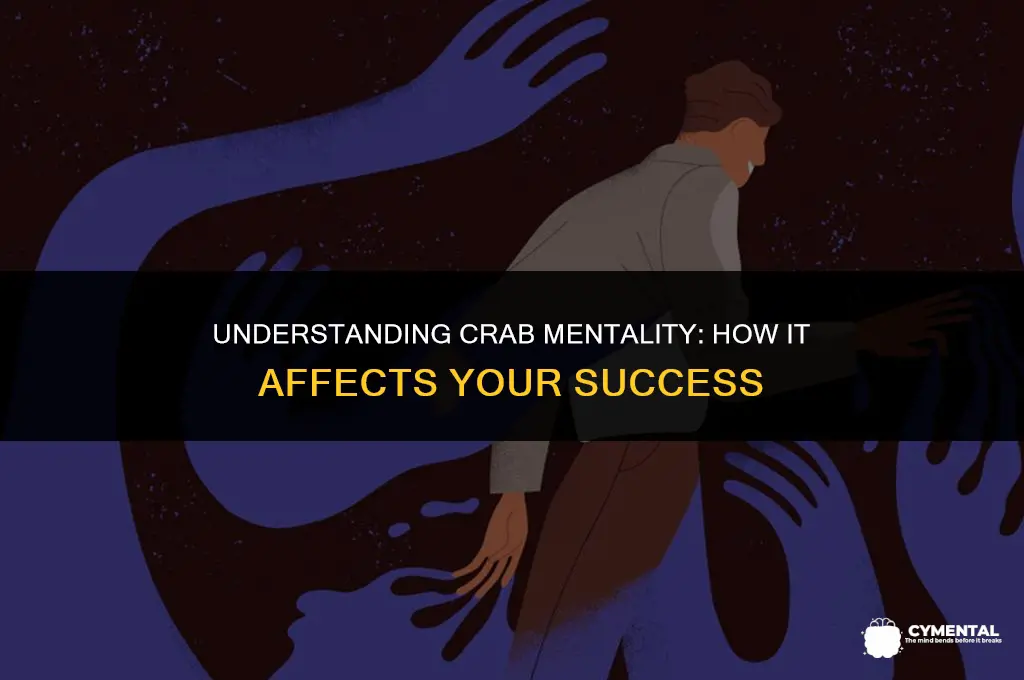
Crab mentality, also known as the crab bucket syndrome, is a fascinating social phenomenon that describes how individuals within a group may sabotage or undermine each other's success. This concept is often illustrated through the metaphor of crabs in a bucket, where if one crab tries to climb out, the others will pull it back down, ensuring that none of them escape. In human contexts, this mentality can manifest in various ways, such as through jealousy, competition, or a desire to maintain the status quo. Understanding crab mentality is crucial for recognizing and overcoming these destructive patterns, both in personal and professional settings. By exploring this concept, we can gain insights into how to foster more supportive and collaborative environments, where individuals can thrive without being held back by their peers.
Explore related products


What You'll Learn
- Definition: Crab mentality refers to a negative mindset where individuals discourage others' success
- Origin: The term comes from the observation of crabs in a bucket, where they pull each other down
- Examples: Discouraging a friend from pursuing a new opportunity or criticizing someone's achievements
- Impact: Crab mentality can hinder personal growth, create toxic environments, and limit potential
- Overcoming: Recognizing and challenging negative thoughts, supporting others, and focusing on self-improvement

Definition: Crab mentality refers to a negative mindset where individuals discourage others' success
Crab mentality is a term used to describe a specific type of negative behavior where individuals actively discourage or undermine the success of others. This phenomenon is often observed in social and professional settings, where people may feel threatened by the achievements of their peers or colleagues. Instead of celebrating the success of others, those with crab mentality may engage in behaviors such as gossip, criticism, or sabotage to bring others down to their level.
The origins of the term "crab mentality" can be traced back to the observation of crabs in a bucket. When crabs are placed in a bucket, they will often try to climb out. However, as one crab begins to climb, the others will grab onto it and pull it back down, preventing it from escaping. This behavior is similar to how individuals with crab mentality may react when they see someone else succeeding.
Crab mentality can have significant negative impacts on both the individuals who exhibit it and those who are targeted by it. For the person being undermined, it can lead to feelings of frustration, demotivation, and even depression. It can also create a toxic environment that stifles creativity, innovation, and collaboration. For the person exhibiting crab mentality, it can lead to a sense of emptiness, dissatisfaction, and a lack of personal growth.
One of the challenges in addressing crab mentality is that it often stems from deep-seated insecurities and fears. Individuals may feel threatened by the success of others because they perceive it as a reflection of their own inadequacies. Therefore, simply telling someone to "stop being negative" or "be more supportive" may not be effective in changing their behavior. Instead, it is important to address the underlying issues that contribute to crab mentality, such as low self-esteem, fear of failure, or a lack of empathy.
In conclusion, crab mentality is a destructive behavior that can have far-reaching consequences. By understanding its roots and impacts, we can begin to develop strategies for overcoming it and fostering a more supportive and collaborative environment.
Understanding Neurodiversity: Autism vs. Intellectual Disability Explained
You may want to see also
Explore related products


Origin: The term comes from the observation of crabs in a bucket, where they pull each other down
The term "crab mentality" originates from a fascinating observation of crabs in a bucket. When crabs are placed in a bucket, they exhibit a peculiar behavior: instead of working together to escape, they pull each other down. This phenomenon is a vivid metaphor for a certain type of human behavior, where individuals, often out of jealousy or fear of someone else's success, try to bring others down rather than supporting them.
This concept is deeply rooted in social psychology. It highlights the tendency for people to compare themselves to others and feel threatened by those who are perceived as more successful or capable. This insecurity can lead to negative behaviors such as gossip, sabotage, and criticism, all aimed at diminishing the achievements of others.
In the workplace, crab mentality can manifest in various ways. For instance, employees might undermine their colleagues' efforts to gain favor with superiors or hoard information to maintain a competitive edge. This behavior not only harms the individuals targeted but also damages team cohesion and overall productivity.
To combat crab mentality, it's essential to foster a culture of collaboration and mutual support. Encouraging open communication, recognizing individual contributions, and promoting a growth mindset can help mitigate the negative effects of this behavior. By understanding the origins and implications of crab mentality, we can take steps to create more positive and supportive environments in our personal and professional lives.
Understanding Mental Disability Through a Biblical Lens
You may want to see also
Explore related products


Examples: Discouraging a friend from pursuing a new opportunity or criticizing someone's achievements
Crab mentality is a concept that describes a type of negative social behavior where individuals discourage others from pursuing new opportunities or criticize their achievements. This behavior is often driven by feelings of insecurity, jealousy, or a desire to maintain the status quo. In this section, we'll explore some examples of crab mentality in action and discuss how it can impact individuals and groups.
One common example of crab mentality is when a friend or colleague discourages you from pursuing a new job opportunity. They may say things like "You're not qualified for that position" or "You'll never be able to handle the workload." This type of behavior can be damaging, as it can prevent individuals from taking risks and pursuing their goals. It's important to recognize when someone is exhibiting crab mentality and to not let their negativity hold you back.
Another example of crab mentality is when someone criticizes another person's achievements. This can take many forms, such as belittling someone's accomplishments, taking credit for their work, or spreading rumors about them. This type of behavior can be harmful, as it can undermine an individual's confidence and motivation. It's important to be aware of when someone is exhibiting crab mentality and to not let their criticism affect your self-esteem.
Crab mentality can also manifest in group settings, such as in the workplace or in social circles. In these cases, individuals may band together to discourage others from pursuing new opportunities or to criticize their achievements. This type of behavior can create a toxic environment and can stifle creativity and innovation. It's important to be aware of when crab mentality is present in a group setting and to take steps to address it.
To overcome crab mentality, it's important to focus on your own goals and aspirations. Surround yourself with positive, supportive individuals who encourage you to take risks and pursue your dreams. Additionally, be aware of your own behavior and make sure that you're not exhibiting crab mentality towards others. By being proactive and positive, you can help to create a more supportive and encouraging environment for yourself and those around you.
Building Resilience: A Guide to Becoming Psychologically Strong
You may want to see also
Explore related products



Impact: Crab mentality can hinder personal growth, create toxic environments, and limit potential
Crab mentality, a term derived from the behavior of crabs in a bucket, where they pull each other down to prevent escape, has profound implications for personal and professional development. This mindset can significantly hinder an individual's growth by creating a toxic environment that discourages ambition and innovation. When people are trapped in a crab mentality, they often feel threatened by the success of others and respond by undermining their peers' efforts. This behavior not only stunts the growth of the individual but also fosters a culture of mediocrity and competition rather than collaboration.
In a workplace setting, crab mentality can lead to a toxic environment where employees are more focused on sabotaging each other's projects than on contributing to the organization's goals. This can result in decreased productivity, increased turnover rates, and a general sense of dissatisfaction among team members. Leaders who exhibit crab mentality traits may fail to recognize and reward talent, instead opting to keep their team members in line through fear and intimidation. This approach can limit the potential of high-performing employees and drive them to seek opportunities elsewhere.
The impact of crab mentality extends beyond the workplace and into personal relationships. Friends and family members who exhibit this behavior may discourage others from pursuing their dreams or trying new things, fearing that their own insecurities will be exposed. This can lead to strained relationships and a sense of isolation for the person trying to grow and develop. Over time, being surrounded by individuals with a crab mentality can erode one's confidence and self-esteem, making it difficult to take risks and pursue personal goals.
Breaking free from crab mentality requires a conscious effort to shift one's mindset from competition to collaboration. This involves recognizing and celebrating the successes of others, offering support and encouragement, and focusing on personal growth rather than comparing oneself to others. Leaders can play a crucial role in fostering a positive work culture by promoting open communication, recognizing and rewarding talent, and creating an environment where employees feel safe to take risks and innovate.
In conclusion, crab mentality can have a significant negative impact on personal growth, relationships, and professional environments. By understanding the behaviors associated with this mindset and actively working to overcome them, individuals can create a more supportive and collaborative atmosphere that encourages growth and development. Leaders, in particular, have a responsibility to model positive behaviors and create an environment where employees can thrive and reach their full potential.
Exploring the Gray Areas: What Constitutes Mental Cheating?
You may want to see also
Explore related products


Overcoming: Recognizing and challenging negative thoughts, supporting others, and focusing on self-improvement
Recognizing and challenging negative thoughts is a crucial step in overcoming crab mentality. This involves becoming aware of your own thought patterns and actively working to change them. One way to do this is by practicing mindfulness and meditation, which can help you become more aware of your thoughts and emotions. Additionally, cognitive-behavioral therapy (CBT) is a useful tool for identifying and challenging negative thought patterns. CBT involves working with a therapist to identify negative thoughts, challenge them with evidence, and replace them with more positive and realistic thoughts.
Supporting others is another important aspect of overcoming crab mentality. This can involve offering encouragement and support to friends and family members who are struggling, as well as volunteering in your community. Helping others can help you feel more connected and less isolated, which can in turn reduce feelings of crab mentality. It's also important to surround yourself with positive and supportive people, as this can help you maintain a more positive outlook.
Focusing on self-improvement is a key component of overcoming crab mentality. This can involve setting goals for yourself, such as learning a new skill or improving your physical health. It's important to focus on your own growth and development, rather than comparing yourself to others. Additionally, practicing gratitude can help you focus on the positive aspects of your life, rather than dwelling on negative thoughts. Keeping a gratitude journal, where you write down three things you're grateful for each day, can be a helpful way to cultivate a more positive mindset.
In terms of practical tips, it's important to remember that overcoming crab mentality is a process that takes time and effort. Be patient with yourself and don't expect immediate results. It's also important to seek professional help if you're struggling with persistent negative thoughts or feelings of isolation. Finally, remember that you're not alone – many people struggle with crab mentality, and there is support available.
Mastering the Social Security Disability Mental Exam: Tips and Strategies
You may want to see also
Frequently asked questions
Crab mentality, also known as crab syndrome, is a metaphorical concept describing a type of social behavior where individuals within a group pull each other down or hinder each other's progress, rather than supporting and helping one another to succeed.
The term 'crab mentality' originates from the observation of crabs in a bucket. When crabs are placed in a bucket, they often try to climb out. However, instead of working together, they tend to grab onto each other and pull each other back down, making it difficult for any crab to escape. This behavior is used as a metaphor for certain human social behaviors.
Crab mentality can manifest in various ways in real life, such as through jealousy, envy, gossip, sabotage, or lack of support among peers. For example, in a workplace, colleagues might undermine each other's efforts to get a promotion, or in a social circle, friends might discourage each other from pursuing personal goals or dreams.
Overcoming or avoiding crab mentality involves fostering a supportive and collaborative environment. This can be achieved by encouraging open communication, celebrating others' successes, offering help and guidance, and focusing on personal growth rather than comparing oneself to others. By promoting a culture of positivity and mutual support, individuals can work together towards common goals and uplift each other.