Ava Ramirez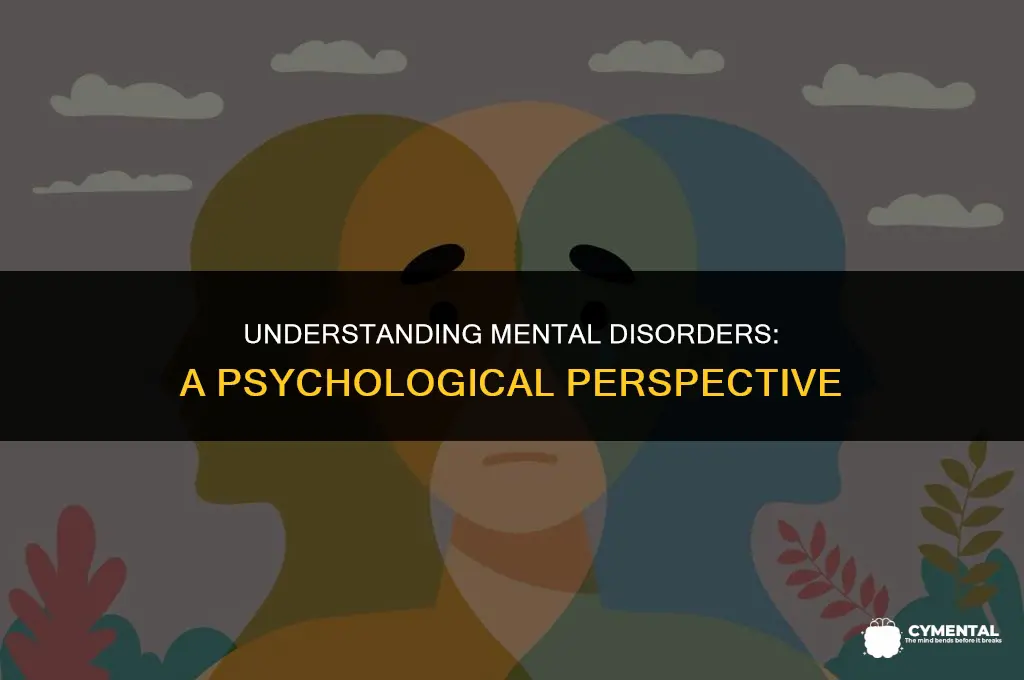
A mental disorder, also known as a mental illness or psychiatric disorder, is a condition characterized by significant disturbances in thinking, feeling, and behavior. These disturbances often result in distress or impairment in social, occupational, or other important areas of functioning. Mental disorders can manifest in various ways, including symptoms such as anxiety, depression, hallucinations, delusions, and changes in mood or personality. They are typically diagnosed by mental health professionals using criteria outlined in diagnostic manuals like the DSM-5. Understanding mental disorders is crucial for providing effective treatment and support to those affected, as well as for reducing stigma and promoting overall mental health and well-being.
Explore related products


$32.99 $32.99


$46.95 $46.95


What You'll Learn
- Definition and Classification: Understanding what constitutes a mental disorder and how they are categorized in psychology
- Types of Disorders: Exploring various mental disorders such as anxiety, depression, bipolar disorder, and schizophrenia
- Causes and Risk Factors: Investigating the biological, psychological, and environmental factors that contribute to mental disorders
- Symptoms and Diagnosis: Recognizing the signs and symptoms of mental disorders and the methods used for diagnosis
- Treatment and Management: Examining the different approaches to treating and managing mental disorders, including therapy and medication

Definition and Classification: Understanding what constitutes a mental disorder and how they are categorized in psychology
A mental disorder, as defined by the American Psychological Association (APA), is a condition that affects a person's thinking, feeling, or behavior, causing distress or impairment in social, occupational, or other important areas of functioning. This broad definition encompasses a wide range of conditions, from anxiety and depression to schizophrenia and bipolar disorder. The classification of mental disorders is a complex and evolving process, with various systems and criteria used to categorize and diagnose these conditions.
One of the most widely used classification systems is the Diagnostic and Statistical Manual of Mental Disorders (DSM), published by the APA. The DSM provides a standardized set of criteria for diagnosing mental disorders, as well as a numerical code for each condition. The latest edition, DSM-5, was published in 2013 and includes significant changes to the classification system, such as the elimination of the multiaxial system and the addition of new disorders.
The International Classification of Diseases (ICD), published by the World Health Organization (WHO), is another important classification system for mental disorders. The ICD provides a global standard for coding and classifying diseases, including mental and behavioral disorders. The latest edition, ICD-11, was published in 2019 and includes a revised classification system for mental disorders, with a focus on improving the accuracy and consistency of diagnoses across different cultures and settings.
Understanding the definition and classification of mental disorders is essential for psychologists, psychiatrists, and other mental health professionals, as it provides a framework for diagnosing and treating these conditions. It is also important for researchers, policymakers, and the general public, as it helps to promote a better understanding of mental health and the need for effective interventions and support systems.
Exploring the Thin Line: Delusions and Mental Health Disorders
You may want to see also
Explore related products



Types of Disorders: Exploring various mental disorders such as anxiety, depression, bipolar disorder, and schizophrenia
Anxiety disorders encompass a range of conditions characterized by excessive fear and worry. Generalized anxiety disorder (GAD) involves persistent and excessive worry about various aspects of life, while social anxiety disorder (SAD) is marked by an intense fear of social situations. Panic disorder is another form, where individuals experience sudden and intense episodes of fear, often accompanied by physical symptoms like rapid heartbeat and shortness of breath.
Depressive disorders, on the other hand, are characterized by persistent feelings of sadness and loss of interest. Major depressive disorder (MDD) is the most common form, where individuals experience a persistent low mood, loss of appetite, and changes in sleep patterns. Dysthymia, or persistent depressive disorder, involves a chronic low mood that lasts for at least two years.
Bipolar disorder is a mood disorder characterized by extreme mood swings. Individuals with bipolar disorder experience episodes of mania, where they feel extremely energetic and euphoric, followed by episodes of depression. The severity and frequency of these episodes can vary greatly from person to person.
Schizophrenia is a complex disorder that affects an individual's perception, thoughts, and emotions. It is characterized by symptoms such as delusions, hallucinations, and disorganized thinking. There are different subtypes of schizophrenia, including paranoid, disorganized, and catatonic.
Each of these disorders has its own unique set of symptoms and treatment approaches. For example, anxiety disorders are often treated with cognitive-behavioral therapy (CBT) and medication, while depressive disorders may be treated with antidepressants and psychotherapy. Bipolar disorder typically requires a combination of mood stabilizers and psychotherapy, and schizophrenia is often treated with antipsychotic medications and supportive therapy.
Understanding these different types of disorders is crucial for accurate diagnosis and effective treatment. Mental health professionals use a variety of tools, including clinical interviews and psychological assessments, to diagnose these conditions. Early diagnosis and treatment can significantly improve outcomes for individuals with mental disorders, allowing them to lead fulfilling and productive lives.
Understanding Epilepsy: Dispelling Myths About Its Classification
You may want to see also
Explore related products


![Mental Health and Mental Disorders: An Encyclopedia of Conditions, Treatments, and Well-Being [3 volumes]](https://m.media-amazon.com/images/I/813s-0p62iL._AC_UY218_.jpg)

Causes and Risk Factors: Investigating the biological, psychological, and environmental factors that contribute to mental disorders
Mental disorders are complex conditions influenced by a multitude of factors. Biological factors play a significant role, with genetic predispositions often increasing the likelihood of developing certain disorders. For instance, studies have shown that individuals with a family history of depression are more susceptible to experiencing depressive episodes themselves. Neurotransmitter imbalances, such as those involving serotonin and dopamine, can also contribute to the development of mental health issues like anxiety and schizophrenia.
Psychological factors are equally important in understanding mental disorders. Traumatic experiences, such as physical or emotional abuse, can have long-lasting effects on an individual's mental health, potentially leading to conditions like post-traumatic stress disorder (PTSD). Additionally, cognitive patterns and coping mechanisms can influence the onset and severity of mental health issues. For example, individuals who engage in negative self-talk or have difficulty managing stress may be more prone to developing anxiety disorders.
Environmental factors also play a crucial role in the development of mental disorders. Socioeconomic status, access to healthcare, and exposure to toxins or pollutants can all impact mental health. For instance, research has shown that individuals living in poverty are at a higher risk of developing mental health issues due to the chronic stress associated with financial insecurity. Furthermore, exposure to environmental toxins, such as lead or pesticides, has been linked to an increased risk of neurological disorders.
Investigating these causes and risk factors is essential for developing effective prevention and treatment strategies. By understanding the complex interplay between biological, psychological, and environmental factors, mental health professionals can tailor interventions to address the specific needs of individuals. This may involve a combination of medication, therapy, and lifestyle changes, as well as broader societal interventions aimed at reducing risk factors and promoting mental well-being.
In conclusion, mental disorders are multifaceted conditions influenced by a range of biological, psychological, and environmental factors. By examining these factors in detail, we can gain a deeper understanding of the causes and risk factors associated with mental health issues, ultimately leading to more effective prevention and treatment strategies.
Understanding ADHD: Is Attention Deficit Disorder a Mental Illness?
You may want to see also
Explore related products


Symptoms and Diagnosis: Recognizing the signs and symptoms of mental disorders and the methods used for diagnosis
Recognizing the signs and symptoms of mental disorders is crucial for timely intervention and effective treatment. Mental health professionals use a variety of methods to diagnose these conditions, often starting with a thorough clinical interview. During this interview, the clinician will ask about the individual's symptoms, personal history, and any relevant family history. They may also use standardized assessment tools, such as questionnaires or rating scales, to gather more information about the person's mental state.
In addition to clinical interviews and assessment tools, mental health professionals may also use physical examinations and laboratory tests to rule out underlying medical conditions that could be contributing to the person's symptoms. For example, a thyroid disorder or vitamin deficiency can sometimes mimic the symptoms of depression or anxiety. By conducting a comprehensive evaluation, clinicians can ensure that they are addressing the root cause of the individual's distress.
One of the challenges in diagnosing mental disorders is that symptoms can vary widely from person to person, and some individuals may not exhibit any obvious signs of distress. Furthermore, many mental health conditions have overlapping symptoms, making it difficult to distinguish between them. For instance, both depression and anxiety can cause sleep disturbances, changes in appetite, and feelings of irritability. To accurately diagnose these conditions, clinicians must carefully consider the individual's unique symptom profile and personal history.
Despite these challenges, there are some common signs and symptoms that can indicate the presence of a mental disorder. These may include persistent feelings of sadness or hopelessness, changes in sleep or appetite, difficulty concentrating or making decisions, and withdrawal from social activities. Individuals may also experience physical symptoms, such as headaches, stomachaches, or unexplained pain. If these symptoms persist and interfere with daily functioning, it is important to seek professional help.
In recent years, there has been a growing emphasis on early intervention and prevention in mental health care. By recognizing the signs and symptoms of mental disorders early on, individuals can receive treatment before their conditions become more severe and difficult to treat. This can lead to better outcomes and improved quality of life. Mental health professionals are trained to identify these early warning signs and provide appropriate support and treatment to help individuals manage their symptoms and improve their overall well-being.
Unraveling the Enigma: Howard Hughes' Mental Health Struggles
You may want to see also
Explore related products

$13.99 $13.99


Treatment and Management: Examining the different approaches to treating and managing mental disorders, including therapy and medication
Cognitive-behavioral therapy (CBT) is a widely used therapeutic approach for treating mental disorders. It focuses on identifying and changing negative thought patterns and behaviors that contribute to the disorder. CBT is often used to treat anxiety disorders, depression, and post-traumatic stress disorder (PTSD). During CBT sessions, patients work with a therapist to develop coping strategies and learn how to manage their symptoms.
Medication is another common treatment option for mental disorders. Antidepressants, anti-anxiety medications, and mood stabilizers are often prescribed to help manage symptoms. For example, selective serotonin reuptake inhibitors (SSRIs) are a type of antidepressant that can be used to treat depression and anxiety disorders. It is important to note that medication should always be used in conjunction with therapy, as it can help to enhance the effectiveness of therapeutic interventions.
In addition to CBT and medication, there are other therapeutic approaches that can be used to treat mental disorders. Dialectical behavior therapy (DBT) is a type of therapy that focuses on helping patients develop emotional regulation skills and improve their ability to tolerate distress. DBT is often used to treat borderline personality disorder and other emotional regulation difficulties.
Family therapy is another approach that can be used to treat mental disorders. It involves working with the patient's family members to identify and address patterns of communication and behavior that may be contributing to the disorder. Family therapy can be particularly helpful for treating disorders that affect the entire family, such as eating disorders and substance abuse disorders.
Finally, it is important to consider the role of lifestyle changes in the treatment and management of mental disorders. Regular exercise, a healthy diet, and adequate sleep can all contribute to improved mental health. Additionally, stress management techniques, such as meditation and yoga, can help to reduce symptoms of anxiety and depression.
In conclusion, there are a variety of approaches that can be used to treat and manage mental disorders. By working with a mental health professional, patients can develop a treatment plan that is tailored to their individual needs and goals. With the right combination of therapy, medication, and lifestyle changes, it is possible to effectively manage mental health conditions and improve overall well-being.
Understanding Intellectual Disabilities: A Comprehensive Overview
You may want to see also
Frequently asked questions
A mental disorder in psychology is a condition that affects a person's thinking, feeling, or behavior, causing significant distress or impairment in daily functioning. These disorders are often characterized by symptoms that deviate from normal psychological functioning and can be diagnosed using criteria outlined in psychological and psychiatric manuals.
Mental disorders are typically diagnosed by mental health professionals, such as psychologists, psychiatrists, or social workers, using a combination of clinical interviews, psychological assessments, and sometimes medical tests. The diagnostic process involves evaluating the patient's symptoms, personal history, and current circumstances to determine if they meet the criteria for a specific mental disorder as outlined in diagnostic manuals like the DSM-5 (Diagnostic and Statistical Manual of Mental Disorders).
Some common types of mental disorders include anxiety disorders (such as generalized anxiety disorder, panic disorder, and phobias), mood disorders (like depression and bipolar disorder), personality disorders (such as borderline personality disorder and narcissistic personality disorder), psychotic disorders (including schizophrenia), and neurodevelopmental disorders (like autism spectrum disorder and ADHD). Each type of disorder has its own set of symptoms and diagnostic criteria.