Lucas Bennett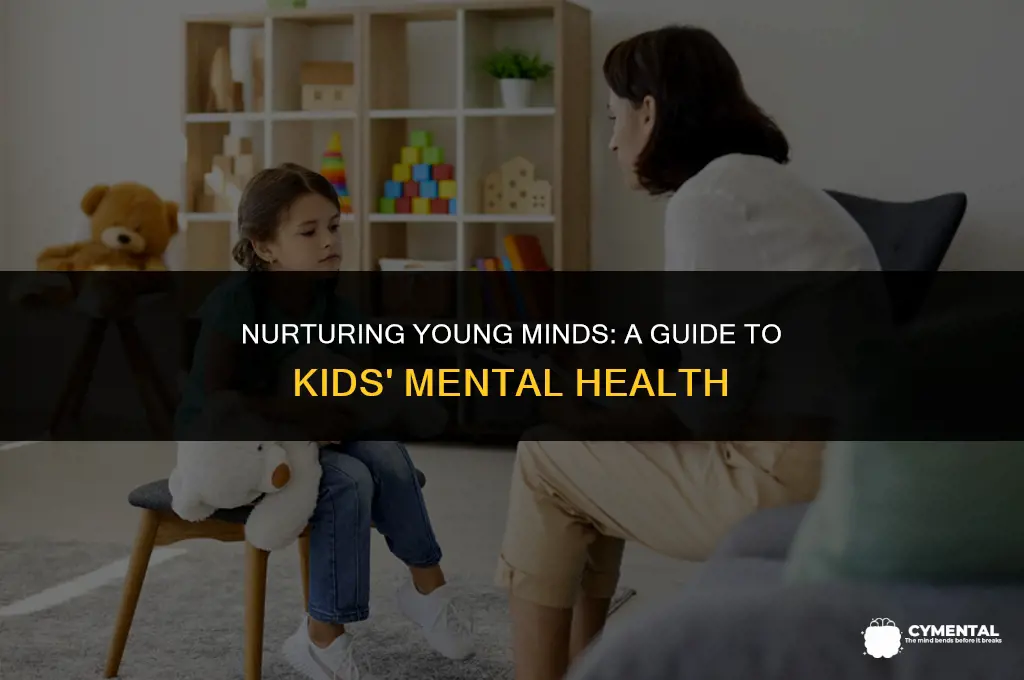
Mental health is a crucial aspect of overall well-being, especially for children. It encompasses the emotional, psychological, and social well-being of kids, impacting how they think, feel, and behave. Good mental health allows children to develop resilience, form healthy relationships, and achieve their full potential in school and life. However, mental health issues can affect children of all ages, manifesting in various ways such as anxiety, depression, or behavioral problems. Understanding and addressing these issues is vital to support children's development and ensure they lead happy, healthy lives.
| Characteristics | Values |
|---|---|
| Definition | Mental health for kids refers to the emotional, psychological, and social well-being of children and adolescents. It impacts how they think, feel, and behave. |
| Importance | Good mental health is crucial for a child's development, learning, and ability to cope with stress and challenges. |
| Common Disorders | Anxiety, depression, attention deficit hyperactivity disorder (ADHD), and autism spectrum disorder are among the most common mental health conditions in children. |
| Symptoms | Symptoms can vary widely but may include changes in mood, behavior, sleep patterns, and appetite. Children may also express physical complaints like headaches or stomachaches. |
| Diagnosis | Mental health professionals use a combination of interviews, observations, and sometimes psychological testing to diagnose mental health conditions in children. |
| Treatment Options | Treatments can include therapy (such as cognitive-behavioral therapy), medication, and lifestyle changes. Early intervention is key to effective treatment. |
| Prevention | Promoting good mental health in kids involves fostering a supportive environment, teaching coping skills, and encouraging healthy habits like regular exercise and balanced nutrition. |
| Role of Parents | Parents play a critical role in recognizing signs of mental health issues, seeking professional help, and providing emotional support and stability. |
| School's Role | Schools can contribute by creating a safe and nurturing environment, offering mental health resources, and educating staff to recognize and respond to mental health concerns. |
| Societal Impact | Children's mental health issues can have long-term effects on society, including increased healthcare costs, reduced productivity, and higher rates of substance abuse and criminal behavior. |
| Research and Development | Ongoing research is essential to improve understanding, diagnosis, and treatment of mental health conditions in children. This includes developing new therapies and medications. |
| Access to Care | Ensuring access to mental health care for all children is a significant challenge, particularly in underserved communities. Telehealth and school-based services are helping to bridge gaps. |
| Stigma | Stigma surrounding mental health issues can prevent children and families from seeking help. Public awareness campaigns and education are crucial to reducing stigma. |
| Technology's Role | Technology can be both beneficial and harmful. While it offers access to information and support, excessive screen time and social media use can negatively impact children's mental health. |
| Future Directions | Future efforts should focus on integrating mental health care into primary care, increasing funding for research, and developing more effective prevention and intervention strategies. |
Explore related products


$9.9 $16.99


What You'll Learn
- Emotional Well-being: Helping kids understand and manage their emotions effectively
- Resilience Building: Teaching children to bounce back from challenges and setbacks
- Positive Relationships: Encouraging healthy interactions with peers and family members
- Coping Strategies: Providing kids with tools to handle stress and difficult situations
- Self-esteem and Confidence: Fostering a positive self-image and belief in one's abilities

Emotional Well-being: Helping kids understand and manage their emotions effectively
Emotional well-being is a crucial aspect of mental health for children, as it equips them with the tools to navigate their feelings and respond appropriately to various situations. One effective way to help kids understand and manage their emotions is through emotional intelligence education. This involves teaching children to recognize, label, and express their emotions in a healthy manner. For instance, parents and educators can use emotion charts or feeling wheels to help kids identify different emotions and understand how they might manifest physically or behaviorally.
Another important strategy is to model emotional regulation. Children learn by observing, so when adults demonstrate healthy emotional responses, such as taking deep breaths to calm down or using "I" statements to express feelings, kids are more likely to adopt these behaviors themselves. Additionally, providing a safe and supportive environment where children feel comfortable discussing their emotions can foster a sense of security and encourage open communication.
It's also beneficial to teach children coping mechanisms for dealing with strong emotions. This could include techniques like mindfulness meditation, physical activity, or creative expression through art or music. By offering a variety of strategies, kids can find what works best for them and develop a personalized toolkit for emotional management.
Furthermore, helping children develop problem-solving skills can enhance their emotional well-being. When kids feel empowered to tackle challenges and find solutions, they are less likely to feel overwhelmed or helpless. Encouraging a growth mindset, where mistakes are viewed as opportunities for learning, can also contribute to emotional resilience.
In conclusion, promoting emotional well-being in children requires a multifaceted approach that includes education, modeling, support, coping strategies, and problem-solving skills. By addressing these areas, we can help kids develop a healthy relationship with their emotions and build a strong foundation for overall mental health.
Empowering Minds: A Guide to Becoming a Mental Health Volunteer
You may want to see also
Explore related products




Resilience Building: Teaching children to bounce back from challenges and setbacks
Teaching children resilience is akin to equipping them with a superpower. It’s the ability to withstand life’s inevitable knocks and come out stronger on the other side. Resilience isn’t about avoiding difficulties; it’s about learning how to navigate them effectively. For kids, this skill is crucial as it sets the foundation for a lifetime of mental well-being.
One effective way to build resilience in children is through role modeling. Kids learn by observing, so when they see adults in their lives handling stress and challenges with composure and optimism, they’re more likely to adopt these behaviors themselves. Encouraging open conversations about feelings and difficulties also plays a key role. When children feel safe to express their emotions, they’re better able to process and overcome them.
Another strategy is to teach problem-solving skills. By guiding children through the process of identifying problems, brainstorming solutions, and evaluating outcomes, we empower them to tackle challenges head-on. This not only boosts their confidence but also reinforces the idea that they have the capability to manage difficult situations.
It’s also important to foster a growth mindset in children. This involves praising effort and perseverance rather than just outcomes. When kids understand that their abilities can be developed through hard work and dedication, they’re more likely to view setbacks as opportunities for growth rather than failures.
Lastly, promoting healthy coping mechanisms is essential. This could include activities like exercise, art, or music, which provide constructive ways for children to channel their emotions. Teaching relaxation techniques, such as deep breathing or meditation, can also help kids manage stress and anxiety.
In essence, resilience building is about equipping children with the tools they need to navigate life’s ups and downs. By providing a supportive environment, modeling healthy behaviors, and teaching practical skills, we can help kids develop the mental fortitude to bounce back from challenges and setbacks, setting them up for a lifetime of mental health and well-being.
Exploring the Genetic Links to Mental Health: What You Need to Know
You may want to see also
Explore related products


Positive Relationships: Encouraging healthy interactions with peers and family members
Healthy relationships are crucial for a child's mental well-being. Positive interactions with peers and family members can significantly impact a child's self-esteem, emotional regulation, and overall happiness. Encouraging these healthy relationships involves teaching children effective communication skills, empathy, and conflict resolution strategies.
One way to foster positive relationships is by modeling healthy interactions at home. Parents and caregivers can demonstrate active listening, express emotions in a constructive manner, and resolve conflicts peacefully. This sets a strong foundation for children to build their own healthy relationships.
In school settings, educators can promote positive relationships by creating a supportive and inclusive classroom environment. This can be achieved through team-building activities, group discussions, and teaching social skills such as sharing, taking turns, and respecting others' feelings.
Children can also benefit from participating in extracurricular activities or joining clubs where they can interact with peers who share similar interests. These activities provide opportunities for children to develop friendships, learn cooperation, and practice leadership skills.
It's important to note that not all relationships are positive, and children need to be taught how to recognize and handle unhealthy interactions. Educating children about boundaries, consent, and seeking help when needed is essential for their mental health and safety.
In conclusion, encouraging healthy relationships with peers and family members is a vital aspect of promoting mental health in children. By providing children with the skills and knowledge to navigate relationships effectively, we can help them build a strong foundation for a happy and healthy future.
Navigating Mental Health: The Essential Role of Case Management
You may want to see also
Explore related products


$8.93 $17.93

$7.93 $12.99


Coping Strategies: Providing kids with tools to handle stress and difficult situations
Teaching children effective coping strategies is crucial in fostering their mental resilience. One practical approach is to encourage physical activity as a means of stress relief. Regular exercise can help reduce anxiety and improve mood by releasing endorphins, the body's natural feel-good chemicals. Parents and caregivers can support this by modeling an active lifestyle and providing opportunities for children to engage in sports or outdoor play.
Another valuable tool is mindfulness practice. Mindfulness involves being present in the moment and can help children manage overwhelming emotions. Simple exercises, such as deep breathing or guided meditation, can be introduced to children as young as five years old. These practices can be incorporated into daily routines, such as before bedtime or during transitions between activities, to help children develop a sense of calm and focus.
Cognitive restructuring is a technique that can help older children and adolescents reframe negative thoughts and develop a more positive outlook. This involves identifying and challenging negative thought patterns and replacing them with more constructive and realistic ones. For example, a child who is anxious about a test might be encouraged to think about past successes or to focus on the process of studying rather than the outcome.
Social support is also a critical component of coping strategies for children. Encouraging open communication and fostering strong relationships with family and friends can provide children with a sense of security and belonging. Parents can model this by maintaining open lines of communication and by being supportive and non-judgmental when children express their feelings.
Finally, it's important to teach children problem-solving skills. By breaking down problems into manageable steps and brainstorming solutions, children can develop a sense of control and competence. This can be particularly helpful in dealing with difficult social situations or academic challenges. Role-playing exercises can be used to practice these skills in a safe and supportive environment.
In conclusion, providing children with a variety of coping strategies can help them navigate stress and difficult situations more effectively. By incorporating physical activity, mindfulness, cognitive restructuring, social support, and problem-solving skills into their daily lives, children can develop the resilience they need to thrive.
Exploring Your Mental Health Records: A Comprehensive Guide
You may want to see also
Explore related products


$15.83 $16.99


Self-esteem and Confidence: Fostering a positive self-image and belief in one's abilities
Building self-esteem and confidence in children is crucial for their mental health and overall well-being. It involves fostering a positive self-image and a strong belief in their abilities. This can be achieved through various strategies that parents, educators, and caregivers can implement in a child's daily life.
One effective approach is to encourage children to set and achieve realistic goals. This helps them develop a sense of accomplishment and competence. For example, a child who struggles with reading can be guided to set a goal of reading a certain number of books within a month. As they progress and achieve this goal, their confidence in their reading abilities will grow.
Another important aspect is to provide children with opportunities to learn new skills and engage in activities they enjoy. This not only helps them discover their talents but also builds their self-esteem as they become proficient in these areas. For instance, enrolling a child in a music class or a sports team can help them develop new skills, make friends, and gain a sense of belonging.
Positive reinforcement and constructive feedback also play a significant role in fostering self-esteem and confidence. Praising children for their efforts and achievements, while also providing guidance on how they can improve, helps them develop a growth mindset. This means they view challenges as opportunities for learning and growth, rather than as threats to their self-worth.
It's also important to model positive self-esteem and confidence as adults. Children often learn by example, so when they see adults around them displaying confidence and a positive attitude, they are more likely to adopt these traits themselves. This can be achieved by demonstrating assertiveness, taking risks, and showing resilience in the face of setbacks.
In conclusion, fostering self-esteem and confidence in children requires a multifaceted approach that includes setting goals, learning new skills, providing positive reinforcement, and modeling healthy behaviors. By implementing these strategies, we can help children develop a strong sense of self-worth and the confidence to navigate the challenges of life.
Unveiling the Meaning Behind the Mental Health Ribbon's Color
You may want to see also
Frequently asked questions
Mental health refers to our emotional, psychological, and social well-being. It affects how we think, feel, and behave. For kids, good mental health is crucial as it helps them develop resilience, cope with stress, form healthy relationships, and achieve their full potential in school and life.
Kids can face various mental health challenges, including anxiety, depression, attention deficit hyperactivity disorder (ADHD), and behavioral disorders. These challenges can manifest in different ways, such as difficulty concentrating, mood swings, withdrawal from friends, or changes in appetite and sleep patterns.
Parents and caregivers can support a child's mental health by providing a stable and nurturing environment, encouraging open communication, teaching coping skills, and modeling healthy behaviors. They can also seek professional help from mental health experts if needed and ensure that the child has access to resources and support networks.