Lucas Bennett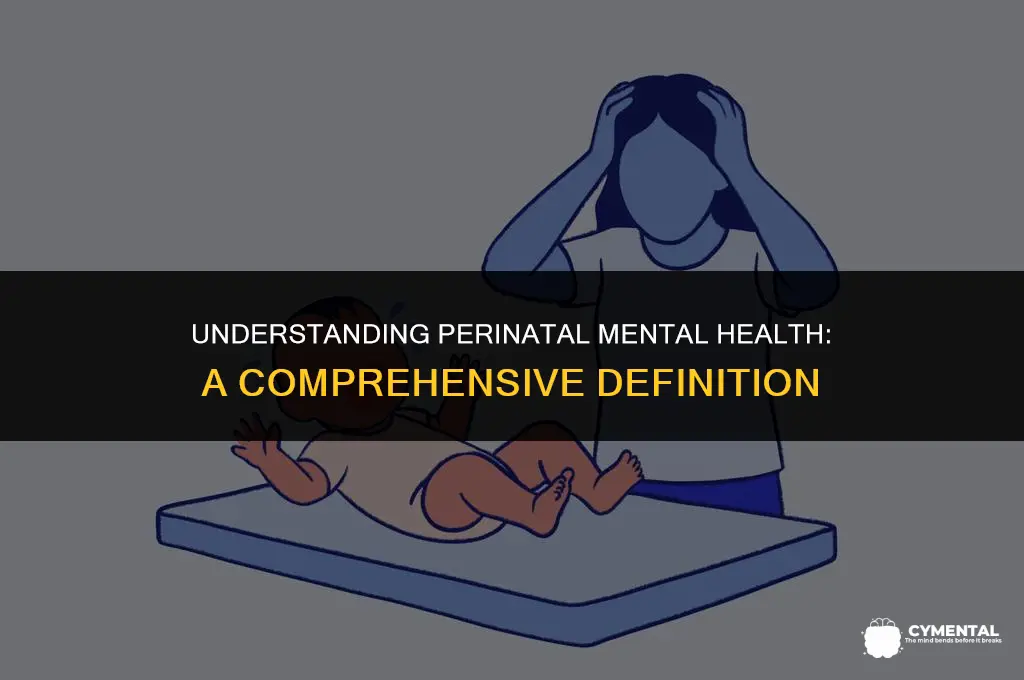
Perinatal mental health refers to the emotional and psychological well-being of individuals during the perinatal period, which encompasses pregnancy, childbirth, and the postpartum period. It is a critical aspect of overall health that can significantly impact both the parent and the child. Perinatal mental health conditions can range from mild to severe and may include symptoms such as anxiety, depression, mood swings, and in some cases, psychosis. These conditions can arise due to various factors, including hormonal changes, social and environmental stressors, and underlying mental health vulnerabilities. Early identification, support, and treatment are essential to promote positive outcomes for both the parent and the child.
| Characteristics | Values |
|---|---|
| Definition | Perinatal mental health refers to the emotional and psychological well-being of women during pregnancy and the postpartum period. |
| Importance | It is crucial for the health of both the mother and the baby, as it can impact bonding, child development, and family dynamics. |
| Common Issues | Anxiety, depression, postpartum depression, bipolar disorder, obsessive-compulsive disorder, and psychosis are common mental health issues during the perinatal period. |
| Risk Factors | Previous mental health issues, lack of social support, stressful life events, and hormonal changes can increase the risk of perinatal mental health problems. |
| Symptoms | Symptoms can include persistent feelings of sadness, anxiety, irritability, fatigue, difficulty bonding with the baby, and changes in appetite or sleep patterns. |
| Diagnosis | Diagnosis is typically made through a combination of self-reporting, clinical interviews, and standardized assessment tools. |
| Treatment | Treatment options may include psychotherapy, medication, support groups, and lifestyle changes such as exercise and nutrition. |
| Prevention | Early identification and intervention, social support, and education can help prevent or mitigate perinatal mental health issues. |
| Research | Ongoing research is focused on understanding the causes, risk factors, and effective treatments for perinatal mental health conditions. |
| Awareness | Raising awareness about perinatal mental health is essential to reduce stigma and encourage women to seek help when needed. |
Explore related products




What You'll Learn
- Overview: Introduction to perinatal mental health, its significance, and the scope of the topic
- Risk Factors: Common risk factors contributing to perinatal mental health issues in new mothers
- Symptoms: Typical symptoms of perinatal mental health disorders, such as postpartum depression and anxiety
- Diagnosis: Methods and criteria used to diagnose perinatal mental health conditions
- Treatment Options: Available treatments and interventions for managing perinatal mental health issues

Overview: Introduction to perinatal mental health, its significance, and the scope of the topic
Perinatal mental health is a critical aspect of healthcare that focuses on the emotional and psychological well-being of individuals during the perinatal period, which encompasses pregnancy, childbirth, and the postpartum period. This field is significant because it addresses the unique mental health challenges that can arise during these life-changing events, affecting not only the individual but also their families and communities.
The scope of perinatal mental health is broad, covering a range of conditions and issues. It includes the prevention, assessment, and treatment of mental health disorders such as depression, anxiety, and psychosis that can occur during pregnancy and the postpartum period. Additionally, it addresses the emotional and psychological impact of pregnancy complications, childbirth trauma, and the adjustment to parenthood.
One unique angle of perinatal mental health is the intersection of physical and mental health. The perinatal period is a time of significant physical changes, and these changes can have a profound impact on an individual's mental health. For example, hormonal fluctuations during pregnancy and childbirth can contribute to mood swings and emotional instability. Furthermore, the physical demands of caring for a newborn can exacerbate mental health issues, making it essential to address both physical and mental health needs during this period.
Another important aspect of perinatal mental health is the role of social support. The transition to parenthood can be isolating, and having a strong support system can be crucial for maintaining mental health. This includes support from partners, family members, friends, and healthcare providers. Perinatal mental health services often emphasize the importance of building and maintaining these support networks to help individuals navigate the challenges of the perinatal period.
In conclusion, perinatal mental health is a vital field that addresses the unique mental health challenges of the perinatal period. It encompasses a range of conditions and issues, and its scope includes prevention, assessment, and treatment. By focusing on the intersection of physical and mental health and the importance of social support, perinatal mental health services can help individuals navigate this life-changing period with greater ease and resilience.
Understanding Psychological Trauma: A Behavioral Health Perspective
You may want to see also
Explore related products


Risk Factors: Common risk factors contributing to perinatal mental health issues in new mothers
Perinatal mental health issues in new mothers are often influenced by a complex interplay of biological, psychological, and social factors. One significant risk factor is a history of mental health disorders prior to pregnancy. Women who have experienced conditions such as depression, anxiety, or bipolar disorder are at a higher risk of developing perinatal mental health issues. This risk is further compounded if the woman experiences a relapse during pregnancy or the postpartum period.
Another critical risk factor is the presence of stressful life events during pregnancy or the postpartum period. These can include marital problems, financial difficulties, or the loss of a loved one. Such stressors can exacerbate existing mental health vulnerabilities or trigger new onset disorders. Additionally, women who lack a strong support system, such as family or friends, may be more susceptible to perinatal mental health issues due to feelings of isolation and lack of assistance.
Biological factors also play a role in perinatal mental health. Hormonal changes during pregnancy and the postpartum period can lead to mood swings and other mental health symptoms. Furthermore, sleep deprivation, which is common in the postpartum period, can significantly impact mental health, leading to increased irritability, anxiety, and depression.
Women who experience complications during pregnancy or childbirth, such as preterm labor, gestational diabetes, or postpartum hemorrhage, are also at a higher risk of developing mental health issues. These complications can lead to increased stress and anxiety, as well as a sense of loss or trauma, which can contribute to the development of perinatal mental health disorders.
Lastly, cultural and societal factors can influence perinatal mental health. Women from certain cultural backgrounds may face additional stressors, such as expectations around motherhood or lack of access to mental health care. Additionally, socioeconomic factors, such as poverty or lack of access to healthcare, can also contribute to the risk of developing perinatal mental health issues.
In conclusion, perinatal mental health issues in new mothers are influenced by a variety of risk factors, including prior mental health history, stressful life events, lack of support, biological changes, pregnancy and childbirth complications, and cultural and societal factors. Understanding these risk factors is crucial for the early identification and treatment of perinatal mental health disorders, as well as for the development of preventive interventions aimed at supporting the mental health of new mothers.
Duration of Mental Health First Aid Certification: What You Need to Know
You may want to see also
Explore related products

$32.99

$19.95




Symptoms: Typical symptoms of perinatal mental health disorders, such as postpartum depression and anxiety
Perinatal mental health disorders, such as postpartum depression and anxiety, manifest through a range of symptoms that can significantly impact a new mother's well-being. These symptoms often emerge within the first few weeks after childbirth but can also develop later. Postpartum depression is characterized by persistent feelings of sadness, hopelessness, and a lack of interest in activities that were once enjoyable. New mothers may also experience changes in appetite, sleep disturbances, and difficulty concentrating or making decisions. In severe cases, thoughts of self-harm or suicide may occur.
Anxiety disorders in the perinatal period can present as excessive worry or fear that interferes with daily functioning. Symptoms may include restlessness, irritability, muscle tension, and sleep problems. Some women may also experience panic attacks, which are sudden episodes of intense fear accompanied by physical symptoms such as a racing heart, sweating, and shortness of breath. Obsessive-compulsive disorder (OCD) can also occur, often involving intrusive thoughts about the baby's safety and well-being, leading to compulsive behaviors such as excessive checking or cleaning.
It is essential to recognize these symptoms early to ensure timely intervention and support. Healthcare providers often screen for perinatal mental health disorders during routine postpartum check-ups, using tools such as the Edinburgh Postnatal Depression Scale (EPDS). This screening helps identify women who may be at risk and allows for appropriate referrals to mental health services.
Treatment for perinatal mental health disorders typically involves a combination of psychotherapy and medication. Cognitive-behavioral therapy (CBT) is a common form of psychotherapy that helps women identify and challenge negative thought patterns and develop coping strategies. Medications such as selective serotonin reuptake inhibitors (SSRIs) may also be prescribed to help manage symptoms of depression and anxiety. In some cases, hospitalization may be necessary to provide intensive care and support.
Support from family, friends, and community resources can also play a crucial role in the recovery process. New mothers are encouraged to seek help and support from their healthcare providers, local mental health services, or support groups specifically designed for perinatal mental health. Early recognition and treatment can significantly improve outcomes for both the mother and the baby, promoting a healthy and nurturing environment for the entire family.
Understanding SI in Mental Health: A Comprehensive Guide
You may want to see also
Explore related products
$16.89 $19.99


Diagnosis: Methods and criteria used to diagnose perinatal mental health conditions
Diagnosing perinatal mental health conditions requires a nuanced approach that considers the unique challenges faced by individuals during the perinatal period. Healthcare providers typically use a combination of clinical interviews, standardized assessment tools, and observational methods to identify symptoms and make a diagnosis. One of the key criteria is the presence of symptoms such as persistent feelings of sadness, anxiety, or irritability that interfere with daily functioning.
In addition to these general symptoms, specific criteria are used to diagnose conditions like postpartum depression (PPD) and perinatal anxiety disorders. For PPD, the Diagnostic and Statistical Manual of Mental Disorders (DSM-5) specifies that symptoms must occur within four weeks of childbirth and include feelings of worthlessness, guilt, or hopelessness. Perinatal anxiety disorders, on the other hand, may be diagnosed based on excessive worry or fear that is difficult to control and interferes with daily life.
Screening tools such as the Edinburgh Postnatal Depression Scale (EPDS) and the Generalized Anxiety Disorder 7-item scale (GAD-7) are commonly used to assess for symptoms of depression and anxiety, respectively. These tools provide a structured way to evaluate the severity of symptoms and help guide treatment decisions. In some cases, additional assessments may be necessary to rule out other potential causes of symptoms, such as thyroid dysfunction or other medical conditions.
It is important to note that diagnosing perinatal mental health conditions can be complex, as symptoms may overlap with normal experiences of the perinatal period. For example, fatigue and changes in appetite are common during pregnancy and postpartum, but they can also be symptoms of depression. Healthcare providers must carefully consider the context and severity of symptoms to make an accurate diagnosis.
In conclusion, diagnosing perinatal mental health conditions involves a comprehensive approach that includes clinical interviews, standardized assessment tools, and observational methods. By carefully evaluating symptoms and considering the unique challenges of the perinatal period, healthcare providers can make accurate diagnoses and provide appropriate treatment to support the mental health and well-being of individuals during this critical time.
Navigating Mental Health Conversations: When Loved Ones Resist Treatment
You may want to see also
Explore related products


Treatment Options: Available treatments and interventions for managing perinatal mental health issues
Cognitive Behavioral Therapy (CBT) is a frontline treatment for perinatal mental health issues, particularly for conditions like postpartum depression and anxiety. CBT involves working with a therapist to identify and challenge negative thought patterns and behaviors, replacing them with more constructive and realistic ones. Sessions typically occur weekly and can be adapted to address the unique challenges faced by new mothers, such as balancing self-care with the demands of parenting.
Medication can also play a crucial role in managing perinatal mental health issues. Antidepressants, such as selective serotonin reuptake inhibitors (SSRIs), are commonly prescribed to treat postpartum depression. These medications work by increasing the levels of serotonin in the brain, which can help improve mood and reduce anxiety. It's important to note that the decision to use medication should be made in consultation with a healthcare provider, taking into account the potential risks and benefits, especially when breastfeeding.
In addition to CBT and medication, interpersonal therapy (IPT) is another effective treatment option. IPT focuses on improving communication skills and relationships, which can be particularly beneficial for new mothers who may be experiencing social isolation or strain in their relationships with partners, family, and friends. IPT can help individuals develop a stronger support network and improve their ability to cope with the stresses of motherhood.
Mindfulness-based interventions have also shown promise in managing perinatal mental health issues. Practices such as mindfulness meditation and yoga can help reduce stress, anxiety, and depression by promoting relaxation and increasing self-awareness. These interventions can be easily incorporated into daily routines and can provide new mothers with valuable tools for managing their mental health.
Finally, community-based support groups and online resources can offer additional support for individuals experiencing perinatal mental health issues. These resources can provide a sense of community, reduce feelings of isolation, and offer practical advice and encouragement from others who have experienced similar challenges.
In conclusion, there are a variety of treatment options available for managing perinatal mental health issues, including CBT, medication, IPT, mindfulness-based interventions, and community-based support. It's important for individuals to work with their healthcare providers to determine the most appropriate treatment plan for their specific needs and circumstances. With the right support and interventions, it is possible to effectively manage perinatal mental health issues and improve overall well-being.
Understanding Dual Diagnosis: When Mental Health and Substance Abuse Co-Occur
You may want to see also
Frequently asked questions
Perinatal mental health refers to the emotional and psychological well-being of individuals during the perinatal period, which encompasses pregnancy, childbirth, and the postpartum period. It involves the prevention, assessment, and treatment of mental health conditions that may arise during this time.
Perinatal mental health is crucial because it affects not only the mother but also the baby and the entire family. Mental health issues during this period can impact the mother's ability to care for her child, the child's development, and the overall family dynamics. Early identification and treatment can lead to better outcomes for everyone involved.
Common perinatal mental health conditions include depression, anxiety, postpartum depression, postpartum psychosis, and bipolar disorder. These conditions can vary in severity and may require different treatment approaches.
Risk factors for perinatal mental health issues include a history of mental health conditions, lack of social support, stressful life events, complications during pregnancy or childbirth, and hormonal changes. It's important to identify these risk factors early to provide appropriate support and interventions.
Perinatal mental health can be supported through a combination of self-care, social support, and professional help. Self-care strategies include exercise, healthy eating, and stress management techniques. Social support can come from family, friends, and community resources. Professional help may involve therapy, medication, or other interventions provided by healthcare professionals specializing in perinatal mental health.