Noah Parker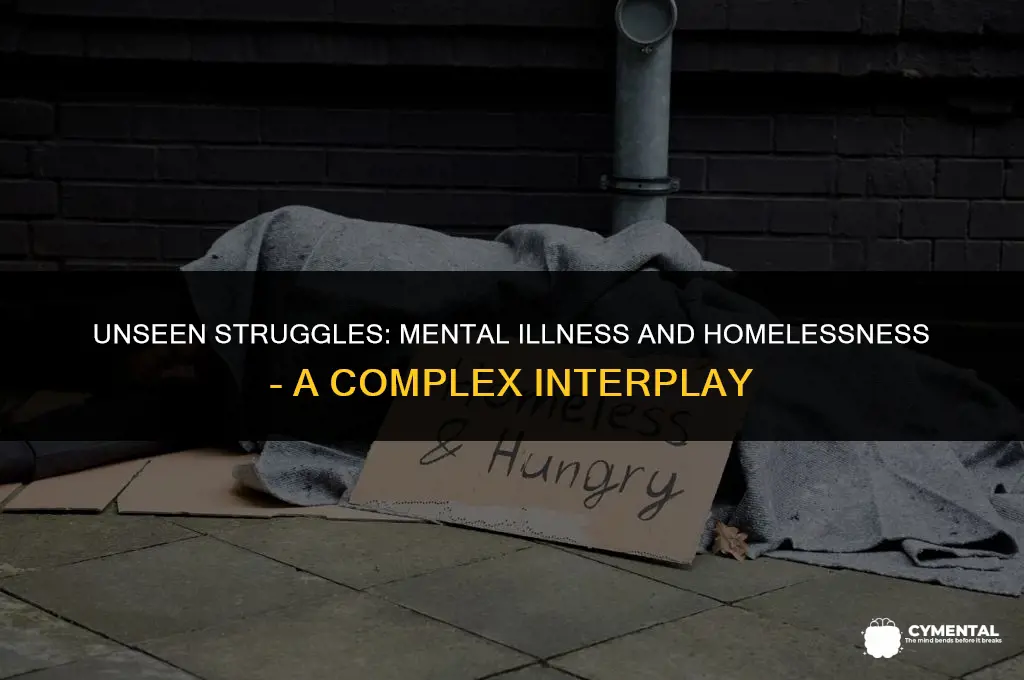
Mental illness in the homeless population is a complex issue influenced by a multitude of factors. One significant contributor is the lack of stable housing, which exacerbates stress and anxiety. Additionally, many homeless individuals face social isolation, leading to depression and other mental health challenges. Substance abuse, often used as a coping mechanism, can also worsen mental health conditions. Furthermore, the constant struggle for basic necessities like food and healthcare can lead to chronic stress, negatively impacting mental well-being. Addressing these underlying issues is crucial in providing effective support and treatment for mental illness among the homeless.
Explore related products


What You'll Learn
- Lack of Access to Healthcare: Many homeless individuals struggle to obtain consistent medical care, exacerbating mental health issues
- Trauma and Abuse: High rates of past trauma and abuse among the homeless population contribute significantly to mental illness
- Substance Abuse: Homelessness often correlates with substance abuse, which can both cause and worsen mental health problems
- Social Isolation: The lack of a supportive social network can lead to increased feelings of loneliness and depression
- Poverty and Stress: The daily stresses of living in poverty, such as finding food and shelter, can contribute to mental illness

Lack of Access to Healthcare: Many homeless individuals struggle to obtain consistent medical care, exacerbating mental health issues
Homeless individuals often face significant barriers in accessing consistent medical care, which can severely exacerbate their mental health issues. One of the primary challenges is the lack of a fixed address, making it difficult for them to register with a primary care physician or maintain regular appointments. This instability in healthcare access can lead to untreated physical ailments, which in turn can worsen mental health conditions. For instance, chronic pain or untreated infections can contribute to increased anxiety and depression.
Moreover, many homeless individuals lack health insurance, further complicating their ability to seek medical attention. Without insurance, the cost of healthcare becomes prohibitive, forcing many to forgo necessary treatments. This financial barrier is particularly detrimental for mental health services, which often require ongoing therapy sessions and medication management. As a result, homeless individuals may only seek help in emergency situations, leading to a cycle of crisis intervention rather than preventive care.
The stigma associated with homelessness also plays a significant role in limiting access to healthcare. Healthcare providers may hold biases or prejudices against homeless individuals, leading to inadequate care or dismissive attitudes. This can create a hostile environment that discourages homeless individuals from seeking help. Additionally, the transient nature of homelessness means that individuals may frequently move between different healthcare systems, leading to fragmented care and a lack of continuity in treatment.
To address these issues, it is crucial to implement targeted interventions that increase access to healthcare for homeless individuals. This could include mobile health clinics that provide services directly to homeless communities, outreach programs that connect homeless individuals with healthcare providers, and policy changes that expand Medicaid coverage to include more mental health services. By improving access to healthcare, we can help mitigate the mental health challenges faced by homeless individuals and provide them with the support they need to improve their overall well-being.
Bullying and Mental Health: Unraveling the Complex Connection and Impact
You may want to see also
Explore related products


Trauma and Abuse: High rates of past trauma and abuse among the homeless population contribute significantly to mental illness
Trauma and abuse are pervasive issues that significantly impact the mental health of the homeless population. Studies have consistently shown that individuals experiencing homelessness are more likely to have a history of trauma, including physical, emotional, and sexual abuse. This heightened exposure to traumatic events can lead to a range of mental health issues, such as post-traumatic stress disorder (PTSD), depression, anxiety, and substance abuse disorders.
One of the primary ways in which trauma and abuse contribute to mental illness in the homeless is through the development of PTSD. PTSD is a chronic condition that can occur after experiencing or witnessing a traumatic event. Symptoms include flashbacks, nightmares, severe anxiety, and uncontrollable thoughts about the event. For the homeless, these symptoms can be particularly debilitating, as they often lack access to safe and stable environments that could help mitigate their distress.
Furthermore, the stress of living in poverty and the constant struggle for basic necessities can exacerbate the mental health effects of past trauma. This ongoing stress can lead to increased levels of cortisol, a hormone associated with stress, which can further impair cognitive function and emotional regulation. As a result, individuals may find it difficult to cope with their symptoms and may turn to substances as a means of self-medication, leading to the development of substance abuse disorders.
Addressing the mental health needs of the homeless population requires a comprehensive approach that takes into account the complex interplay between trauma, abuse, and poverty. Effective interventions should focus on providing safe and stable housing, access to mental health services, and support for substance abuse recovery. Additionally, efforts to prevent trauma and abuse, such as education and awareness campaigns, can help reduce the prevalence of mental illness among the homeless in the long term.
In conclusion, the high rates of past trauma and abuse among the homeless population are a critical factor contributing to mental illness. By understanding the unique challenges faced by this population and implementing targeted interventions, we can work towards improving their mental health outcomes and overall quality of life.
Rising Mental Health Challenges: Uncovering the Surge in Global Struggles
You may want to see also
Explore related products




Substance Abuse: Homelessness often correlates with substance abuse, which can both cause and worsen mental health problems
Substance abuse is a pervasive issue among the homeless population, often serving as both a cause and exacerbator of mental health problems. Research indicates that individuals experiencing homelessness are significantly more likely to struggle with substance use disorders compared to the general population. This correlation can be attributed to various factors, including the stress of living without stable housing, the lack of access to mental health services, and the prevalence of trauma among homeless individuals.
The relationship between substance abuse and mental health is complex and bidirectional. Substance use can precipitate mental health issues by altering brain chemistry and function, leading to conditions such as depression, anxiety, and psychosis. Conversely, mental health problems can drive individuals to use substances as a form of self-medication, providing temporary relief from their symptoms. This cycle can be particularly challenging to break among the homeless, who often face barriers in accessing comprehensive treatment and support services.
Addressing substance abuse among the homeless requires a multifaceted approach that integrates mental health care, social services, and harm reduction strategies. Effective interventions include providing access to detoxification programs, offering medication-assisted treatment for opioid and alcohol use disorders, and implementing evidence-based therapies such as cognitive-behavioral therapy and motivational interviewing. Additionally, harm reduction initiatives, such as needle exchange programs and safe consumption sites, can help mitigate the health risks associated with substance use while connecting individuals to treatment and support services.
In conclusion, substance abuse is a critical issue that contributes significantly to mental illness among the homeless. By understanding the complex interplay between substance use and mental health, and by implementing comprehensive and accessible interventions, we can work towards addressing this pressing public health concern and improving the well-being of homeless individuals.
Navigating Mental Health: Understanding General Appointments and Specialized Care
You may want to see also
Explore related products


$59.95 $89.95


Social Isolation: The lack of a supportive social network can lead to increased feelings of loneliness and depression
Social isolation is a pervasive issue among the homeless population, significantly exacerbating mental health challenges. The absence of a supportive social network can lead to profound feelings of loneliness and depression, which are already prevalent among individuals experiencing homelessness. This lack of social connection can stem from various factors, including the loss of family and friends due to circumstances related to homelessness, such as eviction or relocation.
The impact of social isolation on mental health is multifaceted. Without a support system, individuals may struggle to cope with the daily stresses of homelessness, such as finding shelter, food, and healthcare. This can lead to increased anxiety and depression, as well as a sense of hopelessness and despair. Furthermore, social isolation can hinder access to mental health services, as individuals may lack the encouragement or assistance needed to seek help.
Research has shown that social support plays a crucial role in mitigating the effects of homelessness on mental health. Programs that provide opportunities for social interaction, such as community centers or peer support groups, can help alleviate feelings of loneliness and depression. These initiatives can also empower individuals by fostering a sense of belonging and connection, which are essential for maintaining mental well-being.
In addition to the psychological impact, social isolation can also have physical consequences. Studies have linked loneliness to increased inflammation, higher blood pressure, and a weakened immune system. These physical effects can further compound the health challenges faced by the homeless population, who often have limited access to healthcare and are more susceptible to illness and injury.
Addressing social isolation among the homeless requires a multifaceted approach. In addition to providing opportunities for social interaction, it is essential to address the underlying causes of homelessness, such as affordable housing and access to healthcare. By tackling these systemic issues, we can help create a more supportive environment for individuals experiencing homelessness, thereby reducing the prevalence of social isolation and its detrimental effects on mental health.
Nurturing Mental Wellness: Strategies for a Healthier Mind
You may want to see also
Explore related products

$73.08 $77.99


$14.49 $22.99


Poverty and Stress: The daily stresses of living in poverty, such as finding food and shelter, can contribute to mental illness
The relentless cycle of poverty engenders a myriad of daily stresses that can significantly contribute to mental illness. For individuals experiencing homelessness, the fundamental necessities of life—food, shelter, and safety—become constant sources of anxiety and uncertainty. This perpetual state of insecurity can lead to heightened levels of stress hormones like cortisol, which, over time, can alter brain chemistry and contribute to the development of mental health disorders such as depression and anxiety.
Moreover, the stigma and social isolation associated with homelessness exacerbate these mental health challenges. Being ostracized by society can lead to a profound sense of loneliness and worthlessness, further eroding an individual's mental well-being. The lack of access to adequate healthcare and mental health services compounds these issues, leaving many homeless individuals without the necessary support to manage their mental health effectively.
The daily stresses of living in poverty also impact cognitive functioning. The constant preoccupation with basic survival needs can lead to cognitive overload, making it difficult for individuals to focus on tasks or make decisions. This can result in a diminished ability to problem-solve and plan for the future, perpetuating the cycle of poverty and mental illness.
In addition, the physical environment in which many homeless individuals live can contribute to mental health problems. Exposure to harsh weather conditions, noise pollution, and a lack of privacy can all take a toll on mental well-being. The prevalence of violence and crime in many homeless communities further adds to the sense of insecurity and fear, which can manifest as post-traumatic stress disorder (PTSD) and other trauma-related conditions.
Addressing the mental health needs of homeless individuals requires a multifaceted approach that includes providing access to stable housing, nutritious food, and comprehensive healthcare. Equally important is the need to address the social determinants of health, such as stigma and social isolation, through community engagement and support programs. By tackling these underlying issues, we can begin to break the cycle of poverty and mental illness that affects so many vulnerable individuals.
Understanding Mental Health Struggles: Causes, Triggers, and Early Warning Signs
You may want to see also
Frequently asked questions
The primary factors contributing to mental illness in the homeless population include lack of access to mental health services, substance abuse, trauma, and social isolation.
Substance abuse can exacerbate mental health issues among the homeless by leading to addiction, which can further impair cognitive function and emotional stability. It can also increase the risk of developing other mental health disorders.
Trauma, such as physical or emotional abuse, can significantly contribute to the development of mental illness in the homeless. Experiencing trauma can lead to conditions like post-traumatic stress disorder (PTSD), anxiety, and depression.
Social isolation can worsen mental health issues in the homeless by depriving them of social support networks and meaningful human connections. This lack of social interaction can lead to increased feelings of loneliness, depression, and anxiety.
Addressing mental health issues in the homeless population requires a multifaceted approach, including increasing access to mental health services, providing substance abuse treatment, creating supportive housing programs, and fostering community engagement to reduce social isolation.