Madison Cole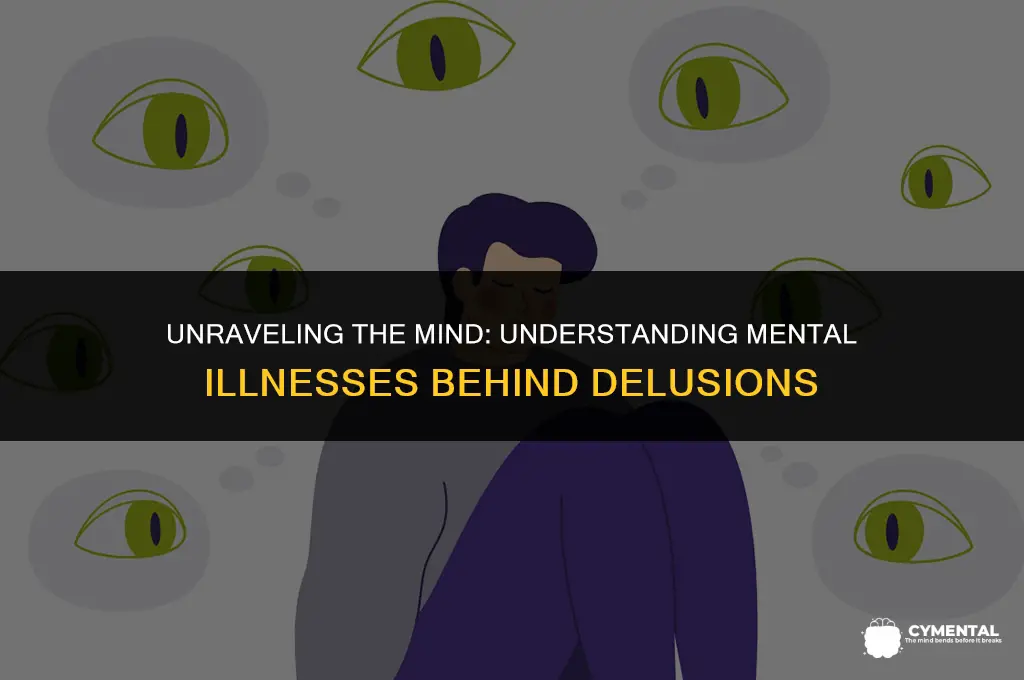
Delusions are a common symptom of several mental illnesses, characterized by firmly held beliefs that are not based in reality. These beliefs can be bizarre or plausible, and they often persist despite evidence to the contrary. Some of the primary mental illnesses that can cause delusions include schizophrenia, schizoaffective disorder, and bipolar disorder. Schizophrenia is perhaps the most well-known disorder associated with delusions, often involving beliefs of persecution, grandeur, or mind control. Schizoaffective disorder combines symptoms of schizophrenia with those of a mood disorder, such as depression or mania, and can also include delusional thinking. Bipolar disorder, particularly during manic episodes, can lead to delusions of grandeur or other unrealistic beliefs. Understanding the underlying causes and mechanisms of these delusions is crucial for effective treatment and management of these mental health conditions.
| Characteristics | Values |
|---|---|
| Illnesses | Schizophrenia, Bipolar Disorder, Major Depressive Disorder, Psychotic Depression, Brief Psychotic Disorder, Delusional Disorder, Shared Psychotic Disorder |
| Symptoms | Delusions, Hallucinations, Disorganized Thinking, Disorganized Behavior, Flat Affect, Social Withdrawal, Lack of Insight |
| Causes | Genetic Predisposition, Environmental Factors, Brain Chemistry Imbalances, Trauma, Substance Abuse, Sleep Deprivation |
| Diagnosis | Clinical Interviews, Psychological Assessments, Medical History Review, Physical Examinations, Lab Tests, Imaging Studies |
| Treatment | Antipsychotic Medications, Psychotherapy, Cognitive Behavioral Therapy, Family Therapy, Social Skills Training, Vocational Rehabilitation |
| Prognosis | Varies by Illness, Early Treatment Improves Outcomes, Chronic Conditions Require Ongoing Management, Relapses May Occur |
| Complications | Suicidal Thoughts, Self-Harm, Aggressive Behavior, Social Isolation, Impaired Functioning, Co-occurring Disorders |
| Prevention | Early Intervention, Stress Management, Healthy Lifestyle Choices, Avoiding Substance Abuse, Maintaining Social Connections |
Explore related products


$32.99 $32.99



What You'll Learn
- Schizophrenia: A chronic disorder characterized by delusions, hallucinations, and disorganized thinking
- Bipolar Disorder: Manic-depressive illness that may include delusional symptoms during manic or depressive episodes
- Psychotic Depression: A severe form of depression accompanied by delusions or hallucinations
- Schizoaffective Disorder: A condition combining symptoms of schizophrenia and a mood disorder, often with delusions
- Delusional Disorder: A mental illness where a person has persistent, non-bizarre delusions without other psychotic symptoms

Schizophrenia: A chronic disorder characterized by delusions, hallucinations, and disorganized thinking
Schizophrenia is a complex and chronic mental disorder that significantly impacts an individual's perception of reality. It is characterized by a combination of symptoms, including delusions, hallucinations, and disorganized thinking. Delusions are false beliefs that are firmly held despite clear evidence to the contrary. These can range from paranoid delusions, where the individual believes they are being persecuted or spied on, to grandiose delusions, where they may believe they have special powers or are of great importance.
Hallucinations are another key feature of schizophrenia, involving sensory experiences that are not based in reality. These can manifest in various forms, such as auditory hallucinations (hearing voices or sounds that are not present) or visual hallucinations (seeing things that are not there). Disorganized thinking, also known as cognitive disorganization, is evident in the way individuals with schizophrenia may struggle to maintain a coherent train of thought, leading to difficulties in communication and problem-solving.
The exact cause of schizophrenia is not fully understood, but it is believed to involve a combination of genetic, environmental, and neurochemical factors. Research suggests that abnormalities in brain structure and function, particularly in the areas responsible for perception and cognition, play a significant role in the development of the disorder. Additionally, certain environmental stressors, such as trauma or substance abuse, may trigger or exacerbate symptoms in susceptible individuals.
Diagnosing schizophrenia typically involves a comprehensive evaluation by a mental health professional, who will assess the presence and severity of symptoms, as well as the individual's medical and psychiatric history. Treatment for schizophrenia often includes a combination of antipsychotic medications, which can help to reduce the intensity of symptoms, and various forms of psychotherapy, aimed at improving coping skills and enhancing overall functioning.
Living with schizophrenia can be challenging, both for the individual affected and their loved ones. However, with appropriate treatment and support, many people with schizophrenia are able to manage their symptoms and lead fulfilling lives. It is essential to approach the disorder with empathy and understanding, recognizing that the experiences of those with schizophrenia are very real to them, even if they do not align with external reality.
Unraveling the Link: Mental Illness and Pathological Lying Explored
You may want to see also
Explore related products


Bipolar Disorder: Manic-depressive illness that may include delusional symptoms during manic or depressive episodes
Bipolar disorder, a complex psychiatric condition, is characterized by extreme mood swings that oscillate between mania and depression. These episodes can be so severe that they disrupt daily life and, in some cases, lead to the manifestation of delusions. Delusions are firmly held beliefs that are not based in reality, and they can occur during either manic or depressive phases of bipolar disorder.
During manic episodes, individuals with bipolar disorder may experience grandiose delusions, where they believe they have special powers, are on a mission, or possess vast wealth. These delusions are often accompanied by increased energy, reduced need for sleep, and impulsive behaviors. In contrast, depressive episodes may give rise to persecutory or nihilistic delusions, where the individual believes they are being watched, followed, or that life is meaningless.
The presence of delusions in bipolar disorder can significantly impact treatment and prognosis. Antipsychotic medications are often used to manage delusional symptoms, in conjunction with mood stabilizers and antidepressants. Psychotherapy, particularly cognitive-behavioral therapy, can also be beneficial in helping individuals recognize and cope with their delusions.
It is crucial for healthcare providers to carefully monitor patients with bipolar disorder for the emergence of delusions, as they can be a sign of a severe exacerbation of the condition. Early intervention and comprehensive treatment planning are essential to manage symptoms effectively and improve the individual's quality of life.
Exploring the Link: Can Herpes Impact Mental Health?
You may want to see also
Explore related products


$17.99 $17.99


Psychotic Depression: A severe form of depression accompanied by delusions or hallucinations
Psychotic depression is a severe and debilitating form of depression that is characterized by the presence of delusions or hallucinations. These symptoms can significantly impair an individual's ability to function in daily life and can lead to a range of negative outcomes, including social isolation, unemployment, and even suicide. It is estimated that approximately 1 in 5 individuals with depression will experience psychotic symptoms at some point during their illness.
Delusions in psychotic depression can take many forms, including persecutory delusions, where the individual believes they are being persecuted or threatened by others, and grandiose delusions, where the individual believes they have special powers or abilities. Hallucinations can also vary in nature, from auditory hallucinations, where the individual hears voices or sounds that are not present, to visual hallucinations, where the individual sees things that are not there.
The exact cause of psychotic depression is not fully understood, but it is believed to be related to a combination of genetic, environmental, and psychological factors. Research has shown that individuals with a family history of psychosis or depression are at increased risk of developing psychotic depression. Additionally, stressful life events, such as the loss of a loved one or a job, can trigger the onset of psychotic symptoms in vulnerable individuals.
Treatment for psychotic depression typically involves a combination of medication and psychotherapy. Antidepressant medications, such as selective serotonin reuptake inhibitors (SSRIs), are often used to treat the underlying depression, while antipsychotic medications, such as olanzapine or risperidone, are used to manage the psychotic symptoms. Cognitive-behavioral therapy (CBT) and other forms of psychotherapy can also be helpful in addressing the psychological factors that contribute to the development and maintenance of psychotic depression.
It is important to note that psychotic depression is a serious mental illness that requires prompt and effective treatment. If left untreated, the symptoms can worsen and lead to a range of negative outcomes. Therefore, it is essential for individuals who experience symptoms of psychotic depression to seek help from a mental health professional as soon as possible. With the right treatment and support, it is possible for individuals with psychotic depression to recover and lead fulfilling lives.
Unraveling the Mind: Mental Illnesses Behind Paranoia
You may want to see also
Explore related products


Schizoaffective Disorder: A condition combining symptoms of schizophrenia and a mood disorder, often with delusions
Schizoaffective disorder is a complex mental health condition that merges the symptom profiles of schizophrenia and a mood disorder, such as bipolar disorder or major depressive disorder. This unique combination often results in the presence of delusions, which are fixed, false beliefs that are not based in reality. Delusions can vary widely in content, ranging from grandiose beliefs about one's own abilities or importance to paranoid beliefs that others are plotting against them.
One of the key challenges in diagnosing schizoaffective disorder is distinguishing it from other mental illnesses that may also present with delusions, such as schizophrenia or bipolar disorder with psychotic features. A thorough clinical evaluation is necessary to assess the full range of symptoms and determine the most appropriate diagnosis. This process typically involves a detailed psychiatric history, mental status examination, and often input from family members or other caregivers who can provide additional context about the individual's symptoms and behavior.
Treatment for schizoaffective disorder usually involves a combination of medication and psychotherapy. Antipsychotic medications are often used to manage the psychotic symptoms, such as delusions and hallucinations, while mood stabilizers or antidepressants may be prescribed to address the mood disorder component. Cognitive-behavioral therapy (CBT) and other forms of psychotherapy can also be beneficial in helping individuals with schizoaffective disorder to better understand and manage their symptoms, improve their coping skills, and enhance their overall quality of life.
It is important to note that schizoaffective disorder can have a significant impact on an individual's daily functioning and interpersonal relationships. The presence of delusions can lead to difficulties in maintaining employment, managing finances, or engaging in social activities. Family members and caregivers often play a crucial role in supporting individuals with schizoaffective disorder, providing emotional support, assistance with daily tasks, and helping to monitor symptoms and medication adherence.
In conclusion, schizoaffective disorder is a complex and challenging mental health condition that requires a comprehensive approach to diagnosis and treatment. By combining symptoms of schizophrenia and a mood disorder, it can present unique difficulties for both individuals and their caregivers. However, with appropriate treatment and support, many individuals with schizoaffective disorder are able to lead fulfilling and productive lives.
Exploring the Link: UTIs and Mental Confusion
You may want to see also
Explore related products


Delusional Disorder: A mental illness where a person has persistent, non-bizarre delusions without other psychotic symptoms
Delusional disorder is a distinct mental illness characterized by the presence of persistent, non-bizarre delusions in the absence of other psychotic symptoms. Unlike schizophrenia, where delusions are often accompanied by hallucinations and disorganized thinking, individuals with delusional disorder maintain a relatively normal level of functioning and do not exhibit other hallmark symptoms of psychosis.
Delusions in this disorder can take many forms, such as persecutory, grandiose, or erotomanic. Persecutory delusions involve the belief that one is being harmed or persecuted by others, while grandiose delusions center around an inflated sense of self-importance or abilities. Erotomanic delusions, on the other hand, involve the belief that a specific person, often of higher social status, is in love with the individual.
It is crucial to differentiate delusional disorder from other conditions that may present with similar symptoms. For instance, while delusions can occur in the context of schizophrenia, bipolar disorder, or major depressive disorder with psychotic features, the key distinction lies in the absence of other psychotic symptoms in delusional disorder. Additionally, delusional disorder is not the same as a personality disorder, such as paranoid personality disorder, which is characterized by a pervasive pattern of suspiciousness and mistrust rather than specific delusional beliefs.
Diagnosis of delusional disorder typically involves a thorough psychiatric evaluation, including a detailed history of the individual's symptoms, social and family background, and any relevant medical or psychological conditions. Treatment for delusional disorder often involves a combination of antipsychotic medications and psychotherapy, with the goal of reducing the intensity and impact of the delusional beliefs on the individual's daily life.
In conclusion, delusional disorder is a unique mental illness that presents with persistent, non-bizarre delusions without other psychotic symptoms. It is essential to recognize and differentiate this condition from other psychiatric disorders to ensure appropriate diagnosis and treatment.
Unraveling the Roots of Mental Fatigue: A Comprehensive Guide
You may want to see also
Frequently asked questions
Delusions are a symptom commonly associated with several mental illnesses, including schizophrenia, bipolar disorder, major depressive disorder with psychotic features, and schizoaffective disorder.
In individuals with schizophrenia, delusions often manifest as fixed, false beliefs that are not based in reality. These can include paranoid delusions, where the person believes they are being persecuted or spied on, or grandiose delusions, where they believe they have special powers or importance.
No, delusions and hallucinations are distinct symptoms. Delusions are false beliefs that are firmly held despite evidence to the contrary, while hallucinations are sensory experiences that occur without an external stimulus, such as hearing voices or seeing things that are not there.
Yes, delusions can often be effectively managed with a combination of antipsychotic medications and psychotherapy. Treatment aims to reduce the intensity and frequency of delusional symptoms and improve the individual's overall quality of life.