Noah Parker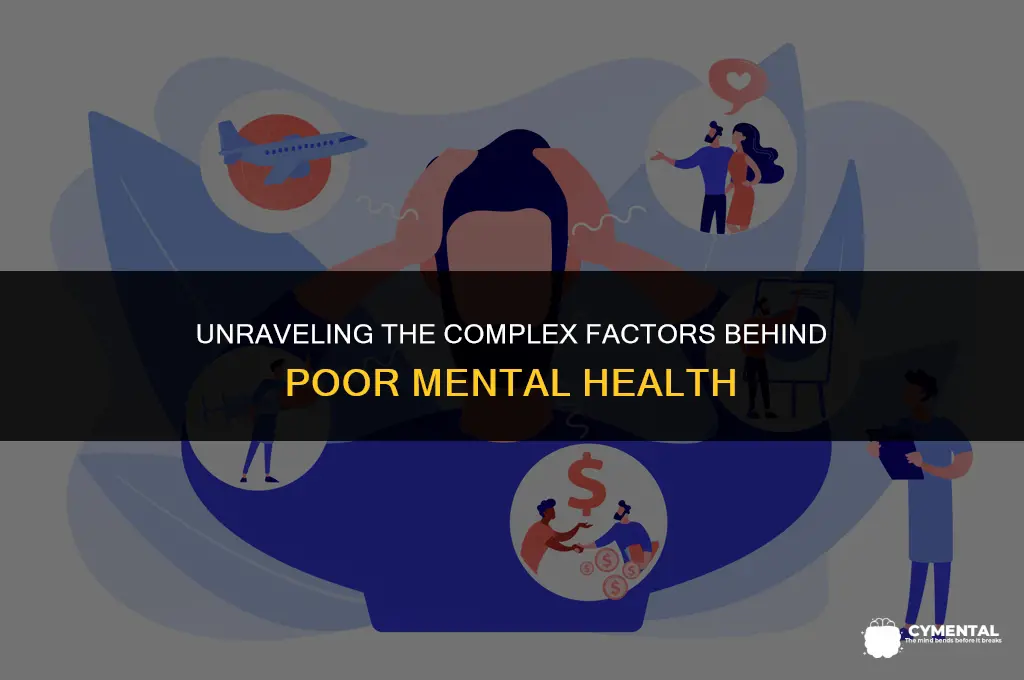
Bad mental health can be caused by a variety of factors, including biological, psychological, and environmental influences. Biological factors such as genetics, brain chemistry, and hormonal imbalances can contribute to mental health issues. Psychological factors like trauma, abuse, and neglect can also lead to poor mental health. Environmental factors such as social isolation, poverty, and discrimination can further exacerbate mental health problems. Additionally, lifestyle choices like substance abuse, poor diet, and lack of exercise can negatively impact mental well-being. Understanding these causes is crucial in developing effective strategies for prevention and treatment of mental health disorders.
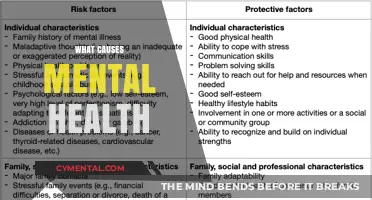
| Characteristics | Values |
|---|---|
| Genetic factors | Family history of mental health issues, genetic predispositions |
| Environmental factors | Trauma, abuse, neglect, stressful life events, social isolation |
| Brain chemistry | Imbalances in neurotransmitters like serotonin, dopamine, and norepinephrine |
| Personality traits | Perfectionism, low self-esteem, pessimism, introversion |
| Lifestyle choices | Unhealthy diet, lack of exercise, substance abuse, poor sleep habits |
| Medical conditions | Chronic illnesses, hormonal imbalances, neurological disorders |
| Social and cultural factors | Discrimination, poverty, unemployment, cultural norms and values |
| Psychological factors | Cognitive distortions, negative thought patterns, emotional dysregulation |
| Childhood experiences | Adverse childhood experiences (ACEs), attachment issues |
| Current life stressors | Work-related stress, relationship problems, financial difficulties |
Explore related products


$17.6 $24.99


What You'll Learn
- Genetic Factors: Family history of mental illness can increase risk
- Environmental Stressors: Traumatic events, abuse, neglect, and chronic stress
- Brain Chemistry: Imbalances in neurotransmitters like serotonin and dopamine
- Lifestyle Choices: Poor diet, lack of exercise, substance abuse, and social isolation
- Medical Conditions: Chronic illnesses, hormonal imbalances, and sleep disorders

Genetic Factors: Family history of mental illness can increase risk
Genetic predisposition plays a significant role in the development of mental health disorders. Research indicates that individuals with a family history of mental illness are at a higher risk of experiencing similar conditions. This increased risk is attributed to the inheritance of genetic variations that affect brain function, neurotransmitter regulation, and stress response systems.
Studies have shown that certain mental health conditions, such as schizophrenia, bipolar disorder, and major depressive disorder, have a strong genetic component. For instance, if one identical twin has schizophrenia, the other twin has a 40-50% chance of developing the disorder as well. This highlights the substantial influence of genetics on mental health outcomes.
Moreover, genetic factors can interact with environmental stressors to exacerbate the risk of mental illness. For example, a person with a genetic predisposition to depression may be more susceptible to developing the condition if they experience chronic stress, trauma, or social isolation. This interplay between genetics and environment underscores the complex nature of mental health disorders.
It is essential to recognize that having a family history of mental illness does not guarantee the development of a mental health condition. Many individuals with genetic risk factors do not manifest symptoms, and protective factors such as a supportive environment, healthy coping mechanisms, and access to mental health care can mitigate the risk.
In conclusion, understanding the role of genetic factors in mental health can inform prevention strategies, early intervention, and personalized treatment approaches. By acknowledging the genetic component of mental illness, individuals and healthcare providers can work together to develop comprehensive plans that address both biological and environmental contributors to mental health outcomes.
Unraveling the Triggers: A Deep Dive into Mental Breakdowns
You may want to see also
Explore related products


Environmental Stressors: Traumatic events, abuse, neglect, and chronic stress
Traumatic events, abuse, neglect, and chronic stress are significant environmental stressors that can profoundly impact mental health. These stressors can alter the brain's structure and function, leading to a range of mental health disorders. For instance, traumatic events such as natural disasters, accidents, or violent crimes can trigger post-traumatic stress disorder (PTSD), characterized by flashbacks, nightmares, and severe anxiety. Abuse and neglect, particularly in childhood, can lead to long-term emotional and psychological scars, increasing the risk of depression, anxiety, and substance abuse disorders. Chronic stress, often resulting from ongoing challenges like financial difficulties, relationship problems, or health issues, can wear down the body's stress response system, leading to mental health issues such as burnout and chronic fatigue syndrome.
The impact of these environmental stressors can be particularly severe in vulnerable populations, such as children, the elderly, and those with pre-existing mental health conditions. Children who experience abuse or neglect are more likely to develop behavioral problems, learning difficulties, and emotional disorders. The elderly may be more susceptible to the effects of chronic stress due to age-related declines in physical and cognitive function. Individuals with pre-existing mental health conditions may find their symptoms exacerbated by additional environmental stressors.
Addressing environmental stressors is crucial for maintaining good mental health. This can involve a range of strategies, from individual coping mechanisms to broader societal interventions. For example, individuals can practice stress management techniques such as meditation, exercise, and deep breathing to help mitigate the effects of chronic stress. Seeking support from friends, family, or mental health professionals can also be beneficial in dealing with traumatic events or abuse. At a societal level, policies aimed at reducing poverty, improving access to healthcare, and promoting safe and supportive environments can help to alleviate environmental stressors and improve overall mental health outcomes.
In conclusion, environmental stressors such as traumatic events, abuse, neglect, and chronic stress play a significant role in the development of mental health issues. Understanding the impact of these stressors and implementing effective coping strategies and societal interventions can help to mitigate their effects and promote better mental health outcomes.
Exploring the Complex Link: Drugs and Mental Illness
You may want to see also
Brain Chemistry: Imbalances in neurotransmitters like serotonin and dopamine
Neurotransmitters such as serotonin and dopamine play crucial roles in regulating mood, motivation, and various cognitive functions. Imbalances in these chemicals can significantly impact mental health, leading to conditions like depression, anxiety, and bipolar disorder. For instance, low levels of serotonin are often associated with depression, as this neurotransmitter helps to regulate mood, appetite, and sleep patterns. Similarly, dopamine imbalances can affect motivation, reward perception, and movement control, contributing to disorders like Parkinson's disease and schizophrenia.
Several factors can disrupt the balance of these neurotransmitters, including genetic predispositions, environmental stressors, and lifestyle choices. Traumatic events, chronic stress, and substance abuse can also alter brain chemistry, exacerbating mental health issues. Furthermore, nutritional deficiencies, particularly in essential amino acids like tryptophan and tyrosine, can impede the synthesis of serotonin and dopamine, respectively.
Diagnosing neurotransmitter imbalances typically involves a combination of medical history evaluation, psychological assessments, and laboratory tests. Treatment approaches may include pharmacotherapy, such as selective serotonin reuptake inhibitors (SSRIs) or dopamine agonists, as well as psychotherapy and lifestyle modifications. In some cases, alternative therapies like transcranial magnetic stimulation (TMS) or ketamine infusion may be considered.
It is essential to address neurotransmitter imbalances comprehensively, considering both biological and psychosocial factors. By understanding the intricate interplay between brain chemistry and mental health, individuals can seek appropriate interventions and improve their overall well-being.
Unraveling the Complex Web: What Causes Mental Health Issues?
You may want to see also
Lifestyle Choices: Poor diet, lack of exercise, substance abuse, and social isolation
A poor diet can significantly impact mental health. Consuming high amounts of processed foods, sugars, and unhealthy fats can lead to fluctuations in blood sugar levels, which in turn can affect mood and energy levels. Additionally, a lack of essential nutrients such as omega-3 fatty acids, vitamin D, and B vitamins can contribute to symptoms of depression and anxiety. To improve mental health through diet, it is recommended to focus on whole, nutrient-dense foods such as fruits, vegetables, lean proteins, and whole grains.
Regular physical activity is crucial for maintaining good mental health. Exercise has been shown to reduce symptoms of depression and anxiety by releasing endorphins, which are natural mood elevators. It also helps to improve sleep quality and increase self-esteem. Aim for at least 30 minutes of moderate-intensity exercise most days of the week, such as brisk walking, cycling, or swimming. Incorporating strength training and flexibility exercises can also be beneficial.
Substance abuse can have a detrimental effect on mental health. The use of drugs and alcohol can lead to changes in brain chemistry, contributing to symptoms of depression, anxiety, and psychosis. It can also worsen existing mental health conditions and interfere with the effectiveness of treatments. Seeking professional help and support is essential for overcoming substance abuse and improving mental health.
Social isolation can negatively impact mental health by leading to feelings of loneliness, sadness, and low self-esteem. Human connection and social support are vital for emotional well-being. To combat social isolation, it is important to maintain relationships with friends and family, join social groups or clubs, and engage in community activities. Volunteering can also be a rewarding way to connect with others and improve mental health.
Exploring the Link Between Cannabis Use and Mental Health
You may want to see also
Medical Conditions: Chronic illnesses, hormonal imbalances, and sleep disorders
Chronic illnesses can significantly impact mental health by causing persistent stress, anxiety, and feelings of helplessness. Conditions such as diabetes, heart disease, and chronic pain can lead to depression and a decreased quality of life. The constant management of these illnesses, including medication regimens and lifestyle adjustments, can also contribute to mental health challenges.
Hormonal imbalances, particularly those involving thyroid hormones, estrogen, and testosterone, can affect mood, energy levels, and cognitive function. For example, hypothyroidism can lead to symptoms of depression, while hyperthyroidism may cause anxiety and irritability. Hormonal changes during menopause or andropause can also contribute to mood swings and emotional distress.
Sleep disorders, such as insomnia, sleep apnea, and restless leg syndrome, can disrupt the body's natural sleep-wake cycle, leading to fatigue, irritability, and cognitive impairment. Chronic sleep deprivation has been linked to an increased risk of developing mental health conditions like depression and anxiety. Addressing sleep disorders through behavioral changes, medication, or therapy can help improve mental health outcomes.
It is essential to recognize the interplay between physical and mental health, as treating underlying medical conditions can often lead to improvements in mental well-being. Healthcare providers should consider the potential mental health implications of chronic illnesses, hormonal imbalances, and sleep disorders when developing treatment plans for their patients.
Unraveling the Roots of Mental Fatigue: A Comprehensive Guide
You may want to see also
Frequently asked questions
Common causes of bad mental health include genetic predisposition, environmental stressors, traumatic experiences, substance abuse, and chronic physical health conditions.
Social media can negatively impact mental health by promoting comparison, cyberbullying, and feelings of isolation. Excessive use can also lead to anxiety, depression, and disrupted sleep patterns.
Diet plays a significant role in mental health. Consuming a balanced diet rich in nutrients can help support brain function and reduce symptoms of mental health disorders. Conversely, a diet high in processed foods and sugar can exacerbate mental health issues.
Yes, lack of sleep can significantly affect mental health. Chronic sleep deprivation is linked to increased symptoms of anxiety, depression, and other mental health disorders. It can also impair cognitive function and emotional regulation.