Harper Lewis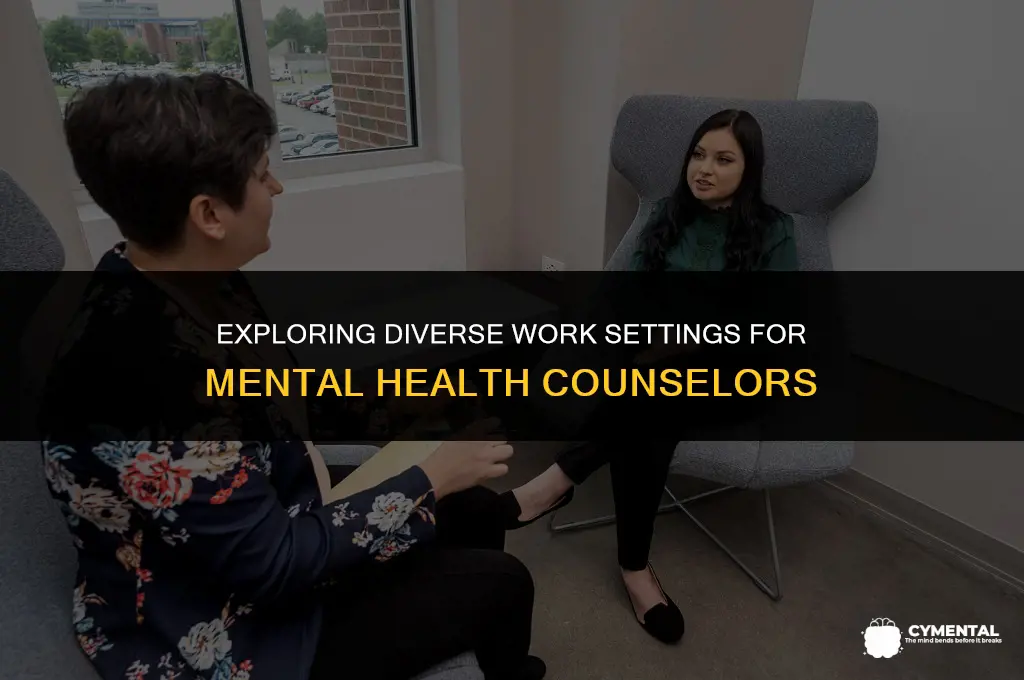
Mental health counselors work in a variety of settings to provide support and guidance to individuals, couples, families, and groups. They can be found in private practices, hospitals, clinics, schools, universities, government agencies, and non-profit organizations. Some counselors specialize in specific areas such as substance abuse, marriage and family therapy, or child and adolescent counseling. The work environment for mental health counselors can vary significantly depending on their area of specialization and the population they serve. For example, a counselor working in a school setting may focus on helping students cope with academic and social pressures, while a counselor in a hospital may provide crisis intervention and support to patients and their families. Regardless of the setting, mental health counselors play a crucial role in promoting mental wellness and helping individuals navigate life's challenges.
Explore related products


What You'll Learn
- Hospitals and Clinics: Mental health counselors provide inpatient and outpatient services in various medical settings
- Private Practice: Many counselors operate their own practices, offering individual, group, and family therapy sessions
- Schools and Universities: Counselors work in educational institutions, supporting students' mental health and academic success
- Community Organizations: Non-profit organizations and community centers employ counselors to serve diverse populations and needs
- Corporate Settings: Some counselors work in corporate environments, promoting employee well-being and productivity

Hospitals and Clinics: Mental health counselors provide inpatient and outpatient services in various medical settings
Mental health counselors play a crucial role in hospitals and clinics, providing essential inpatient and outpatient services. Inpatient services involve working with patients who are admitted to the hospital for mental health treatment, often due to severe symptoms or crises. Counselors in these settings collaborate with a multidisciplinary team, including psychiatrists, nurses, and social workers, to develop and implement individualized treatment plans. They conduct therapy sessions, facilitate group activities, and monitor patients' progress closely.
Outpatient services, on the other hand, cater to individuals who visit the clinic for mental health support without being admitted to the hospital. These services can include individual therapy, group counseling, and family therapy. Mental health counselors in outpatient settings often work with a diverse range of clients, addressing various mental health concerns such as anxiety, depression, and trauma. They provide ongoing support, helping clients develop coping strategies and improve their overall well-being.
In both inpatient and outpatient settings, mental health counselors must be adept at crisis intervention, risk assessment, and referral. They need to stay updated on the latest evidence-based practices and be able to adapt their approach to meet the unique needs of each patient or client. Effective communication and collaboration skills are also essential, as counselors often work closely with other healthcare professionals to ensure comprehensive care.
The work environment in hospitals and clinics can be fast-paced and emotionally demanding. Counselors must be able to manage their own stress and maintain professional boundaries while providing empathetic support to their patients. They also need to be knowledgeable about relevant laws and regulations, such as HIPAA, to ensure the confidentiality and privacy of patient information.
Overall, mental health counselors in hospitals and clinics make a significant impact on the lives of individuals struggling with mental health issues. Their dedication and expertise help patients navigate challenging times and work towards recovery and improved mental health outcomes.
Empowering Voices: The Impact of Advocacy in Mental Health
You may want to see also
Explore related products


Private Practice: Many counselors operate their own practices, offering individual, group, and family therapy sessions
Operating a private practice allows mental health counselors to provide personalized care in a more intimate setting. This arrangement often leads to stronger therapeutic relationships, as clients can receive consistent support from the same counselor over an extended period. Private practices can be particularly beneficial for individuals seeking specialized therapy, such as cognitive-behavioral therapy (CBT) or dialectical behavior therapy (DBT), as counselors can tailor their approach to meet the unique needs of each client.
One of the key advantages of private practice is the flexibility it offers both counselors and clients. Counselors can set their own schedules, allowing them to accommodate clients at times that are most convenient for them. This flexibility can be especially important for individuals with busy lives or those who may have difficulty attending sessions during traditional business hours. Additionally, private practices often have shorter wait times for appointments, enabling clients to receive timely support when they need it most.
Private practices also provide a more private and confidential environment for therapy. Clients may feel more comfortable discussing sensitive issues in a setting that is separate from their workplace or other public spaces. This confidentiality can be crucial for individuals dealing with stigmatized conditions or those who are concerned about their privacy being compromised.
However, private practice also comes with its own set of challenges. Counselors must be responsible for managing their own administrative tasks, such as billing, scheduling, and record-keeping. This can be time-consuming and may require additional training or resources. Furthermore, private practices may not be as accessible to individuals with limited financial resources, as they often do not accept insurance or offer sliding scale fees.
Despite these challenges, private practice remains a popular option for mental health counselors seeking to provide high-quality, personalized care to their clients. By offering individual, group, and family therapy sessions, counselors can address a wide range of mental health concerns and support clients in achieving their therapeutic goals.
Understanding High Acuity Mental Health: A Comprehensive Guide
You may want to see also
Explore related products


Schools and Universities: Counselors work in educational institutions, supporting students' mental health and academic success
Mental health counselors play a vital role in educational settings, particularly in schools and universities. Their primary function is to support students' mental health and academic success, addressing a wide range of issues that can impact a student's ability to learn and thrive in an academic environment. This support can include individual counseling sessions, group therapy, crisis intervention, and referrals to external resources when necessary. Counselors also often collaborate with teachers, administrators, and other staff members to create a supportive and inclusive school culture that promotes mental wellness.
One of the unique challenges faced by counselors in educational institutions is the need to balance the demands of academic performance with the emotional and psychological needs of students. This can involve working with students who are struggling with anxiety, depression, or other mental health issues that may be exacerbated by the pressures of schoolwork and exams. Counselors must also be adept at navigating the complex dynamics of school systems, including policies and procedures related to student support and accommodations.
In addition to providing direct support to students, counselors in schools and universities often engage in preventive measures to promote mental health and well-being. This can include developing and implementing programs aimed at reducing stress, improving coping skills, and fostering resilience among students. Counselors may also participate in outreach efforts to raise awareness about mental health issues and reduce stigma, encouraging students to seek help when needed.
The role of mental health counselors in educational institutions is becoming increasingly important, as the prevalence of mental health issues among students continues to rise. According to recent studies, a significant proportion of college students report experiencing symptoms of anxiety and depression, with many citing academic pressures as a contributing factor. In response to this growing need, schools and universities are expanding their counseling services, investing in additional staff and resources to ensure that students have access to the support they need.
In conclusion, mental health counselors in schools and universities play a critical role in supporting students' mental health and academic success. Their work involves a unique blend of direct support, preventive measures, and collaboration with other school staff to create a supportive and inclusive environment. As the demand for mental health services in educational settings continues to grow, the importance of these professionals cannot be overstated.
Understanding Mental Behavioral Health Outpatient Services: A Guide
You may want to see also
Explore related products


Community Organizations: Non-profit organizations and community centers employ counselors to serve diverse populations and needs
Non-profit organizations and community centers play a vital role in providing mental health services to diverse populations. These organizations often employ counselors to address the unique needs of their communities, offering a range of services from individual therapy to group counseling and educational workshops. Counselors working in these settings must be adaptable and culturally sensitive, as they serve clients from various backgrounds and with different challenges.
One of the key benefits of working in community organizations is the opportunity to make a significant impact on the lives of individuals who may not have access to mental health services otherwise. Counselors in these settings often work with underserved populations, such as low-income families, immigrants, and minority groups. They may also collaborate with other community resources, such as schools, churches, and social service agencies, to provide comprehensive support to their clients.
Community organizations often have a strong focus on outreach and education, aiming to reduce the stigma associated with mental health issues and promote overall well-being. Counselors may be involved in organizing events, workshops, and support groups that address specific mental health concerns, such as depression, anxiety, or substance abuse. They may also provide training to community members on topics such as stress management, conflict resolution, and parenting skills.
Working in a community organization can also offer counselors the opportunity for professional growth and development. They may have the chance to work with a diverse range of clients, develop new skills and techniques, and contribute to the development of innovative programs and services. Additionally, many community organizations provide a supportive and collaborative work environment, where counselors can learn from their colleagues and share their expertise.
However, working in community organizations also comes with its challenges. Counselors may face limited resources, high caseloads, and the need to navigate complex funding and reporting requirements. They may also need to be flexible and adaptable, as the needs of their communities can change rapidly. Despite these challenges, many counselors find working in community organizations to be a rewarding and fulfilling career path, as they have the opportunity to make a tangible difference in the lives of their clients and contribute to the overall health and well-being of their communities.
Mindful May: Engaging Activities for Mental Health Awareness Month
You may want to see also
Explore related products


Corporate Settings: Some counselors work in corporate environments, promoting employee well-being and productivity
In the modern corporate landscape, mental health counselors play a pivotal role in fostering a healthy and productive workforce. They are often employed by companies to address the psychological well-being of their employees, recognizing that mental health is as crucial to productivity as physical health. Corporate counselors work within the organization to create a supportive environment that encourages employees to seek help when needed, thereby reducing stigma and promoting overall wellness.
One of the primary responsibilities of corporate counselors is to provide one-on-one counseling sessions to employees. These sessions can help workers manage stress, anxiety, and other mental health issues that may be impacting their job performance. Counselors also conduct group therapy sessions, workshops, and seminars on various topics related to mental health and well-being, such as mindfulness, stress management, and work-life balance.
Moreover, corporate counselors often collaborate with human resources departments to develop and implement mental health policies and programs. They may assist in creating employee assistance programs (EAPs), which offer confidential counseling services to employees and their families. Counselors may also be involved in training managers and supervisors to recognize signs of mental health issues in their team members and to provide appropriate support and referrals.
The presence of mental health counselors in corporate settings can have a significant positive impact on the organization. By addressing mental health concerns early on, companies can reduce absenteeism, improve employee morale, and enhance overall productivity. Furthermore, investing in mental health services demonstrates a commitment to employee well-being, which can lead to increased job satisfaction and loyalty.
In conclusion, corporate mental health counselors are essential in promoting a culture of wellness within organizations. Their work not only benefits individual employees but also contributes to the success and sustainability of the company as a whole. As awareness of mental health issues continues to grow, the role of corporate counselors is likely to become even more critical in the years to come.
Exploring Outpatient Mental Health Treatment: A Comprehensive Guide
You may want to see also
Frequently asked questions
Mental health counselors work in a variety of settings, including private practices, hospitals, clinics, schools, universities, government agencies, and non-profit organizations.
In schools, mental health counselors provide support to students, helping them manage emotional and psychological challenges, improve academic performance, and develop healthy relationships.
Yes, mental health counselors may specialize in areas such as substance abuse counseling, child and adolescent counseling, marriage and family therapy, or trauma counseling, among others.
Requirements vary by location, but typically include a master's degree in counseling or a related field, supervised clinical experience, and passing a licensing exam.