Madison Cole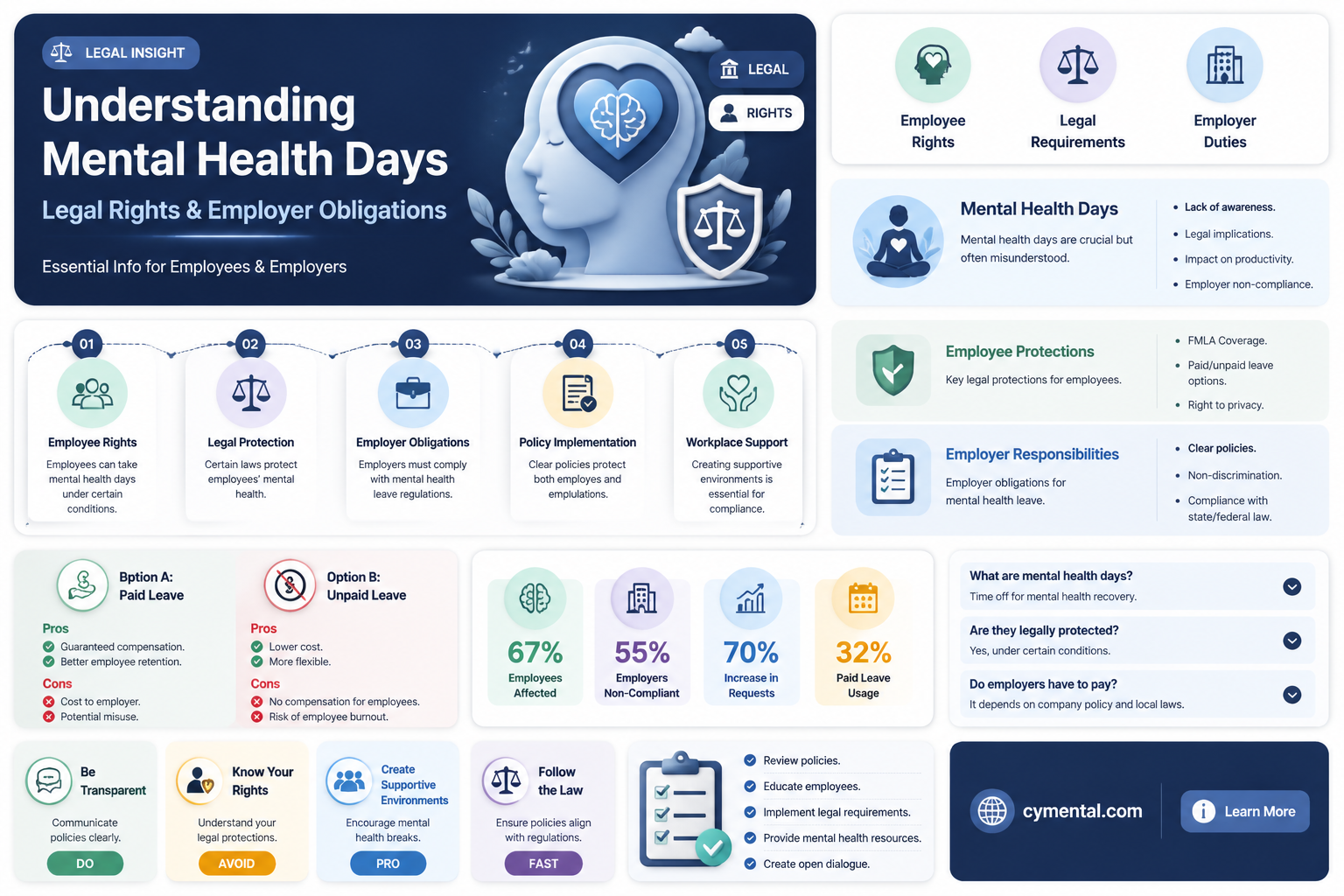
Mental health days have become an increasingly recognized and accepted aspect of workplace wellness and employee benefits. As awareness about mental health issues grows, many countries and organizations are implementing policies to support employees' mental wellbeing. This includes providing paid time off specifically designated for mental health reasons. However, the legality and specifics of mental health days vary widely depending on the jurisdiction and the employer's policies. Some countries have mandated mental health days as part of their labor laws, while others leave it to the discretion of individual employers. Understanding the legal framework surrounding mental health days is crucial for both employees and employers to ensure compliance and promote a healthy work environment.
Explore related products



What You'll Learn
- Legal Recognition: Exploring laws and policies acknowledging mental health days as legitimate absences
- Workplace Implementation: Discussing how companies integrate mental health days into their employee benefits
- Eligibility Criteria: Outlining conditions or requirements employees must meet to qualify for mental health days
- Impact on Productivity: Analyzing how mental health days affect overall workplace productivity and employee well-being
- Global Perspectives: Comparing mental health day policies across different countries and cultures

Legal Recognition: Exploring laws and policies acknowledging mental health days as legitimate absences
In the realm of labor laws and employee rights, the recognition of mental health days as legitimate absences is a progressive step towards fostering a healthier work environment. Various countries and jurisdictions have begun to enact policies that acknowledge the importance of mental well-being, allowing employees to take time off without fear of repercussions. For instance, in Canada, the Canada Labour Code has been amended to include mental health as a reason for taking a leave of absence, reflecting a growing understanding of mental health issues in the workplace.
The implementation of such laws often involves a nuanced approach, balancing the needs of employees with the operational requirements of employers. In some cases, mental health days may be integrated into existing sick leave policies, while in others, they may be treated as separate entitlements. The specifics can vary widely, from the number of days allowed to the conditions under which they can be taken. For example, some laws may require a medical certificate or a diagnosis from a mental health professional, while others may adopt a more flexible approach, trusting employees to self-assess their needs.
One of the key challenges in legalizing mental health days is combating the stigma associated with mental illness. By explicitly recognizing mental health as a valid reason for absence, these laws help to normalize discussions around mental well-being and encourage employees to seek support when needed. Moreover, they send a powerful message that mental health is as important as physical health, deserving of the same level of care and consideration.
From an employer's perspective, the introduction of mental health days can have both positive and negative implications. On the one hand, it can lead to increased employee satisfaction, reduced turnover, and improved productivity, as employees are better able to manage their mental health. On the other hand, it may pose challenges in terms of staffing and workload distribution, particularly in industries where absenteeism can have a significant impact on operations. Employers may need to develop strategies to mitigate these effects, such as cross-training staff or implementing flexible work arrangements.
In conclusion, the legal recognition of mental health days represents a significant shift in how society views and addresses mental well-being in the workplace. By providing employees with the right to take time off for mental health reasons, these laws not only support individual health but also contribute to a more compassionate and productive work culture. As more jurisdictions adopt such policies, it is likely that we will see a broader cultural change, with mental health becoming a more integral part of workplace discussions and practices.
Canceling Your Breeze Mental Health Subscription: A Step-by-Step Guide
You may want to see also
Explore related products


Workplace Implementation: Discussing how companies integrate mental health days into their employee benefits
Companies are increasingly recognizing the importance of mental health in the workplace, and one way they are addressing this is by integrating mental health days into their employee benefits packages. This practice not only helps to reduce stigma around mental health issues but also demonstrates a commitment to employee well-being.
Implementing mental health days requires careful consideration of various factors. Firstly, companies need to establish clear policies and guidelines around how these days can be used, ensuring that they are not abused or taken advantage of. This might include setting limits on the number of mental health days available per year, requiring advance notice for taking such days, and providing resources for employees to access mental health support.
Another important aspect of implementation is communication. Companies must effectively communicate the availability and purpose of mental health days to their employees, emphasizing that these days are intended for mental health support and not as an excuse for extended vacations. This can be done through company-wide announcements, training sessions, and regular check-ins with employees.
Furthermore, companies should consider the potential impact of mental health days on productivity and workload distribution. While the long-term benefits of improved mental health can lead to increased productivity, there may be short-term challenges in managing workloads when employees are absent. Companies can mitigate this by cross-training employees, establishing backup plans, and encouraging open communication about workload management.
In conclusion, integrating mental health days into employee benefits packages is a progressive step towards promoting mental well-being in the workplace. By carefully considering the implementation process, companies can ensure that these days are used effectively and responsibly, ultimately benefiting both employees and the organization as a whole.
Innovative Minds: Crafting a Mental Health App for Wellness
You may want to see also
Explore related products




Eligibility Criteria: Outlining conditions or requirements employees must meet to qualify for mental health days
To qualify for mental health days, employees typically need to meet specific eligibility criteria set by their employer or governing labor laws. These criteria often include a minimum period of employment, such as six months or a year, to ensure that new hires have sufficient time to acclimate to their roles before taking time off for mental health reasons. Additionally, employees may need to provide documentation from a healthcare professional confirming their need for mental health days. This documentation could include a diagnosis, a treatment plan, or a recommendation for time off to manage mental health symptoms.
Some employers may also require employees to exhaust other leave options, such as sick leave or vacation time, before granting mental health days. This policy can help to ensure that mental health days are used as a last resort and that employees are not taking advantage of the benefit. However, it can also create barriers to accessing mental health care, as employees may be reluctant to use their limited leave options for mental health reasons.
Eligibility criteria may also vary depending on the size of the employer. Smaller businesses may have more flexible policies due to their limited resources, while larger corporations may have more stringent requirements to manage the impact of mental health days on their operations. Furthermore, some industries may have specific regulations or standards that influence the eligibility criteria for mental health days. For example, healthcare workers may have different requirements than office workers due to the nature of their jobs and the potential impact of mental health issues on patient care.
In some cases, eligibility criteria may also be influenced by the employee's role within the organization. Employees in critical positions, such as those in management or with specialized skills, may face different requirements than those in more general roles. This can help to ensure that the organization can maintain its operations and meet its obligations even when key employees are absent.
Overall, the eligibility criteria for mental health days are designed to balance the needs of employees with the operational requirements of the employer. By setting clear conditions and requirements, employers can help to ensure that mental health days are used appropriately and that employees have access to the support they need to manage their mental health.
Pathways to Becoming a Qualified Mental Health Professional
You may want to see also
Explore related products


Impact on Productivity: Analyzing how mental health days affect overall workplace productivity and employee well-being
Recent studies have shown that mental health days can have a significant impact on workplace productivity. By allowing employees to take time off to focus on their mental well-being, companies can reduce the negative effects of presenteeism, where employees are physically present but mentally disengaged. This can lead to increased productivity and efficiency when employees return to work, as they are better equipped to handle tasks and make decisions.
One study found that for every dollar invested in mental health treatment, there is a four-fold return in improved productivity and reduced absenteeism. This suggests that mental health days can be a cost-effective way for companies to improve their bottom line while also supporting their employees' well-being.
However, it's important to note that the impact of mental health days on productivity can vary depending on the company culture and the individual employee. In some cases, mental health days may be seen as a sign of weakness or a lack of commitment, which could lead to stigma and decreased productivity. To mitigate this, companies should work to create a supportive and inclusive culture that encourages employees to take care of their mental health without fear of judgment or repercussions.
Additionally, mental health days should be implemented as part of a broader strategy to support employee well-being. This could include providing access to mental health resources, such as counseling or therapy, and promoting healthy work-life balance practices. By taking a holistic approach to employee well-being, companies can create a more productive and engaged workforce.
In conclusion, mental health days can have a positive impact on workplace productivity and employee well-being, but their effectiveness depends on the company culture and the individual employee. To maximize the benefits of mental health days, companies should work to create a supportive and inclusive culture and implement them as part of a broader strategy to support employee well-being.
Establishing Hope: A Guide to Opening a Mental Health Facility
You may want to see also
Explore related products


Global Perspectives: Comparing mental health day policies across different countries and cultures
Across the globe, the recognition and implementation of mental health days vary significantly, reflecting the diverse cultural, social, and legal landscapes of different countries. While some nations have enshrined mental health days as a legal right, others are still grappling with the concept, often due to differing attitudes towards mental health and work.
In countries like Canada and Australia, mental health days are legally recognized and protected under broader health and safety legislation. Employees are entitled to take time off for mental health reasons without fear of discrimination or termination. This approach underscores a progressive understanding of mental health as an integral part of overall well-being, deserving of the same legal safeguards as physical health.
Contrastingly, in many Asian countries, the legal framework around mental health days is less developed. Cultural stigmas surrounding mental health issues often lead to a reluctance to acknowledge and address them in the workplace. However, there are signs of change, with countries like Japan and South Korea beginning to implement policies that recognize the importance of mental health, albeit in a more limited capacity compared to their Western counterparts.
In Europe, the situation is varied. Some countries, such as Sweden and Germany, have robust mental health policies that include the right to mental health days. These policies are often part of a broader social welfare system that prioritizes employee well-being. In other European nations, the legal recognition of mental health days is still in its infancy, with ongoing debates about the balance between employee rights and employer obligations.
The differences in mental health day policies across countries highlight the need for a nuanced understanding of the cultural and legal contexts in which they operate. While there is a growing global consensus on the importance of mental health, the translation of this awareness into concrete legal rights remains a challenge in many parts of the world. As such, the journey towards universal recognition and implementation of mental health days as a legal right is ongoing, shaped by the unique perspectives and priorities of each nation.
Unveiling the Meaning Behind the Mental Health Ribbon's Color
You may want to see also
Frequently asked questions
No, mental health days are not legally recognized in all countries. The recognition and implementation of mental health days as a legal right vary significantly across different jurisdictions.
As of my last update in June 2024, countries like Canada, Australia, and some European nations have laws or policies in place that require employers to provide mental health days. However, the specifics can vary greatly between countries and even within regions.
The number of mental health days granted per year can vary. Some countries or companies may offer a specific number, such as 5 or 10 days, while others may have more flexible policies that do not specify a limit.
Mental health days are intended to provide employees with time off to focus on their mental well-being. They can be used for self-care, seeking professional help, or simply taking a break from work-related stress.
The notice period for taking mental health days can depend on the employer's policy or the specific laws of the country. Some may require advance notice, while others may allow for more spontaneous use.