Madison Cole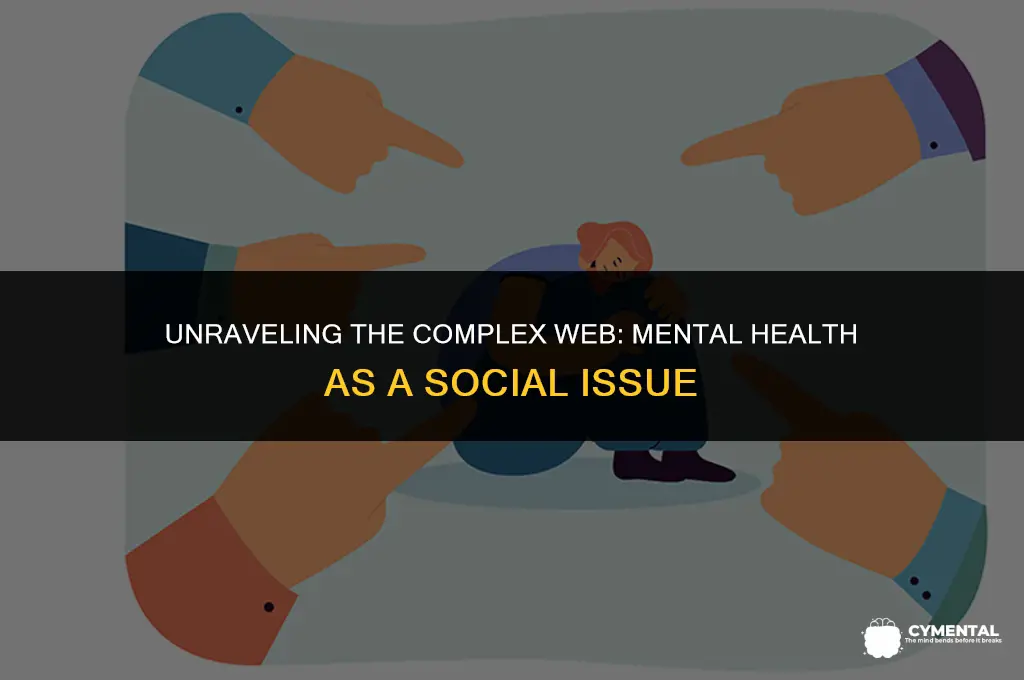
Mental health is a social problem because it affects not only the individual but also the community and society as a whole. Mental health issues can lead to social isolation, stigma, and discrimination, which can further exacerbate the problem. Additionally, mental health issues can have a significant impact on the economy, with lost productivity and increased healthcare costs. Therefore, it is important to address mental health as a social problem and work towards creating a more supportive and inclusive environment for those affected.
Explore related products


What You'll Learn
- Stigma and Discrimination: Negative attitudes and stereotypes hinder open discussions and treatment-seeking behavior
- Access to Care: Limited availability of mental health services, especially in underserved communities, exacerbates the issue
- Social Determinants: Factors like poverty, education, and employment status significantly impact mental well-being
- Media Representation: Inaccurate portrayals of mental illness in media contribute to misconceptions and stigma
- Policy and Funding: Inadequate policies and insufficient funding for mental health initiatives perpetuate the problem

Stigma and Discrimination: Negative attitudes and stereotypes hinder open discussions and treatment-seeking behavior
Stigma and discrimination are pervasive barriers that significantly impact the mental health landscape. Negative attitudes and stereotypes surrounding mental illness create an environment where individuals are hesitant to openly discuss their struggles or seek necessary treatment. This silence perpetuates a cycle of shame and misunderstanding, further exacerbating the social problem of mental health.
One of the primary consequences of stigma is the reluctance of individuals to seek professional help. Fear of being judged, labeled, or ostracized prevents many from reaching out to mental health services, leading to untreated conditions that can worsen over time. This not only affects the individual's well-being but also places a greater burden on society, as untreated mental health issues can lead to increased healthcare costs, reduced productivity, and strained social relationships.
Moreover, stigma and discrimination can manifest in various forms, including media portrayals, language used in everyday conversation, and institutional policies. Sensationalized media coverage often perpetuates harmful stereotypes, while casual use of derogatory terms can contribute to a culture of disrespect and misunderstanding. Institutional policies, such as discriminatory hiring practices or lack of mental health resources in schools and workplaces, can further marginalize individuals struggling with mental health issues.
To combat stigma and discrimination, it is essential to promote education and awareness about mental health. This includes challenging negative stereotypes, encouraging open conversations, and providing accurate information about mental illness and treatment options. Additionally, advocating for policy changes and increased funding for mental health services can help create a more supportive environment for those affected by mental health issues.
In conclusion, stigma and discrimination are significant obstacles in addressing mental health as a social problem. By fostering a culture of understanding, acceptance, and support, we can work towards reducing the negative impact of stigma and improving the lives of individuals struggling with mental health issues.
Understanding Mental Health Clinicians: Their Role in Your Well-being
You may want to see also
Explore related products





Access to Care: Limited availability of mental health services, especially in underserved communities, exacerbates the issue
In many underserved communities, the scarcity of mental health services creates a significant barrier to care. This limited availability not only affects the quality of life for individuals suffering from mental health issues but also perpetuates the cycle of poverty and social inequality. Research indicates that communities with fewer mental health resources experience higher rates of unemployment, homelessness, and incarceration, as untreated mental health conditions can lead to a decline in functioning and an increase in risky behaviors.
One of the primary reasons for the limited availability of mental health services in underserved communities is the shortage of qualified professionals willing to work in these areas. This is often due to a lack of financial incentives, such as lower salaries and limited opportunities for career advancement, as well as the personal challenges associated with working in high-stress, resource-poor environments. Additionally, many mental health professionals are not adequately trained to address the unique cultural and social needs of underserved populations, further exacerbating the issue.
Another factor contributing to the limited availability of mental health services is the stigma associated with mental illness in many underserved communities. This stigma can lead to a lack of awareness about the importance of mental health care and can discourage individuals from seeking help. Furthermore, the cultural norms and values of some communities may prioritize physical health over mental health, leading to a lack of investment in mental health services and resources.
To address the issue of limited access to mental health care in underserved communities, it is essential to implement a multifaceted approach that includes increasing funding for mental health services, providing incentives for mental health professionals to work in underserved areas, and developing culturally competent mental health programs. Additionally, efforts to reduce stigma and increase awareness about the importance of mental health care are crucial in encouraging individuals to seek help and in promoting a more supportive and inclusive community environment.
Exploring Ideation: Understanding Mental Health's Creative Processes
You may want to see also
Explore related products




Social Determinants: Factors like poverty, education, and employment status significantly impact mental well-being
Individuals living in poverty are more likely to experience mental health issues due to the chronic stress of financial insecurity. This stress can lead to anxiety, depression, and even psychosis. Furthermore, poverty often limits access to quality healthcare, including mental health services, exacerbating the problem.
Education is another critical social determinant of mental health. Those with lower levels of education are at a higher risk of developing mental health disorders. This may be due to a lack of knowledge about mental health, limited access to resources, and fewer opportunities for social mobility.
Employment status also plays a significant role in mental well-being. Unemployment can lead to feelings of worthlessness, isolation, and anxiety. Conversely, individuals in precarious or low-paying jobs may experience high levels of stress, which can negatively impact their mental health.
These social determinants are interconnected and can create a cycle of disadvantage. For example, poverty can limit access to education, which in turn can affect employment opportunities, further perpetuating poverty. This cycle can have a devastating impact on mental health, making it difficult for individuals to break free from the cycle and achieve good mental well-being.
Addressing these social determinants is crucial in improving mental health outcomes. This can be done through policies that reduce poverty, increase access to education, and promote stable employment. Additionally, mental health services should be tailored to address the specific needs of individuals facing these social determinants, ensuring that they receive the support they need to achieve good mental health.
Unveiling Men's Mental Health Awareness Month: A Time for Reflection and Support
You may want to see also
Explore related products


Media Representation: Inaccurate portrayals of mental illness in media contribute to misconceptions and stigma
The media plays a significant role in shaping public perception of mental illness. Unfortunately, inaccurate portrayals of mental health conditions in movies, television shows, and news articles often contribute to misconceptions and stigma. These misrepresentations can have serious consequences, as they may lead individuals to avoid seeking help or support due to fear of being judged or misunderstood.
One common issue is the sensationalization of mental illness, where media outlets focus on extreme cases or violent incidents involving individuals with mental health conditions. This creates a distorted view of mental illness, suggesting that those affected are inherently dangerous or unpredictable. In reality, the vast majority of people with mental health issues are not violent and pose no threat to others.
Another problem is the trivialization of mental health struggles, where media representations downplay the severity of conditions like depression or anxiety. This can lead to a lack of empathy and understanding from the general public, making it more difficult for those affected to receive the support they need.
To combat these issues, it's essential to promote accurate and nuanced representations of mental illness in the media. This can be achieved by consulting with mental health professionals and individuals with lived experience when creating content related to mental health. Additionally, media outlets should strive to present a balanced view of mental illness, highlighting both the challenges and the successes of those affected.
Ultimately, changing the way mental illness is portrayed in the media is crucial for reducing stigma and promoting a more compassionate and understanding society. By presenting accurate and empathetic representations of mental health conditions, we can help to create a culture where individuals feel comfortable seeking help and support when they need it.
Unveiling the Symbolic Hues of Mental Health Awareness
You may want to see also
Explore related products


Policy and Funding: Inadequate policies and insufficient funding for mental health initiatives perpetuate the problem
Mental health policies and funding are critical components in addressing the mental health crisis. However, inadequate policies and insufficient funding perpetuate the problem, leaving many individuals without access to necessary care. This issue is multifaceted, involving both governmental and societal factors that contribute to the lack of resources and support for mental health initiatives.
One of the primary reasons for inadequate policies is the stigma surrounding mental health. This stigma leads to a lack of understanding and empathy, resulting in policies that do not prioritize mental health care. Additionally, the complexity of mental health issues makes it challenging for policymakers to create effective solutions. Without a comprehensive understanding of the problem, policies may be misguided or insufficient.
Insufficient funding is another significant barrier to addressing mental health issues. Mental health care is often expensive, and without adequate funding, many individuals cannot afford the treatment they need. This is particularly problematic for marginalized communities, who may already face financial barriers to accessing healthcare. Furthermore, the allocation of funds is often disproportionate, with more resources being directed towards physical health initiatives.
To address these issues, it is essential to advocate for policy changes and increased funding for mental health initiatives. This can be achieved through public awareness campaigns, lobbying efforts, and community engagement. By working together, we can create a society that prioritizes mental health care and provides the necessary resources for individuals to thrive.
Exploring Mental Health Courts: A Compassionate Approach to Justice
You may want to see also
Frequently asked questions
Mental health is considered a social problem because it affects not only the individual but also the community and society as a whole. Issues such as stigma, discrimination, and lack of access to resources contribute to the social implications of mental health.
Stigma surrounding mental health can lead to discrimination, social exclusion, and reluctance to seek help. It perpetuates negative stereotypes and can worsen the mental health outcomes of those affected.
Access to mental health resources, such as therapy, medication, and support services, is crucial in addressing mental health issues. However, disparities in access to these resources can exacerbate mental health problems within certain communities, making it a social issue.
Mental health issues can have a ripple effect on communities and society. They can impact productivity, relationships, and overall well-being. Additionally, untreated mental health conditions can lead to increased healthcare costs and burden on social services.
Addressing mental health as a social problem requires a multifaceted approach. This includes reducing stigma through education and awareness campaigns, increasing access to mental health resources, promoting early intervention, and fostering supportive communities.