Harper Lewis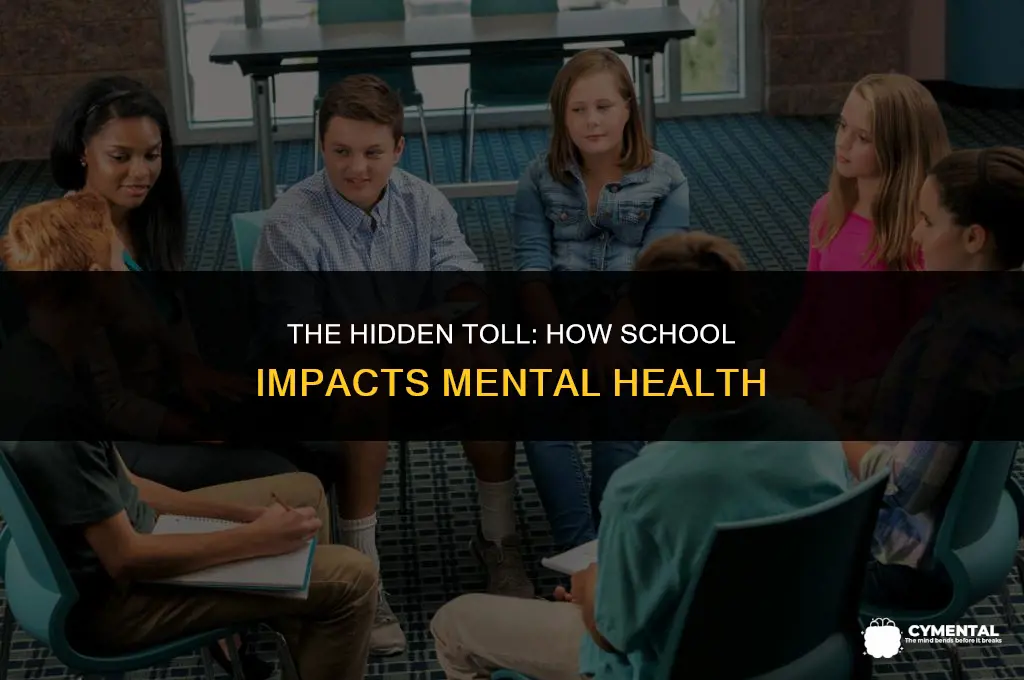
School can have a profound impact on mental health, often in negative ways. The pressure to perform academically, coupled with social stressors and a lack of support, can lead to anxiety, depression, and other mental health issues. Students may feel overwhelmed by the demands of their coursework, leading to feelings of inadequacy and stress. Additionally, the social environment of school can be challenging, with issues such as bullying, peer pressure, and the struggle to fit in contributing to poor mental well-being. Furthermore, schools often lack adequate resources and support systems to address these issues, leaving students to cope on their own. This can have long-lasting effects, as poor mental health in school can set the stage for ongoing struggles in adulthood.
Explore related products


What You'll Learn
- High Academic Pressure: Excessive workload and expectations can lead to stress, anxiety, and burnout among students
- Social Stress: Bullying, peer pressure, and the struggle to fit in can significantly impact students' mental wellbeing
- Lack of Support: Insufficient mental health resources and support systems in schools can exacerbate existing issues
- Unhealthy Competition: The emphasis on grades and performance can foster an environment of competition that undermines cooperation and self-esteem
- Rigid Schedules: The inflexibility of school schedules can disrupt natural sleep patterns and contribute to fatigue and mood disturbances

High Academic Pressure: Excessive workload and expectations can lead to stress, anxiety, and burnout among students
The relentless pursuit of academic excellence can often come at a steep cost to students' mental well-being. High academic pressure, characterized by an excessive workload and unrealistic expectations, is a pervasive issue in educational institutions worldwide. This pressure can manifest in various forms, such as an overwhelming number of assignments, stringent deadlines, and the constant demand for high grades. As a result, students may find themselves trapped in a cycle of stress, anxiety, and burnout, which can have long-lasting detrimental effects on their mental health.
One of the primary sources of academic pressure stems from the competitive nature of modern education. With an increasing emphasis on standardized testing and academic performance, schools and universities often prioritize results over the well-being of their students. This creates an environment where students feel compelled to push themselves to the limit, sacrificing their mental health in the process. Furthermore, the rise of social media and the constant comparison it fosters can exacerbate feelings of inadequacy and pressure to succeed, as students are bombarded with images and messages of their peers' achievements.
The impact of high academic pressure on students' mental health can be severe and far-reaching. Chronic stress can lead to a range of physical and emotional symptoms, including headaches, sleep disturbances, and changes in appetite. Anxiety can manifest as excessive worry, restlessness, and difficulty concentrating, while burnout can result in feelings of exhaustion, cynicism, and detachment from one's studies. These mental health issues can not only affect students' academic performance but also their overall quality of life, relationships, and long-term well-being.
To mitigate the effects of high academic pressure, it is essential for educational institutions to adopt a more holistic approach to education. This may involve reducing the workload, providing more flexible deadlines, and offering support services such as counseling and mental health resources. Additionally, fostering a culture of self-care and promoting healthy coping mechanisms can help students better manage the pressures of academic life. By prioritizing students' mental health and well-being, schools and universities can create a more supportive and sustainable learning environment.
Prioritizing Well-being: How to Explain Leaving a Job for Mental Health Reasons
You may want to see also
Explore related products


Social Stress: Bullying, peer pressure, and the struggle to fit in can significantly impact students' mental wellbeing
Bullying, peer pressure, and the struggle to fit in are pervasive issues that can significantly impact students' mental wellbeing. These forms of social stress are particularly insidious because they often occur in environments where students are supposed to feel safe and supported, such as schools. The effects of bullying can be long-lasting, leading to anxiety, depression, and even suicidal thoughts. Peer pressure, on the other hand, can force students to engage in behaviors they are uncomfortable with, leading to feelings of guilt and shame. The struggle to fit in can result in social isolation, which can exacerbate feelings of loneliness and low self-esteem.
One of the reasons why social stress is so detrimental to mental health is that it can create a sense of helplessness. Students who are bullied or pressured by their peers may feel like they have no control over their situation, which can lead to a downward spiral of negative emotions. Furthermore, social stress can interfere with students' ability to focus and learn, leading to academic problems that can further exacerbate their mental health issues.
To address social stress, schools need to take a proactive approach. This can include implementing anti-bullying programs, providing counseling services, and creating safe spaces where students can express themselves without fear of judgment. Parents can also play a role by talking to their children about their experiences and providing support and guidance. Ultimately, addressing social stress requires a concerted effort from all stakeholders, including students, parents, teachers, and administrators.
In conclusion, social stress is a serious issue that can have a significant impact on students' mental wellbeing. By understanding the causes and effects of social stress, and by taking proactive steps to address it, we can create a safer and more supportive environment for all students.
Empowering Voices: A Guide to Advocating for Mental Health
You may want to see also
Explore related products


Lack of Support: Insufficient mental health resources and support systems in schools can exacerbate existing issues
Schools are often the first line of defense in identifying and addressing mental health issues in young people. However, a lack of adequate mental health resources and support systems can turn this critical environment into a source of stress and exacerbation for existing problems. This is particularly concerning given the prevalence of mental health issues among students, with studies showing that one in five children and adolescents experience a mental disorder each year.
The shortage of school counselors, psychologists, and social workers means that students may not have access to the professional help they need. This can lead to a range of negative outcomes, including increased anxiety, depression, and even suicidal ideation. Furthermore, without proper support, students may struggle to develop the coping mechanisms and resilience needed to navigate the challenges of adolescence and beyond.
In addition to the lack of professional staff, many schools also fail to provide adequate training for teachers and other school personnel on how to recognize and respond to mental health issues. This can result in students being overlooked or misunderstood, further exacerbating their struggles. Moreover, the stigma surrounding mental health can prevent students from seeking help, even when it is available.
To address these issues, schools must prioritize the allocation of resources towards mental health support. This includes hiring more mental health professionals, providing training for staff, and implementing programs that promote mental wellness and reduce stigma. By taking these steps, schools can create a more supportive environment that fosters the well-being of all students.
Launching Your Mental Health Consulting Business: A Comprehensive Guide
You may want to see also
Explore related products


Unhealthy Competition: The emphasis on grades and performance can foster an environment of competition that undermines cooperation and self-esteem
The relentless pursuit of high grades and stellar performance in schools can inadvertently cultivate a toxic competitive atmosphere. This environment often pits students against one another, fostering a sense of rivalry rather than camaraderie. Such unhealthy competition can have severe repercussions on students' mental well-being, as it may lead to increased stress, anxiety, and a diminished sense of self-worth.
One of the primary drivers of this unhealthy competition is the grading system itself. When grades are used as the sole measure of success, students may feel compelled to outperform their peers to secure top marks. This can result in a cutthroat culture where collaboration is undervalued, and students are discouraged from helping one another. Furthermore, the pressure to maintain a high GPA can lead to a fear of failure, causing students to avoid taking risks or exploring new interests that might not yield immediate academic rewards.
Social media also plays a significant role in exacerbating this competitive environment. Platforms like Instagram and Facebook often showcase the achievements of others, creating a constant barrage of comparisons. Students may feel inadequate when they see their peers posting about their academic successes, leading to feelings of envy and a heightened sense of competition. This perpetual comparison can erode self-esteem and contribute to a negative self-image.
To mitigate the harmful effects of unhealthy competition, schools can implement strategies that promote cooperation and self-esteem. For instance, educators can encourage group projects and collaborative learning activities that reward teamwork and mutual support. Additionally, schools can adopt a more holistic approach to assessment, recognizing and valuing diverse skills and talents beyond just academic performance. By fostering an environment that celebrates individual growth and collective achievement, schools can help students develop a healthier mindset towards competition and improve their overall mental health.
Exploring the Role of Clinical Mental Health Counselors: A Comprehensive Guide
You may want to see also
Explore related products


Rigid Schedules: The inflexibility of school schedules can disrupt natural sleep patterns and contribute to fatigue and mood disturbances
The rigid schedules imposed by schools can significantly disrupt the natural sleep patterns of students. Research indicates that adolescents require 8-10 hours of sleep per night for optimal health and cognitive function. However, early school start times and the pressure to complete homework and extracurricular activities often result in students getting far less sleep than they need. This chronic sleep deprivation can lead to a range of negative outcomes, including fatigue, irritability, and difficulty concentrating.
Furthermore, the inflexibility of school schedules can exacerbate mood disturbances in students. The transition from middle to high school, for example, often involves a shift to an earlier start time, which can be particularly challenging for adolescents whose circadian rhythms are already shifting later. This misalignment between the school schedule and the student's natural sleep-wake cycle can contribute to the development of mood disorders such as depression and anxiety.
In addition to the direct impact on sleep and mood, rigid school schedules can also lead to unhealthy coping mechanisms. Students who are struggling to manage their time may resort to caffeine or other stimulants to stay awake and focused, which can further disrupt their sleep patterns and contribute to a cycle of fatigue and stress. Moreover, the lack of flexibility in school schedules can make it difficult for students to engage in physical activity or spend time with friends and family, both of which are important for maintaining good mental health.
To mitigate these issues, some schools have begun to experiment with later start times and more flexible scheduling options. These changes can help to better align the school day with students' natural sleep patterns, potentially leading to improved sleep quality, mood, and overall well-being. Additionally, educators and parents can work together to help students develop healthy time management skills and prioritize activities that promote mental health and well-being.
In conclusion, the rigid schedules often found in schools can have a significant negative impact on students' mental health, particularly in terms of sleep and mood. By understanding the underlying issues and working to implement more flexible and student-centered scheduling policies, we can help to create a healthier and more supportive learning environment for all students.
Understanding SMI: What It Means in Mental Health Context
You may want to see also
Frequently asked questions
Students often feel overwhelmed by the pressure to perform academically, socially, and extracurricularly. The competitive environment, coupled with high expectations from parents and teachers, can lead to stress, anxiety, and feelings of inadequacy.
The school environment can be a significant contributor to mental health issues due to factors such as bullying, social exclusion, and a lack of support systems. Additionally, the rigid structure and lack of autonomy can exacerbate feelings of stress and anxiety.
Common mental health challenges faced by students include depression, anxiety disorders, eating disorders, and sleep disturbances. These issues can be exacerbated by the demands and pressures of the school environment.
Schools can improve mental health support for students by providing access to counseling services, implementing mental health education programs, and creating a supportive and inclusive school culture. Additionally, reducing academic pressure and promoting work-life balance can help alleviate stress and anxiety.
Parents and teachers play a crucial role in addressing mental health concerns in schools. They can help by being vigilant for signs of mental health issues, providing emotional support, and advocating for policies and programs that promote mental well-being. Collaboration between parents, teachers, and mental health professionals is essential for creating a supportive environment for students.