Caleb Wright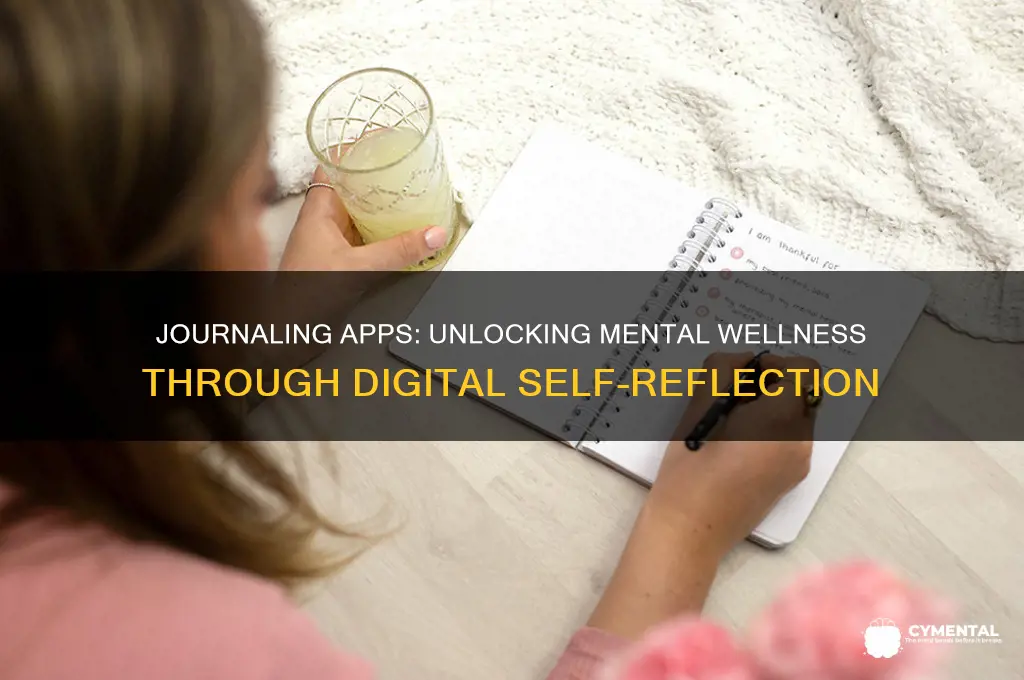
Journaling apps have become invaluable tools for supporting mental health by providing a convenient, accessible, and private space for individuals to express their thoughts and emotions. These apps encourage consistent reflection, helping users track patterns in their moods, identify stressors, and gain clarity on their feelings. With features like prompts, mood tracking, and reminders, journaling apps make it easier to establish a daily practice, fostering self-awareness and emotional regulation. Additionally, the ability to revisit past entries allows users to measure progress and celebrate growth, which can be empowering and motivating. By combining the therapeutic benefits of traditional journaling with modern technology, these apps offer a practical and effective way to manage stress, anxiety, and other mental health challenges.
| Characteristics | Values |
|---|---|
| Stress Reduction | Helps clarify thoughts and feelings, reducing overwhelm and promoting relaxation. |
| Emotional Awareness | Encourages reflection, helping users identify and process emotions effectively. |
| Cognitive Processing | Aids in organizing thoughts, improving problem-solving and decision-making abilities. |
| Mood Tracking | Allows users to monitor mood patterns over time, identifying triggers and trends. |
| Gratitude Practice | Many apps include prompts for gratitude, fostering positivity and reducing negative thoughts. |
| Accessibility | Available anytime, anywhere, making it convenient for consistent use. |
| Privacy and Security | Offers a safe, private space for self-expression without fear of judgment. |
| Structured Prompts | Provides guided questions to overcome writer’s block and deepen self-reflection. |
| Goal Setting and Tracking | Helps users set and monitor personal goals, enhancing motivation and accountability. |
| Digital Organization | Automatically organizes entries by date, tags, or categories for easy retrieval. |
| Reminders and Consistency | Sends reminders to encourage daily journaling habits. |
| Integration with Mental Health Tools | Some apps sync with therapy apps or mental health resources for holistic support. |
| Customizable Experience | Allows personalization of themes, fonts, and layouts to enhance user engagement. |
| Progress Visualization | Offers charts or graphs to visualize emotional or behavioral progress over time. |
| Mindfulness Integration | Includes mindfulness exercises or meditation prompts to complement journaling. |
| Community Support | Some apps offer optional sharing features or communities for peer support. |
| Evidence-Based Practices | Many apps incorporate techniques from CBT, DBT, or positive psychology for effectiveness. |
Explore related products


$9.79 $17.99


What You'll Learn
- Stress Reduction: Writing down thoughts helps clear the mind, reducing anxiety and stress levels effectively
- Emotional Clarity: Journaling organizes emotions, making it easier to understand and process feelings
- Gratitude Practice: Promotes positivity by focusing on daily achievements and things to be thankful for
- Goal Tracking: Helps set and monitor personal goals, fostering a sense of purpose and progress
- Self-Reflection: Encourages introspection, aiding in personal growth and self-awareness over time

Stress Reduction: Writing down thoughts helps clear the mind, reducing anxiety and stress levels effectively
The simple act of transferring thoughts from mind to paper can be a powerful tool for stress relief. When we experience stress, our minds often become cluttered with worries, to-do lists, and negative self-talk, creating a mental whirlwind that feels overwhelming. Journaling acts as a release valve, allowing us to externalize these thoughts and gain a sense of control. Research suggests that expressive writing, particularly about stressful events, can lead to significant reductions in anxiety and improvements in mood. A study published in the *Journal of Experimental Psychology* found that participants who wrote about their thoughts and feelings for 15-20 minutes a day over several sessions experienced lower stress levels compared to those who wrote about superficial topics.
Imagine your mind as a cluttered desk, piled high with papers representing worries, tasks, and emotions. Journaling is like organizing those papers into folders, making the mess more manageable. By writing down stressors, you create distance from them, objectifying abstract worries and making them less intimidating. This process, known as cognitive offloading, frees up mental space and reduces the cognitive burden of keeping track of unresolved thoughts. For instance, a study in *Psychological Science* showed that participants who wrote down upcoming tasks were less likely to dwell on them, leading to better focus and reduced anxiety.
To maximize stress reduction through journaling, consider these practical tips: set aside 10-15 minutes daily, preferably at the same time, to write freely without judgment. Use prompts like "What’s weighing on my mind today?" or "What am I grateful for?" to guide your thoughts. Keep your journal accessible—whether it’s a physical notebook or a digital app—to jot down thoughts whenever stress arises. For those new to journaling, start small; even a few sentences can provide immediate relief. Over time, this practice can become a healthy habit, offering a consistent outlet for stress and fostering emotional resilience.
While journaling is a versatile tool, it’s essential to approach it with awareness. Avoid rehashing negative experiences without reflection, as this can inadvertently amplify stress. Instead, focus on exploring emotions and identifying patterns. For example, if you frequently write about work-related stress, consider actionable steps to address the root cause. Pair journaling with other stress-reduction techniques, such as deep breathing or mindfulness, for a comprehensive approach. Remember, journaling is not about perfection but about process—it’s a safe space to untangle thoughts and reclaim mental clarity.
Incorporating journaling into your routine can be particularly beneficial for individuals aged 18-45, a demographic often facing high-stress levels due to career, relationships, and personal expectations. Apps like Day One or Reflect offer features like mood tracking and prompts, making it easier to maintain consistency. For those who prefer pen and paper, a simple notebook can be equally effective. The key is to find a method that feels natural and sustainable. By committing to this practice, you’re not just writing—you’re actively reshaping your relationship with stress, one entry at a time.
Family Support: Key Strategies for Managing Mental Health Together
You may want to see also
Explore related products


Emotional Clarity: Journaling organizes emotions, making it easier to understand and process feelings
Emotions, when left untangled, can cloud judgment and exacerbate stress. Journaling acts as a mental decluttering tool, transforming chaotic feelings into structured narratives. By committing emotions to text, individuals create distance from their immediate intensity, allowing for calmer, more objective analysis. This process mirrors cognitive behavioral therapy techniques, where identifying and labeling emotions is the first step toward managing them. For instance, a user might write, “I felt overwhelmed today because of a looming deadline,” which isolates the emotion (overwhelmed) and its trigger (deadline), making both more manageable.
Consider the act of journaling as a form of emotional cartography. Each entry maps the terrain of your inner world, revealing patterns and connections that might otherwise remain hidden. A journaling app enhances this process with features like mood tracking and prompts, which guide users to explore specific emotions in depth. For example, a prompt like, “Describe a recent conflict and how it made you feel,” encourages users to dissect complex emotions such as frustration or hurt. Over time, these entries accumulate into a personal database of emotional responses, enabling users to recognize recurring themes—like anxiety tied to social situations or joy linked to creative pursuits.
However, emotional clarity through journaling isn’t automatic; it requires intentional practice. Start by setting aside 10–15 minutes daily to write freely, without judgment. Use a journaling app’s tagging or categorization feature to label entries by emotion (e.g., “anger,” “gratitude”), which simplifies later reflection. For younger users (teens and young adults), visual aids like emoji-based mood scales can make the process more engaging. Older adults might benefit from voice-to-text options if writing by hand is cumbersome. The key is consistency—regular engagement deepens self-awareness and strengthens the ability to process emotions effectively.
A cautionary note: while journaling fosters clarity, it can sometimes amplify distress if not approached thoughtfully. Avoid rehashing negative experiences without a constructive focus. Instead, pair emotional exploration with problem-solving questions like, “What can I do differently next time?” or “What does this emotion tell me about my needs?” Journaling apps with built-in reflection prompts or guided exercises can help steer users toward actionable insights rather than rumination. For individuals with severe mental health conditions, journaling should complement professional therapy, not replace it.
Ultimately, the power of journaling lies in its ability to transform emotions from abstract, overwhelming forces into tangible, understandable elements of experience. By organizing feelings into coherent narratives, users gain a sense of control and insight that extends beyond the page. A journaling app amplifies this process with tools that streamline reflection and highlight progress. Whether you’re navigating daily stressors or deeper emotional challenges, the practice of journaling offers a pathway to clarity—one entry at a time.
Boost Your Mood: Simple Diet Tips for Better Mental Health
You may want to see also
Explore related products


$7.84 $14.99



Gratitude Practice: Promotes positivity by focusing on daily achievements and things to be thankful for
Gratitude journaling, a cornerstone of many mental health apps, harnesses the power of positive psychology to rewire our brains for contentment. By intentionally recording daily achievements and blessings, no matter how small, we train our minds to scan for the good instead of defaulting to negativity. This practice, backed by research from psychologists like Martin Seligman, has been shown to increase happiness levels by over 25% in just three weeks of consistent use.
Consider this: a 10-minute daily gratitude entry, ideally before bed, can significantly impact your mental landscape. Start by jotting down three specific things you're grateful for, avoiding vague statements like "my family." Instead, try "the way my daughter laughed when we played tag" or "the unexpected compliment from my colleague." Specificity amplifies the emotional connection and deepens the practice's effectiveness.
The beauty of gratitude journaling lies in its accessibility. Unlike complex meditation techniques or expensive therapies, it requires nothing more than a pen and paper (or a journaling app). Apps often enhance the experience with prompts like "What surprised you today?" or "Who made you smile?" These guided questions nudge users beyond surface-level gratitude, encouraging reflection on the richness of everyday life.
For maximum benefit, treat gratitude journaling as a non-negotiable daily habit, like brushing your teeth. Consistency is key to rewiring neural pathways and cultivating a lasting positive outlook. Over time, this practice can become a powerful tool for resilience, helping you navigate challenges with a mindset grounded in appreciation rather than scarcity.
Essential Tools to Support and Enhance Your Mental Well-being
You may want to see also
Explore related products


$8.99 $19.99


Goal Tracking: Helps set and monitor personal goals, fostering a sense of purpose and progress
Goal tracking within journaling apps isn't just about ticking boxes—it's about rewiring your brain for resilience. Every time you set a goal, whether it’s drinking 3 liters of water daily or meditating for 10 minutes, you’re creating a mental contract with yourself. Research in behavioral psychology shows that the act of writing down goals activates the prefrontal cortex, the brain’s planning center, making you 42% more likely to achieve them. Journaling apps amplify this by breaking goals into actionable steps, turning abstract aspirations like “reduce stress” into tangible tasks like “practice deep breathing for 5 minutes daily.” This clarity transforms overwhelm into momentum, a critical shift for mental health.
Consider the difference between vague intentions and tracked progress. A study published in the *Journal of Clinical Psychology* found that individuals who tracked their goals daily reported higher levels of motivation and lower anxiety levels compared to those who didn’t. Journaling apps often use visual tools like progress bars or habit streaks, which tap into the brain’s reward system. For instance, seeing a 7-day streak for “journaling before bed” releases dopamine, reinforcing the behavior. This gamification isn’t just fun—it’s therapeutic, especially for those struggling with motivation due to depression or ADHD.
However, goal tracking isn’t without pitfalls. Overloading your app with too many goals can backfire, leading to burnout or self-criticism. A practical tip: limit yourself to 2–3 key goals at a time, focusing on areas like physical health, emotional well-being, or relationships. For example, if you’re tracking sleep, aim for 7–9 hours nightly, but allow flexibility—life happens. Apps like Daylio or Habitica let you adjust goals without penalizing you, fostering self-compassion instead of rigidity. This balance is crucial, as mental health thrives on progress, not perfection.
The real power of goal tracking lies in its ability to connect daily actions to long-term purpose. For someone recovering from anxiety, tracking “3 gratitude entries weekly” can shift focus from fear to appreciation. Over time, these micro-achievements build a narrative of growth, countering negative self-talk. A 2021 study in *Frontiers in Psychology* highlighted that individuals who reviewed their goal progress monthly experienced a 30% increase in life satisfaction. Journaling apps make this review effortless, often prompting reflections like, “What went well?” or “What can I improve?” This cyclical process—set, track, reflect—turns goals into stepping stones, not burdens.
In practice, start small and specific. If you’re new to journaling, begin with a single goal, like “write 3 sentences daily about my emotions.” Gradually layer in others, such as “walk 5,000 steps” or “call a friend once a week.” The key is consistency, not intensity. Apps like Moodpath even integrate goal tracking with mood monitoring, helping you see correlations—for instance, how regular exercise reduces irritability. Over time, this data becomes a tool for self-discovery, proving that even incremental progress is profound. In a world that glorifies instant results, goal tracking in journaling apps reminds us that mental health is a marathon, not a sprint.
Family Doctors: Your First Line in Mental Health Support?
You may want to see also
Explore related products


Self-Reflection: Encourages introspection, aiding in personal growth and self-awareness over time
Journaling apps serve as modern tools for self-reflection, offering structured prompts and private spaces to explore thoughts and emotions. Unlike traditional notebooks, these apps often include features like mood tracking, guided questions, and progress visualizations, which deepen introspection. For instance, apps like Day One or Reflect provide daily prompts such as, "What surprised you today?" or "What are you grateful for?" These questions nudge users to examine their experiences more closely, fostering a habit of mindful self-inquiry. Over time, this practice becomes a mirror, reflecting patterns, triggers, and growth opportunities that might otherwise remain unnoticed.
The act of self-reflection through journaling apps is not just about recording events but analyzing them. By revisiting entries, users can identify recurring themes—whether it’s stress from work, relationship dynamics, or personal achievements. For example, a user might notice that entries written on Mondays often mention fatigue, prompting them to evaluate their weekend habits or work-life balance. This analytical approach transforms raw emotions into actionable insights, bridging the gap between awareness and change. Studies suggest that consistent self-reflection can rewire neural pathways, enhancing emotional intelligence and decision-making skills.
To maximize the benefits of self-reflection via journaling apps, establish a routine. Dedicate 10–15 minutes daily to write freely, focusing on emotions, challenges, or victories. Use the app’s features strategically: tag entries with emotions to track mood trends, or set reminders to ensure consistency. For deeper introspection, try the "5 Whys" technique—ask "why" repeatedly to uncover the root cause of a thought or behavior. For instance, if you feel anxious, ask, "Why am I anxious? Because of a deadline. Why does the deadline stress me? Because I fear failure. Why do I fear failure?..." This method, paired with an app’s organizational tools, can reveal underlying beliefs shaping your mental health.
A cautionary note: self-reflection can sometimes amplify negative emotions if not balanced with self-compassion. If journaling stirs up distress, incorporate positive psychology techniques like listing three good things that happened each day or writing a letter of forgiveness to yourself. Additionally, avoid over-analyzing every entry; some thoughts are meant to be observed, not dissected. Finally, remember that growth is nonlinear. Celebrate small victories—like recognizing a harmful thought pattern—as milestones in your journey toward self-awareness. With patience and consistency, journaling apps become more than digital diaries; they become catalysts for profound personal transformation.
Are Mental Institutions Truly Helpful? Exploring Their Impact and Effectiveness
You may want to see also
Frequently asked questions
A journaling app helps improve mental health by providing a structured and accessible way to track thoughts, emotions, and experiences. It encourages self-reflection, reduces stress, and promotes mindfulness, allowing users to process their feelings and identify patterns over time.
A: While journaling apps are a valuable tool for self-care and emotional processing, they are not a replacement for professional therapy. They can complement therapy by helping users organize their thoughts and monitor progress, but serious mental health issues require the expertise of a trained therapist.
A: Journaling apps offer features like reminders, mood tracking, and data analysis, making it easier to maintain consistency. They also provide privacy through password protection and portability, allowing users to journal anytime, anywhere, which can enhance their mental health practice.