Harper Lewis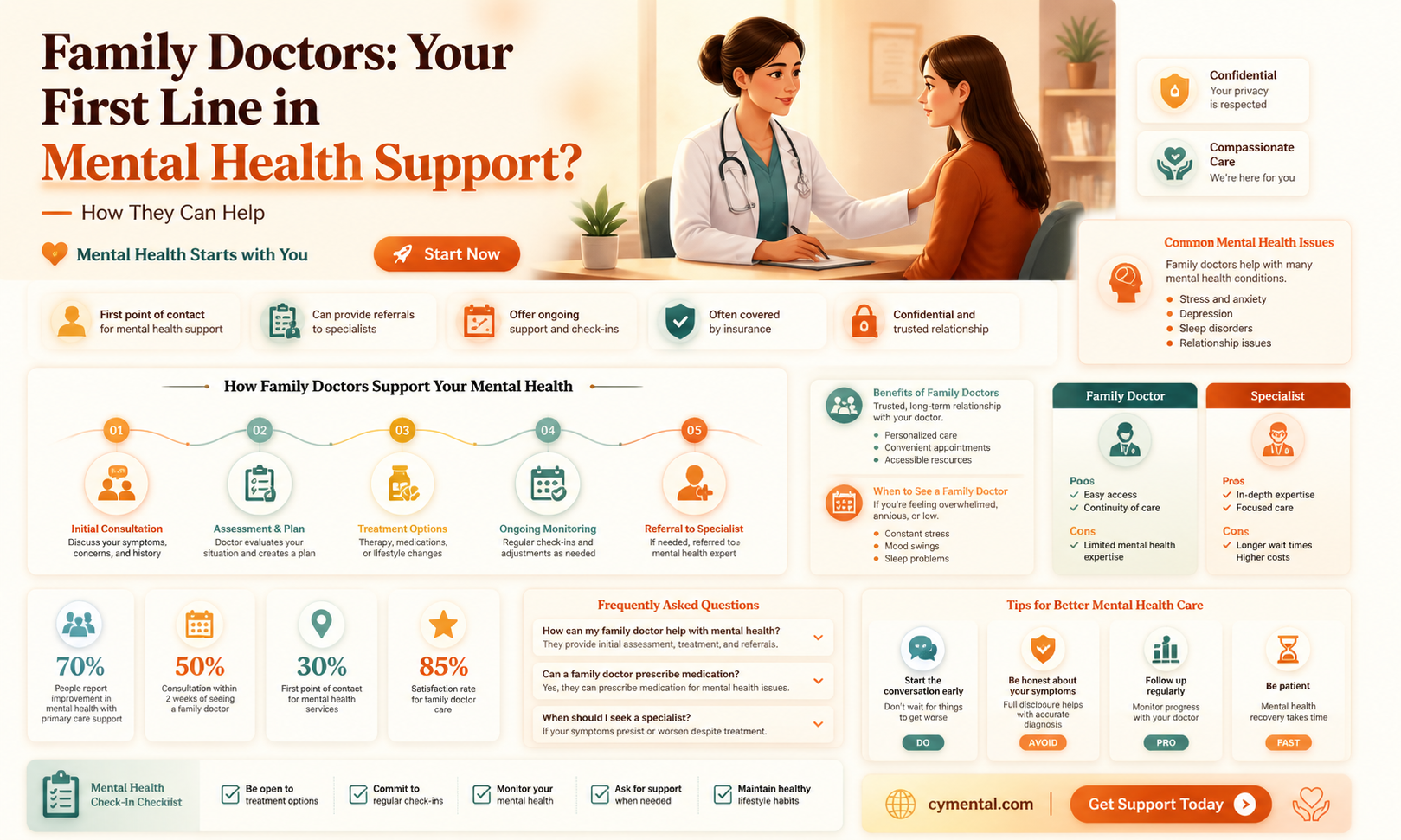
Family doctors, also known as primary care physicians, play a crucial role in addressing mental health concerns, often serving as the first point of contact for individuals seeking help. While they may not specialize in psychiatry or psychology, they are trained to recognize and manage common mental health issues such as anxiety, depression, and stress. Family doctors can provide initial assessments, offer basic treatment options like medication or therapy referrals, and monitor progress over time. Their holistic approach to patient care allows them to consider both physical and mental health factors, ensuring a comprehensive treatment plan. Additionally, they can help reduce the stigma surrounding mental health by creating a safe and familiar environment for patients to discuss their concerns. For more complex or severe cases, they may collaborate with mental health specialists to ensure patients receive the appropriate level of care. Thus, a family doctor can be a valuable resource in supporting mental well-being and guiding individuals toward the right treatment path.
| Characteristics | Values |
|---|---|
| Initial Assessment & Diagnosis | Can screen for common mental health conditions (depression, anxiety, etc.), conduct initial evaluations, and provide basic diagnoses. |
| Treatment for Mild to Moderate Conditions | Can prescribe medication and offer brief counseling for conditions like mild depression, anxiety, and insomnia. |
| Referrals | Refer patients to specialists (psychiatrists, psychologists, therapists) for more complex cases or specialized treatment. |
| Ongoing Management | Monitor symptoms, adjust medications, and provide ongoing support for chronic mental health conditions. |
| Preventive Care | Address lifestyle factors (sleep, diet, exercise) that impact mental health and provide education on stress management and coping strategies. |
| Coordination of Care | Collaborate with other healthcare providers involved in a patient's mental health treatment. |
| Accessibility | Often more readily available and familiar with a patient's overall health history compared to specialists. |
| Stigma Reduction | Can help reduce stigma associated with seeking mental health care by providing a familiar and trusted environment. |
| Limitations | May not have specialized training in complex mental health disorders or psychotherapy techniques. |
Explore related products

$9.79 $28.99


What You'll Learn
- Screening & Diagnosis: Family doctors can identify mental health issues through routine check-ups and assessments
- Initial Treatment: They provide basic therapy, medication, and referrals for mild to moderate conditions
- Ongoing Support: Monitor progress, adjust treatments, and offer continuous care for mental health patients
- Holistic Care: Address physical and mental health together for comprehensive patient well-being
- Referral Network: Connect patients to specialists, therapists, and mental health resources when needed

Screening & Diagnosis: Family doctors can identify mental health issues through routine check-ups and assessments
Family doctors are often the first line of defense in identifying mental health issues, leveraging routine check-ups to screen for early signs of conditions like depression, anxiety, or burnout. These visits, typically focused on physical health, provide a unique opportunity to assess mental well-being through structured questionnaires or casual conversations. For instance, the PHQ-9 (Patient Health Questionnaire-9) is a widely used tool that takes less than 5 minutes to complete and can accurately flag depressive symptoms. By integrating such screenings into annual exams, doctors can catch issues before they escalate, especially in patients who might not otherwise seek mental health care.
Consider the process: during a routine visit, a doctor might ask about sleep patterns, energy levels, or recent life changes. These seemingly innocuous questions can reveal underlying mental health struggles. For example, persistent insomnia or unexplained fatigue could signal depression, while heightened irritability might point to anxiety. The key lies in the doctor’s ability to connect physical symptoms with mental health red flags, a skill honed through training and experience. This proactive approach is particularly crucial for vulnerable populations, such as adolescents or older adults, who may face barriers to accessing specialized care.
However, effective screening requires more than just asking the right questions. Doctors must create a non-judgmental environment where patients feel safe disclosing their struggles. This involves active listening, empathy, and avoiding medical jargon that might alienate patients. For instance, instead of asking, “Are you experiencing depressive episodes?” a doctor might say, “Have you felt persistently down or uninterested in things you used to enjoy?” Such phrasing encourages openness and reduces stigma. Additionally, doctors should be mindful of cultural differences in expressing mental health concerns, as some patients may describe emotional distress through physical symptoms like headaches or stomachaches.
Once a potential issue is identified, the next step is diagnosis, which often involves further assessment and collaboration with specialists. Family doctors can initiate this process by ruling out physical causes for symptoms, such as thyroid dysfunction or vitamin deficiencies, which can mimic mental health disorders. If a mental health condition is suspected, they may refer patients to psychologists or psychiatrists for comprehensive evaluation. In some cases, they can also prescribe initial treatments, such as low-dose antidepressants (e.g., 20 mg of fluoxetine daily) or recommend lifestyle changes like regular exercise and mindfulness practices.
The takeaway is clear: routine check-ups are not just about monitoring blood pressure or cholesterol levels—they are vital opportunities to address mental health. By incorporating screenings into these visits, family doctors can bridge the gap between physical and mental well-being, ensuring holistic care for their patients. Practical tips for patients include preparing a list of symptoms or concerns before the appointment and being honest about emotional struggles, even if they seem unrelated to the visit’s purpose. For doctors, staying updated on screening tools and fostering a compassionate approach can make all the difference in identifying and addressing mental health issues early.
Supporting Mental Health: Practical Ways to Help Loved Ones Heal
You may want to see also
Explore related products


Initial Treatment: They provide basic therapy, medication, and referrals for mild to moderate conditions
Family doctors often serve as the first line of defense in addressing mental health concerns, offering a range of initial treatments for mild to moderate conditions. These primary care providers are equipped to assess symptoms, diagnose common disorders, and implement basic interventions, ensuring patients receive timely and accessible care. For instance, a patient experiencing symptoms of anxiety or depression might first consult their family doctor, who can then determine the appropriate course of action—whether it’s therapy, medication, or a referral to a specialist.
Therapy: Family doctors frequently employ brief, evidence-based therapeutic techniques such as cognitive-behavioral therapy (CBT) or problem-solving therapy. These approaches are particularly effective for conditions like generalized anxiety disorder or mild depression. For example, a doctor might guide a patient through identifying negative thought patterns and replacing them with more constructive ones, often over 4–6 sessions. This form of intervention is practical, time-efficient, and can yield significant improvements in symptoms for many individuals.
Medication: When therapy alone is insufficient, family doctors may prescribe medications tailored to the patient’s condition. For anxiety, selective serotonin reuptake inhibitors (SSRIs) like sertraline (25–50 mg daily) are commonly initiated, while for depression, options like fluoxetine (20 mg daily) may be considered. Dosages are typically started low and adjusted based on response and side effects. It’s crucial for patients to follow their doctor’s instructions closely, as abrupt discontinuation can lead to withdrawal symptoms. For older adults or those with comorbidities, doctors may opt for medications with fewer interactions, such as mirtazapine for depression.
Referrals: While family doctors can manage many cases, they also recognize when a condition requires specialized care. For instance, a patient with severe, treatment-resistant depression or bipolar disorder may be referred to a psychiatrist for advanced interventions like transcranial magnetic stimulation (TMS) or mood stabilizers. Similarly, individuals with complex trauma or personality disorders may benefit from referral to a psychologist or therapist trained in modalities like dialectical behavior therapy (DBT). Timely referrals ensure patients receive the most appropriate level of care, preventing unnecessary suffering or deterioration.
In practice, the role of the family doctor in mental health is both practical and transformative. By offering basic therapy, prescribing medication, and making informed referrals, they bridge the gap between recognizing a problem and accessing effective treatment. Patients should view their family doctor as a trusted ally in their mental health journey, capable of providing immediate relief while navigating the complexities of the healthcare system. This initial treatment phase is often the foundation for long-term recovery and resilience.
Finding Support: Where to Get Mental Health Help and Resources
You may want to see also
Explore related products


Ongoing Support: Monitor progress, adjust treatments, and offer continuous care for mental health patients
Family doctors are often the first point of contact for individuals seeking mental health support, and their role extends far beyond initial diagnosis. Ongoing support is critical in mental health care, as it ensures that patients receive consistent, tailored treatment that evolves with their needs. This continuous care model involves regular monitoring of progress, adjustments to treatment plans, and a commitment to long-term well-being. For instance, a patient prescribed an antidepressant like sertraline may start at 50 mg daily, but their family doctor might increase the dosage to 100 mg after six weeks if symptoms persist, based on follow-up assessments.
Monitoring progress requires a structured approach, often involving symptom checklists, mood diaries, or standardized scales like the PHQ-9 for depression. Family doctors can use these tools during routine visits to objectively measure improvement or deterioration. For example, a patient with anxiety might track their panic attack frequency weekly, allowing the doctor to identify patterns and intervene early if symptoms worsen. This data-driven approach ensures that treatment remains responsive to the patient’s evolving condition, fostering trust and collaboration in the doctor-patient relationship.
Adjusting treatments is a delicate balance that requires both clinical expertise and empathy. For a child with ADHD, a family doctor might start with a low dose of methylphenidate (e.g., 5 mg) and gradually increase it while monitoring side effects like appetite loss or sleep disturbances. Similarly, for patients undergoing therapy, the doctor might recommend switching from cognitive-behavioral therapy to dialectical behavior therapy if emotional regulation remains a challenge. These adjustments should always be made in consultation with the patient, ensuring their preferences and lifestyle are considered.
Continuous care also involves addressing barriers to treatment adherence, such as stigma, cost, or logistical challenges. Family doctors can offer practical solutions, like prescribing generic medications to reduce costs or providing teleconsultations for patients with transportation difficulties. For older adults, simplifying medication regimens or using pill organizers can improve compliance. By proactively managing these obstacles, family doctors ensure that mental health care remains accessible and sustainable over time.
Ultimately, the role of a family doctor in ongoing mental health support is irreplaceable. Their ability to integrate physical and mental health care, coupled with their longitudinal relationship with patients, positions them uniquely to provide holistic, adaptive treatment. While specialists play a vital role in complex cases, family doctors serve as the backbone of mental health care, offering continuity and personalized attention that fosters resilience and recovery. This model of care not only improves outcomes but also humanizes the healthcare experience, treating patients as individuals rather than diagnoses.
Empowering Actions: Simple Ways to Make a Positive Impact Today
You may want to see also
Explore related products


$14.97


Holistic Care: Address physical and mental health together for comprehensive patient well-being
Family doctors are often the first point of contact for patients seeking medical care, and their role extends beyond treating physical ailments. A holistic approach to healthcare recognizes the intricate connection between physical and mental well-being, allowing family physicians to become pivotal in addressing mental health concerns. This integrated perspective is particularly crucial as mental health issues frequently coexist with physical conditions, influencing treatment outcomes and overall patient health.
The Mind-Body Connection: Unraveling the Interdependence
Consider a patient presenting with chronic back pain. A holistic family doctor might explore not only the physical causes but also the potential psychological factors contributing to the pain. Research suggests that stress, anxiety, and depression can exacerbate physical symptoms, creating a cycle of discomfort. For instance, a study published in the *Journal of Psychosomatic Research* found that patients with chronic pain and comorbid depression required higher doses of pain medication and experienced slower recovery rates. By acknowledging this mind-body link, family doctors can devise treatment plans that target both aspects, potentially improving patient outcomes.
Practical Implementation: Strategies for Holistic Care
Implementing holistic care involves a multifaceted approach. Firstly, family doctors should conduct comprehensive assessments, inquiring about mental health history and current emotional well-being during routine check-ups. This can be as simple as incorporating a brief mental health screening tool, such as the Patient Health Questionnaire-9 (PHQ-9) for depression, into annual physical examinations. For patients aged 12 and above, the Generalized Anxiety Disorder 7-item (GAD-7) scale can be a valuable addition to identify anxiety disorders. These tools provide a quick yet effective means of detecting mental health issues, enabling early intervention.
Collaborative Care: A Team Effort
Effective holistic care often requires a collaborative effort. Family doctors can act as coordinators, referring patients to mental health specialists while continuing to manage physical health. This integrated care model has shown promising results, particularly in primary care settings. For instance, a study in the *Journal of the American Board of Family Medicine* reported that collaborative care for depression and diabetes led to significant improvements in both conditions, with patients experiencing better glycemic control and reduced depressive symptoms. Such an approach ensures that patients receive specialized care while maintaining the continuity and trust established with their family physician.
Empowering Patients: Education and Self-Care
Educating patients about the interplay between physical and mental health is empowering. Family doctors can provide resources and guidance on stress management techniques, such as mindfulness meditation or cognitive-behavioral therapy exercises, which patients can practice at home. For instance, teaching deep breathing exercises to a patient with hypertension and anxiety can help lower blood pressure and reduce anxiety symptoms. Additionally, encouraging physical activity, a healthy diet, and adequate sleep as part of a holistic self-care routine can significantly impact both physical and mental health.
In the realm of holistic care, family doctors play a pivotal role in bridging the gap between physical and mental health. By adopting an integrated approach, they can provide comprehensive care, improve treatment adherence, and ultimately enhance patient well-being. This model of care is particularly advantageous in primary care settings, where long-term patient-doctor relationships can facilitate early detection and effective management of both physical and mental health concerns.
Empowering Change: Simple Actions to Make a Positive Impact Today
You may want to see also
Explore related products


Referral Network: Connect patients to specialists, therapists, and mental health resources when needed
Family doctors often serve as the first point of contact for patients experiencing mental health concerns, but their role extends beyond initial assessments. A robust referral network is essential to ensure patients receive specialized care when needed. This network connects individuals to psychiatrists, psychologists, therapists, and community resources, bridging the gap between primary care and mental health services. Without such a system, patients may face delays, misdiagnoses, or inadequate treatment, exacerbating their conditions.
Consider a 35-year-old patient presenting with persistent anxiety and insomnia. A family doctor might prescribe a low-dose SSRI (e.g., 10 mg of escitalopram) and recommend lifestyle changes. However, if symptoms persist after 6–8 weeks, the doctor should refer the patient to a psychiatrist for a detailed evaluation and potential medication adjustments. Simultaneously, a referral to a cognitive-behavioral therapist could provide coping strategies, while a sleep specialist might address underlying sleep disorders. This multi-faceted approach ensures comprehensive care tailored to the patient’s needs.
Building an effective referral network requires collaboration and communication. Family doctors must maintain updated lists of specialists, therapists, and resources, including their areas of expertise, availability, and contact information. For instance, a pediatrician might refer a teenager with depression to a child and adolescent psychiatrist, while an elderly patient with dementia could benefit from a geriatric psychiatrist and local memory clinics. Additionally, integrating digital tools like electronic health records (EHRs) can streamline referrals and track patient progress across providers.
One common challenge is limited access to mental health specialists, particularly in rural or underserved areas. In such cases, family doctors can leverage telemedicine platforms to connect patients with remote therapists or psychiatrists. Community resources, such as support groups, crisis hotlines, and mental health apps (e.g., Calm or Headspace), can also supplement professional care. For example, a patient with mild anxiety might benefit from a mindfulness app while awaiting therapy, reducing symptom severity and improving treatment readiness.
Ultimately, a well-structured referral network empowers family doctors to act as coordinators of care, ensuring patients receive timely, specialized support. By fostering partnerships with mental health professionals and staying informed about available resources, primary care providers can address complex mental health needs effectively. This collaborative approach not only improves patient outcomes but also reduces the burden on overstretched mental health systems, making care more accessible and sustainable for all.
Melodies of Healing: Music's Powerful Impact on Mental Well-Being
You may want to see also
Frequently asked questions
Yes, family doctors can diagnose common mental health conditions like depression, anxiety, and stress-related disorders. They may use assessments, questionnaires, and discussions to evaluate symptoms.
Yes, family doctors can prescribe medications for mental health conditions, such as antidepressants or anti-anxiety drugs. However, complex cases may require referral to a psychiatrist.
Family doctors typically do not provide therapy but can offer brief counseling or advice. For ongoing therapy, they may refer patients to psychologists, counselors, or other mental health professionals.
In emergencies, a family doctor can provide initial support, assess the situation, and refer to emergency services or mental health crisis teams if needed.
Yes, family doctors can coordinate care by monitoring progress, adjusting treatments, and referring to specialists or support services for ongoing mental health management.