Ava Ramirez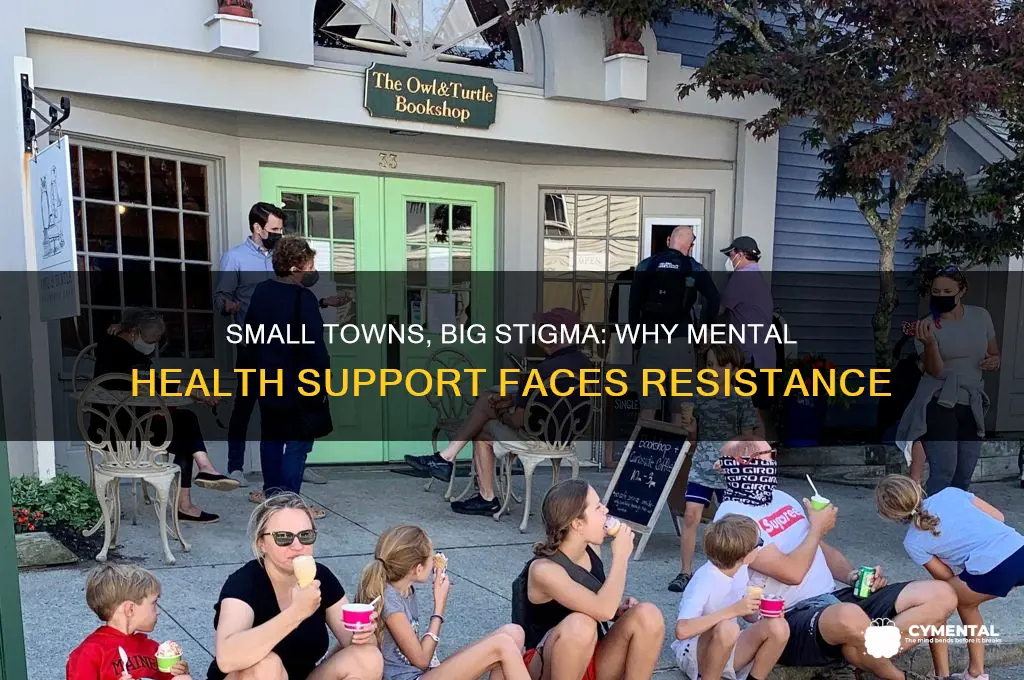
Small towns often face unique challenges when it comes to accepting mental health support, primarily due to deeply ingrained cultural norms, limited resources, and a strong sense of community that can inadvertently stigmatize seeking help. Residents may fear judgment or ostracism, viewing mental health struggles as a sign of weakness rather than a treatable condition. Additionally, the lack of anonymity in tight-knit communities can deter individuals from accessing services, as confidentiality concerns loom large. Economic constraints and inadequate infrastructure further exacerbate the issue, leaving many without access to qualified professionals. These factors collectively create a barrier, making it difficult for mental health initiatives to gain traction and leaving vulnerable individuals without the support they need.
| Characteristics | Values |
|---|---|
| Stigma | Fear of judgment or labeling within tight-knit communities. |
| Lack of Anonymity | Concern about privacy due to everyone knowing each other. |
| Cultural Beliefs | Reliance on self-reliance, faith, or traditional coping mechanisms over professional help. |
| Limited Resources | Few mental health providers, long travel distances, and high costs. |
| Mistrust of Outsiders | Skepticism toward professionals from urban areas or different cultural backgrounds. |
| Lack of Awareness | Limited understanding of mental health issues or available services. |
| Economic Barriers | High costs of treatment, lack of insurance, or financial instability. |
| Fear of Vulnerability | Hesitancy to appear weak or dependent in a community that values strength. |
| Generational Attitudes | Older generations may dismiss mental health concerns as unnecessary or modern. |
| Limited Accessibility | Lack of transportation options or technology for telehealth services. |
| Community Pressure | Expectations to "tough it out" or avoid burdening others with personal struggles. |
| Historical Trauma | Past negative experiences with healthcare systems or authority figures. |
| Normalization of Struggles | Viewing mental health issues as a normal part of life rather than treatable conditions. |
| Political or Religious Influence | Opposition to mental health services based on local political or religious beliefs. |
| Lack of Youth Engagement | Younger generations may leave small towns, reducing advocacy for mental health services. |
Explore related products


What You'll Learn
- Stigma and Shame: Fear of judgment discourages seeking mental health support in tight-knit communities
- Lack of Anonymity: Small towns offer little privacy, deterring individuals from accessing mental health services
- Limited Resources: Few mental health professionals and facilities make help inaccessible for rural residents
- Cultural Misunderstanding: Traditional beliefs often clash with modern mental health practices, leading to rejection
- Economic Barriers: High costs and lack of insurance prevent many from pursuing mental health treatment

Stigma and Shame: Fear of judgment discourages seeking mental health support in tight-knit communities
In small towns, where everyone knows your name, the fear of being labeled as "crazy" or "weak" can be paralyzing. A single rumor or misplaced comment can spread like wildfire, shaping how you're perceived for years. This isn’t just about gossip—it’s about survival in a community where reputation often determines social and economic standing. For instance, a farmer struggling with depression might avoid seeking help because admitting vulnerability could jeopardize partnerships or customer trust. The stigma isn’t just personal; it’s systemic, woven into the fabric of daily life.
Consider the mechanics of stigma in tight-knit communities. When mental health issues are framed as moral failings or personal flaws, seeking help becomes an admission of guilt rather than a step toward healing. This is compounded by the lack of anonymity. In a city, you can attend therapy without bumping into your neighbor in the waiting room. In a small town, even scheduling an appointment feels like a public declaration. Practical steps to mitigate this include advocating for telehealth services, which offer privacy, or creating local support groups where anonymity is respected. However, these solutions require community buy-in, which is often hindered by the very stigma they aim to address.
The role of shame cannot be overstated. Shame thrives in environments where emotional expression is equated with weakness. For example, a teenager experiencing anxiety might internalize the message that "real men don’t cry" or "strong women handle it alone." This internalized shame becomes a barrier to seeking help, as the fear of confirming these stereotypes outweighs the desire for relief. To combat this, community leaders and educators can model vulnerability by sharing their own struggles or normalizing conversations about mental health. Schools, churches, and local organizations can host workshops that reframe mental health as a universal human experience, not a personal failing.
Comparatively, urban areas often benefit from a culture of anonymity and specialized resources, which small towns lack. In cities, mental health campaigns can reach thousands without singling out individuals. In small towns, such campaigns must be hyper-localized and sensitive to the community’s values. For instance, framing mental health care as a form of self-improvement or resilience—aligning with values like hard work and perseverance—can make it more palatable. Additionally, leveraging trusted figures like local doctors, clergy, or sports coaches to endorse mental health initiatives can reduce resistance.
Ultimately, dismantling stigma and shame requires a shift in community norms. This isn’t an overnight process but a gradual one, requiring persistence and empathy. Start with small, actionable steps: organize a mental health awareness event, train local volunteers in crisis intervention, or partner with telehealth providers to offer discounted services. The goal isn’t to erase the tight-knit nature of small towns but to transform it from a barrier into a support system. When communities recognize that seeking help is a sign of strength, not weakness, the fear of judgment begins to lose its grip.
Annual Mental Health Support: How Many Seek Help Each Year?
You may want to see also
Explore related products


Lack of Anonymity: Small towns offer little privacy, deterring individuals from accessing mental health services
In small towns, where everyone knows your name, the concept of anonymity is a luxury rarely afforded. This lack of privacy can significantly impact an individual's willingness to seek mental health support. Imagine a scenario where a person struggling with anxiety or depression must consider the potential consequences of being seen entering a therapist's office. The fear of judgment, gossip, or even discrimination is very real and acts as a powerful deterrent.
The Impact of Being Recognized:
When a community is tightly knit, the chances of encountering familiar faces during a therapy session are high. This recognition can lead to unintended disclosures. For instance, a teenager battling self-harm might avoid seeking help due to the embarrassment of being seen by peers or teachers. The potential for personal struggles to become public knowledge is a genuine concern, especially in places where privacy is limited.
A Comparative Perspective:
Contrast this with urban areas, where anonymity is a given. In cities, individuals can access mental health services without the fear of bumping into someone they know. This privacy encourages more people to seek help, as evidenced by higher therapy attendance rates in metropolitan areas. Small towns, however, present a unique challenge where the very fabric of community connectivity becomes a barrier to personal well-being.
Practical Solutions:
To address this issue, creative solutions are necessary. One approach could be the implementation of teletherapy services, allowing individuals to receive counseling remotely, thus preserving their privacy. Additionally, educating the community about the importance of confidentiality and reducing the stigma around mental health can create a more supportive environment. For instance, local campaigns could emphasize that seeking help is a sign of strength, targeting specific age groups like adolescents and young adults who are more susceptible to peer influence.
A Call for Discretion:
Mental health professionals in small towns should prioritize discretion in their practice. This might include offering flexible appointment times to minimize patient overlap and ensuring waiting areas provide a sense of seclusion. By understanding the unique dynamics of small-town life, healthcare providers can adapt their services to encourage more residents to seek the support they need without fear of losing their privacy. This tailored approach is crucial in bridging the gap between the need for mental health services and the reluctance to access them.
Guiding Your Child Through Mental Clutter: Practical Steps for Clarity
You may want to see also
Explore related products


Limited Resources: Few mental health professionals and facilities make help inaccessible for rural residents
Rural communities often face a stark reality: the nearest psychiatrist might be hours away, and even then, securing an appointment could take months. This scarcity of mental health professionals is a critical barrier to care. In urban areas, residents can typically choose from multiple therapists, psychologists, and psychiatrists within a short commute. Contrast this with rural towns, where a single mental health provider might serve an entire county. The American Psychological Association reports that 85% of non-metropolitan counties have a severe shortage of mental health professionals, leaving residents with limited options for treatment.
Consider the logistical challenges: a farmer in a remote area cannot easily take time off work for a two-hour drive to a therapist’s office, especially if follow-up appointments are required weekly. Even when providers are available, they often lack specialization. A general practitioner might be the only resource for mental health care, despite lacking the training to address complex conditions like PTSD or severe depression. This gap in expertise can lead to misdiagnosis or inadequate treatment, further discouraging rural residents from seeking help.
The lack of facilities compounds the problem. Rural areas rarely have inpatient psychiatric units, crisis stabilization centers, or even outpatient clinics. When a mental health emergency arises, the nearest hospital might be ill-equipped to handle it, forcing families to travel long distances or rely on law enforcement, which is poorly suited to address mental health crises. For example, in Montana, a state with vast rural expanses, there are only 1.5 psychiatrists per 100,000 people, compared to the national average of 17.1. This disparity highlights the systemic neglect of rural mental health infrastructure.
Telehealth has emerged as a potential solution, but it’s not a panacea. While video therapy can bridge the distance gap, it requires reliable internet access, which remains a luxury in many rural areas. According to the FCC, 22.3% of rural Americans lack access to broadband, compared to just 1.5% in urban areas. Even when technology is available, older adults—a significant portion of rural populations—may struggle with digital literacy, making telehealth less accessible. Without addressing these technological and demographic barriers, telehealth remains an incomplete solution.
To improve access, rural communities need targeted investments in mental health infrastructure. This includes recruiting and retaining providers through loan forgiveness programs, competitive salaries, and professional development opportunities. Mobile clinics and community health workers can also fill gaps by bringing services directly to residents. Policymakers must prioritize funding for rural mental health facilities and expand broadband access to support telehealth initiatives. Until these steps are taken, the scarcity of resources will continue to isolate rural residents from the care they need.
Daily Cooking: A Recipe for Improved Mental Well-being?
You may want to see also
Explore related products



Cultural Misunderstanding: Traditional beliefs often clash with modern mental health practices, leading to rejection
In small towns, the clash between traditional beliefs and modern mental health practices often stems from a deep-rooted cultural framework that views emotional struggles through a different lens. For instance, in many rural communities, mental health issues are attributed to spiritual causes, such as possession, curses, or a lack of faith, rather than biological or psychological factors. This perspective can lead to the rejection of professional help in favor of prayer, herbal remedies, or rituals performed by local healers. When a therapist suggests cognitive-behavioral therapy or medication, it may be seen as dismissing centuries-old practices that the community trusts, creating a barrier to acceptance.
Consider the case of a 45-year-old woman in a Midwestern farming community who experiences severe anxiety. Her family insists she attend church more frequently and consult the local pastor, believing her condition is a test of faith. When a visiting mental health worker recommends a 10-week course of selective serotonin reuptake inhibitors (SSRIs) and weekly counseling sessions, the family declines, fearing the medication will interfere with her spiritual journey. This example illustrates how cultural misunderstandings can overshadow evidence-based interventions, leaving individuals without the comprehensive care they need.
To bridge this gap, mental health professionals must adopt a culturally sensitive approach. Start by acknowledging and respecting traditional beliefs rather than dismissing them outright. For example, a therapist might say, "I understand prayer is important to you, and I believe it can complement the strategies we’ll work on together." Incorporating local healers or religious leaders into the treatment plan can also foster trust. In one Appalachian town, a collaboration between a psychiatrist and a respected pastor led to a 30% increase in residents seeking mental health services within six months.
However, this approach requires caution. While integrating traditional practices can build rapport, it’s essential to ensure they do not contradict or undermine evidence-based treatments. For instance, advising a patient to rely solely on herbal remedies for severe depression could delay necessary intervention. Mental health providers should educate themselves on local customs and engage in open dialogue to identify common ground. A practical tip: conduct community workshops that explain mental health concepts in culturally relevant terms, such as framing therapy as a tool for "strengthening the mind" rather than a sign of weakness.
Ultimately, addressing cultural misunderstandings is not about replacing tradition with modernity but about finding harmony between the two. By validating community values while introducing scientifically proven methods, mental health professionals can gradually dismantle resistance. For small towns, this means recognizing that seeking help is not a rejection of heritage but a step toward holistic well-being. The goal is to create a system where a 16-year-old struggling with anxiety can attend both youth group meetings and therapy sessions, supported by a community that understands both are acts of self-care.
Struggling Alone: Why I Didn't Seek Mental Health Support for My Child
You may want to see also
Explore related products



Economic Barriers: High costs and lack of insurance prevent many from pursuing mental health treatment
In small towns, where median household incomes often lag behind urban centers, the financial burden of mental health treatment can be insurmountable. A single therapy session, averaging $100–$200 without insurance, becomes a luxury many cannot afford. For families living paycheck to paycheck, this expense competes with essentials like groceries, utilities, and car repairs. Even when providers offer sliding-scale fees, the reduced cost may still be too high for those earning below the poverty line. This economic reality forces individuals to prioritize survival over mental well-being, creating a cycle of untreated conditions that worsen over time.
Consider the case of rural telehealth services, often touted as a solution to accessibility. While these platforms can reduce travel costs, they require reliable internet and devices, which are not universally available in underserved areas. For instance, in counties with high poverty rates, up to 30% of households lack broadband access. Additionally, telehealth sessions still incur fees, and without insurance coverage, they remain out of reach for many. Even when insurance is available, high deductibles and copays can deter individuals from seeking help. A deductible of $2,000, for example, means a patient must pay out-of-pocket until that amount is met, a daunting prospect for low-income families.
The lack of insurance exacerbates this crisis. In states that have not expanded Medicaid, many low-income adults fall into the "coverage gap," earning too much to qualify for Medicaid but too little to afford private insurance. For mental health care, this gap is particularly devastating, as these services are often excluded from basic plans or require higher out-of-pocket costs. For example, a 45-minute therapy session might be covered at only 50%, leaving the patient responsible for $75 or more per visit. Over months of treatment, these costs accumulate, discouraging continuation even when progress is evident.
To address these barriers, practical steps can be taken. First, community health centers can partner with local employers to offer subsidized mental health benefits, even if minimal. Second, states can allocate funds to expand Medicaid coverage, ensuring more residents qualify for affordable care. Third, providers can train in low-cost interventions, such as group therapy or brief cognitive-behavioral therapy sessions, which reduce individual costs while maintaining effectiveness. Finally, public awareness campaigns can educate residents about available resources, such as free crisis hotlines or low-cost clinics, reducing stigma and increasing utilization.
Without systemic changes, economic barriers will continue to prevent small-town residents from accessing mental health care. The cost of inaction is high: untreated conditions lead to increased hospitalizations, lost productivity, and strained community resources. By addressing affordability through policy reforms, innovative service models, and community partnerships, small towns can begin to dismantle these barriers, ensuring mental health care is a right, not a privilege.
Mental Health Conditions: A Pathway to Medicaid Eligibility in Michigan?
You may want to see also
Frequently asked questions
Small towns may reject mental health help due to stigma, lack of awareness, fear of judgment, or a preference for self-reliance and community-based solutions over professional intervention.
Stigma in small towns often stems from misconceptions about mental health, leading to shame or embarrassment. Residents may fear being labeled or ostracized if they seek help, resulting in avoidance of services.
Yes, many small towns have deep-rooted cultures of self-sufficiency and privacy. Historically, mental health issues were often handled within families or communities, making outsiders or professional help seem unnecessary or intrusive.
Absolutely. Limited access to mental health professionals, funding, and infrastructure in small towns can create skepticism about the effectiveness or availability of services, leading to rejection or disinterest.