Lucas Bennett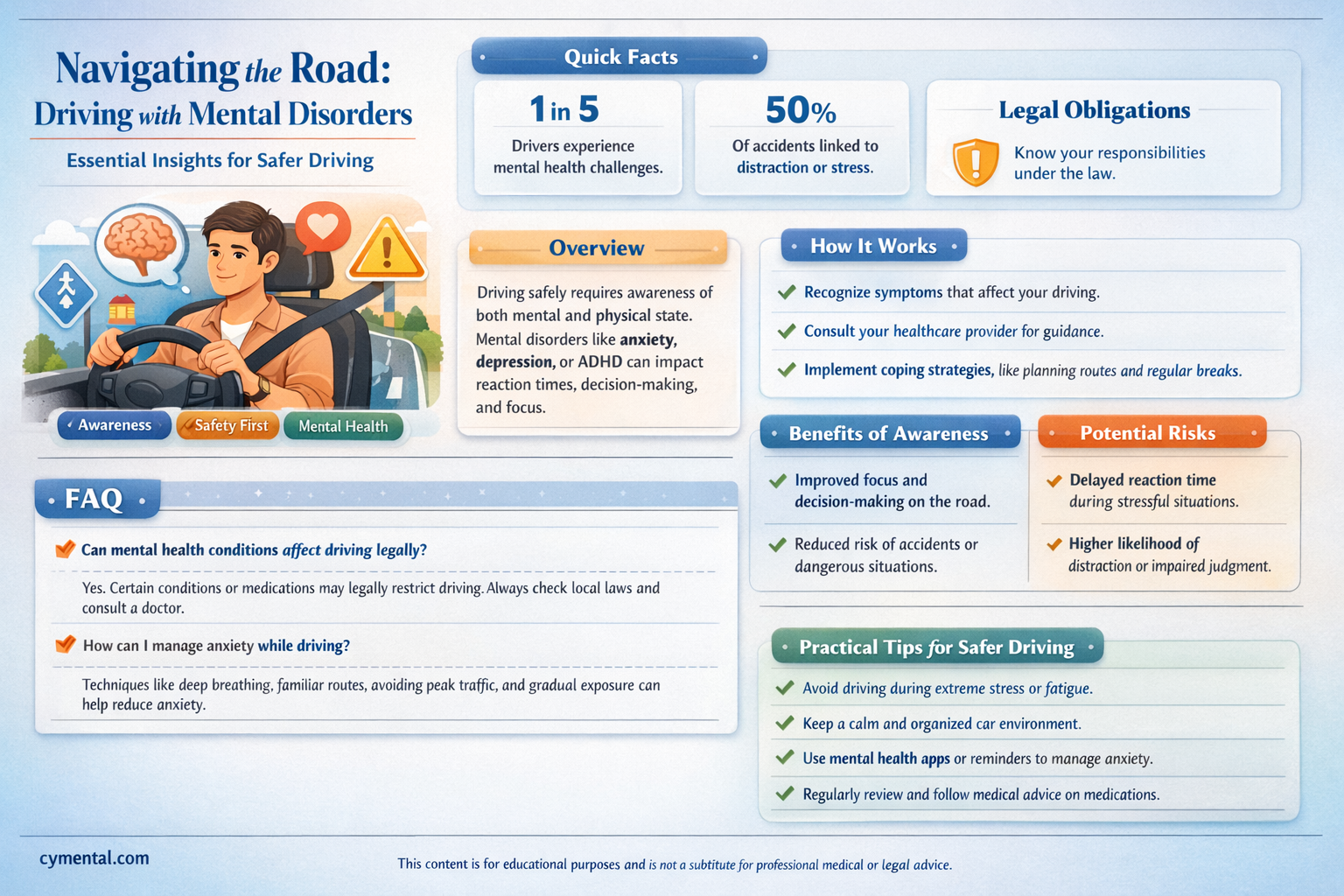
The question of whether one is allowed to drive with mental disorders is a complex and sensitive issue that varies depending on the jurisdiction and the specific circumstances of the individual. Generally, the ability to drive is contingent upon a person's capacity to operate a vehicle safely, which includes both physical and mental capabilities. Mental disorders can potentially impair judgment, reaction time, and decision-making skills, all of which are critical for safe driving. However, not all mental disorders automatically disqualify someone from driving. The assessment typically involves evaluating the individual's specific condition, the severity of their symptoms, and the potential risks they may pose on the road. In many places, there are legal requirements for individuals with certain mental health conditions to be evaluated by a medical professional to determine their fitness to drive. It's important for individuals with mental disorders to consult with their healthcare provider and local authorities to understand the regulations and ensure they are making informed decisions about their driving privileges.
Explore related products

$14.82 $15.95


What You'll Learn
- Legal Requirements: Varies by country and state, often requiring a doctor's evaluation to determine fitness to drive
- Safety Concerns: Mental disorders may affect reaction time, decision-making, and spatial awareness, posing potential risks
- Common Disorders: Conditions like depression, anxiety, and ADHD are common but may not necessarily impair driving ability
- Medication Side Effects: Psychiatric medications can have side effects that impact driving, such as drowsiness or dizziness
- Support and Resources: Organizations and helplines available to provide guidance and support for individuals with mental disorders regarding driving

Legal Requirements: Varies by country and state, often requiring a doctor's evaluation to determine fitness to drive
The legal requirements for driving with mental disorders vary significantly by country and state, reflecting the diverse approaches to regulating mental health and road safety. In many jurisdictions, individuals with mental disorders are required to undergo a medical evaluation to determine their fitness to drive. This evaluation typically involves a thorough assessment by a licensed healthcare professional, who will consider the individual's specific condition, its impact on their cognitive and motor functions, and any potential risks to themselves or others on the road.
The evaluation process may include a review of the individual's medical history, a physical examination, and various cognitive tests to assess their attention, memory, and decision-making abilities. In some cases, additional assessments, such as a driving simulation or an on-road test, may be required to further evaluate the individual's driving skills and safety.
The outcome of the evaluation will depend on the specific legal standards in place in the individual's jurisdiction. In some cases, individuals with certain mental disorders may be deemed unfit to drive altogether, while in others, they may be allowed to drive with restrictions, such as only during daylight hours or with a licensed driver present. In some jurisdictions, individuals may be required to undergo regular re-evaluations to ensure their continued fitness to drive.
It is important to note that the legal requirements for driving with mental disorders are subject to change, and individuals should consult with their healthcare provider and local licensing authority to stay informed about the current regulations in their area. Additionally, individuals with mental disorders should be aware of their own limitations and take steps to ensure their safety and the safety of others on the road, such as avoiding driving during periods of acute illness or when taking medications that may impair their driving abilities.
In conclusion, the legal requirements for driving with mental disorders are complex and vary widely by jurisdiction. Individuals with mental disorders should be proactive in understanding and complying with these requirements, and should work closely with their healthcare providers and local licensing authorities to ensure their safety and the safety of others on the road.
Understanding Mental Health Disorders That Qualify for Disability Benefits
You may want to see also
Explore related products


Safety Concerns: Mental disorders may affect reaction time, decision-making, and spatial awareness, posing potential risks
Driving with a mental disorder can significantly impact an individual's ability to operate a vehicle safely. One of the primary concerns is the effect of mental disorders on reaction time. Conditions such as depression, anxiety, and bipolar disorder can slow down cognitive processes, making it difficult for drivers to respond quickly to sudden changes on the road, such as a pedestrian stepping into the street or a car abruptly stopping in front of them.
Decision-making is another critical aspect of driving that can be impaired by mental disorders. For instance, individuals with schizophrenia may experience delusions or hallucinations that distort their perception of reality, leading to poor judgment calls while driving. Similarly, those with obsessive-compulsive disorder (OCD) might be plagued by intrusive thoughts that distract them from focusing on the road, potentially causing them to make erratic or unsafe decisions.
Spatial awareness is also a key factor in safe driving that can be affected by mental health conditions. Disorders such as dissociative identity disorder (DID) can cause individuals to feel detached from their surroundings, making it challenging to accurately gauge distances and navigate through traffic. Additionally, conditions like post-traumatic stress disorder (PTSD) can trigger flashbacks or intense emotional responses to certain stimuli, such as loud noises or specific locations, which can impair a driver's ability to maintain awareness of their environment.
It is essential for individuals with mental disorders to be aware of these potential risks and take appropriate precautions. This may include working with a mental health professional to develop strategies for managing symptoms while driving, such as practicing mindfulness techniques or using assistive technologies like GPS navigation systems. In some cases, it may be necessary for individuals to limit their driving or rely on alternative forms of transportation to ensure their safety and the safety of others on the road.
Ultimately, the decision to drive with a mental disorder should be made in consultation with a healthcare provider and based on an individual's specific circumstances and abilities. By understanding the potential risks and taking proactive steps to mitigate them, individuals with mental disorders can help to ensure that they are able to drive safely and responsibly.
Exploring Rapunzel's Mental Health: A Tale of Tangles and Trauma
You may want to see also
Explore related products


Common Disorders: Conditions like depression, anxiety, and ADHD are common but may not necessarily impair driving ability
Depression, anxiety, and ADHD are prevalent mental health conditions that affect millions of individuals worldwide. While these disorders can significantly impact daily functioning, they do not automatically disqualify someone from driving. In fact, many people with these conditions are able to drive safely and responsibly. However, it is crucial to consider the specific symptoms and severity of each disorder, as well as the individual's response to treatment, when assessing their ability to operate a vehicle.
For instance, depression can cause fatigue, difficulty concentrating, and slowed reaction times, which could potentially impair driving ability. However, if an individual's depression is well-managed through medication and therapy, and they do not experience severe symptoms that interfere with driving, they may be able to drive safely. Similarly, anxiety can lead to heightened alertness and distractibility, but if it is controlled and does not cause panic attacks or other debilitating symptoms while driving, it may not necessarily impair driving ability.
ADHD, characterized by inattention, hyperactivity, and impulsivity, can also affect driving performance. Individuals with ADHD may be more prone to distractions, have difficulty following traffic rules, and exhibit impulsive behavior behind the wheel. However, with proper treatment, such as stimulant medication and behavioral therapy, many people with ADHD are able to drive safely and responsibly.
It is important to note that each individual's experience with these disorders is unique, and the impact on driving ability can vary greatly. Some people may need to take extra precautions, such as avoiding driving during peak traffic hours or using assistive technologies, while others may be able to drive without any restrictions. Ultimately, the decision to drive with a mental health condition should be made in consultation with a healthcare professional, who can assess the individual's specific circumstances and provide guidance on safe driving practices.
Mindful Strategies: Proactive Steps to Safeguard Mental Health
You may want to see also
Medication Side Effects: Psychiatric medications can have side effects that impact driving, such as drowsiness or dizziness
Psychiatric medications can significantly impact a person's ability to drive safely. One of the most common side effects of these medications is drowsiness, which can impair reaction times and judgment, increasing the risk of accidents. For example, benzodiazepines, commonly prescribed for anxiety and sleep disorders, can cause pronounced drowsiness and dizziness, making it dangerous to operate a vehicle.
Another class of medications, antidepressants, particularly selective serotonin reuptake inhibitors (SSRIs), can also affect driving ability. While they are generally considered safer than benzodiazepines, they can still cause side effects such as drowsiness, especially when first starting treatment or when the dosage is increased. It's crucial for individuals taking these medications to be aware of how they might affect their driving and to take necessary precautions.
In addition to drowsiness, psychiatric medications can cause other side effects that impact driving, such as blurred vision, dry mouth, and muscle weakness. These side effects can be particularly problematic when driving, as they can affect a person's ability to see the road clearly, maintain a proper grip on the steering wheel, and react quickly to changing road conditions.
It's important for individuals taking psychiatric medications to discuss their driving concerns with their healthcare provider. In some cases, it may be necessary to adjust the dosage or switch to a different medication that has fewer side effects. Additionally, individuals should be aware of how their medications interact with other substances, such as alcohol, which can further impair driving ability.
Ultimately, the decision to drive while taking psychiatric medications should be made on a case-by-case basis, taking into account the specific medications, dosages, and individual circumstances. It's essential for individuals to prioritize their safety and the safety of others on the road by being informed about the potential side effects of their medications and taking appropriate precautions.
Understanding Bipolar Disorder: Is It Considered a Mental Disability?
You may want to see also
Support and Resources: Organizations and helplines available to provide guidance and support for individuals with mental disorders regarding driving
Individuals with mental disorders may face unique challenges when it comes to driving, and it's crucial to have access to the right support and resources. Fortunately, there are several organizations and helplines available to provide guidance and assistance.
One such organization is the National Alliance on Mental Illness (NAMI), which offers a helpline (1-800-950-NAMI) and a website with extensive resources on mental health and driving. NAMI can connect individuals with local support groups, provide information on mental health conditions and their impact on driving, and offer guidance on how to navigate the legal and medical aspects of driving with a mental disorder.
Another valuable resource is the Anxiety and Depression Association of America (ADAA), which has a dedicated webpage on driving and mental health. The ADAA provides tips for managing anxiety and depression while driving, as well as information on how to talk to a healthcare provider about driving concerns. They also offer a helpline (1-240-485-1001) for individuals seeking support.
For those in crisis, the National Suicide Prevention Lifeline (1-800-273-TALK) is available 24/7 to provide support and resources. While not specifically focused on driving, the lifeline can connect individuals with mental health professionals and provide immediate assistance in times of need.
Additionally, many states have their own resources and guidelines for individuals with mental disorders who wish to drive. For example, the California Department of Motor Vehicles (DMV) has a webpage dedicated to mental health and driving, which outlines the requirements for individuals with mental disorders to obtain or maintain a driver's license.
It's important to note that the laws and regulations surrounding driving with mental disorders vary by state, and individuals should consult with their healthcare provider and local DMV to understand their specific rights and responsibilities. With the right support and resources, individuals with mental disorders can safely navigate the roads and maintain their independence.
Exploring the Complex Relationship Between Insanity and Mental Health Disorders
You may want to see also