Caleb Wright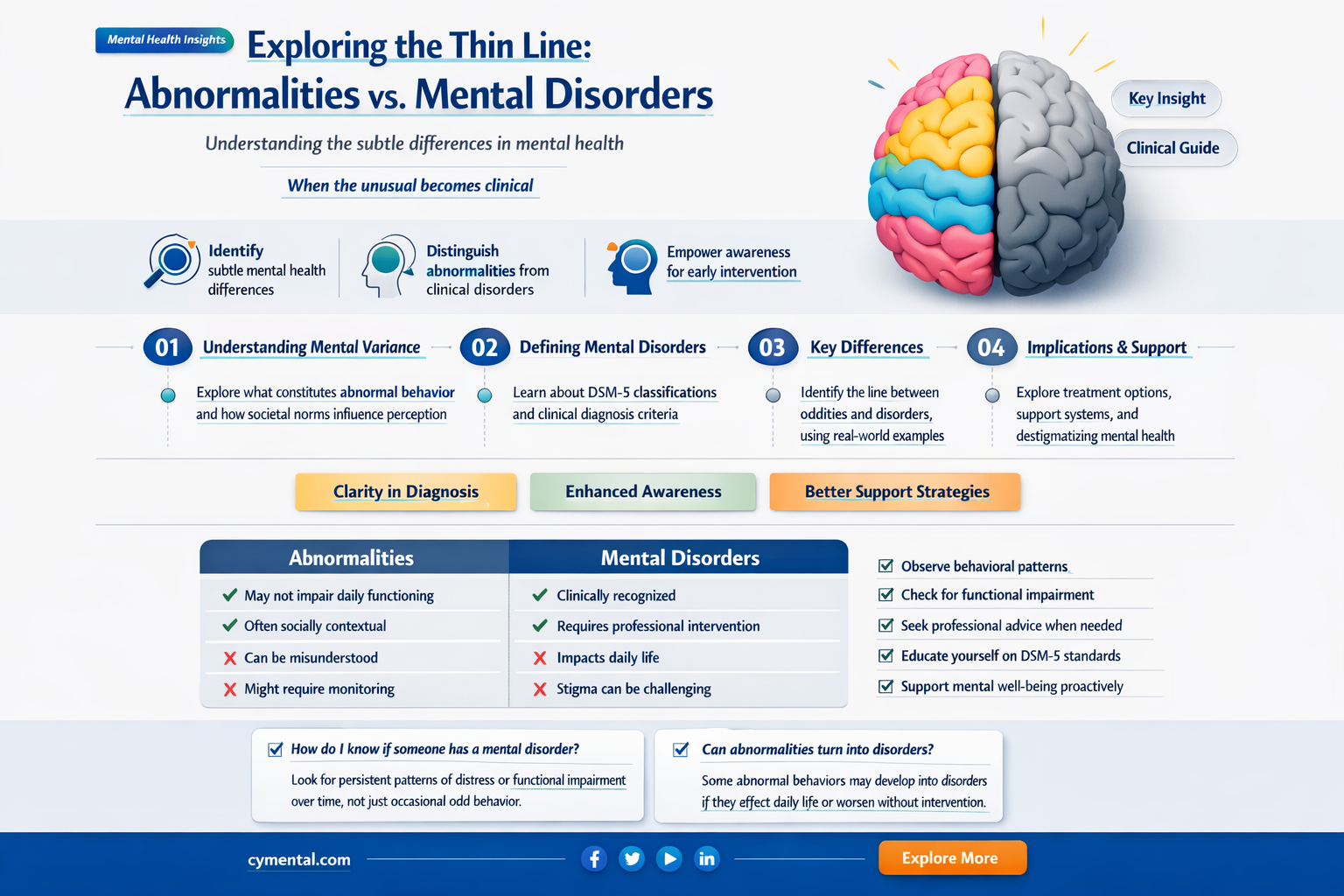
The question of whether abnormalities constitute mental disorders is a complex and multifaceted issue within the field of psychology and psychiatry. At its core, this inquiry delves into the nature of mental health, the criteria for diagnosing mental disorders, and the societal implications of such classifications. Mental disorders are typically characterized by significant disturbances in thought, emotion, or behavior that impair an individual's ability to function in daily life. However, the concept of 'abnormality' is subjective and can vary greatly across different cultures, historical periods, and professional perspectives. What may be considered abnormal in one context might be viewed as normal or even desirable in another. Furthermore, the diagnostic criteria for mental disorders, as outlined in manuals such as the DSM-5, are continually evolving and subject to debate among mental health professionals. This ongoing discourse highlights the need for a nuanced understanding of the relationship between abnormalities and mental disorders, one that takes into account the biological, psychological, and social factors that contribute to mental health.
| Characteristics | Values |
|---|---|
| Definition | Mental disorders are health conditions that affect a person's thinking, feeling, and behavior. They can cause distress and impair a person's ability to function in daily life. |
| Types | Anxiety disorders, mood disorders, personality disorders, psychotic disorders, eating disorders, substance use disorders, and others. |
| Causes | Genetic factors, environmental factors, brain chemistry, life experiences, and other factors can contribute to the development of mental disorders. |
| Symptoms | Symptoms vary depending on the type of disorder but can include changes in mood, behavior, thinking, and physical symptoms such as headaches or stomachaches. |
| Diagnosis | Mental disorders are typically diagnosed by a mental health professional through a combination of interviews, questionnaires, and observation. |
| Treatment | Treatment options include psychotherapy, medication, lifestyle changes, and other interventions. The specific treatment plan depends on the individual and the type of disorder. |
| Prognosis | The prognosis for mental disorders varies depending on the type and severity of the disorder, as well as the individual's response to treatment. Many people with mental disorders can recover or manage their symptoms with appropriate treatment. |
| Prevalence | Mental disorders are common, with approximately 1 in 5 adults in the United States experiencing a mental illness in a given year. |
| Impact | Mental disorders can have a significant impact on a person's quality of life, relationships, and ability to function in daily life. They can also have a broader impact on society, including increased healthcare costs and decreased productivity. |
| Stigma | There is often stigma associated with mental disorders, which can lead to discrimination, social isolation, and reluctance to seek treatment. |
| Research | Ongoing research is focused on understanding the causes of mental disorders, developing new treatments, and improving the effectiveness of existing treatments. |
| Prevention | While it is not always possible to prevent mental disorders, there are steps that can be taken to reduce the risk, such as maintaining a healthy lifestyle, seeking support from friends and family, and practicing stress management techniques. |
What You'll Learn
- Defining Abnormalities: Understanding what constitutes abnormal behavior and how it differs from typical behavior patterns
- Types of Mental Disorders: Overview of major categories such as anxiety, mood, psychotic, and personality disorders
- Diagnostic Criteria: Exploring the standards and tools used by professionals to diagnose mental health conditions
- Causes and Risk Factors: Investigating genetic, environmental, and psychological factors that contribute to mental disorders
- Treatment and Management: Discussing various therapeutic approaches, medications, and strategies for managing mental health issues

Defining Abnormalities: Understanding what constitutes abnormal behavior and how it differs from typical behavior patterns
Abnormal behavior is often defined as any action or pattern of actions that deviates significantly from what is considered typical or socially acceptable within a given culture or context. This can encompass a wide range of behaviors, from minor eccentricities to severe psychological disturbances. Understanding what constitutes abnormal behavior is crucial for identifying and addressing potential mental health issues, as well as for fostering a more inclusive and tolerant society.
One approach to defining abnormal behavior is through the lens of statistical analysis. In this view, abnormal behavior is seen as any action or pattern of actions that falls outside the normal distribution of behaviors within a population. For example, if a person's behavior is so unusual that it occurs in less than 1% of the population, it may be considered abnormal. However, this approach has its limitations, as it does not take into account the cultural or social context in which the behavior occurs.
Another approach is to define abnormal behavior in terms of its impact on the individual or society. In this view, abnormal behavior is seen as any action or pattern of actions that causes significant distress or impairment to the individual, or that disrupts the normal functioning of society. For example, a person who is unable to hold down a job or maintain relationships due to their behavior may be considered abnormal. Similarly, a person who engages in criminal or violent behavior may be seen as abnormal due to the harm they cause to others.
It is important to note that what is considered abnormal behavior can vary greatly depending on the cultural and social context. For example, in some cultures, it may be considered abnormal for a woman to wear pants or for a man to wear a dress. In other cultures, these behaviors may be perfectly acceptable. Similarly, what is considered abnormal behavior in one era may be seen as normal in another. For example, in the past, it was considered abnormal for a person to have a tattoo, while today it is a common form of self-expression.
In conclusion, defining abnormal behavior is a complex and multifaceted task that requires careful consideration of statistical, cultural, and social factors. By understanding what constitutes abnormal behavior, we can better identify and address potential mental health issues, as well as foster a more inclusive and tolerant society.
Understanding Narcissistic Personality Disorder: A Mental Health Perspective
You may want to see also
Types of Mental Disorders: Overview of major categories such as anxiety, mood, psychotic, and personality disorders
Mental disorders encompass a wide range of conditions that affect an individual's thinking, feeling, and behavior. These conditions can be broadly categorized into several major types, each with its own set of characteristics and symptoms. Understanding these categories is crucial for accurate diagnosis and effective treatment.
Anxiety disorders are among the most common mental health conditions. They are characterized by excessive and persistent worry or fear that interferes with daily life. Examples include generalized anxiety disorder, panic disorder, and social anxiety disorder. Symptoms often include restlessness, fatigue, difficulty concentrating, and sleep disturbances. Treatment typically involves a combination of medication and psychotherapy.
Mood disorders, also known as affective disorders, involve significant changes in mood that are inconsistent with the individual's circumstances. Major depressive disorder and bipolar disorder are two primary types of mood disorders. Symptoms of depression include persistent sadness, loss of interest in activities, and changes in appetite and sleep patterns. Bipolar disorder is marked by episodes of mania, characterized by elevated mood, increased energy, and impulsive behavior, alternating with periods of depression. Treatment for mood disorders often includes antidepressant medications and mood stabilizers, along with therapy.
Psychotic disorders are characterized by a disconnection from reality, often manifesting as hallucinations, delusions, or disorganized thinking. Schizophrenia is a well-known example of a psychotic disorder. Symptoms can include hearing voices, believing false information, and exhibiting unusual behaviors. Treatment typically involves antipsychotic medications and supportive therapies to help individuals manage their symptoms and improve their quality of life.
Personality disorders involve long-standing patterns of thinking and behavior that are inflexible and maladaptive, causing distress or impairment in social, occupational, or other areas of functioning. Examples include borderline personality disorder, narcissistic personality disorder, and antisocial personality disorder. Symptoms vary widely depending on the specific disorder but often include difficulties with interpersonal relationships, emotional regulation, and impulse control. Treatment for personality disorders can be challenging and usually involves long-term psychotherapy.
In conclusion, mental disorders are diverse and complex conditions that require careful consideration and individualized treatment approaches. By understanding the major categories of mental disorders, healthcare professionals can better diagnose and treat these conditions, ultimately improving outcomes for affected individuals.
Mental Health Conditions That May Disqualify You from Military Service
You may want to see also
Diagnostic Criteria: Exploring the standards and tools used by professionals to diagnose mental health conditions
Mental health professionals rely on a variety of diagnostic criteria and tools to identify and classify mental disorders. These criteria are outlined in manuals such as the Diagnostic and Statistical Manual of Mental Disorders (DSM-5) and the International Classification of Diseases (ICD-11). The DSM-5, for example, provides detailed descriptions of mental disorders, including symptoms, severity levels, and diagnostic features. It also includes decision trees and flowcharts to aid in the diagnostic process.
One of the key components of diagnostic criteria is the identification of specific symptoms and their severity. For instance, to diagnose major depressive disorder, a patient must exhibit at least five symptoms from a list that includes feelings of sadness, loss of interest in activities, changes in appetite, and thoughts of suicide. The severity of these symptoms must also be assessed, with criteria ranging from mild to severe.
Another important aspect of diagnostic criteria is the consideration of cultural and contextual factors. Mental health professionals must take into account a patient's cultural background, social environment, and personal history when making a diagnosis. This is because what may be considered a symptom in one culture may not be in another, and contextual factors can significantly impact the manifestation of mental disorders.
In addition to symptom-based criteria, some diagnostic tools also incorporate functional impairment as a key factor. This means that the impact of a mental disorder on a person's ability to function in daily life is considered when making a diagnosis. For example, a patient with obsessive-compulsive disorder may be diagnosed based on the extent to which their obsessions and compulsions interfere with their work, relationships, and other aspects of their life.
It's also worth noting that diagnostic criteria are not static and are subject to revision as new research emerges. For instance, the DSM-5 has undergone several updates since its initial publication in 2013, with changes made to reflect the latest scientific findings and clinical practices. This ongoing refinement of diagnostic criteria is crucial for ensuring that mental health professionals have the most accurate and up-to-date tools at their disposal.
In conclusion, diagnostic criteria play a vital role in the identification and treatment of mental disorders. By providing a standardized framework for assessing symptoms, severity, and functional impairment, these criteria help mental health professionals make accurate diagnoses and develop effective treatment plans. However, it's important to remember that diagnostic criteria are not infallible and should be used in conjunction with clinical judgment and a comprehensive understanding of each patient's unique circumstances.
Understanding ASD: A Mental Health Disorder or Neurodiversity?
You may want to see also
Causes and Risk Factors: Investigating genetic, environmental, and psychological factors that contribute to mental disorders
Genetic factors play a significant role in the development of mental disorders. Research has shown that certain genetic variations can increase the risk of conditions such as schizophrenia, bipolar disorder, and major depressive disorder. For example, a study published in the journal Nature Genetics identified over 200 genetic variants associated with schizophrenia. These findings suggest that genetic predisposition can be a critical factor in the onset of mental disorders.
Environmental factors also contribute to the development of mental disorders. Traumatic experiences, such as physical or emotional abuse, neglect, or exposure to violence, can have long-lasting effects on mental health. Additionally, chronic stress, social isolation, and unhealthy lifestyle choices can exacerbate mental health issues. For instance, a study conducted by the World Health Organization found that individuals who experienced childhood trauma were more likely to develop anxiety and depressive disorders later in life.
Psychological factors, such as personality traits and coping mechanisms, can also influence the development of mental disorders. Certain personality traits, like neuroticism, can make individuals more susceptible to anxiety and depressive disorders. Furthermore, ineffective coping mechanisms, such as substance abuse or avoidance behaviors, can worsen mental health symptoms. A study published in the Journal of Abnormal Psychology found that individuals with maladaptive coping strategies were more likely to experience severe symptoms of post-traumatic stress disorder (PTSD).
It is essential to consider the interplay between genetic, environmental, and psychological factors when investigating the causes of mental disorders. These factors often interact in complex ways, and understanding their relationships can help in developing more effective prevention and treatment strategies. For example, a study published in the journal Psychological Medicine found that the combination of genetic predisposition and environmental stressors significantly increased the risk of developing depression.
In conclusion, mental disorders are not solely the result of abnormalities but are influenced by a multitude of factors, including genetic, environmental, and psychological elements. By examining these factors in detail, we can gain a better understanding of the underlying causes of mental disorders and develop more targeted interventions to improve mental health outcomes.
Understanding ADHD: A Mental Health Disorder or Not?
You may want to see also
Treatment and Management: Discussing various therapeutic approaches, medications, and strategies for managing mental health issues
Cognitive-behavioral therapy (CBT) is a widely used therapeutic approach for managing mental health issues. It focuses on identifying and changing negative thought patterns and behaviors that contribute to a person's distress. CBT is often used to treat anxiety disorders, depression, and other conditions. It typically involves weekly sessions with a therapist, where individuals learn to recognize and challenge their negative thoughts, and develop coping strategies to deal with stressful situations.
Medications can also play a crucial role in managing mental health issues. Antidepressants, such as selective serotonin reuptake inhibitors (SSRIs), are commonly prescribed to treat depression and anxiety disorders. These medications work by increasing the levels of serotonin in the brain, which can help improve mood and reduce symptoms of anxiety. It's important to note that medications should always be taken under the guidance of a healthcare professional, as they can have side effects and may not be suitable for everyone.
In addition to CBT and medications, there are other therapeutic approaches that can be effective in managing mental health issues. Dialectical behavior therapy (DBT) is a type of therapy that combines CBT with mindfulness techniques. It's often used to treat borderline personality disorder and other conditions that involve emotional dysregulation. DBT teaches individuals skills to manage their emotions, tolerate distress, and improve their relationships with others.
Lifestyle changes can also be an important part of managing mental health issues. Regular exercise, a healthy diet, and adequate sleep can all contribute to improved mental well-being. Mindfulness practices, such as meditation and yoga, can also be helpful in reducing stress and anxiety. It's important to find a balance between these lifestyle changes and other treatments, such as therapy and medication, to achieve the best possible outcomes.
Finally, it's crucial to recognize that managing mental health issues is an ongoing process. It's not always possible to achieve a complete cure, but with the right combination of treatments and lifestyle changes, individuals can learn to manage their symptoms and lead fulfilling lives. It's important to seek help from a healthcare professional if you're struggling with mental health issues, as they can provide guidance and support to help you find the best treatment options for your specific needs.
Exploring the Spectrum: A Comprehensive Guide to Psychological Disorders
You may want to see also
Frequently asked questions
Mental disorders are conditions that affect a person's thinking, feeling, mood, or behavior. They can interfere with daily life and may cause distress or impairment in social, occupational, or other areas of functioning.
Mental disorders are typically diagnosed by mental health professionals, such as psychiatrists, psychologists, or licensed therapists. Diagnosis often involves a combination of clinical interviews, psychological assessments, and sometimes medical tests to rule out underlying physical conditions.
Yes, many mental disorders can be effectively treated with a variety of interventions, including psychotherapy (talk therapy), medication, lifestyle changes, and support groups. Treatment plans are often tailored to the individual's specific needs and circumstances.
Yes, mental disorders are relatively common. According to the World Health Organization (WHO), approximately 1 in 4 people worldwide will experience a mental disorder at some point in their lives.
While it may not be possible to prevent all mental disorders, there are steps that can be taken to reduce the risk of developing certain conditions. These include maintaining a healthy lifestyle, managing stress, seeking support from friends and family, and getting professional help when needed.