Harper Lewis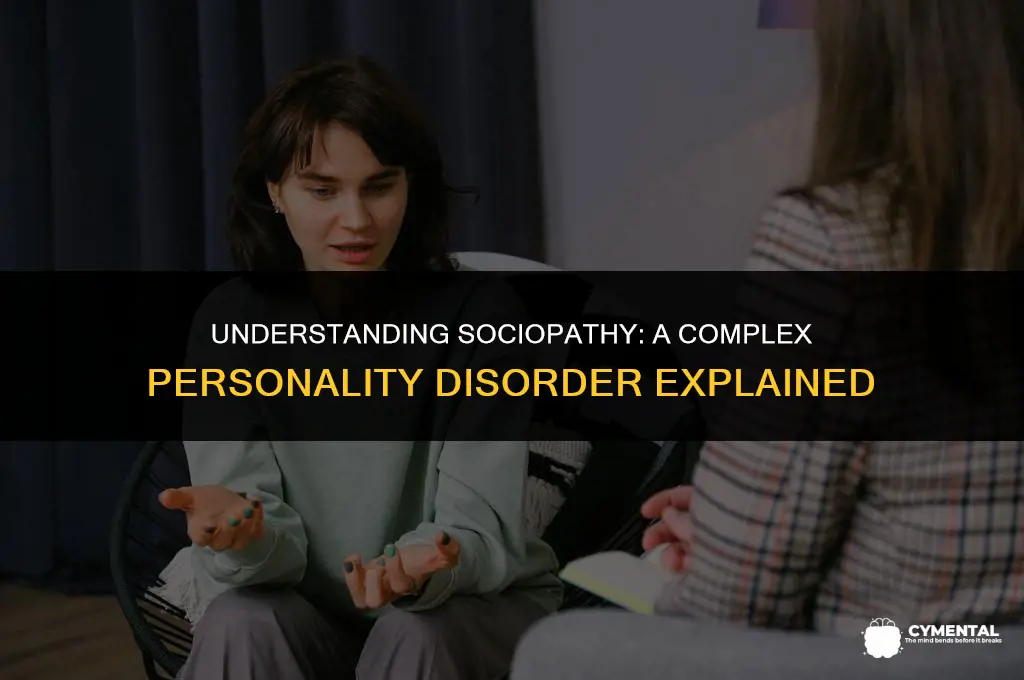
The question of whether sociopathy is a mental disorder is a complex and contentious issue within the fields of psychology and psychiatry. Sociopathy, often used interchangeably with antisocial personality disorder (ASPD), is characterized by a pattern of disregard for the rights of others, lack of empathy, and impulsive behavior. While some argue that sociopathy is a distinct mental disorder warranting clinical attention, others contend that it is a social construct used to label and stigmatize individuals who do not conform to societal norms. This debate has significant implications for the diagnosis, treatment, and understanding of individuals exhibiting sociopathic traits.
| Characteristics | Values |
|---|---|
| Definition | A sociopath is a term used to describe a person with antisocial personality disorder (ASPD), characterized by a disregard for the rights of others and a lack of empathy or remorse. |
| Diagnostic Criteria | According to the DSM-5, a person must meet at least three of the following criteria to be diagnosed with ASPD: failure to conform to social norms, deceitfulness, impulsivity, irritability and aggressiveness, reckless disregard for safety of self or others, consistent irresponsibility, and lack of remorse. |
| Prevalence | ASPD is estimated to affect about 1% of the general population, with higher rates among individuals in forensic settings. |
| Causes | The exact causes of sociopathy are not fully understood, but it is believed to result from a combination of genetic, environmental, and neurological factors. |
| Symptoms | Symptoms of sociopathy include a lack of empathy, manipulativeness, impulsivity, aggression, and a tendency to engage in criminal behavior. |
| Treatment | Treatment for sociopathy is often challenging, as individuals with this disorder may not see their behavior as problematic. Cognitive-behavioral therapy and medication may be used to manage symptoms. |
| Prognosis | The prognosis for individuals with sociopathy varies, but many continue to experience difficulties with relationships and the law throughout their lives. |
| Legal Implications | Sociopathy is not a legal defense, but it may be considered in sentencing and treatment decisions within the criminal justice system. |
| Social Impact | Sociopaths can have a significant negative impact on society, as their behavior can lead to harm to others and contribute to social unrest. |
| Research | Ongoing research is focused on better understanding the causes and treatment of sociopathy, as well as developing more effective interventions for individuals with this disorder. |
Explore related products

$14.09 $21.95

$11.99


What You'll Learn

Definition and Diagnosis
A sociopath is defined as an individual who exhibits a pervasive pattern of disregard for the rights of others, often characterized by deceit, manipulation, and a lack of empathy or remorse. This term is frequently used interchangeably with "psychopath," although some distinctions exist between the two. Sociopathy is not officially recognized as a distinct mental disorder in the Diagnostic and Statistical Manual of Mental Disorders (DSM-5), which is the primary reference for psychiatric diagnoses in the United States. Instead, the behaviors associated with sociopathy are often subsumed under the broader category of Antisocial Personality Disorder (ASPD).
Diagnosing sociopathy, or more accurately ASPD, involves a comprehensive evaluation of an individual's behavioral patterns, personality traits, and history. Mental health professionals, such as psychiatrists and psychologists, typically conduct this assessment through clinical interviews, behavioral observations, and sometimes psychological testing. Key diagnostic criteria for ASPD include a history of conduct disorder before the age of 15, a pattern of deceit and manipulation, impulsivity, irritability, and a disregard for the safety and rights of others.
It's important to note that diagnosing ASPD, and by extension identifying sociopathic tendencies, is a complex process that requires careful consideration of multiple factors. A single behavioral incident or personality trait is not sufficient for diagnosis; rather, a consistent and pervasive pattern of behavior over time is necessary. Additionally, the diagnosis should be made by a qualified mental health professional, as it involves nuanced judgments and interpretations of behavioral data.
In practice, the diagnosis of sociopathy or ASPD often occurs in forensic settings, such as prisons or psychiatric hospitals, where individuals have already demonstrated significant behavioral problems. However, it can also be diagnosed in outpatient settings, particularly when individuals seek treatment for related issues, such as substance abuse or criminal behavior. Early identification and intervention can be crucial in managing the symptoms of ASPD and reducing the risk of future criminal activity or social impairment.
Overall, while the term "sociopath" is widely used in popular culture and media, it is not a formal psychiatric diagnosis. Instead, the behaviors and traits associated with sociopathy are typically evaluated and diagnosed under the rubric of Antisocial Personality Disorder, using established clinical criteria and methods.
Unraveling the Mind of a Notorious Criminal: Ted Bundy's Mental Health
You may want to see also
Explore related products


Symptoms and Traits
Sociopathy, also known as antisocial personality disorder, is characterized by a distinct set of symptoms and traits that differentiate it from other mental health conditions. One of the primary symptoms is a pervasive pattern of disregard for the rights of others, which often manifests as deceitfulness, manipulation, and exploitation. Individuals with sociopathy may engage in criminal behavior, such as theft, fraud, or assault, without feeling remorse or guilt.
Another key trait of sociopathy is a lack of empathy and emotional depth. People with this disorder often have difficulty understanding and relating to the feelings of others, which can lead to strained relationships and social isolation. They may also exhibit a grandiose sense of self-importance and entitlement, believing that they are superior to others and deserving of special treatment.
Impulsivity and a tendency to act without considering the consequences are also common symptoms of sociopathy. This can result in risky behavior, such as substance abuse, reckless driving, or unprotected sex, without regard for the potential harm to themselves or others. Additionally, individuals with sociopathy may have a history of unstable employment, financial problems, and legal issues due to their inability to conform to societal norms and expectations.
It is important to note that sociopathy is a complex disorder with a multifaceted etiology. While some individuals may exhibit these symptoms and traits to a lesser degree, others may experience them more intensely and chronically. Diagnosis and treatment of sociopathy typically involve a comprehensive assessment by a mental health professional, who can help individuals develop coping strategies and improve their overall quality of life.
Exploring the Possibilities: Can Mental Disorders Be Cured?
You may want to see also
Explore related products


Causes and Risk Factors
While the exact causes of sociopathy are not fully understood, research suggests that a combination of genetic, environmental, and neurological factors contribute to its development. Studies have shown that individuals with a family history of antisocial behavior or mental illness may be at a higher risk of developing sociopathic traits. Additionally, childhood trauma, abuse, or neglect can also play a significant role in shaping an individual's personality and behavior, potentially leading to sociopathy.
Neurological factors, such as abnormalities in brain structure and function, have also been implicated in sociopathy. For example, research has shown that individuals with sociopathic traits often have reduced activity in areas of the brain associated with empathy, impulse control, and decision-making. Furthermore, exposure to toxins, such as lead, during childhood has been linked to an increased risk of developing antisocial behavior.
Environmental factors, such as socioeconomic status, education, and social relationships, can also influence an individual's likelihood of developing sociopathic traits. For instance, individuals who grow up in poverty or who experience social isolation may be more likely to engage in antisocial behavior as a means of survival or to gain social status. Moreover, exposure to violent or criminal environments can also contribute to the development of sociopathic traits.
It is important to note that while these factors may increase the risk of developing sociopathy, they do not guarantee that an individual will become a sociopath. Many individuals who experience these risk factors do not develop antisocial personality disorder, and the reasons for this are not fully understood. Further research is needed to better understand the complex interplay of factors that contribute to the development of sociopathy.
Unraveling the Psyche: Joe Goldberg's Mental Health Struggles
You may want to see also
Explore related products


$43.99 $45.99


Treatment Options
Treatment for sociopathy, also known as antisocial personality disorder (ASPD), is complex and often challenging. Unlike other mental health conditions, there is no single, universally effective treatment for sociopathy. Instead, a multifaceted approach is typically employed, aiming to manage symptoms and improve the individual's ability to function in society.
One of the primary treatment options for sociopathy is psychotherapy. Cognitive-behavioral therapy (CBT) is often used to help individuals with ASPD identify and change negative thought patterns and behaviors. CBT can be effective in reducing impulsivity and aggression, two common traits associated with sociopathy. However, the success of psychotherapy can be limited by the individual's willingness to engage in the therapeutic process and their ability to form a trusting relationship with the therapist.
Medication can also play a role in the treatment of sociopathy, although there is no specific medication approved for this condition. Medications such as selective serotonin reuptake inhibitors (SSRIs), mood stabilizers, and antipsychotics may be prescribed to manage associated symptoms such as depression, anxiety, or aggression. It is important to note that medication alone is not considered a cure for sociopathy and is typically used in conjunction with psychotherapy.
In addition to individual therapy and medication, group therapy and social skills training can be beneficial for individuals with sociopathy. These interventions can help improve communication skills, empathy, and the ability to form and maintain relationships. Family therapy may also be recommended to address any underlying family dynamics that may contribute to the individual's condition.
It is crucial to recognize that treatment for sociopathy is a long-term process that requires patience, persistence, and a comprehensive approach. While some individuals may show improvement with treatment, others may continue to struggle with symptoms throughout their lives. The goal of treatment is not to cure sociopathy but to help individuals manage their symptoms and lead more productive and fulfilling lives.
Understanding Personality Disorders: Are They Mental Illnesses?
You may want to see also
Explore related products


$12.39 $19




Societal Impact
The societal impact of sociopathy is profound and multifaceted, affecting various aspects of community life and interpersonal relationships. Sociopaths, characterized by their lack of empathy and remorse, often engage in manipulative and deceitful behaviors that can lead to significant harm to others. This can manifest in a range of ways, from financial fraud and exploitation to emotional manipulation and, in extreme cases, criminal behavior.
One of the key challenges in addressing the societal impact of sociopathy is the difficulty in identifying and diagnosing the condition. Sociopaths are often adept at masking their true nature, presenting themselves as charming and trustworthy individuals. This can make it challenging for mental health professionals, law enforcement, and the general public to recognize the warning signs of sociopathic behavior. As a result, sociopaths may go undetected, continuing to cause harm to unsuspecting victims.
The impact of sociopathy on the criminal justice system is another area of concern. Sociopaths are disproportionately represented in prison populations, and their manipulative behaviors can pose significant challenges for rehabilitation and reintegration efforts. Furthermore, the lack of empathy and remorse exhibited by sociopaths can make it difficult for them to understand the harm they have caused, hindering their ability to make amends and reintegrate into society.
In addition to the criminal justice system, sociopathy can also have a significant impact on the workplace and organizational environments. Sociopaths may use their manipulative skills to climb the corporate ladder, often at the expense of their colleagues. This can lead to a toxic work environment, characterized by fear, mistrust, and decreased productivity. Moreover, the financial impact of sociopathic behavior in the workplace can be substantial, with companies facing significant losses due to fraud and embezzlement.
Addressing the societal impact of sociopathy requires a multifaceted approach, involving education, awareness, and targeted interventions. By increasing public understanding of the condition and its warning signs, we can better equip individuals to protect themselves from sociopathic manipulation. Furthermore, developing specialized treatment programs and interventions for sociopaths can help to mitigate their harmful behaviors and promote more positive outcomes for both the individuals affected and society as a whole.
Unraveling the Psyche: Mental Disorders and Serial Killers
You may want to see also
Frequently asked questions
Yes, sociopathy is considered a mental disorder. It is characterized by a lack of empathy, manipulative behavior, and a tendency to engage in antisocial activities without regard for the consequences.
Key traits of a sociopath include a lack of empathy, a tendency to manipulate others, a disregard for the rights of others, a history of antisocial behavior, and a lack of remorse for harmful actions.
While there is no cure for sociopathy, certain therapies and interventions can help manage the symptoms and behaviors associated with the disorder. These may include cognitive-behavioral therapy, medication, and social skills training.