Caleb Wright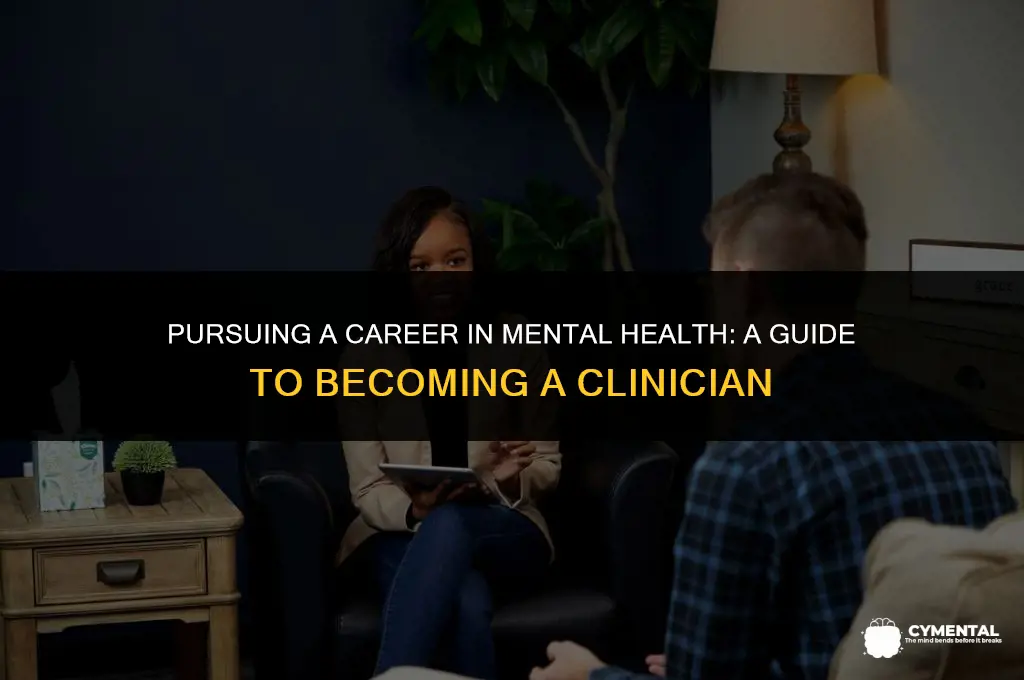
Becoming a mental health clinician involves a combination of education, training, and licensure. Typically, one must earn a master's degree in a field such as psychology, social work, or counseling. This is followed by supervised clinical experience, where aspiring clinicians work directly with clients under the guidance of experienced professionals. After completing the necessary educational and experiential requirements, individuals must obtain licensure or certification in their state or country to practice independently. Throughout their careers, mental health clinicians are expected to stay updated with the latest research and best practices in the field, often through continuing education courses and professional development opportunities.
Explore related products

$22.24 $34.99


What You'll Learn
- Education Requirements: Obtain a master's or doctoral degree in psychology, counseling, or social work
- Licensure and Certification: Meet state licensing requirements and consider national certifications like LPC or LCSW
- Practical Experience: Complete supervised clinical hours, internships, or practicums to gain hands-on experience
- Specialization: Pursue specialized training or certifications in areas like CBT, DBT, or trauma therapy
- Continuing Education: Stay updated with the latest research and best practices through ongoing education and workshops

Education Requirements: Obtain a master's or doctoral degree in psychology, counseling, or social work
To become a mental health clinician, one of the primary education requirements is to obtain a master's or doctoral degree in psychology, counseling, or social work. This advanced level of education is crucial as it provides the necessary theoretical knowledge and practical skills to effectively diagnose, treat, and manage mental health conditions. A master's degree typically takes two to three years to complete and involves coursework in areas such as psychopathology, counseling theories, and research methods. Doctoral degrees, such as a Ph.D. or Psy.D., require an additional three to five years of study and often include a research component or clinical internship.
In addition to formal education, aspiring mental health clinicians must also consider the importance of experiential learning. This can be achieved through supervised clinical practice, internships, or volunteer work in mental health settings. Such experiences not only enhance one's understanding of mental health issues but also provide opportunities to develop essential clinical skills under the guidance of experienced professionals. It is also important to note that licensure requirements vary by state and often necessitate a certain number of supervised clinical hours in addition to the completion of a graduate degree.
Furthermore, the field of mental health is constantly evolving, and clinicians must be committed to ongoing education and professional development. This can involve attending workshops, conferences, and seminars, as well as engaging in continuous reading and research to stay abreast of the latest developments in the field. Membership in professional organizations such as the American Psychological Association (APA) or the National Association of Social Workers (NASW) can also provide valuable resources and opportunities for networking and collaboration.
In summary, the education requirements for becoming a mental health clinician are rigorous and multifaceted, involving both formal academic study and practical experiential learning. By obtaining a master's or doctoral degree in psychology, counseling, or social work, and by engaging in ongoing professional development, individuals can acquire the necessary skills and knowledge to effectively support and treat those struggling with mental health issues.
Exploring Mental Health Diversion: A Compassionate Approach to Justice
You may want to see also
Explore related products


Licensure and Certification: Meet state licensing requirements and consider national certifications like LPC or LCSW
To become a licensed mental health clinician, you must first meet the specific licensing requirements set by the state in which you wish to practice. These requirements typically include completing a certain number of hours of supervised clinical experience, passing a state-administered exam, and maintaining ongoing education to keep your license current. It's crucial to research the exact requirements for your state, as they can vary significantly.
In addition to state licensure, many mental health professionals choose to pursue national certifications to enhance their credentials and demonstrate their expertise. Two prominent national certifications are the Licensed Professional Counselor (LPC) and the Licensed Clinical Social Worker (LCSW). The LPC certification is generally for those who have completed a master's degree in counseling, while the LCSW is for those with a master's degree in social work. Both certifications require passing a national exam and meeting specific educational and experiential criteria.
Pursuing national certification can offer several benefits, including increased job opportunities, higher earning potential, and greater professional recognition. It can also provide a sense of accomplishment and validation of your skills and knowledge as a mental health clinician. However, it's important to weigh the costs and time commitment involved in obtaining these certifications against the potential benefits for your career.
When deciding whether to pursue national certification, consider your long-term career goals and the specific requirements of the certification you're interested in. It may be helpful to speak with other professionals in your field who have obtained these certifications to gain insight into their experiences and the impact it has had on their careers. Ultimately, the decision to pursue national certification should be based on a careful evaluation of how it aligns with your personal and professional objectives.
Exploring Women's Mental Health: Awareness, Advocacy, and Action
You may want to see also
Explore related products


Practical Experience: Complete supervised clinical hours, internships, or practicums to gain hands-on experience
Gaining practical experience is a critical step in becoming a mental health clinician. Supervised clinical hours, internships, and practicums provide hands-on experience that is essential for developing the skills and knowledge needed to work effectively in the field. These experiences allow aspiring clinicians to apply theoretical knowledge in real-world settings, work directly with clients, and receive valuable feedback from experienced professionals.
To gain practical experience, students should seek out opportunities that align with their career goals and interests. This may include working in a variety of settings, such as hospitals, clinics, schools, and community organizations. It is important to choose placements that offer a diverse range of experiences and challenges, as this will help to develop a well-rounded skill set.
During supervised clinical hours, interns, and practicum students should be prepared to take on a variety of responsibilities, including conducting assessments, developing treatment plans, and providing therapy. It is also important to be open to learning from mistakes and seeking guidance from supervisors and colleagues.
In addition to providing valuable experience, supervised clinical hours, internships, and practicums can also help students to build professional networks and make connections in the field. These relationships can be instrumental in securing future job opportunities and advancing one's career.
Overall, gaining practical experience is a crucial step in becoming a mental health clinician. It provides the opportunity to develop essential skills, apply theoretical knowledge in real-world settings, and build professional networks. By seeking out diverse and challenging placements, students can set themselves up for success in their future careers.
Unveiling the Palette of Mental Health: A Colorful Exploration
You may want to see also
Explore related products


Specialization: Pursue specialized training or certifications in areas like CBT, DBT, or trauma therapy
Pursuing specialized training or certifications in areas like Cognitive Behavioral Therapy (CBT), Dialectical Behavior Therapy (DBT), or trauma therapy can significantly enhance a mental health clinician's career. These specialized skills allow clinicians to offer more targeted and effective treatments to their clients, addressing specific mental health concerns with evidence-based approaches.
CBT, for instance, is a widely recognized and effective treatment for various mental health disorders, including depression, anxiety, and post-traumatic stress disorder (PTSD). By obtaining specialized training in CBT, clinicians can learn to help clients identify and challenge negative thought patterns, leading to improved emotional regulation and overall well-being. This training typically involves coursework, practical exercises, and supervised practice to ensure clinicians are well-equipped to implement CBT techniques in their work.
Similarly, DBT is a valuable specialization for clinicians working with clients who struggle with emotional dysregulation, self-harm, or suicidal ideation. DBT combines elements of CBT with mindfulness practices, teaching clients skills to manage intense emotions, improve interpersonal relationships, and increase self-awareness. Specialized training in DBT often includes modules on mindfulness, distress tolerance, emotion regulation, and interpersonal effectiveness, providing clinicians with a comprehensive toolkit to support their clients.
Trauma therapy is another critical area of specialization, particularly for clinicians working with individuals who have experienced traumatic events. This type of therapy focuses on helping clients process and integrate their traumatic experiences, reducing the impact of these events on their daily lives. Specialized training in trauma therapy may cover various approaches, such as Eye Movement Desensitization and Reprocessing (EMDR), Trauma-Focused Cognitive Behavioral Therapy (TF-CBT), or Somatic Experiencing (SE), each offering unique techniques to support clients in their healing journey.
In addition to enhancing clinical skills, pursuing specialized training or certifications can also improve job prospects and career advancement opportunities. Many mental health organizations and private practices seek clinicians with specific expertise in these areas, as they can provide more tailored and effective services to their clients. Furthermore, specialized training can lead to increased confidence and competence in one's practice, ultimately benefiting both the clinician and the clients they serve.
Overall, specializing in areas like CBT, DBT, or trauma therapy can be a rewarding and impactful step in a mental health clinician's career. By investing in specialized training, clinicians can expand their skill set, improve client outcomes, and contribute to the growing field of mental health care.
Exploring Mental Health Awareness: June's Significance and Impact
You may want to see also
Explore related products


Continuing Education: Stay updated with the latest research and best practices through ongoing education and workshops
Continuing education is a cornerstone of professional development in the field of mental health. As a clinician, staying abreast of the latest research findings, therapeutic techniques, and best practices is not only essential for providing effective care but also for maintaining licensure and certification. Ongoing education can take many forms, including workshops, seminars, online courses, and professional conferences. These opportunities allow clinicians to deepen their knowledge, refine their skills, and stay informed about emerging trends and innovations in mental health care.
One of the most significant benefits of continuing education is the opportunity to network with peers and experts in the field. Attending conferences and workshops can help clinicians build professional relationships, collaborate on research projects, and gain insights from experienced practitioners. Additionally, many continuing education programs offer credits that can be applied toward licensure renewal requirements, ensuring that clinicians remain compliant with regulatory standards.
To make the most of continuing education opportunities, clinicians should approach them with a clear learning agenda. This involves identifying specific areas of interest or practice that they wish to improve, seeking out programs that address these needs, and actively engaging with the material presented. Taking notes, asking questions, and participating in discussions can enhance the learning experience and facilitate the application of new knowledge in clinical settings.
Furthermore, clinicians should consider incorporating a variety of educational formats into their professional development plan. While traditional in-person workshops and conferences can be valuable, online courses and webinars offer flexibility and accessibility, allowing clinicians to learn at their own pace and on their own schedule. Many professional organizations and educational institutions also offer podcasts, newsletters, and journals that provide up-to-date information on the latest research and best practices in mental health care.
In conclusion, continuing education is a vital component of a mental health clinician's career. By actively seeking out and engaging with educational opportunities, clinicians can enhance their knowledge, improve their practice, and provide the highest quality of care to their clients. Whether through workshops, online courses, or professional conferences, ongoing education is essential for staying current and advancing in the field of mental health.
Understanding SI in Mental Health: A Comprehensive Guide
You may want to see also
Frequently asked questions
To become a mental health clinician, you typically need to complete a master's degree in a field such as clinical psychology, counseling, or social work. Some positions may require a doctoral degree, especially for those who wish to specialize in a particular area or work in academia.
Mental health clinicians need strong communication and interpersonal skills to effectively work with clients. They should also possess empathy, patience, and the ability to remain calm under pressure. Critical thinking and problem-solving skills are essential for developing treatment plans and adapting to the needs of each client. Additionally, maintaining confidentiality and adhering to ethical standards are crucial in this profession.
The steps to obtain licensure as a mental health clinician vary by state and profession. Generally, you will need to complete the required education, gain supervised clinical experience, pass a licensing exam, and meet any additional state-specific requirements. It's important to research the specific licensure process for your desired profession and location to ensure you meet all the necessary criteria.