Caleb Wright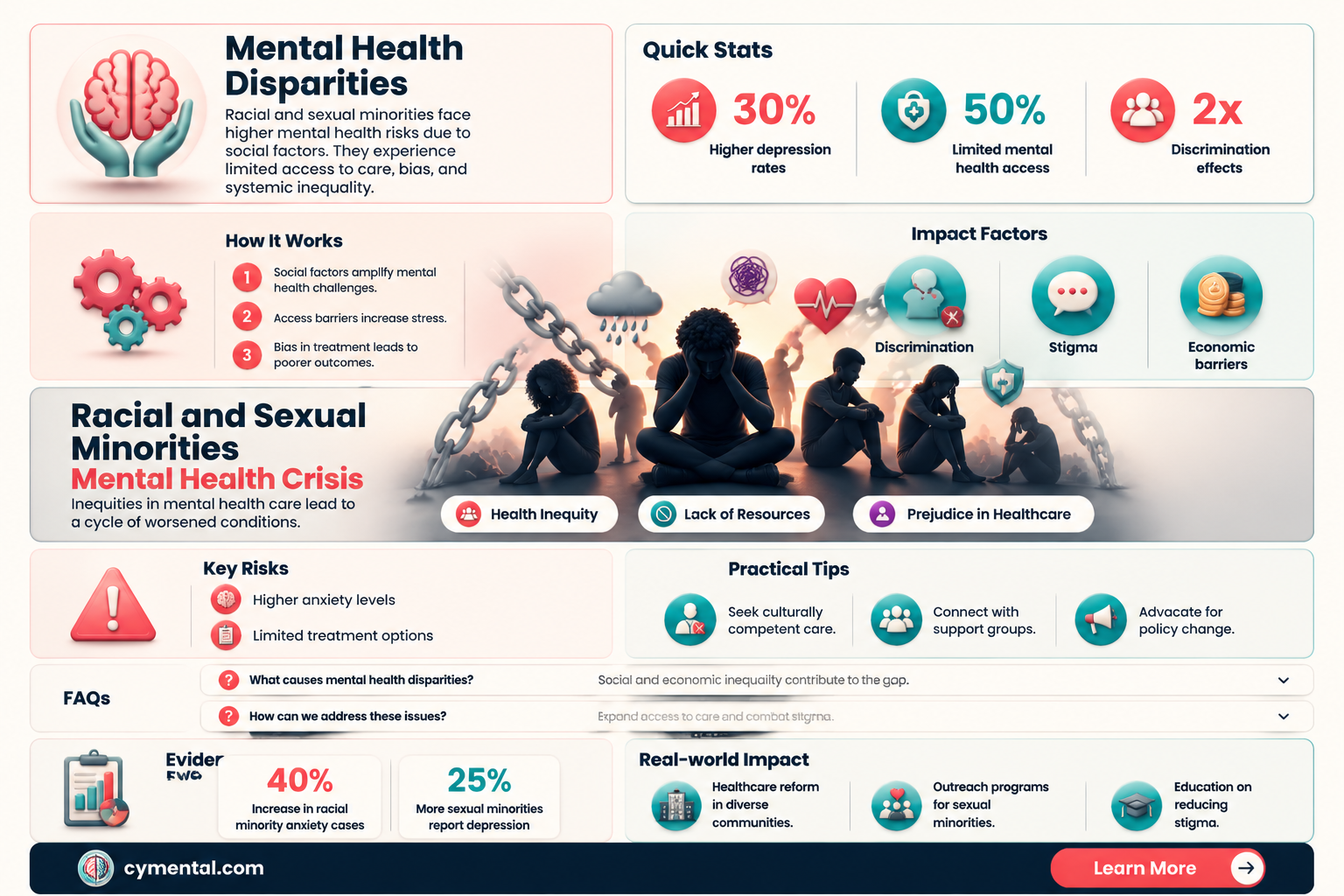
Research indicates that racial and sexual minorities often face a higher prevalence of mental illness compared to their majority counterparts. This disparity can be attributed to a multitude of factors, including systemic discrimination, social exclusion, and limited access to mental health resources. The intersectionality of race and sexual orientation can further compound these challenges, leading to unique stressors and barriers to care for individuals in these communities. Understanding and addressing these disparities is crucial for promoting mental health equity and ensuring that all individuals have access to the support and resources they need to thrive.
What You'll Learn
- Prevalence Rates: Racial and sexual minorities may experience higher rates of mental illness due to societal stressors
- Access to Care: Minorities often face barriers in accessing mental health services, including language and cultural differences
- Stigma and Discrimination: Increased stigma and discrimination can exacerbate mental health issues within minority communities
- Socioeconomic Factors: Economic disparities can contribute to higher levels of stress and mental illness among minorities
- Cultural Competency in Healthcare: Lack of cultural competency among healthcare providers can lead to misdiagnosis and inadequate treatment for minorities

Prevalence Rates: Racial and sexual minorities may experience higher rates of mental illness due to societal stressors
Research indicates that racial and sexual minorities often face higher prevalence rates of mental illness compared to their majority counterparts. This disparity can be attributed to a multitude of societal stressors that these groups uniquely experience. For instance, systemic racism, discrimination, and marginalization can lead to chronic stress, which is a known risk factor for developing mental health conditions such as anxiety and depression.
Furthermore, the intersectionality of race and sexual orientation can compound these effects, leading to even higher rates of mental illness among individuals who identify as both racial and sexual minorities. These individuals may face additional stressors such as homophobia, transphobia, and cultural conflicts that further exacerbate their mental health challenges.
Studies have shown that racial and sexual minorities are more likely to experience adverse childhood events, such as abuse, neglect, and bullying, which can have long-lasting impacts on their mental health. Additionally, these groups often have limited access to mental health resources and services, which can prevent them from receiving the care they need.
It is also important to consider the role of societal norms and expectations in contributing to mental illness among racial and sexual minorities. For example, the pressure to conform to certain gender roles or cultural expectations can lead to feelings of shame, guilt, and self-esteem issues, which can negatively impact mental health.
In conclusion, the higher prevalence rates of mental illness among racial and sexual minorities are a complex issue that is influenced by a range of societal stressors. Addressing these disparities requires a multifaceted approach that includes increasing access to mental health services, addressing systemic discrimination, and promoting greater understanding and acceptance of diverse identities.
Exploring the Impact of Culture on Mental Health: A Comprehensive Guide
You may want to see also
Access to Care: Minorities often face barriers in accessing mental health services, including language and cultural differences
Language barriers are a significant obstacle for minorities seeking mental health care. When individuals cannot communicate effectively with their healthcare providers, it can lead to misdiagnosis, inadequate treatment, and a lack of trust in the healthcare system. For example, a Spanish-speaking individual may struggle to convey their symptoms accurately to an English-speaking therapist, resulting in a misunderstanding of their condition.
Cultural differences can also impede access to mental health services. Minority communities may have unique beliefs and values surrounding mental illness, which can influence their willingness to seek help. For instance, in some cultures, mental illness may be stigmatized or viewed as a personal weakness, discouraging individuals from reaching out for support. Additionally, cultural differences in communication styles, such as the use of nonverbal cues or the importance of family involvement, may not be adequately addressed by mainstream mental health services.
Socioeconomic factors further exacerbate these barriers. Minority communities are often disproportionately affected by poverty, unemployment, and lack of health insurance, making it difficult for them to afford mental health care. Furthermore, mental health services may be scarce in minority neighborhoods, requiring individuals to travel long distances or wait extended periods for appointments.
To address these barriers, it is essential to increase the availability of culturally competent mental health services. This includes training healthcare providers in minority languages and cultural practices, as well as developing targeted outreach programs to engage minority communities. Additionally, policymakers must work to reduce socioeconomic disparities by expanding access to health insurance and increasing funding for mental health services in underserved areas.
In conclusion, access to care is a critical issue for minorities affected by mental illness. By addressing language and cultural barriers, as well as socioeconomic disparities, we can work towards ensuring that all individuals have equal access to the mental health services they need.
Understanding Health: What Term Describes an Illness Affecting Body or Mind?
You may want to see also
Stigma and Discrimination: Increased stigma and discrimination can exacerbate mental health issues within minority communities
Stigma and discrimination are pervasive issues that significantly impact the mental health of minority communities. Research has consistently shown that individuals from racial and sexual minority groups face higher rates of mental illness compared to their majority counterparts. This disparity is often exacerbated by the stigma and discrimination they encounter in their daily lives.
One of the primary ways stigma and discrimination affect mental health is by creating a sense of isolation and marginalization. When individuals feel ostracized by society, they are less likely to seek help for their mental health issues, fearing judgment or rejection. This can lead to a worsening of symptoms and a decreased quality of life.
Moreover, stigma and discrimination can also limit access to mental health resources. Minority communities may face barriers in obtaining adequate healthcare, including a lack of culturally competent providers and limited availability of services in their native languages. This can result in delayed or inadequate treatment, further exacerbating mental health issues.
In addition, the stress of dealing with stigma and discrimination can have a direct impact on mental health. Chronic stress has been linked to a range of mental health problems, including anxiety, depression, and post-traumatic stress disorder (PTSD). For minority individuals, the constant stress of navigating a discriminatory society can be particularly damaging.
To address these issues, it is crucial to work towards reducing stigma and discrimination in all forms. This can be achieved through education and awareness campaigns, as well as policy changes that promote equality and inclusion. By creating a more supportive and accepting society, we can help to improve the mental health outcomes of minority communities.
Unseen Scars: The Mental Impact of Physical Abuse
You may want to see also
Socioeconomic Factors: Economic disparities can contribute to higher levels of stress and mental illness among minorities
Economic disparities significantly contribute to the mental health challenges faced by racial and sexual minorities. Research indicates that individuals from lower socioeconomic backgrounds experience higher levels of stress, which can lead to increased rates of mental illness. This stress is often chronic and multifaceted, stemming from factors such as financial instability, limited access to healthcare, and social exclusion.
For racial minorities, economic inequality can exacerbate the impact of systemic racism, leading to a compounded effect on mental health. Discrimination in the workplace, housing, and education can limit opportunities for economic advancement, trapping individuals in cycles of poverty and stress. Furthermore, the lack of representation and resources in minority communities can hinder access to mental health services, making it more difficult for individuals to seek help.
Sexual minorities also face unique economic challenges that can impact their mental well-being. Discrimination in employment and housing can lead to financial insecurity, while the lack of family support and social networks can increase feelings of isolation and stress. Additionally, the cost of healthcare, particularly for gender-affirming treatments and mental health services, can be prohibitively expensive for many sexual minorities.
Addressing these economic disparities is crucial for improving the mental health outcomes of racial and sexual minorities. Policy interventions aimed at reducing poverty, increasing access to healthcare, and combating discrimination can help to alleviate the chronic stress that contributes to mental illness. Community-based initiatives, such as support groups and resource centers, can also play a vital role in providing mental health services and fostering a sense of belonging among minority populations.
In conclusion, the intersection of economic disparities and minority status creates a complex web of challenges that can significantly impact mental health. By addressing these socioeconomic factors, we can work towards creating a more equitable and supportive environment for all individuals, regardless of their racial or sexual identity.
The Impact of Social Media on Mental Health: A Statistical Overview
You may want to see also
Cultural Competency in Healthcare: Lack of cultural competency among healthcare providers can lead to misdiagnosis and inadequate treatment for minorities
Cultural competency in healthcare is a critical factor in ensuring that all patients receive accurate diagnoses and appropriate treatment. A lack of cultural competency among healthcare providers can lead to significant disparities in care, particularly for racial and sexual minorities. This can result in misdiagnosis, inadequate treatment, and a general mistrust of the healthcare system among these populations.
One of the primary reasons for these disparities is the failure of healthcare providers to understand and appreciate the cultural backgrounds and experiences of their patients. This lack of understanding can lead to misunderstandings and miscommunications, which can have serious consequences for patient care. For example, a healthcare provider who is not familiar with the cultural norms and values of a particular community may misinterpret a patient's symptoms or behaviors, leading to an incorrect diagnosis.
Furthermore, a lack of cultural competency can also lead to inadequate treatment for minorities. Healthcare providers who are not aware of the unique health needs and challenges faced by different cultural groups may not be able to provide the most effective care. This can result in poorer health outcomes for minority patients, who may already be at a disadvantage due to systemic inequalities in access to healthcare.
To address these issues, it is essential for healthcare providers to receive training in cultural competency. This training should cover a range of topics, including the importance of understanding cultural differences, how to communicate effectively with patients from diverse backgrounds, and how to provide culturally sensitive care. By improving cultural competency among healthcare providers, we can help to reduce disparities in care and ensure that all patients receive the high-quality treatment they deserve.
In addition to training healthcare providers, it is also important to address the broader systemic issues that contribute to disparities in healthcare. This includes working to increase access to healthcare for minority communities, addressing socioeconomic factors that impact health, and promoting diversity and inclusion within the healthcare workforce. By taking a comprehensive approach to addressing these issues, we can help to create a more equitable and just healthcare system for all.
Boosting Mental Health: The Positive Power of Social Media
You may want to see also
Frequently asked questions
Research indicates that racial and sexual minorities often experience higher rates of mental illness due to various social determinants of health, including discrimination, socioeconomic disparities, and limited access to mental health care.
Factors contributing to the higher prevalence of mental illness in these groups include systemic discrimination, cultural stigma, trauma, poverty, lack of access to quality mental health services, and social isolation.
Improving mental health services for racial and sexual minorities involves increasing cultural competency among providers, addressing language barriers, providing more accessible and affordable care, and implementing community-based interventions that are tailored to the specific needs of these populations.